When Intelligent Driving Becomes Standard, What Else Can Automakers Use to Win Over Consumers?
 11/23 2026
 573
If two cars can both handle urban navigation-assisted driving, both offer automatic parking, and both can receive continuous upgrades via OTA, how compelling is it really for consumers to choose one over the other on the strength of intelligent driving features alone?
In the past few years, automakers carved out product differentiation by adding sensors, boosting computing power, and rolling out city NOA. Today, intelligent driving capabilities are steadily spreading into more price segments, and simply offering a certain feature is increasingly hard to sustain as a long-term advantage.
J.D. Power's China Automotive Intelligence Experience Study, released in May 2026, shows that the intelligence market depth index rose to 428 points, but the function performance index fell to 875 points—the first decline in four years.
Among issues related to advanced configurations, unstable or inaccurate operation accounted for 48%.
It should be noted that this study covers the overall experience of automotive intelligent configurations, not intelligent driving alone. Still, it reflects a noteworthy shift in the intelligent driving field: the popularization of configurations and the improvement of user experience have not occurred in tandem.
When more and more automakers can deliver similar intelligent driving functions, what else can they rely on to establish differentiation?
01 Once Intelligent Driving Becomes Standard, How Much Is the Configuration Itself Still Worth?
In the past, high-level assisted driving functions such as city NOA were mainly confined to higher-priced models. Automakers could create relatively intuitive product differentiation by adding sensors, equipping higher-computing-power platforms, or launching new assisted driving features.
As these capabilities gradually trickle down into more price segments, the old way of competing is being challenged. When a function goes from being unique to a few models to being available on more of them, its technical value does not disappear—but its ability to serve as a differentiated selling point gradually weakens.
Just like reversing cameras and basic driver assistance: once consumers begin to take them for granted, it becomes difficult for automakers to gain a meaningful competitive edge simply by offering them.
This is not to say that intelligent driving technology no longer matters. Technology still determines product capabilities and affects whether an enterprise can enter a specific market. But the relationship between technical capability and market competitiveness is no longer a simple one-to-one correspondence.
Equipped with the same city NOA, two cars may both handle the daily commute, yet still differ in how they make decisions on congested roads, navigate complex intersections, and respond to the behavior of other vehicles.
These differences may not be directly visible from chip models, sensor counts, or feature lists, but they will shape users' judgment over long-term use. Automakers now face a very real question: which differences are users willing to pay for?
If a technical advantage is hard for users to perceive, or shows up only in low-frequency scenarios, even the most demanding R&D may not generate corresponding market returns.
Conversely, if an improvement enhances the daily commute—making following, lane changing, and intersection passage more natural and stable—it may carry more product value even if it is not the most eye-catching technology at the launch event.
Configurations are still the foundation of competition, but they are no longer sufficient on their own to explain why a car is more attractive. Automakers need to consider not only what functions they can provide, but also which capabilities are worth investing in and which problems are worth prioritizing.
02 Why Do Different Automakers Choose Different Intelligent Driving Paths?
As an important part of product competition, automakers naturally hope to seize more initiative in intelligent driving capabilities. But there is more than one way to obtain that initiative.
XPeng has long invested in in-house intelligent driving technology and continues to advance related layouts such as in-house chips; Li Auto is also building its own intelligent driving technology system.
For such enterprises, the value of in-house development lies not only in obtaining a usable driving algorithm, but also in linking technological evolution with overall vehicle product planning.
In-house development allows enterprises to decide R&D priorities more directly and adjust technical solutions according to their own models and user needs. But in-house development itself does not equal competitiveness.
Enterprises must also bear long-term R&D investment and solve issues such as technology mass production, cross-model reuse, and continuous iteration.
If the R&D direction is disconnected from user needs, or the model scale is insufficient to support the investment, in-house development may become a heavy cost burden.
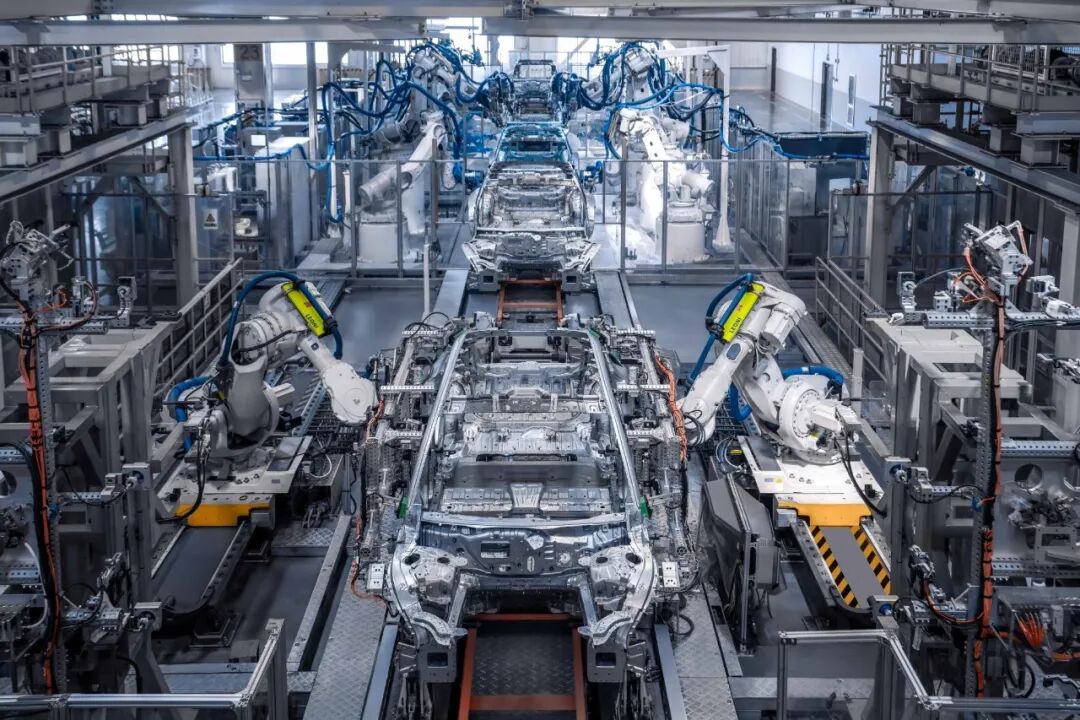 Image source: Internet
Another route is to cooperate with external solution providers. Huawei provides smart vehicle solutions to automakers through different cooperation models; third-party solution providers such as Momenta work with multiple automakers to bring related technologies into different brands and models.
For automakers, external cooperation can indeed ease the pressure of developing from scratch and may also shorten part of the R&D cycle.
But adopting external solutions does not mean handing the entire product over to suppliers. Automakers still need to define functional requirements, complete vehicle integration, verify actual performance, and take responsibility for the final delivered product.
The difference among these routes lies in how enterprises allocate R&D investment, technological control, and commercial risk. In-house development enterprises need to bear more long-term investment and also have the opportunity to build deeper technological accumulation;
enterprises adopting external solutions can leverage specialized division of labor and economies of scale, but need to manage supplier dependence, product differentiation, and coordination of technological iteration.
Enterprises adopting hybrid routes need to divide responsibilities among different modules and models and bear the complexity of system integration. Therefore, judging whether an automaker is competitive cannot depend only on whether it develops in-house, nor only on which supplier it uses.
What automakers truly need to master is not necessarily the entire development process of every technology, but the ability to decide where the product should go, where R&D resources should be invested, and how to judge the final effect.
If in-house development cannot bring better product decisions and continuous delivery capabilities, technological autonomy itself can hardly constitute a complete competitive barrier;
if external solutions are adopted, but the automaker can form advantages in product definition, vehicle integration, and user experience, it can likewise establish competitiveness.
03 Why Do Products Built from Similar Technical Routes Turn Out Different?
Technical routes determine how enterprises organize R&D, but do not directly determine what experience consumers ultimately receive. Even if two automakers adopt similar intelligent driving solutions, they still need to complete development and adaptation according to the model's sensor configuration, computing platform, vehicle characteristics, and product positioning.
More importantly, their priorities for intelligent driving functions may be completely different. For users who often commute in congested urban sections, whether the system can follow smoothly and reduce unnecessary braking and hesitation may affect daily experience more than high-difficulty maneuvers in a few complex scenarios.
For users who often travel long distances, the continuity of highway navigation and lane-changing decisions may matter more. For price-sensitive models, automakers also need to calculate the costs of additional hardware, software development, and subsequent maintenance.
Higher-spec sensors, larger computing platforms, and more functions may raise the technical ceiling, but they do not necessarily bring user benefits that match the investment. This involves how R&D resources are allocated.
Enterprises can channel more investment into core algorithms and computing platforms, or prioritize solving problems users frequently encounter, or reduce costs through hardware optimization, supply chain collaboration, and system integration.
Different choices will affect the final product's capabilities, price, and development cycle.
 Image source: Internet
For automakers, in-house development or outsourcing is only a path choice; more critical is whether they can judge which intelligent driving capabilities are truly worth investing in. If R&D work is mainly arranged around technical indicators, resources tend to concentrate on performance improvements that can be quantified and easily demonstrated.
But consumers may not evaluate vehicles according to the same set of indicators. For users, whether the system is natural and reliable on everyday roads and whether it responds reasonably in complex situations may matter more than how far a certain parameter leads.
This requires automakers to truly connect product planning, user feedback, and R&D decisions.
The product team needs to identify the issues users care about most, the technical team needs to assess the causes of the problems and solution paths, and the cost and project teams need to judge the investment, returns, and implementation cycle of improvements.
This requires not only making R&D personnel pay more attention to experience, but also enabling enterprises to form a clear resource allocation mechanism—namely, which problems must be solved first, which capabilities are worth using as product selling points, and which technological improvements currently have insufficient commercial value.
When different automakers adopt similar supplier solutions, product definition and resource allocation capabilities instead become important sources of differentiation. Even with the same basic technology, what problems an enterprise chooses to solve, how it integrates with the vehicle, and what level it controls costs will also affect the competitiveness of the final product.
04 What Is the True Competitiveness of Automakers?
A capability performing well on a certain model does not mean the enterprise can stably deliver it to more models and maintain the same quality in subsequent upgrades.
From R&D prototype vehicles to mass-produced models, the system needs to adapt to different hardware configurations and vehicle conditions. After the vehicle is delivered, the software still needs iteration, new functions may introduce new problems, and existing capabilities also need continuous verification.
Therefore, the competitiveness of automakers is reflected not only in technical performance at a certain point in time, but also in whether R&D results can be transformed into repeatable mass-production capabilities.
This involves technology reuse across model platforms, supply chain collaboration, version management, problem localization, and upgrade verification.
These tasks may not directly become marketing selling points, but they affect R&D costs, product delivery efficiency, and users' long-term usage experience.
Image source: Internet
For in-house development enterprises, the advantage should not merely be owning their own algorithms or chips, but being able to organize technology development, vehicle integration, and subsequent iteration into a stable process.
For enterprises adopting external solutions, competitiveness is also not merely finding a technology supplier, but being able to collaborate effectively with suppliers and transform external technology into an experience that fits their own product positioning.
Therefore, simply comparing technical routes makes it difficult to judge an enterprise's future competitiveness.
But it is undeniable that when everyone has intelligent driving, the differences among automakers are no longer just whether they have a certain function, nor just how much core technology they have mastered.
Rather, it is whether enterprises can judge which technologies are worth investing in, which needs are worth prioritizing, and continuously transform R&D results into product value that users can perceive.
Technology can be accumulated through in-house development or obtained through cooperation, but how to turn technology into product competitiveness is ultimately still the automaker's own task.
-
![]()
What Is Leapmotor Really After? Q3 Revenue of 31.7 Billion Yuan, Yet Only 40 Million Yuan in Profit!
-
![]()
Himile Technology: Tire Mold Leader with Steady Revenue Growth and Over 2 Billion Yuan in Cumulative R&D Investment Over Five Years
-
![]()
WeRide's Q3 2026: Revenue up nearly 90%, gross margin 43%—Is Spring Finally Coming for L4 Companies?
-
![]()
From 89.6% Digitalization to AI Empowerment: Unveiling the "Nerve Center" of the Modern Industrial System
-
The AI Hardware Bull Market Is Over
-
![]()
Guangdong Leads by a Landslide, Shanghai Dominates Finance, Beijing's Giants Set the Pace
-
![]()
Breaking: Huawei Unveils First HarmonyOS AI Phone — Netizens Say They Guessed Wrong as Price Exceeds Expectations
-
![]()
Anthropic Prospectus Insights: How Compute Power, Jobs, and Organizations Will Change