Leapmotor: Selling More, Earning Less—Has "Trading Price for Volume" Run Its Course?
 11/23 2026
 358
Leapmotor (09863.HK) released its Q3 2026 financial report after the Hong Kong market close on November 20, Beijing time. Overall, the report clearly missed expectations: revenue was slightly below market consensus, while profit fell significantly short. Specifically:
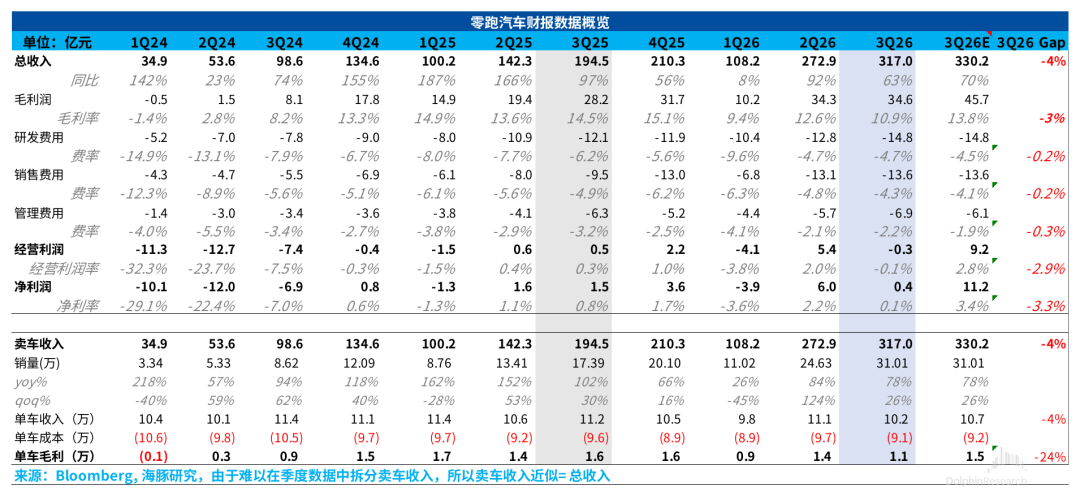
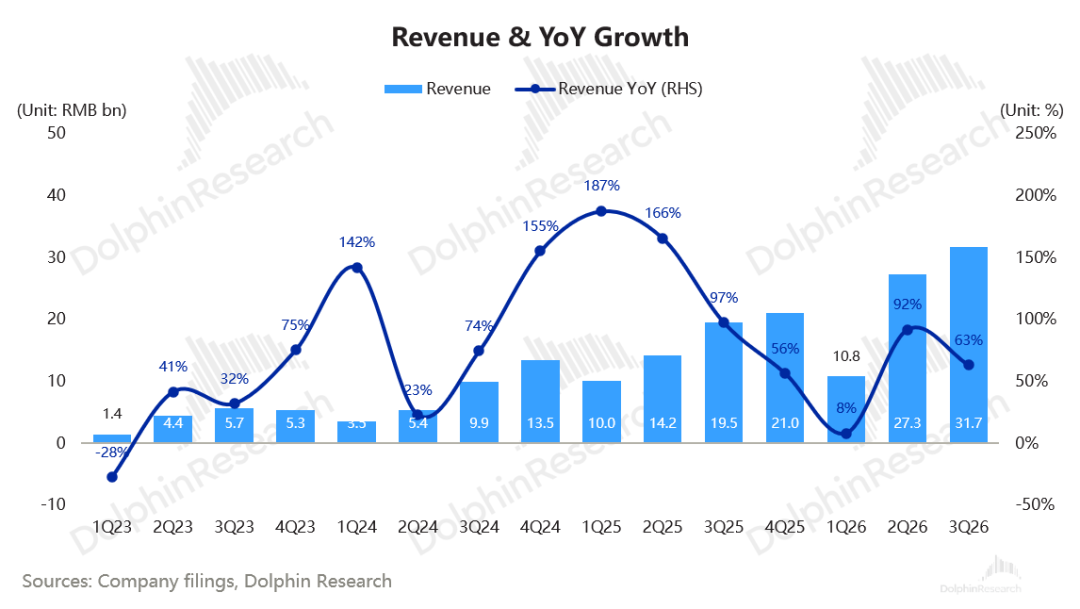
1. Revenue below expectations, average selling price per vehicle fell notably quarter over quarter: In Q3, Leapmotor's total revenue was RMB 31.70 billion, up 63.0% year over year, below the market expectation of RMB 32.55 billion (about 2.6% lower), mainly due to lower-than-expected revenue per vehicle.
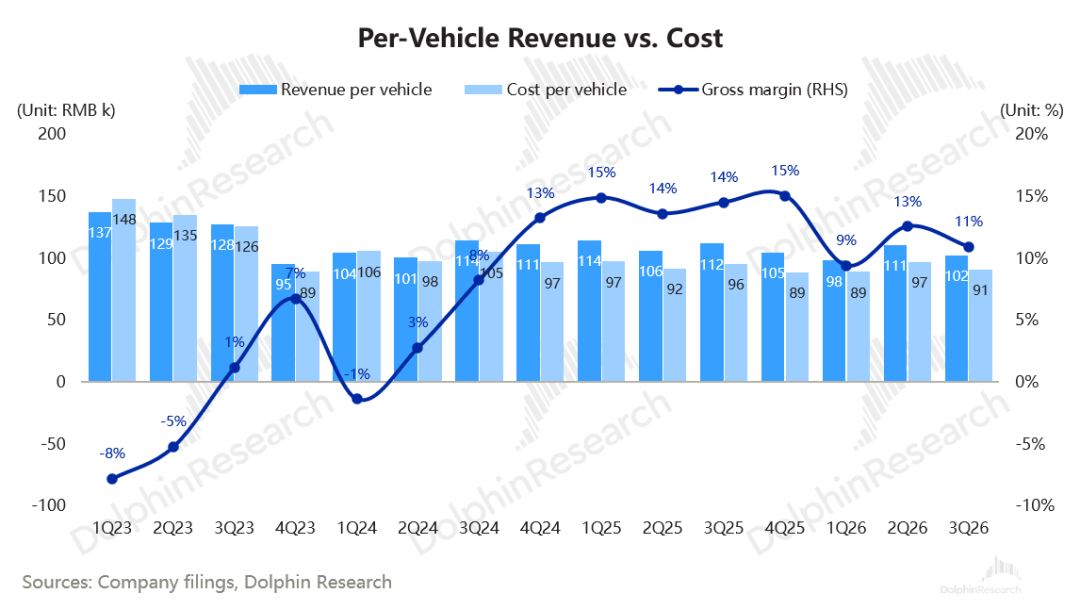
In Q3, Leapmotor's revenue per vehicle was only RMB 102,000 (roughly estimated based on total revenue/sales volume), down about RMB 9,000 from RMB 111,000 in Q2, and about RMB 3,000 below the market expectation of about RMB 105,000, mainly due to a downshift in model mix as the share of the low-priced A series continued to rise:
In Q3, A10 and A05 continued to gain volume (cumulative sales of the two models since launch have exceeded 200,000 units), and the A series' share of the model mix rose about 8.7 percentage points quarter over quarter to 34.8%, while the share of the higher-priced D series (D19/D99) was basically flat quarter over quarter.
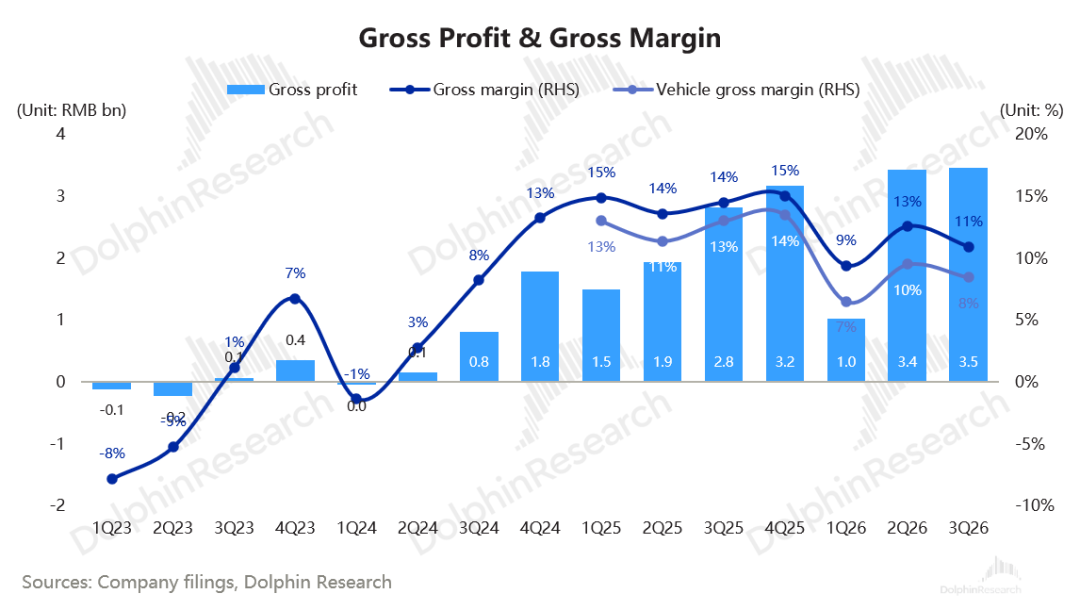
2. Gross margin fell sharply quarter over quarter, far below market expectations: In Q3, Leapmotor's gross margin was 10.9%, down 1.7 percentage points quarter over quarter and down 3.6 percentage points year over year, far below the market expectation of 13.8%; gross profit per vehicle fell from RMB 13,900 in Q2 to RMB 11,200, versus market expectations of about RMB 14,500.
The full-year guidance for vehicle gross margin is 10–11%, while the Q3 consolidated gross margin was only 10.9%. After excluding non-vehicle businesses with higher gross margins such as carbon credits and components, vehicle gross margin is very likely below 10%.
The company attributed this to three factors: changes in product mix, rising raw material prices, and higher shipping costs. Specifically:
a. Product mix shifted toward low-priced vehicles: A higher share of low-margin A-series entry-level models was the primary reason for the quarter-over-quarter decline in gross margin; although D99 had its first full quarter of deliveries, its volume was not enough to offset the impact.
b. Rising raw material and shipping costs: Higher prices for memory chips, batteries, and other raw materials were the primary reason for the year-over-year decline in gross margin; higher export volume combined with rising shipping freight rates also dragged down the quarter-over-quarter gross margin.
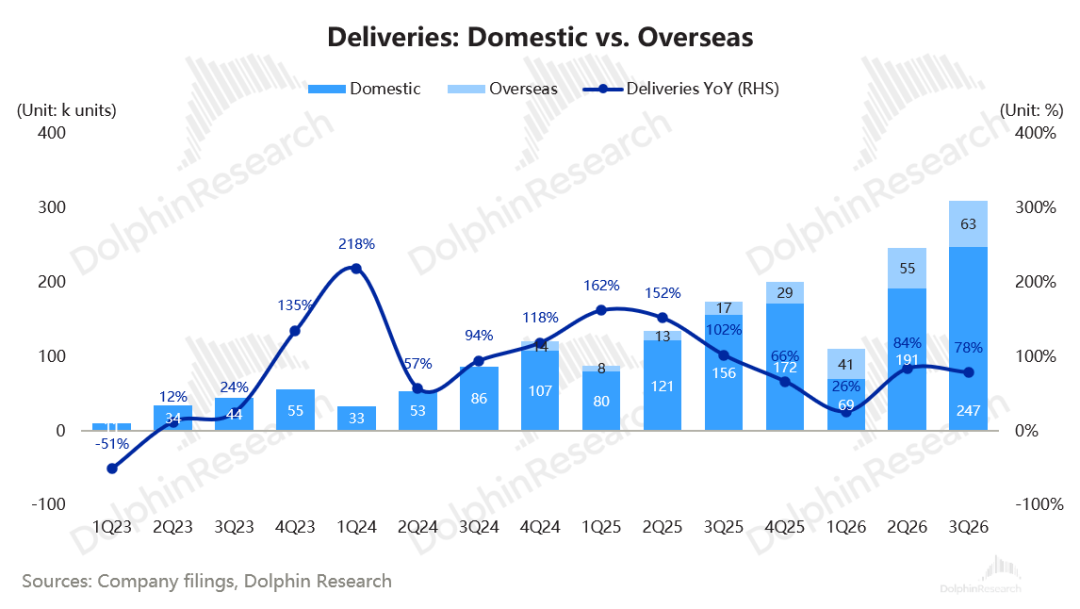
c. Scale effects were offset by pricing and costs: In Q3, Leapmotor's sales volume was 310,000 units, up 26% quarter over quarter, with monthly sales exceeding 100,000 units from July to September, but gross profit was only RMB 3.46 billion, just RMB 30 million more than RMB 3.43 billion in Q2.
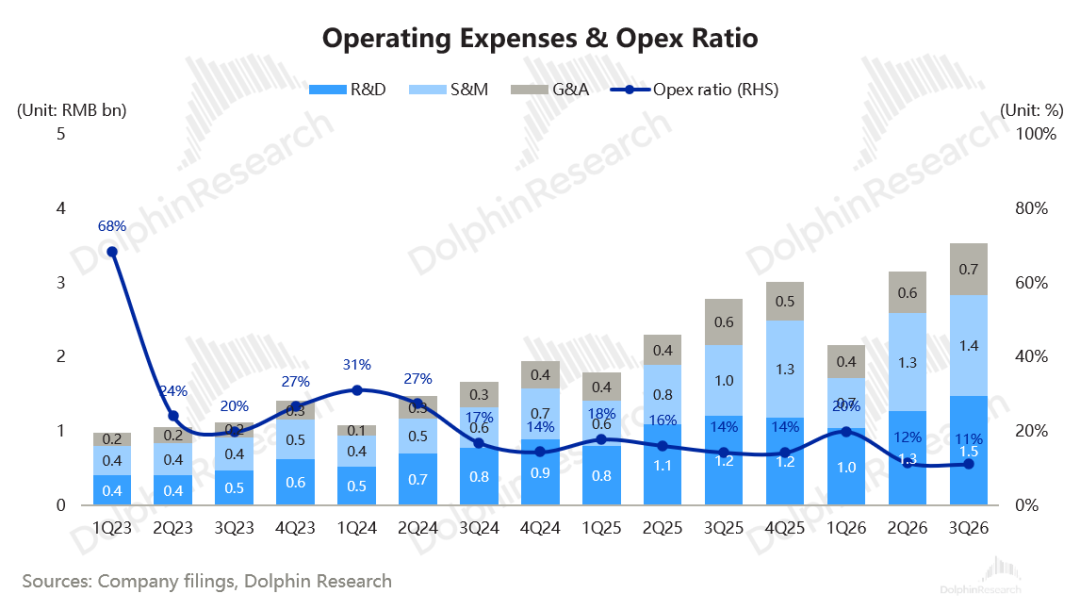
3. Operating expenses continued to rise quarter over quarter, while the expense ratio edged down: In Q3, Leapmotor's total operating expenses were RMB 3.53 billion, up RMB 380 million quarter over quarter and slightly above the market expectation of RMB 3.46 billion; the operating expense ratio was 11.1%, down 0.4 percentage points quarter over quarter but above the market expectation of about 10.6%. Among these:
a. R&D expenses were RMB 1.48 billion, up RMB 210 million quarter over quarter and in line with market expectations: mainly invested in next-generation platform technologies such as the LEAP 5.0 architecture, LWM world model, CTC 3.0, and MM-i multi-mode hybrid electric drive (released at the September Tech Day), as well as an increase in R&D personnel.
b. Selling expenses were RMB 1.36 billion, up RMB 50 million quarter over quarter: In Q3, new models such as A05 and the B01/B10 facelifts were launched in a concentrated manner, and combined with Tech Day and continued expansion of overseas channels, advertising spending and sales personnel increased; however, the selling expense ratio fell 0.5 percentage points quarter over quarter to 4.3%.
c. Administrative expenses were RMB 690 million, up RMB 120 million quarter over quarter and above the market expectation of RMB 610 million: mainly due to an increase in administrative personnel alongside business expansion, as well as higher taxes and surcharges.
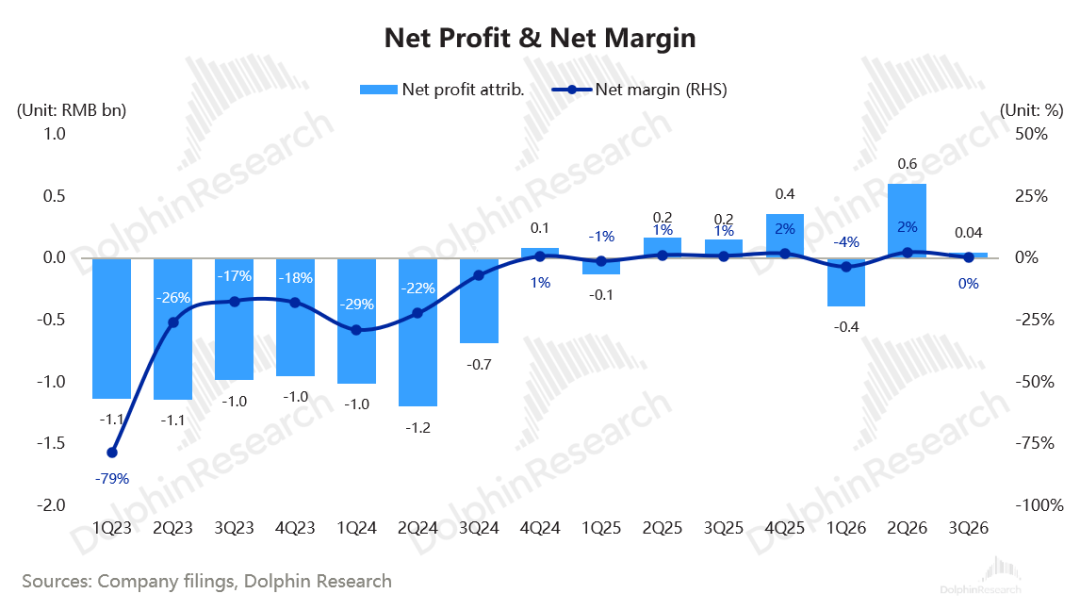
4. Operating profit turned negative, net profit attributable to shareholders nearly zero, significantly below expectations: In Q3, Leapmotor's operating profit was RMB 30 million (RMB 540 million in Q2 and RMB 50 million in the same period last year), far below the market expectation of RMB 920 million.
Net profit attributable to shareholders was only RMB 40 million (RMB 600 million in Q2 and RMB 150 million in the same period last year), versus market expectations of RMB 1.12 billion. Net profit per vehicle fell from about RMB 2,430 in Q2 to about RMB 130, mainly due to the sharp decline in gross margin, the quarter-over-quarter increase in operating expenses, and a quarter-over-quarter decrease of about RMB 220 million in other income.
Dolphin Analyst View
Overall, Leapmotor's results this quarter clearly missed expectations. Revenue per vehicle fell to RMB 102,000, and gross margin dropped to 10.9%, nearly 3 percentage points below market expectations. With operating expenses continuing to rise and other income declining, operating profit turned negative, and net profit attributable to shareholders was only RMB 40 million, almost zero.
The biggest problem this quarter is that monthly sales of 100,000 units did not bring profit; instead, profit was eroded by higher volume of low-priced vehicles and rising raw material and shipping costs.
The earnings downgrade the market had previously worried about materialized ahead of schedule in Q3; moreover, price cuts for BYD's second-generation Seagull, new cash subsidies in October, the cut in export tax rebates, and rising memory chip costs are expected to continue weighing on average selling prices and gross margins in Q4 and 2027.
Whether full-year guidance will be adjusted, and by how much, will need to be confirmed by management at tonight's earnings call. But according to Dolphin Analyst's estimates, the completion status of each guidance item is as follows:
a. Full-year sales volume of about 1 million units: likely to be largely achieved. Cumulative deliveries in the first three quarters were about 667,000 units, and about 773,000 units from January to October; November–December would need average monthly sales of about 114,000 units, about 7% faster than October's 106,000 units.
Dolphin Analyst expects Q4 deliveries of about 320,000–340,000 units and full-year 2026 sales volume of about 990,000–1.01 million units; however, the low-priced A series is expected to remain the main volume driver, the D series' premiumization breakthrough has fallen short of expectations, and average selling prices and gross margins in Q4 are likely to remain under pressure.
b. Full-year net profit of about RMB 3 billion: cannot be achieved and is likely to be cut. Cumulative net profit attributable to shareholders in the first three quarters was only about RMB 250 million, and Q4 would need to earn about RMB 2.75 billion, close to the original full-year target itself.
Based on Dolphin Analyst's estimates of about 330,000 units in Q4, revenue per vehicle of about RMB 105,000, and a gross margin of 11%–12%, Q4 net profit attributable to shareholders would center around RMB 400–500 million, and the full year would be about RMB 650–750 million, only about one quarter of the original guidance.
The full-year gross margin guidance of 13–14% is likewise unachievable: the consolidated gross margin in the first three quarters was about 11.3%, and the full year is about 11.2%–11.6%; the vehicle gross margin guidance of 10–11% was likely already breached in Q3.
c. Overseas: the full-year export target of about 200,000 units can be achieved. Cumulative exports from January to October have exceeded 180,000 units, and November–December only need average monthly exports of about 10,000 units; given the Q3 average monthly pace of about 21,000 units, full-year exports are expected to reach about 220,000 units.
Whether the 2027 overseas target of 350,000–400,000 units will be maintained depends on management, but localization has already made progress and is expected to offset part of the negative impact of the export tax rebate cut (13%→9%): the Zaragoza plant in Spain began producing B10 on October 16, and B05 is expected to enter trial production within the year and start production in 2027; the Goiânia plant in Brazil is expected to begin mass production of B10 and C10 in the second half of 2027. The contribution of overseas expansion to profit still depends on when the joint venture releases profit.
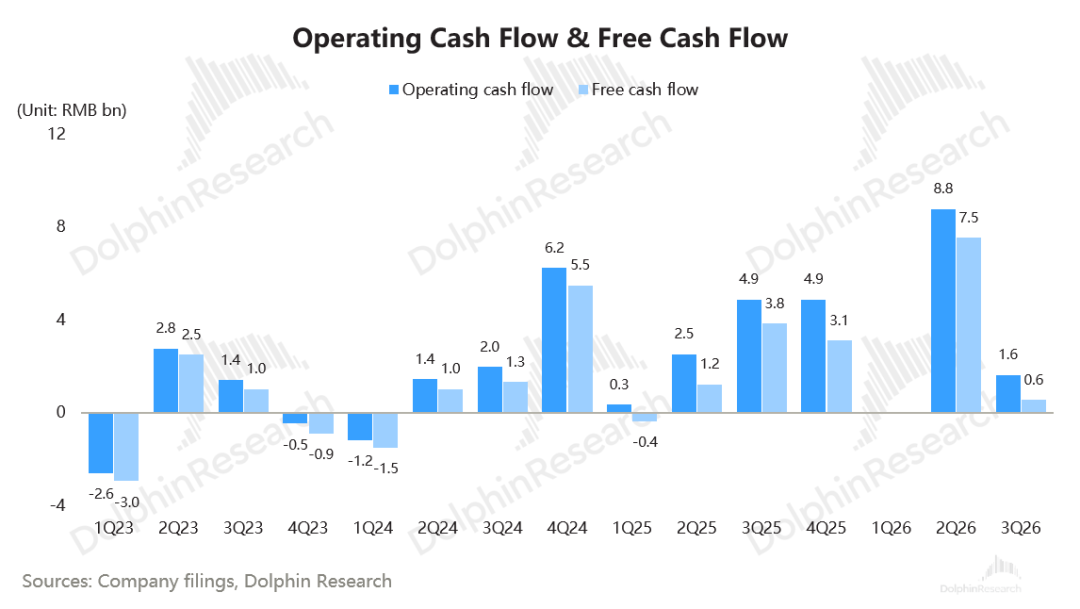
d. Cash flow fell sharply: Q3 operating cash flow was RMB 1.62 billion (RMB 8.78 billion in Q2 and RMB 4.88 billion in the same period last year), and free cash flow was RMB 550 million (RMB 7.54 billion in Q2). The company explained this as increased procurement spending for strategic inventory buildup and concentrated maturity of accounts payable; cash on hand at quarter-end was RMB 39.14 billion.
Based on 2026 sales volume of 1 million units and revenue of RMB 104.7 billion (up 62% year over year), the current market capitalization of about RMB 36.8 billion corresponds to a 2026 P/S of about 0.35x, already at the bottom of the historical valuation range.
The company previously set a 2027 target of 1.5–1.6 million units (7 new models, with the second brand debuting in Q4 2027). Dolphin Analyst conservatively expects 1.25 million units (up 25% year over year, with incremental volume mainly from overseas), corresponding to 2027 revenue of about RMB 138.6 billion (up 32% year over year).
Dolphin Analyst believes the main reasons Leapmotor's valuation is at a historical low are as follows:
1) Profit guidance has been cut further: The full-year profit target has already been cut during the year from about RMB 5 billion to about RMB 3 billion, while cumulative profit in the first three quarters was only about RMB 250 million, and Q3 gross margin did not rise but fell to 10.9%, making the RMB 3 billion target basically unattainable. Dolphin Analyst expects full-year net profit of only about RMB 650–750 million, about one quarter of the original guidance.
If raw material and shipping cost pressures persist and there is no visible improvement on the profit side, the market will not assign a high multiple.
2) The quality of revenue is declining: Sales growth mainly comes from the A series priced at RMB 50,000–60,000, while the D series' premiumization breakthrough has not been very successful. Revenue per vehicle fell from RMB 111,000 in Q2 to RMB 102,000, and gross margin accordingly fell from 12.6% to 10.9%.
If the low-priced A series continues to bring volume but not profit, the multiple applied to revenue should also be discounted.
3) The valuation pillar of overseas expansion is facing dual headwinds from costs and policy: In Q3, rising shipping costs already dragged down gross margin; export tax rebates will be cut from 13% to 9% starting April 2027, and the EU may impose import quotas on plug-in hybrids.
Leapmotor's exports are sold through its joint venture with Stellantis, and Leapmotor's own gross margin is only in the low single digits; profit release from the joint venture will take time.
Of the 2027 overseas target of 350,000–400,000 units, only about 50,000 units will come from localized production in Spain, with most still exported from China, making it difficult to fully offset the policy impact.
4) Neither the industry cycle nor the cost side supports a re-rating: Domestic passenger vehicle retail sales are still declining, components such as memory chips are still rising in price, and the overall valuation of the vehicle sector is suppressed at a historical low, making it difficult for Leapmotor to re-rate independently of the sector.
Therefore, with the profit target unmet and the downward trend in gross margin not yet stopped, Dolphin Analyst expects limited upside for Leapmotor in the near term.
Only when memory and commodity prices ease somewhat, combined with the cost-reduction effect of self-developed battery cells bringing gross margin back into an upward channel, and overseas expansion exceeding expectations, may a real upward opportunity emerge; in addition, technology licensing revenue and the components external supply model (FAW Hongqi cooperation, FAW's subscription to a private placement, STLA platform cooperation) also provide upside options for valuation.
Related charts:
- END -
// Reprint authorization
This article is an original article by Dolphin Research. Authorization is required for reprinting.
// Disclaimer and general disclosure notice
This report is intended solely for general informational and comprehensive data purposes, aimed at general reading and data reference by users of Dolphin Research and its affiliates. It does not take into account the specific investment objectives, investment product preferences, risk tolerance, financial situation, or particular needs of any recipient. Investors must consult independent professional advisers before making any investment decisions based on this report. Anyone who makes investment decisions by using or referring to the content or information mentioned in this report shall bear the risk themselves. Dolphin Research shall not be liable for any liability or loss that may be directly or indirectly caused by the use of the data contained in this report. The information and data contained in this report are based on publicly available materials and are for reference only. Dolphin Research strives for, but does not guarantee, the reliability, accuracy, and completeness of the relevant information and data.
The information mentioned or views expressed in this report shall not be regarded or deemed, in any jurisdiction, as an offer to sell securities or an invitation to buy or sell securities, nor do they constitute advice, inquiry, or recommendation regarding relevant securities or related financial instruments. The information, tools, and materials contained in this report are not intended or intended to be distributed to citizens or residents of any jurisdiction where the distribution, publication, provision, or use of the relevant information, tools, and materials would conflict with applicable laws or regulations, or would cause Dolphin Research and/or its subsidiaries or affiliates to be subject to any registration or licensing requirements in that jurisdiction.
This report reflects only the personal views, opinions, and analytical methods of the relevant creators and does not represent the position of Dolphin Research and/or its affiliated institutions.
This report was produced by Dolphin Research, and the copyright belongs solely to Dolphin Research. Without the prior written consent of Dolphin Research, no institution or individual may (i) produce, copy, reproduce, reprint, forward, or otherwise distribute copies or reproductions in any form, and/or (ii) directly or indirectly redistribute or transfer the same to other unauthorized persons. Dolphin Research reserves all related rights.
-
![]()
Second-Hand Domestic Phones: African Buyers' Alternative to Transsion
-
![]()
Why Are Smart Glasses Bucking the Trend and Growing Exponentially in a Cold Winter?
-
Used Chinese Phones: Africa's Enthusiasts Embrace a Transsion Alternative
-
![]()
The Largest IPO in History: 14 Young Chinese Professionals Strike It Rich
-
![]()
AI Can't Understand Emotions, but It Has Spawned Seven New Businesses
-
![]()
Long Lead Times for Imported Rubidium Clocks? The SRS Stanford Research Systems FS725 Benchtop Rubidium Atomic Frequency Standard Is in Stock and Shipping Directly!
-
![]()
The 12th Munich Shanghai Analytica China Exhibition Concludes: Zolix Showcases Cutting-Edge Spectroscopy Solutions
-
![]()
Tengjing Technology Sets 2027 Revenue Target of at Least 1.8 Billion Yuan