2027 Global Auto Market Outlook: Regional Policy Divergence, Supply Chain Cost Pressures Transmit Across Regions
 11/25 2026
 454
In 2026, the global auto market is nearing its close amid intense price wars, trade policy adjustments and supply chain fluctuations. Standing at the 2027 outlook juncture, the main development threads of major core markets are becoming increasingly clear: Europe is reshaping industrial and regulatory rules, North American trade negotiations and tariff directions remain uncertain, and the domestic market is seeking a recovery window amid adjustments. Meanwhile, rising electronics supply chain costs are a challenge faced by all regions. Mobility Global's latest assessments of China, Europe, North America and the global supply chain provide a reference for observing the industry landscape in the next phase.
▍Europe: Industrial Policy and Trade Thresholds Tightening Simultaneously
The core of Europe's current policy is seeking a balance between supporting domestic manufacturing and adjusting import structures.
On the industrial support front, the EU's Industrial Accelerator Act (IAA) proposal introduced in March this year sets differentiated threshold requirements: starting from 2027, battery electric, plug-in hybrid and fuel cell vehicles seeking corresponding policy incentives must meet two conditions: the vehicle must be assembled within the EU, and the EU domestic content of component value excluding the battery must reach 70%. Conventional hybrids and internal combustion vehicles are not covered by these incentives. By the second phase in 2030, batteries and electric drive systems will also be included in domestic content assessment, and in the long term, the rules may be further tightened. The proposal also includes flexibility clauses allowing origin requirements to be relaxed if costs rise significantly.
Mobility Global analysis suggests that the final IAA provisions will likely trend toward pragmatism and are expected to be finalized and take effect in 2028. Overall, the EU prefers to use incentive tools such as subsidies, public procurement tenders and carbon super-credits to guide automakers toward compliance, rather than setting hard quotas or market bans.
On emissions regulation, signals of flexibility in the implementation pace of reduction targets have already emerged. On November 4, the European Parliament's Committee on the Environment, Climate and Food Safety (ENVI) voted to propose lowering the 2035 emissions target for passenger cars. Multiple procedural votes still lie ahead, but this development already reflects a trend toward softer regulatory positioning.
On import policy, the EU and China have reached a four-year annual quota arrangement for imports of hybrid and plug-in hybrid vehicles, to be implemented as early as the end of 2026. The quota covers vehicles from all sources including free trade partners and currently takes the form of a 200-day temporary quota, pending approval by the EU.

From a market impact perspective, Mobility Global predicts that in 2027, China's hybrid vehicle import sales will be relatively high, mainly as companies draw down inventory ahead of the quota implementation; after 2028, import volumes will match the quota, with BYD, MG and Chery likely occupying the first tier of imports. In the medium to long term, this quota constraint will compel Chinese automakers to accelerate localization in Europe. The decline in Chinese hybrid imports will also create market space for European domestic hybrid models. Overall, local production and supply chain investment have become necessary conditions for Chinese automakers' continued growth in the European market, a trend that favors leading automakers with scale advantages.
▍North America: USMCA Negotiations Delayed, Multiple Tariff Paths Remain Possible
The greatest uncertainty in the North American market comes from trade agreements and tariff policy.
After the November US midterm elections, the Democratic Party won majorities in both the Senate and House of Representatives, meaning Trump's remaining term (through January 2029) will encounter more congressional resistance in advancing policy. The subsequent direction will largely depend on the outcome of the game theory between Congress and the White House over trade and industrial policy in the next two years.
The USMCA (United States-Mexico-Canada Agreement) update negotiations that the market had expected to be completed within the year did not materialize. Any bilateral trade agreement requires votes in both chambers of Congress and presidential signature. In the current complex political environment, reaching a complete trilateral agreement before 2029 will be difficult. The probability of a fully updated USMCA taking effect is low, but the President can still unilaterally adjust tariff rates on automobiles, parts, steel, aluminum and copper imposed under Section 232.
There are already calls in the market to push for adding a "US value-added clause" to the USMCA framework: vehicles would need to meet a certain proportion of US domestic component value in addition to regional value requirements. Once implemented, production capacity for core components such as engines, transmissions, power batteries and electric drive axles would accelerate their shift to the US, and procurement orders would move away from Canada, Mexico and regions outside North America. Since the rules have not yet been finalized, corporate investment decisions still face uncertainty.

Mobility Global has outlined three scenarios: The baseline scenario, with the highest probability, involves mutual concessions among the US, Canada and Mexico and a compromise reached in the medium term. Auto and parts tariffs under Section 232 are expected to fall to around 15%, and congressional pressure and economic realities may drive partial tariff easing by the end of 2027. In the transition scenario, the US and Mexico reach an agreement first in early 2027, with Canada following by mid-year, and the US relies more on trade facilitation measures that do not require broad congressional authorization. In the tighter scenario, high tariffs continue through 2028, trade and cost buffer space narrows, and Mexico and Canada may pivot to other trading partners.
▍China: Adjustment Under Pressure in 2026, Phased Recovery Space in 2027
Mobility Global's latest estimates (not yet formally finalized, with data still subject to adjustment) show that domestic light vehicle sales in 2026 are expected to decline approximately 21.5% year-on-year, further revised down by 5 to 6 percentage points from previous expectations. Looking ahead to 2027, some purchase incentive policies are planned to phase out gradually by December 2027, which is expected to generate a wave of front-loaded purchase demand; falling lithium prices, continued improvement of charging infrastructure, and expanding supply of B-to-E-segment mid-to-high-end models will drive product value enhancement. These positive factors will support the market in achieving approximately 5% recovery growth. But even with growth, the full-year market size will still be significantly below the 2025 level of 27.3 million units.
However, market constraints are equally prominent. The 2025 stimulus policies front-loaded demand for A-segment entry-level models, and this pull-forward effect will continue to manifest in 2026; high oil prices will also continue to suppress purchase willingness for internal combustion and hybrid vehicles. In addition, how macroeconomic changes will affect consumer purchase willingness remains highly uncertain.
▍Global Commonality: Beyond DRAM Price Increases, PCB and Analog Chips Warrant Attention
Across regions, electronics supply chain cost pressures are transmitting to the vehicle assembly stage.
Globally, rapid investment in AI data centers continues to occupy electronics manufacturing capacity, with automakers competing with hyperscale data center companies for the same types of components, a trend that has been evident since November 2025. The 2027 DRAM (dynamic random-access memory, automotive-grade operating memory) price outlook has already been revised upward above levels predicted just weeks ago, and related annual price negotiations have just begun. Currently, DRAM mainly manifests as price increases, raising per-vehicle electronics costs. Mobility Global estimates that DRAM price increases may push per-vehicle costs up by approximately $200 in 2028.
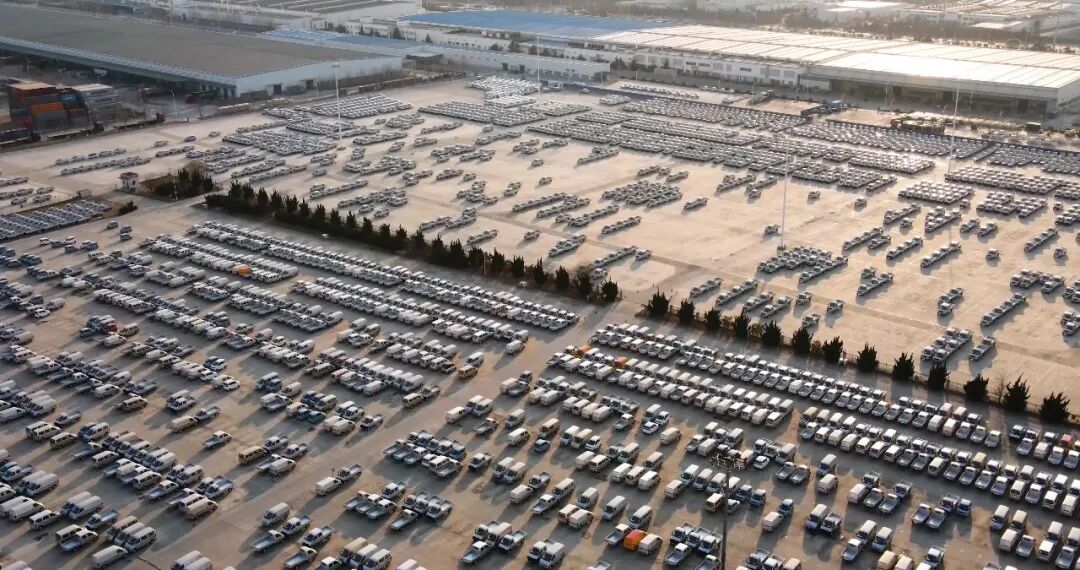
By contrast, the risks for PCB (printed circuit boards) and mature-node analog chips are more complex, facing dual pressures of price increases and supply tightness simultaneously. Almost all electronic control components rely on PCBs, making them a weak link in the supply chain. About two months ago, signs of tightening supply for ECU electronic control unit PCBs had already emerged. Analog chips are widely deployed in various automotive electronic modules, mostly custom-specific models, with long capacity expansion cycles and high substitution difficulty. Automotive-grade analog chip prices have already risen significantly in 2026 and are expected to maintain double-digit increases in 2027.
The common concern across regions is rising electronics costs and potential supply chain constraints, but specific challenges vary by market: China is in a demand adjustment period, Europe is reassessing its industrial and regulatory framework and supporting regional production, and North America remains affected by uncertainty in trade policy and tariff negotiations. For automakers, component suppliers and all parties across the industry chain, these variables will remain key areas to track in 2027.
Layout 丨 Zheng Li
Source 丨 Mobility Global
Image Source 丨 Qianku Network
-
![]()
2027 Global Auto Market Outlook: Regional Policy Divergence, Supply Chain Cost Pressures Transmit Across Regions
-
![]()
Halved! Europe Caps Chinese Plug-in Hybrid Imports at 350,000 Units, Dealing a Heavy Blow to BYD and Others
-
![]()
Data Analysis, Information Research, and Content Creation Emerge as the Most Commonly Assigned Tasks for Office Agent Users — Part I of the "China Office Agent Market User Research Report 2026"
-
![]()
Dell: The New Cloud "Brake" Didn't Hit Orders — But Did It Hit Valuations?
-
![]()
Former Apple and Meta Employee, Columbia PhD Founder Secures $18 Million Seed Round
-
![]()
WorkBuddy, Qwen Office, and Doubao Work Lead Office Agent Usage, Report Finds — Part II of the China Office Agent Market User Research Report 2026
-
Jensen Huang Is Back, but AI Hardware Will Struggle to Rally Again
-
Chinese Industrial Tycoons Are Collectively Betting on DeepSeek