Lei Jun Loses Money to Make Friends? Xiaomi Sells 286,000 Cars in 9 Months, Losing 32,000 Yuan per Vehicle
 11/26 2026
 415
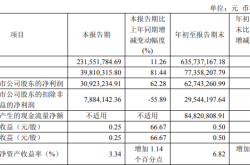
Recently, Xiaomi released its Q3 report, and profits have indeed fallen quite sharply—largely because memory costs this year have been exorbitant.
Among the segments, the automotive business delivered both expected and unexpected results. Expected, because it lost money again; unexpected, because it lost 3.4 billion yuan, setting a new high for the year.
In total, Xiaomi lost 9.1 billion yuan over the first nine months of this year, compared with a profit of 900 million yuan last year. The loss in the first three quarters alone is more than ten times last year's full-year profit. Surprising, isn't it?
For the specific figures, refer to the chart below. All data comes from official financial reports, so it is quite authoritative and reliable.
In Q1, 80,856 vehicles were delivered, with a loss of 3.1 billion yuan; in Q2, 104,199 vehicles were delivered, with a loss of 2.6 billion yuan; in Q3, 100,975 vehicles were delivered, with a loss of 3.4 billion yuan.
In total, 286,000 vehicles were delivered in the first three quarters, with total revenue of 65.6 billion yuan and total losses of 9.1 billion yuan (Note: this revenue and loss include the AI business, but the AI business is relatively small—the automotive business is the main contributor).
By this calculation, the average price per vehicle is 229,300 yuan, while the loss per vehicle is about 32,000 yuan. That is equivalent to Lei Jun having to dig 32,000 yuan out of his own pocket and lose it to buyers for every car sold.
Some netizens joked, does this count as Lei Jun losing money to make friends? He doesn't care about making money—right now he only cares about sales: make friends first, talk business later. After all, Xiaomi is big and wealthy and can afford the losses.
Of course, this statement is certainly not accurate. No matter how rich Lei Jun is, he certainly would not be willing to take money out of his own pocket to make friends this way. The reason for such a big loss this year is that circumstances forced his hand.
This year, memory and flash storage prices soared, other chips are also rising, and lithium battery prices have also risen compared with last year. According to previous media analysis, the cost of new energy vehicles this year has increased by about 15,000–20,000 yuan compared with last year. For this item alone, if Xiaomi sold 286,000 vehicles and the cost rose by 20,000 yuan per vehicle, that would amount to an extra 5.7 billion yuan.
In addition, this year Xiaomi developed the new-generation SU7, as well as the YU7 GT, YU7 standard version, and N70, N90. These R&D costs are certainly higher as well.
Moreover, competition across the entire automotive market this year has been too fierce. Everyone is fighting a price war. Xiaomi Auto did not raise prices, but instead cut prices through promotions. In particular, the YU7 standard version and YU7 GT version are really well priced, and the N70 and N90 were also launched at affordable prices. As a result, we can see that Xiaomi Auto's gross margin is declining.
So with costs rising, gross margin declining, competition fierce, and a price war breaking out, Xiaomi Auto naturally lost money—and the loss was really quite large.
Fortunately, Xiaomi Auto has far too much cash on hand. The chart above shows Xiaomi's cash reserves announced over the last 8 quarters. It can be seen that Xiaomi's cash position is very ample. After all, Xiaomi is not just an automaker, but also the world's third-largest phone manufacturer, and it also has a wide range of large and small home appliances, AIoT products, and internet business, which can continuously provide funds for Xiaomi Auto. Xiaomi can fully bear a temporary loss. Which other automaker has such confidence?
-
![]()
Million Satellites Approved: SpaceX to Move Data Centers into Space
-
![]()
Q1 Orders Top Ten Million! How Did Metalens Secure Over 100 Million Yuan in Financing?
-
![]()
Zhongrun Optics: New Facility Enters Capacity Ramp-Up Phase in First Half of 2026
-
![]()
AI Helps Citizens Mass-Produce FOIA Requests as Startups Mine Public Data, Straining Transparency Systems
-
Used Car Sales Stall as Small Dealers Begin to Band Together
-
![]()
Why Have Japanese Coffins and Robot Clothing Become Caoxian's Business?
-
Three Ministries Issue Landmark Document: The "Policy Floor" for Optical Communications Has Arrived
-
5. FSD V15 Major Upgrade: Deconstructing the Engineering Core UVE Behind Reality View