Optical Giant Changes Leadership: Transition and Challenges During a Period of Performance Pressure
 10/09 2026
 543
543
Recently, Schott announced that its current CEO, Torsten Derr, will step down on October 31 due to family reasons. The company has appointed Stefan Brandl as his successor, effective November 1.
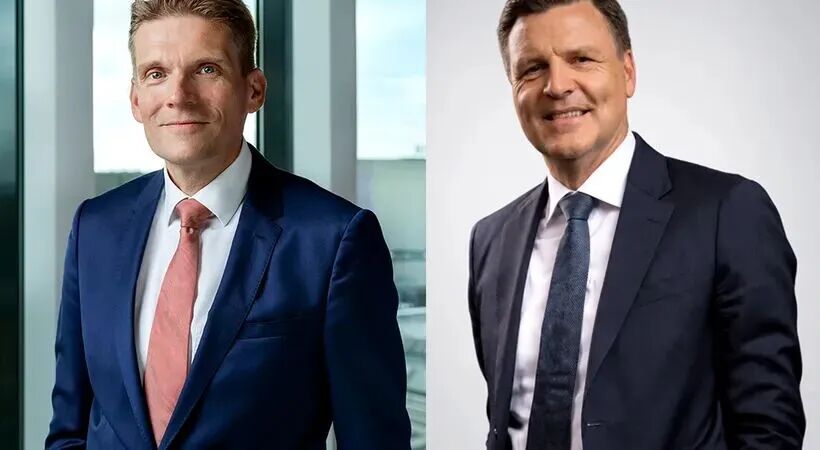
Torsten Derr (left) and Stefan Brandl (right)
In fact, Brandl's appointment comes at a critical juncture in Schott's strategic transformation. The company is experiencing significant profit pressures but is fully committed to emerging sectors such as AR and semiconductors.
Brandl has served as a member of Schott's supervisory board for many years, gaining a deep understanding of the company's strategy and its unique governance structure as a foundation-owned enterprise. Meanwhile, he has accumulated extensive practical experience in international CEO roles, leading motor and fan manufacturer ebm-papst Group from 2017 to 2021 and serving as Deputy Chairman and CEO of automotive component supplier Dräxlmaier Group since 2021.
Financial reports show that in the 2024/2025 fiscal year, Schott achieved global revenue of €2.83 billion, roughly flat compared to the previous fiscal year. EBIT (Earnings Before Interest and Taxes) plummeted from approximately €400 million in the previous fiscal year to €230 million, with net profit at €165 million. The profit decline was primarily driven by a combination of three factors: asset impairments in the precision materials and home appliances business segments, high energy costs in Germany, and uncertainties stemming from U.S. tariff policies.
Nevertheless, Schott's financial foundation remains robust, with a 68% equity ratio representing a net asset buffer of approximately €3.3 billion, providing ample space for strategic transformation. Despite profit pressures, Schott's strategic direction is exceptionally clear. The company has explicitly identified AR, semiconductors, and healthcare as its three key future growth markets and continues to ramp up investments globally.
While Derr's departure has been officially attributed to 'family reasons,' his tenure of less than two years is uncommon for a large industrial conglomerate. Some industry insiders point out that Schott's core challenge at present is not strategic direction but rather execution efficiency and the speed of profit recovery.
Brandl's background in the automotive industry may be precisely the capability the supervisory board values—a sector renowned for supply chain management and cost control. During his tenure at Dräxlmaier Group, he managed a major automotive component supplier with dozens of production bases worldwide. His experience in balancing cost and innovation within complex supply chains holds direct relevance for Schott's current situation, where the company must invest in the future while repairing profitability.
The optical sector is currently undergoing structural transformation. According to LightCounting forecasts, the market size for 100G and above pluggable optical modules is expected to surge from nearly $20 billion in 2025 to over $50 billion by 2030, with the CPO market size potentially reaching $10 billion by 2030. Additionally, AR glasses are widely regarded by the industry as the 'next-generation human-computer interaction interface.' IDC predicts that China's smart glasses shipments will reach 4.51 million units by 2026, a year-on-year increase of 78%, with the global market also expected to maintain rapid growth.
Against the backdrop of accelerating consolidation in the optical industry, Brandl must maintain technological leadership while more rapidly converting technological advantages into financial returns. The ultimate effectiveness of this leadership transition remains to be seen over time.
-
![]()
Case Amount Hits 201.085 Million Yuan! Optical Enterprise Faces Charges for Smuggling State-Prohibited Goods
-
![]()
Optical Giant Changes Leadership: Transition and Challenges During a Period of Performance Pressure
-
![]()
Better Not Expect Too Much from the Domestic Muse
-
The Race to Become the ‘First Video Large Model Stock’: Kling AI Eyes Hong Kong IPO, Targeting Launch as Soon as Next Year
-
![]()
Holiday Sales of Communication Devices Soar by 119.8%: Is It Volume or Pricing Driving Growth?
-
![]()
OpenAI Annual Revenue Disappoints, AI Sector Tumbles, Nvidia’s Market Value Plunges $168.4 Billion Overnight
-
Can an AI Smartphone That 'Automates Tasks' Go Too Far?
-
![]()
4G Intelligent Lighting Module Selection, Deployment, and Common Issues