14 investors compete for shares! SJTU-affiliated optics company LinDing Optics closes C+ round
 11/09 2026
 531

At a time when hard-tech investment is generally becoming more rational, a financing round in which multiple institutions competed for shares has quietly taken place in the ultra-precision optics sector.
LinDing Optics (Shanghai) Co., Ltd. has just completed its C+ round of financing. Investors in this round include Juntong Capital, Shanghai Science and Technology Innovation Group, Shanghai D0 Linghao Bay Venture Capital, Jinfu Investment, Lingang Lanwan Capital, Guoxin Venture Capital, Ningbo Integrated Circuit Industry Fund, Woyan Capital, Guoke Jiahe, Shanghai Science and Technology Innovation Origin Fund, Shanghai Free Trade Zone Fund, Guotai Haitong, Haitong Kaiyuan, Zhiwei Fund and other investment institutions—14 investors in total. Such intensive capital clustering is rare in the precision manufacturing field.
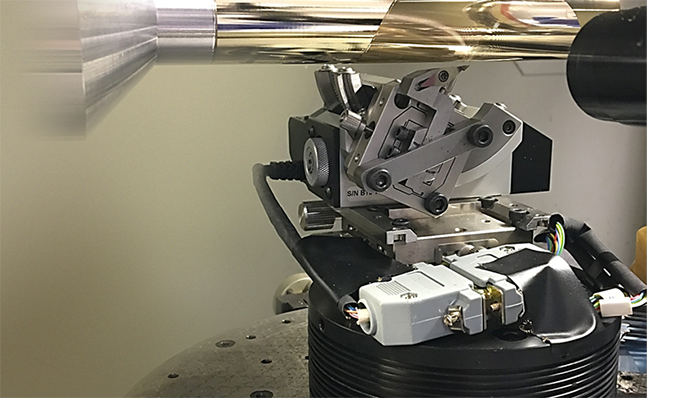
Founded in December 2019, the company was spun off from a scientific and technological achievement transformation project of Shanghai Jiao Tong University and is located in the D0 Linghao Bay area of Minhang, Shanghai. For a long time, overseas giants have held a large market share of high-end equipment, process software, and inspection systems in China's ultra-precision optics field. Most domestic enterprises have been confined to mid- and low-end component processing. To deliver a complete production-line-level solution, enterprises must simultaneously cross three practical thresholds: technology, process, and mass production.
Since its establishment, LinDing Optics has targeted this difficult market, aspiring to build an internationally competitive ultra-precision optical intelligent manufacturing platform. Serving multiple tracks including semiconductors, AR/VR, smart vehicles, and optometric medical care, it provides the industry with complete delivery solutions covering equipment, inspection instruments, and optical components. Its cooperation list already covers many leading enterprises at home and abroad.
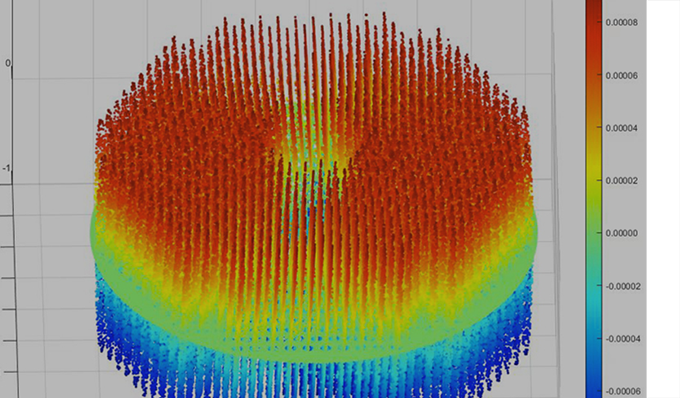
Capital enthusiasm never pays simply for laboratory technical reports. Around the time of this financing round, LinDing Optics' Rugao expansion project officially obtained approval. This project, with a total investment of 250 million yuan, will add 20 mu of land and purchase 104 sets of production equipment. In the future, it can produce structural parts for 100 sets of high-end optical complete machine systems annually. After reaching full production, it can add 200 million yuan in taxable sales, further expanding the manufacturing capacity of core semiconductor components. Industry practitioners familiar with the sector understand that ultra-precision optics is a typical asset-heavy track. R&D capability alone is far from enough. For products with nanometer-level precision, the hardest part is not making a single sample, but achieving stable, large-batch repeat production.
LinDing Optics has formed a "dual enclave" model of R&D in Shanghai and mass production in Rugao. Shanghai D0 Linghao Bay undertakes technical iteration and verification, while the Rugao base undertakes large-scale implementation and production, attempting to solve the industry chronic problem of many university science and technology innovation enterprises: "excellent sample performance, difficult mass production implementation." This is also a key practical factor that won over a group of investment institutions. Many peers in the industry feel deeply that many domestic optical startup projects are stuck between pilot testing and scale-up testing. Enterprises capable of connecting the entire chain from self-developed equipment and process development to large-scale manufacturing are rare samples in this track.
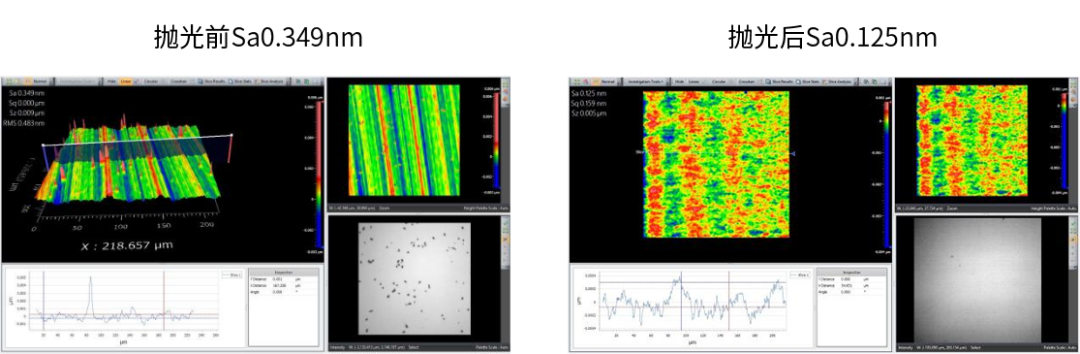
Behind the lively financing, Embodied Emergence observes that this round of capital clustering does not mean the ultra-precision optics track has reached a stage of easy wins. Rather, it precisely exposes the long-standing practical pain points of domestic industry. In the past, many university achievement transformation projects easily fell into two extremes. One type remained completely rooted in the laboratory with very high technical levels, but was never able to adapt to the real production needs of industrial customers. The other type of enterprise was eager to cater to the market and continuously lowered technical indicators in exchange for orders, gradually losing its original technical advantages. LinDing Optics' development path provides a reference. Enterprises with university backgrounds cannot survive relying only on the halo of scientific research. They must complete the full transformation from "turning money into knowledge" to "turning knowledge into industrial value," maintaining investment in underlying technology R&D while respecting the objective laws of manufacturing mass production.
Embodied Emergence believes that LinDing Optics' financing event has major significance at two industrial levels. At the first level, it confirms that the real value of university achievement transformation does not lie in the number of papers and patents, but in whether a complete closed loop of "R&D - pilot testing - mass production" can be built. The Yangtze River Delta enclave model of "R&D in Shanghai, manufacturing in surrounding areas" provides a replicable sample for a large number of hard-tech projects in the university system. Science and technology innovation resources are no longer confined within laboratory walls and can release strength outward along the industrial chain.
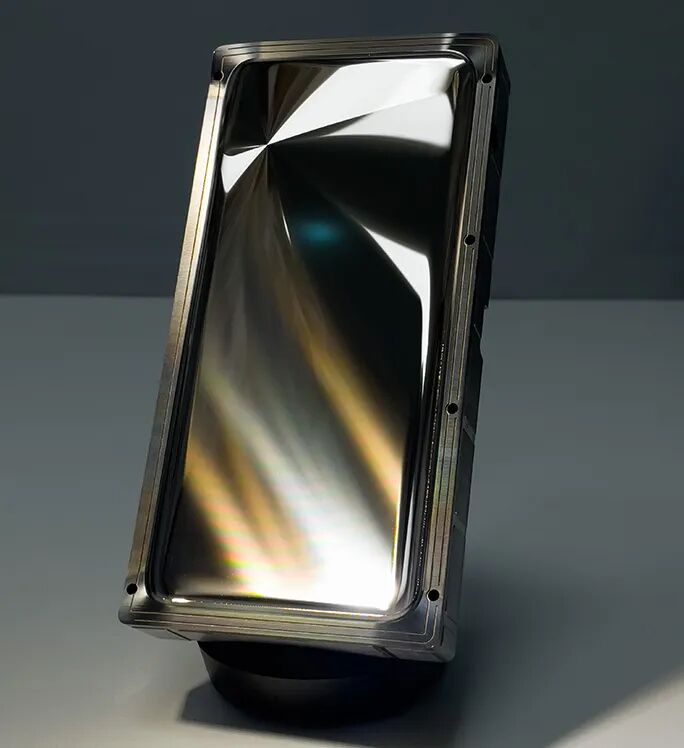
At the second level, capital markets voting with real money also remind the entire domestic optics industry that domestic substitution is not equal to simply imitating overseas products. The requirements of semiconductors and smart vehicles for optical components are no longer limited to the precision of a single component. Customers need more integrated production-line solutions combining complete equipment, processes, and inspection. What domestic enterprises compete on is not only the parameters of a single part, but also the comprehensive capability of the entire system.
Of course, capital clustering will also bring new tests. After obtaining funds, LinDing Optics needs to continuously balance the rhythm among R&D investment, production line expansion, and commercialization implementation. Competition in the ultra-precision manufacturing track is a long-distance race. Financing is only supplies. The real major test lies in whether, after expanding production capacity, the enterprise can continue to deliver stably and truly secure a place for domestic enterprises in the global high-end optics market.
-
So Embarrassing: Apple Alone Takes 50% of Global Phone Revenue—All Domestic Brands Combined Only 30%!
-
![]()
160 Million Views Earn Just 390,000 Yuan: Who Really Profits from AI Short Dramas?
-
Is Cost-Effectiveness Dead? Average Phone Prices Have Risen by 620 Yuan in a Year—Even Xiaomi Is Up 410 Yuan
-
One Headline, Big Headache: "Buy One Get One Free Across the Entire Lineup" Backfires—SAIC Audi Under Investigation
-
From "Competing on Parameters" to "Getting Things Done": AI Is No Longer Just "Pleasing Itself"
-
With a 5-Fold Hourly Wage Gap, Strike-Driven Pay Raises Are Speeding German Cars Toward Their Own Funeral
-
Global Annual Sales of Just 15,000 Units—Can Moving Production to India Cure Honda's EV Woes?
-
Maserati: 7,900 Vehicles Sold Annually With a Net Loss of €840 Million—Will a Chinese Automaker Acquire It?