The City in Goldman Sachs’s Spotlight: Ulanqab!
 09/15 2026
 549
549

Ulanqab, quietly amassing wealth, can no longer remain under the radar!
In August, Goldman Sachs released a report on China's data center industry, directly highlighting a small city in central Inner Mongolia—with a population of fewer than 2 million—as "one of the largest and fastest-growing AI computing hubs in the Asia-Pacific region."
Recently, a Bloomberg reporter visited the area. At a somewhat bustling intersection in eastern Ulanqab during a Friday lunch break, workers streamed out from a data center construction site, while vendors beside food trucks busily served up chicken and tofu skin. "Hundreds of people come every day—nonstop," she remarked.
Why is Wall Street setting its sights on Ulanqab?
From "China's Potato Capital" to "AI Computing Hub": How did Ulanqab’s transformation into an AI computing powerhouse catch the eye of global capital?
Some cities thrive on mineral resources; others gain prominence through manufacturing.
Ulanqab’s evolution resembles a subtle gear shift: once synonymous with potatoes, grasslands, and cool climates, it now increasingly evokes discussions about data centers, intelligent computing, and digital assets.
This is not merely a rebranding exercise.
As AI’s large-scale models enter a compute-intensive phase, factors such as electricity supply, land availability, network connectivity, cooling efficiency, and capital expenditure are reshaping a city’s industrial standing. Ulanqab has leveraged several previously overlooked resources to carve out a new niche in the industry.
Recently, Wall Street Journal, Caixin, and various overseas tech media outlets have turned their gaze toward Ulanqab.
On one hand, reports situate the city within the broader narrative of China’s AI infrastructure expansion and the global race for computing power. On the other hand, leading AI firms like DeepSeek are reportedly ramping up large-scale computing deployments in Inner Mongolia, prompting global investors to reassess the foundational elements of China’s AI ecosystem.
It should be noted that specific figures on investment scales, operational timelines, and self-built data centers for some companies are based on "reports" or planning-stage information and should not all be viewed as finalized projects.
What truly warrants attention is not an impressive projected figure, but whether Ulanqab can successfully navigate each layer—from contract signing and construction to operational launch, utilization rates, and industrial revenue.
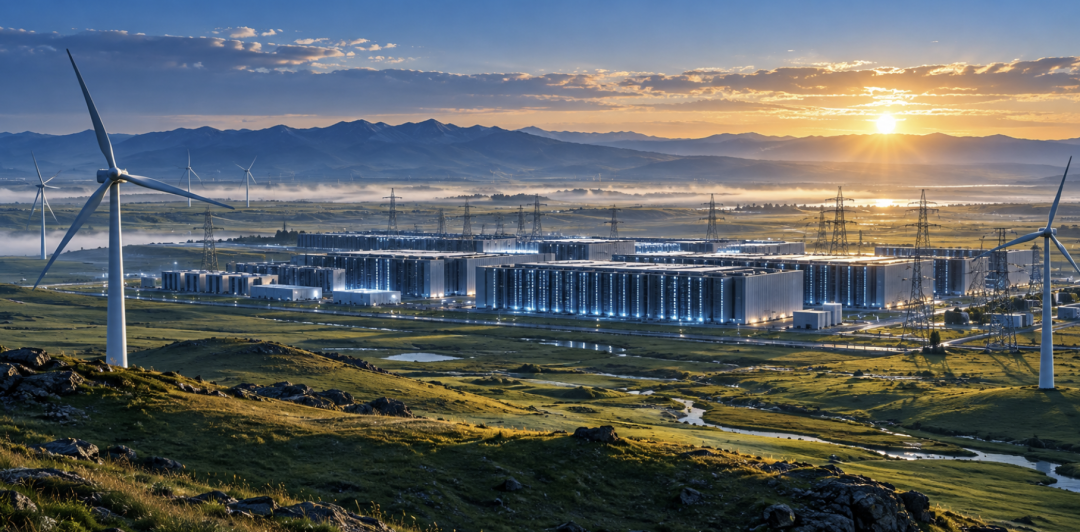

Why has Ulanqab suddenly captured Wall Street’s and overseas media’s attention?
The global AI industry is transitioning from model innovation to infrastructure development. While model parameters, training data, and application ecosystems remain vital, computing power supply has emerged as a critical bottleneck affecting model iteration speed and inference costs.
In the U.S. market, tech giants continue to ramp up AI-related capital expenditures, with data centers, electricity supply, and chip supply chains becoming key areas of focus for capital markets.
A similar trend is evident in China. The National Data Bureau revealed that by the end of 2025, China’s national intelligent computing capacity reached 1.59 million PFLOPS, with 42 ten-thousand-card intelligent computing clusters built and over 13.73 million standard racks of operational computing facilities in use.
Data from the China Academy of Information and Communications Technology also shows rapid growth in China’s computing infrastructure. Computing power is no longer just a backend resource for cloud providers but a foundational element for the entire AI industry.
Against this backdrop, Ulanqab offers three compelling aspects that resonate with capital markets.
First, its AI journey is not starting from scratch. The region began deploying cloud computing and data centers around 2016 and, after years of development, has established a solid foundation in infrastructure, network connectivity, and operational management.
Second, its proximity to Beijing and the Jing-Jin-Ji region positions it strategically. Training tasks can be concentrated in resource-abundant areas, while inference and real-time operations benefit from lower network latency.
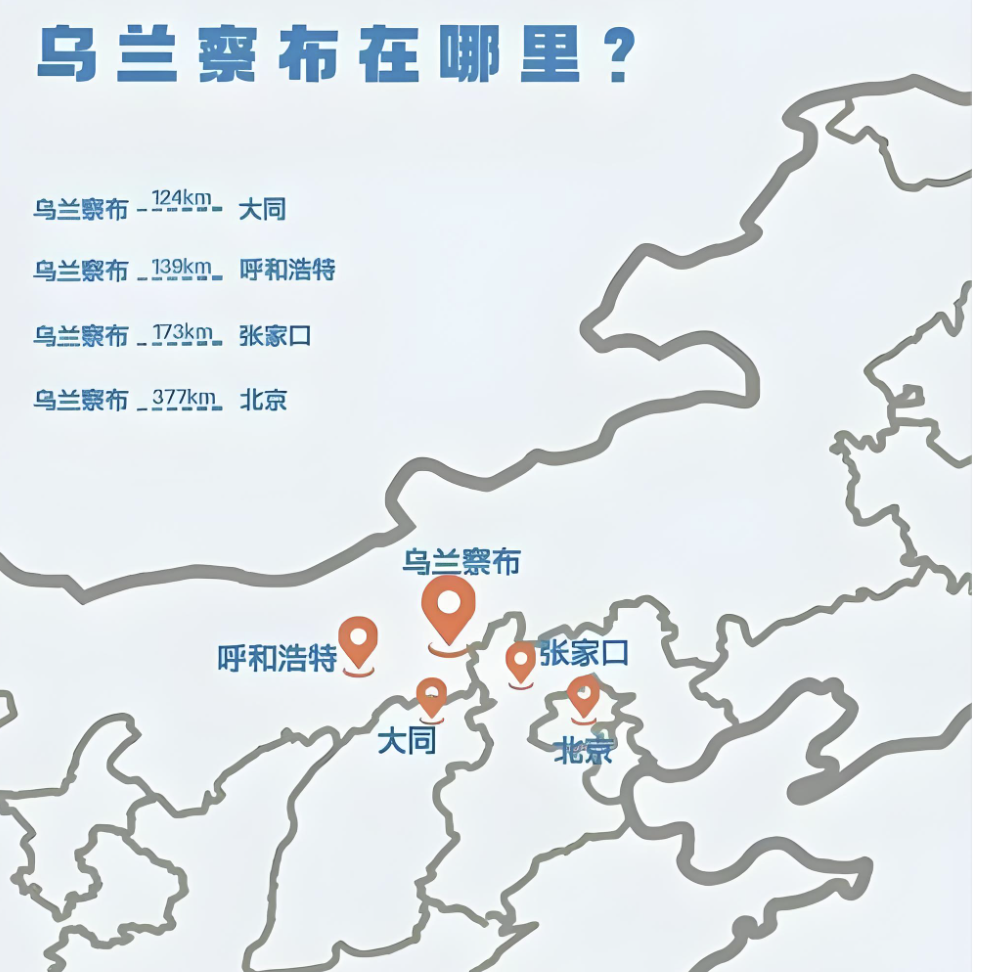
Located approximately 350 kilometers from Beijing, Ulanqab offers ample land and energy capacity compared to first-tier cities, without being entirely disconnected from core clients.
Third, AI computing power is increasingly a game of electricity and energy management. Ulanqab boasts strong wind and solar resources, with local initiatives exploring direct green power integration, hybrid wind-solar-storage systems, and coordinated computing-power-electricity operations.
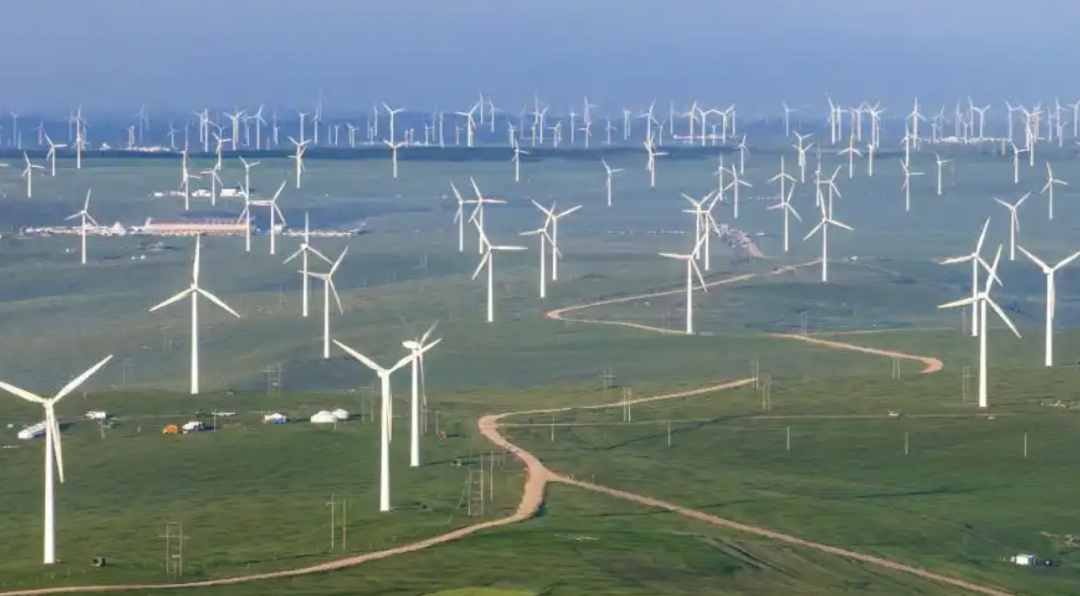
For data centers, electricity cost is just one factor; power supply stability, green energy ratio, carbon management, and long-term contracts determine the overall lifecycle costs of a project.
Why is Ulanqab well-suited for computing power development?
Located in central Inner Mongolia, Ulanqab serves as a vital hub connecting North China, Northwest China, and Northeast China.
Its traditional industrial base does not excel in high-end electronics manufacturing, which, paradoxically, reduces path dependency when selecting new industries.
The region sought a growth model not solely reliant on population scale or traditional manufacturing, making the computing power industry a crucial breakthrough.
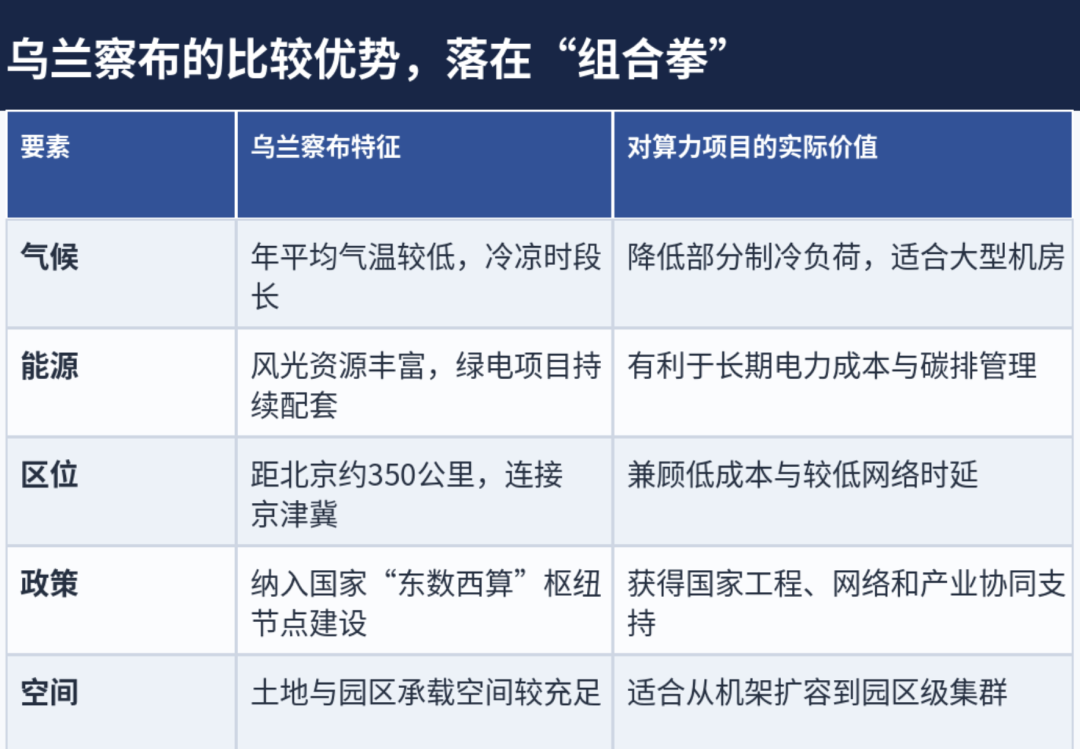
1. Cool climate eases cooling demands
While servers represent the most visible cost for data centers, electricity and cooling are equally critical over the long term.
Ulanqab’s longer cool seasons favor natural or hybrid cooling methods, reducing reliance on mechanical cooling systems.
Though not a decisive advantage, this "coolness" creates ongoing operational value in an era of high-power-density data centers.

2. Wind and solar resources enable green computing
Inner Mongolia is China’s premier wind and solar power base. Developing data centers in Ulanqab is not merely about relocating servers but integrating renewable energy consumption, energy storage, and computing power demands.
The China International Capital Corporation’s zero-carbon computing base, set to be operational by 2025, is publicly reported as a wind-solar-storage integrated green power direct-connected computing park. Equipped with 300,000 kW of wind and solar capacity and 45,000 kW of energy storage, it exemplifies the direction of coordinated computing-power-electricity development.
3. National projects drive infrastructure dividends
Following the launch of the "East Data, West Computing" initiative, the Inner Mongolia node handles non-real-time computing, offline analysis, and model training tasks for regions like Jing-Jin-Ji.
The significance of national hub nodes lies not just in prestige but in elevating network connectivity, energy efficiency, industrial coordination, and resource allocation to a higher level.
4. Local policies shift from "attraction" to "support"
Ulanqab has steadily advanced data center cluster development in recent years, focusing on supporting infrastructure such as power security, green power trading, park facilities, project approvals, talent recruitment, and computing applications.
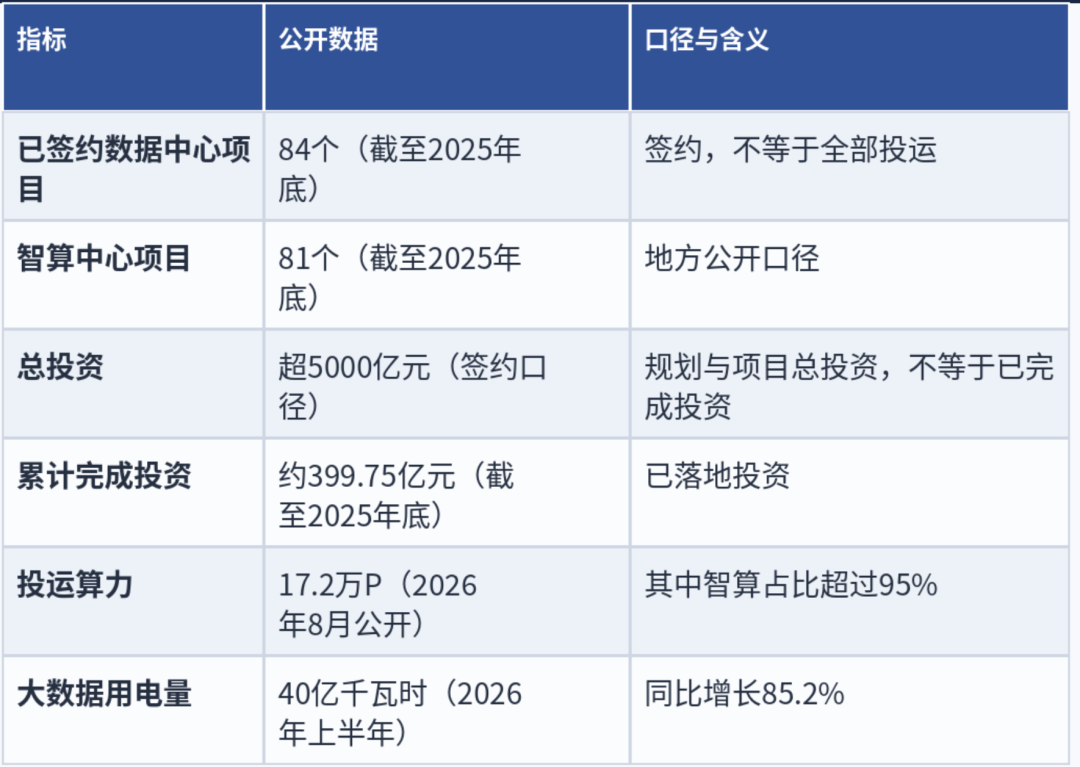
Public data shows that by the end of 2025, the city had signed 84 data center projects, including 81 intelligent computing center projects, with total investments exceeding 500 billion yuan and cumulative completed investments reaching approximately 39.975 billion yuan.
These figures require context.
The 500 billion yuan represents total signed project investments, while the 39.975 billion yuan reflects cumulative completed investments; the two cannot be directly equated with current local industrial revenue.
The city’s true potential will ultimately be validated by operational server racks, stable clients, sustained utilization rates, and reliable cash flows.

From "signed projects" to "industrial formation": How far has Ulanqab progressed?
Recent public reports indicate that Ulanqab’s industrial scale has advanced from early-stage data center construction to concentrated expansion of intelligent computing centers.
Data from August 2026 shows that over 100 data center projects have landed in the city, with operational computing power reaching 172,000 PFLOPS, intelligent computing accounting for over 95%, and a year-on-year increase of 112%.
In the first half of this year, fixed asset investments in the computing power industry and big data electricity consumption both maintained rapid growth.
Caixin, citing data from the Ulanqab Municipal Bureau of Statistics, reported that local internet data services (i.e., big data electricity consumption) reached 4 billion kWh in the first half of 2026, up 85.2% year-on-year.
While rapid electricity growth signals increasing server and data center loads, it also raises questions: How much of this power has been translated into effective computing output, orders, and local economic value?
In terms of enterprise types, Ulanqab attracts a diverse range of companies.
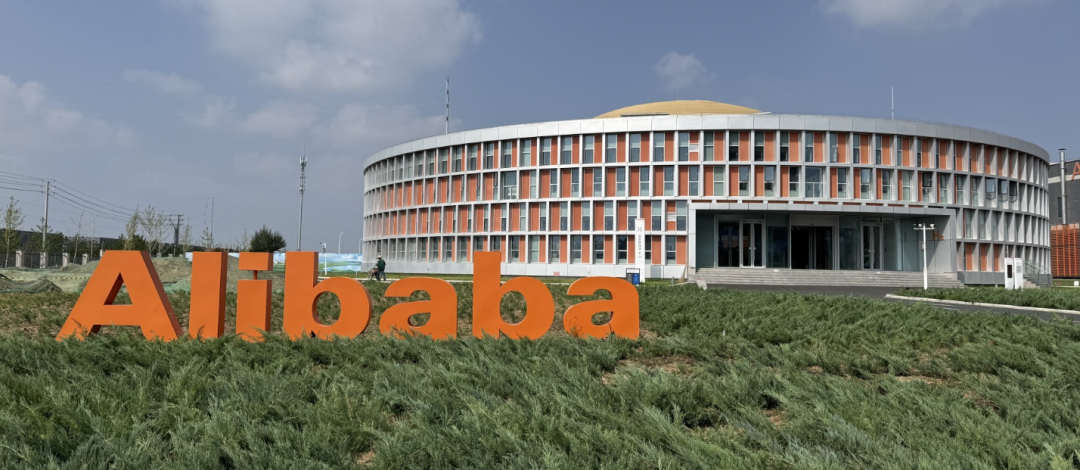
One category includes cloud services and computing infrastructure firms, such as Alibaba Cloud, Huawei, and related entities, which bring cloud platforms, servers, networks, and software ecosystems.
Another category comprises data center operators like ChinaData Group, GDS, 21Vianet, and China International Capital Corporation, which focus on park operations, cabinet services, computing power hosting, and client delivery.
A third category involves internet platforms and AI model companies, such as Kuaishou and ByteDance, whose operations inherently require large-scale computing resources.
For model firms like DeepSeek, having more stable and controllable computing power supplies helps reduce reliance on external cloud resources, though specific construction timelines, investment entities, and chip configurations remain subject to formal corporate disclosures.
Envision Technology’s deployment of the Xinghe Base in Ulanqab has opened new imaginative space for the industrial chain.
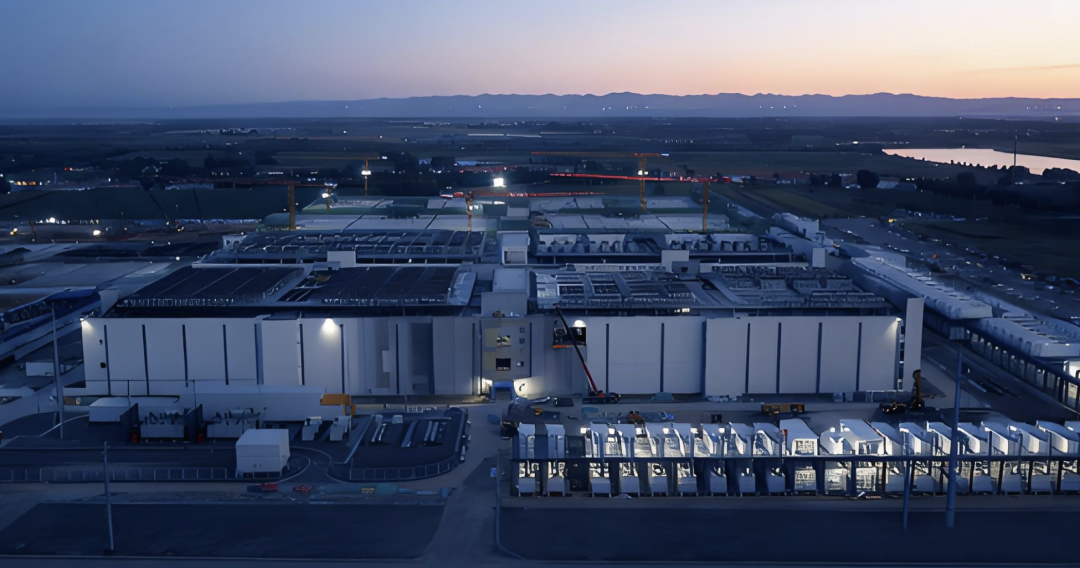
Public reports of the base’s official launch in August 2026 highlight its million-card parallel computing capacity, green power supply, and large-scale AI infrastructure.
However, planned parallel capacity does not equate to simultaneous full-load operation; investors and local governments must continue monitoring actual utilization rates.
Figure: Enterprise deployment matrix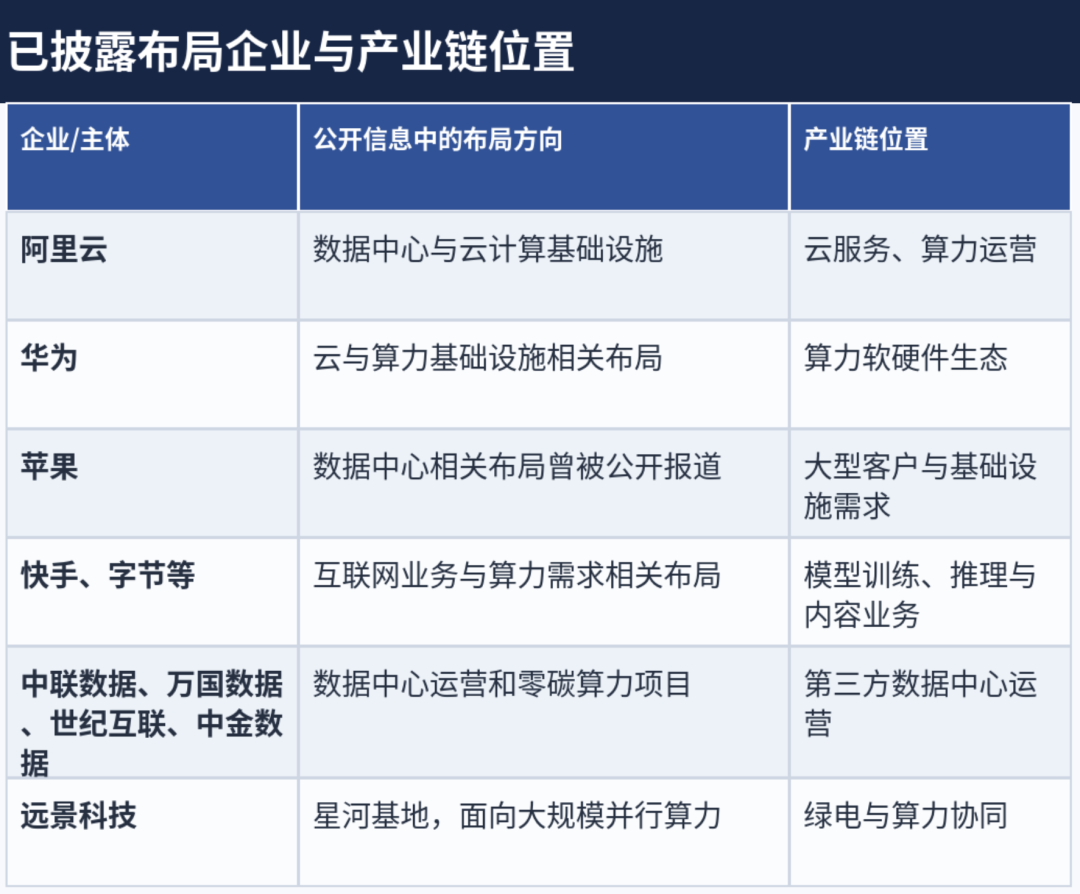
The spillover effects on surrounding cities cannot be viewed through data centers alone
Data centers are not labor-intensive industries but generate a long supporting chain.
First come power facilities, energy storage, substations, communication networks, and cooling equipment; next, server operations and maintenance, data center management, security services, network operations, and engineering construction; further downstream lie model training, industrial simulation, financial risk control, autonomous driving, and government applications.
Ulanqab’s spillover impacts extend in at least three directions.
First, it can form computing power and application synergy with Hohhot. Ulanqab is better suited for large-scale infrastructure, while Hohhot possesses universities, research institutions, administrative, and industrial service resources, creating a combination of resource and application centers.
Second, it can drive computing power demand spillover to Jing-Jin-Ji. Beijing does not lack clients and technology but faces tighter constraints on land, electricity, energy consumption quotas, and data center expansion space.
Ulanqab can undertake some training, rendering, backup, and offline computing tasks, forming a computing power division of labor between "eastern demand and western supply."
Third, it can prompt the energy industry to rediscover clients. Previously, wind and solar power’s primary value lay in grid connection; now, large computing parks have become stable major clients.
Computing power can aid in the absorption of renewable energy, but the prerequisite is true synergy between the power grid, energy storage, dispatching, and data center loads, rather than simply placing two signs together.
, computing power service revenue and tax contributions, and the growth in local enterprises and talent.</p>
<p>Only when servers are operational in data centers, orders are increasing on platforms, and technical personnel are staying locally, does computing power genuinely transition from an engineering project into an industry.</p>
<p><img src=)
True 'transformation' lies in converting resources into enduring capabilities
The story of Ulanqab merits recognition, yet it also necessitates a level-headed approach.
What is commendable is that a city with a strong traditional resource and agricultural profile has seized the opportunity presented by the 'East Data West Calculation' initiative and the AI infrastructure upgrade, leveraging its cool climate, green power, land, location, and policies to forge a distinct identity in the computing power industry.
It did not wait for traditional industries to naturally upgrade but actively sought new avenues for growth.
What calls for a level-headed approach is that the prosperity of the computing power industry does not guarantee high returns for all projects.
The planned scale must undergo construction cycles, the construction scale must be validated by operational status, and the operational scale must be validated by customer orders and utilization rates. The true competition for cities is not about the size of their data centers but about who can consistently provide stable, affordable, green, and schedulable computing power services.
For Ulanqab, the key focus in the next phase should not solely be on expansion but also on enhancing efficiency.
It should continue to evolve from being a 'computing power factory on the grasslands' to offering comprehensive computing power services, energy management, software and hardware adaptation, and industry applications.
Only by enabling more model companies, industrial enterprises, and developers to access usable computing power here and allowing local talent and enterprises to have higher added value in the industrial chain can Ulanqab's transformation be truly complete.
In this regard, Ulanqab's transformation was not an overnight miracle but the culmination of long-term choices aligning with industrial opportunities.
The greatest lesson it offers to other cities is that the key to urban competition lies not just in the resources a city possesses but in its ability to organize those resources into a set of sustainable commercial capabilities.
On China's computing power map, Ulanqab has transformed from the 'Cloud Valley on the Grasslands' into a name that cannot be overlooked.
It proves one thing: in the AI era, the size of a city is inconsequential; what matters is whether you can find that irreplaceable position.
Stay calm and keep moving forward.
What are your thoughts on Ulanqab's transformation in the computing power race? We look forward to your civil and rational insights in the comments section.
Disclaimer: This article is solely for financial hotspot analysis, with data and references sourced from public queries, company announcements, and Huitong IFinD. The views expressed are for reference only and do not constitute any investment or consumption advice.
#FinancialHotspots #InDepthAnalysis #BusinessFinance #InvestmentBankingCircle #ListedCompanies #PrimaryMarket #IPO #AI #Ulanqab Thanks for reading patiently. Feel free to give a 'Like' if you find it helpful.
-
![]()
Goldman Sachs Sets Its Sights on a City: Ulanqab!
-
![]()
The City in Goldman Sachs’s Spotlight: Ulanqab!
-
How Should Gas Stations Adapt Amid Declining Fuel-Powered Vehicle Sales?
-
![]()
Should GAC Shareholders Be Concerned: FAW Opts Not to Invest Cash but Lightens Its Joint Venture Load to Become Second-Largest Shareholder!
-
![]()
Wuling, a Two-Decade Overseas Market Pioneer, Appoints Han Dehong as Party Secretary
-
![]()
Trading Suspended! GAC Group Launches Significant Restructuring
-
Cloud Computing in the Sky: Satellites Evolve from Eyes to Brains
-
Cloud Computing in the Sky: When Satellites Evolve from Observers to Processors