Changsha Offers a 'New Solution' to China's Robot Industry
 09/30 2026
 502
502
Can the Manufacturing Base Support Industrial Ambitions?
In September 2026, the global embodied AI industry reached a turning point.
Goldman Sachs significantly raised its forecasts in its latest Global Physical AI Report, projecting that global humanoid robot shipments will surge from approximately 75,000 units in 2026 to around 890,000 units by 2030—up from a previous 2030 estimate of just 256,000 units. Deutsche Bank revised its 2026 global shipment forecast from 17,500 units to approximately 50,000 units, expecting 700,000 units by 2030, and identified China as the core engine of global growth...
Chinese manufacturers are leading this mass production race. Counterpoint Research data shows that global humanoid robot shipments exceeded 22,000 units in the first half of 2026, up nearly 300% year-on-year. Zhiyuan ranked first with 9,700 units, Unitree second with over 7,000 units, and Galaxy General third with over 1,100 units.
As the industry's evaluation criteria shift from 'who can build it' to 'who can build more, cheaper, and more reliably,' a city is presented with an unexpected opportunity to re-enter the fray.
Changsha, not the most prominent name in embodied AI discourse, is entering the national industrial landscape in a way that surprises the market.
01 Differentiated Approach in the Mass Production Race
Mass production has long been recognized as a challenge in the robotics industry.
According to Goldman Sachs' research on multiple Chinese robotics companies, a typical proof-of-concept (POC) cycle requires 3–6 months, averaging 2–3 rounds of debugging before entering small-scale factory testing, usually not exceeding 50 units.
Many robotics projects stall when scaling from dozens to larger volumes, as costs, yield rates, and stability simultaneously come under pressure. The primary cause is the insufficient maturity of core components.
Wang Chuang, President of Zhiyuan's Business Division, noted that only about one-third of embodied AI components are relatively mature, such as LiDAR. Critical parts like dexterous hands, force sensors, joints, and motion control remain in early iterative stages.
This is not an algorithm issue but an engineering one. Engineering capabilities—a 'hidden asset' accumulated by China's manufacturing sector over three decades—are attached to specific manufacturing clusters, supply chain networks, and production line experience.
As industry competition shifts from algorithmic prowess to mass production delivery, cities with deep manufacturing expertise are beginning to shine. Changsha is one of them.
In Changsha, this engineering capability is most visibly embodied by Lens Technology. This 'Apple supply chain giant,' which started with smartphone glass covers, identified robotics as a core growth sector in 2025 and took a path distinct from most robotics companies.
It does not build its own brand but aims to become a hardware base for robotics firms, applying consumer electronics-grade precision manufacturing and quality control to robot assembly via OEM/ODM models. Data shows that in 2025, the company delivered over 3,000 humanoid robots and more than 10,000 quadruped robots. With its Yong'an campus and Thailand base capable of producing 500,000 units annually, core component scale is expected to multiply by 2026.
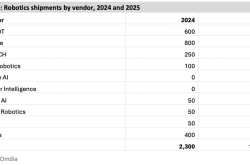
Globally, according to Omdia's *General-Purpose Embodied Robot Market Radar* report, total humanoid robot shipments are projected to reach 13,000 units in 2025. Chinese firms dominate: Zhiyuan leads with 5,168 units (39% global share), followed by Unitree with 4,200 units.
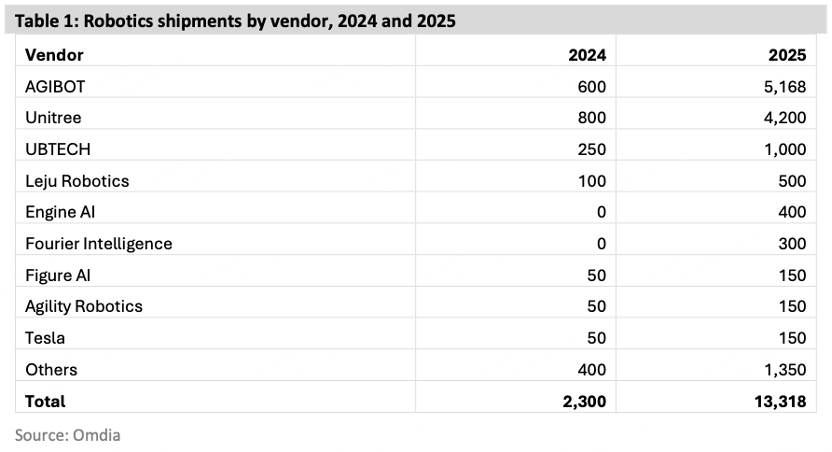
(Source: *General-Purpose Embodied Robot Market Radar*)
By this standard, Lens's 3,000-unit shipment places it in the global top tier. However, while a manufacturing base solves the 'can we build it' question, robots must undergo rigorous validation in real-world conditions. In Changsha, Zoomlion plays this role.
At the Yuelu Conference on September 24, Zoomlion showcased embodied AI robot hardware, software, and application scenarios independently developed by its subsidiary, Zhongke Yungu.
Zoomlion has built an autonomous, secure, and controllable industrial internet platform connecting over 1.8 million construction machinery, production line equipment, and park devices. It operates 21 smart factories, 460+ smart production lines, and deploys over 3,000 industrial robots, with production line automation exceeding 90% and AI scenario application rates over 80%.
She Lingjuan, in charge of Zoomlion's robotics business, stated that the team selected over 200 detailed workstations for robots to learn and test, but currently only a dozen are piloted. Factories do not lower standards for in-house robots; trial deployment in their parks is just the first step. When deployed at client sites with different workpieces and processes, success depends on prior experience.
Zoomlion represents the path of leading enterprises using their own scenarios to drive technological iteration. In Changsha, startups like VisionBit Robotics take real industrial scenarios as their starting point, achieving cross-industry scalability through single-point breakthroughs.
Headquartered in Changsha with an R&D center in Shanghai's Robot Industrial Park, VisionBit built a steel plate cutting and sorting smart production line using the Kunwu platform, reducing debugging time from over six months to under two weeks.
After implementation at Sany Heavy Industry, the line cut manual labor by over 60%, boosted capacity by 300%, and enabled precise online identification, flexible sorting, and intelligent stacking of various irregularly cut pieces, adapting to complex environments and small-batch, multi-variety flexible production.
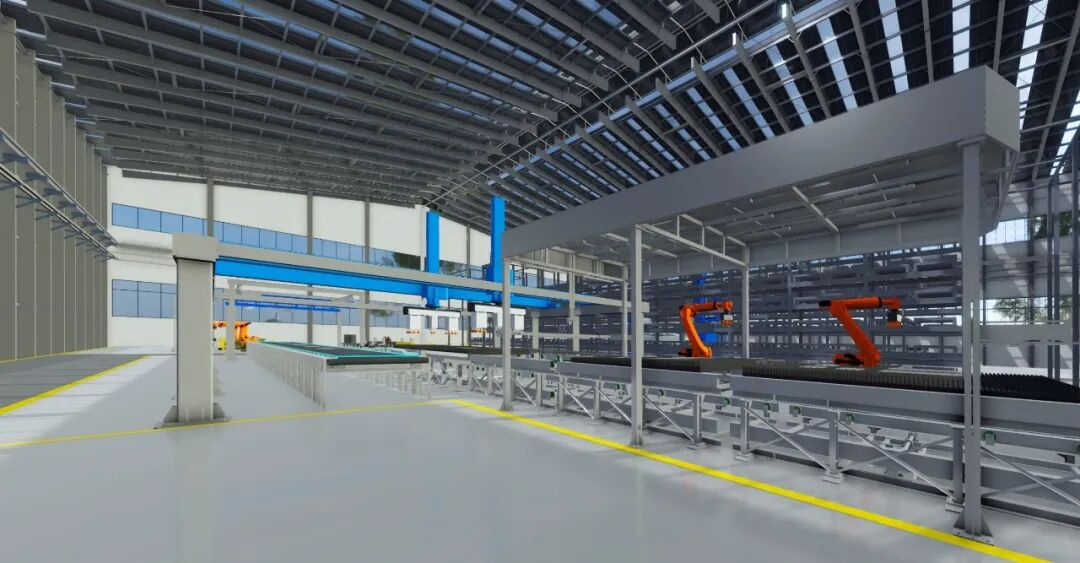
(Source: VisionBit Robotics)
Liu Tingting, VisionBit's Deputy GM, made a crucial point: 'All our technologies grow from production lines.' This forms the underlying logic of Changsha's approach—not building robots in labs and then finding scenarios, but 'taming' them in real-world conditions.
Scenarios matter because embodied AI models must be 'tested' in the real physical world. Real-world operational data—including friction, tolerances, lighting, stress, and sudden failures—cannot be fully simulated.
Changsha boasts China's highest density of heavy-duty industrial scenarios, an easily underestimated variable in the mass production race. While algorithms, talent, and capital dominate visible competition, the speed of real-world data accumulation may be the hidden barrier to crossing the mass production threshold.
02 Changsha's Position in the Ecosystem Density Contest
Manufacturing bases and real-world scenarios form the foundational layer of industrial ecosystems. As embodied AI competition shifts from isolated technological breakthroughs to systemic industrial collaboration, a deeper 'variable' emerges: ecosystem density.
It measures the connection efficiency among upstream/downstream firms, professionals, shared platforms, and real-world scenarios within a region, determining whether manufacturing capabilities can be fully unlocked. Shanghai, Shenzhen, and Beijing have each forged distinct paths. Shanghai's Zhangjiang Robot Valley exemplifies using ecosystem density to accelerate innovation.
The park hosts hundreds of embodied AI firms. Legend has it that 'a complete robot can be assembled by visiting different floors, and engineers from various companies can solve data challenges over coffee.' Its supporting supply chain platform enables 'one-day matching, three-day prototyping, and one-week pilot production.' This density forms a closed loop for R&D, testing, iteration, and deployment, drastically reducing innovation costs and cycles.
Shenzhen has systematized 'connection' even further. Its *2025–2027 Action Plan for Technological Innovation and Industrial Development of Embodied AI Robots in Shenzhen* proposes building a public service platform matrix, including open innovation platforms, public technology service platforms, and industrial innovation service carriers like concept verification centers and pilot-scale bases.
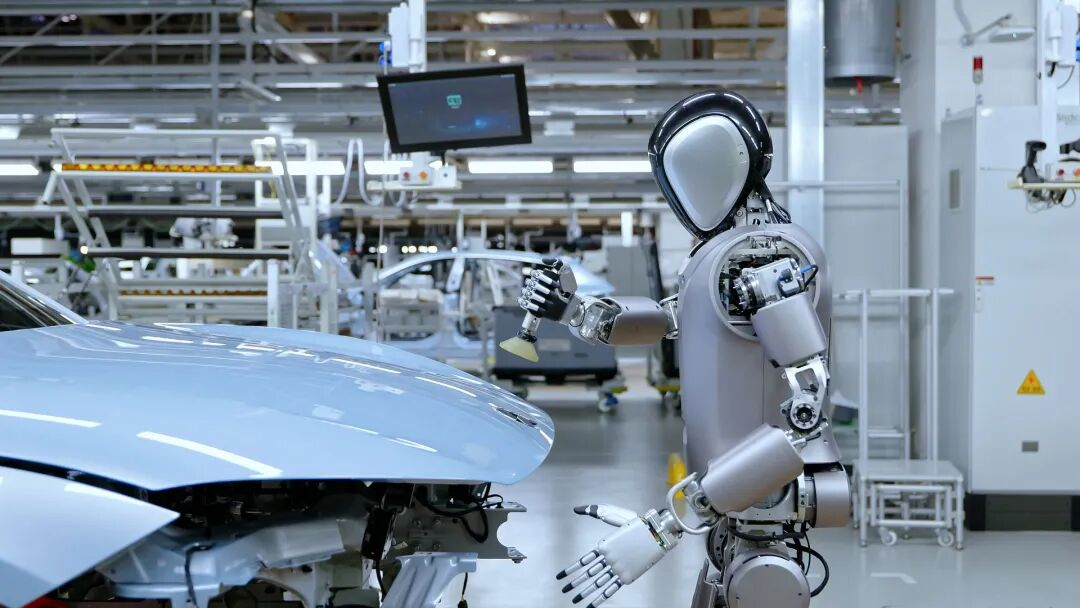
(Source: UBTECH)
In September 2026, Shenzhen released the *2026–2028 Work Plan for Promoting High-Quality Development of the Intelligent Robot Industry*, proposing a 'Two Zones, Two Centers' collaborative development pattern. By 2028, it aims to build the world's most influential intelligent robot industry hub, with local sourcing of core components forming an efficient 'half-hour supply circle.' These 'unremarkable' infrastructures address shared costs that individual firms struggle to bear.
Beijing has taken a more 'cognitive' route. Among the three core areas determining robot cognition and decision-making, Beijing hosts 36 key enterprises, 11 valued at over RMB 10 billion.
Galaxy General Robotics, with the world's first integrated 'brain-cerebellum-neural control' end-to-end embodied large model, boasts a RMB 20 billion valuation; Paxini Perception Technology holds the world's only hundred-billion-scale real-world full-modality dataset...
In contrast, Changsha currently has over 300 humanoid robot-related firms and 300 AI key enterprises, covering ~80% of the full industrial chain—from upstream Wanxin Precision's harmonic reducers to midstream Lens's robot assembly and downstream Zoomlion's scenario applications, with 'eyes, brains, and hands' fully equipped.
However, as the *Changsha Embodied AI Industry Innovation Map* admits, 'core links still lag behind industry leaders, and it lacks ecosystem-leading anchor firms.'
Manufacturing bases and real-world scenarios are Changsha's strengths, but ecosystem density and talent supply are weaknesses. The value of strengths depends on addressing weaknesses. Without sufficient ecosystem density, manufacturing bases risk becoming 'contract manufacturing workshops' rather than industrial innovation hubs.
Wang Yaonan, an academician at the Chinese Academy of Engineering, offered pragmatic advice at the Hunan Intelligent Robot Industry Development Conference: 'Focus on specialized robots before general-purpose ones.'
In his view, general-purpose humanoid and household robots remain distant. Over the next five years, Hunan should prioritize specialized robots for industrial manufacturing, warehousing, construction equipment, agriculture, mining, and power sectors before pursuing general-purpose models in the following decade.
This path aligns closely with Changsha's industrial strengths. Hunan hosts five national advanced manufacturing clusters and 22 national SME specialty clusters, both top nationwide. Advanced manufacturing accounts for 51.7% of its manufacturing sector, providing extensive, complex, and continuous application scenarios for intelligent robot development.
As the river flows day and night, a new chapter begins. China's embodied AI landscape now features two typical strategic logics: Beijing-Shanghai-Shenzhen-Hangzhou's 'talent + capital' aggregation model, betting on breakthroughs in general-purpose AI through high valuations, dense algorithmic talent, and large model infrastructures; and Changsha's 'scenario + manufacturing' interlocking model, betting on faster data accumulation in the physical world through robust manufacturing bases and real-world operational scenarios.
If the latter path proves viable, embodied AI competition will shift from 'talent poaching' to 'scenario poaching,' offering opportunities to all manufacturing-centric cities. Then, urban competition logic will rewrite—victory will no longer belong solely to 'cities with AI talent' but also to 'cities with manufacturing bases and real-world scenarios.'
This race has no referees, only time.
* Images sourced from the internet. Please contact for removal if infringement occurs.
-
![]()
The RSI Craze Hits Embodied AI: Ideals, Realities, and an Unreachable Endpoint
-
![]()
Queen of Chips Teams Up with AI Godmother to Take on Nvidia's Huang
-
![]()
Changsha Offers a 'New Solution' to China's Robot Industry
-
![]()
Extreme Stock Surge! GAC Group and FAW Group's Bold Move Outshines Merger
-
New Retail: A Brand-New Launch
-
![]()
Li Xiang Seeks to Replicate Xiaomi’s ‘Open Ecosystem’ Model, While CATL Aims to Be the ‘Huawei’ of the Battery Sector
-
![]()
AITO Unveils New Model: Pre-Sales Launch on September 30 with Native L3 Autonomous Architecture
-
![]()
Starting at 118,800 Yuan! Lynk & Co Unveils New Car Model: Official Release Set for September 28