After Two Decades of Anticipation, Wuhan and YMTC Face a Cooling A-Share Market
 10/26 2026
 529
High Chip Prices, Short Cycles: Wuhan Faces Challenges
Memory chip prices are on the rise, yet storage giants are no longer rushing to go public.
On October 23, SK Hynix announced the suspension of Pre-IPO financing and IPO plans for its U.S. subsidiary, Solidigm. This storage company, once rumored to be valued at up to $150 billion and expected to raise $15 billion, has decided to temporarily withdraw from the capital markets.
Recent capital market volatility, ongoing adjustments in semiconductor stock prices, and regulatory scrutiny from South Korean authorities over dual listings and minority shareholder rights have made the IPO unfavorable for SK Hynix.
On the same day, Dongshan Precision, which is hurrying to list on the Hong Kong Stock Exchange, experienced a lackluster subscription.
According to Zhitong Finance, by the end of subscription on October 23, brokerages such as Futu and Tiger Brokers had secured only HK$418 million in margin financing subscriptions for Dongshan Precision, equivalent to just 0.39 times the initial public offering size. Although 20 cornerstone investors had pre-committed to subscribe to approximately $680 million worth of shares, the allure of the AI supply chain was no longer as compelling for investors participating in financing for new listings.
One company, seeing poor market conditions, decided to delay listing. Another, already at the issuance stage, found investors less enthusiastic than expected. Meanwhile, in Wuhan, a more closely watched storage giant has not even reached the pricing stage for its listing.
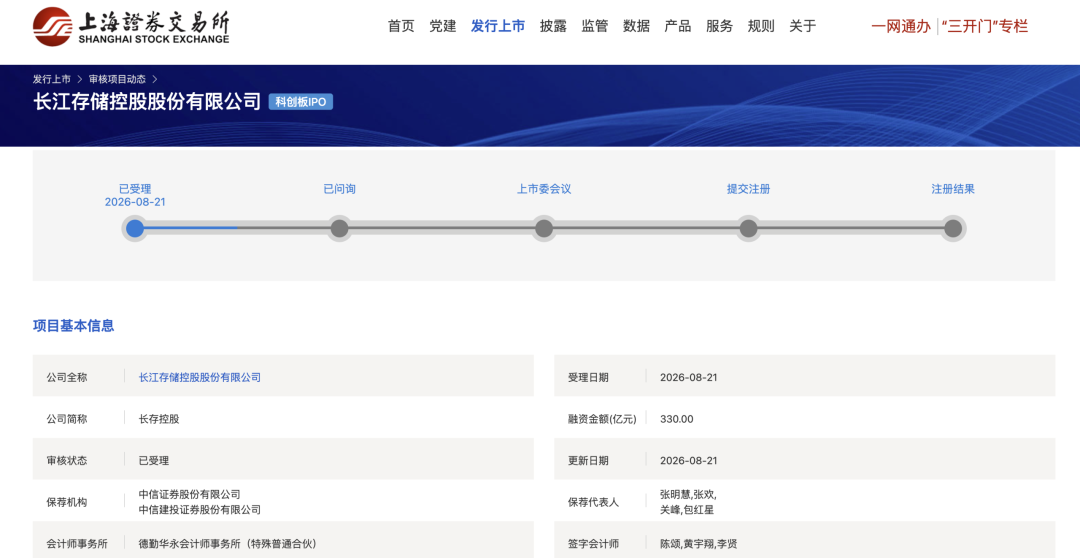
On August 21, YMTC Holdings' IPO application was accepted by the Shanghai Stock Exchange, with plans to raise 33 billion yuan. More than two months later, the review remains at the inquiry stage.
Wuhan has waited nearly two decades for this moment. However, just as YMTC has reached the doorstep of the capital markets, investors, who once enthusiastically welcomed semiconductor companies, seem to be clearing the table.
01 Changxin Is Full, YMTC Hasn't Even Seen the Table
Rewind three months, and YMTC might have faced a very different scenario.
On July 27, Changxin Memory Technologies, a leading domestic DRAM manufacturer, officially listed on the STAR Market with an issue price of 8.66 yuan. On its debut, the stock closed at 49 yuan, surging 465.82%. More remarkably, Changxin's market capitalization reached 3.28 trillion yuan that day, surpassing Industrial and Commercial Bank of China to top the A-share market, with a full-day trading volume of 141.2 billion yuan.
Investors nearly broke down the door to get a piece of this capital feast.
Data shows that 9.4288 million investors participated in Changxin's online subscription, with over 816.9 billion shares subscribed, resulting in a lottery win rate of just 0.47%. Despite the issuance size setting a STAR Market record, it failed to dampen investor enthusiasm. At the closing price on the first trading day, a successful subscription of 500 shares would have yielded a profit of 20,170 yuan.
Institutions were equally active, with 10,907 accounts managed by 285 offline investors participating in the subscription, totaling over 12 trillion shares subscribed. Leading quantitative hedge funds like Nine Chapters Capital and High-Flyer Capital also appeared on the allocation list.
Ultimately, Changxin raised approximately 66.6 billion yuan through its IPO, setting a STAR Market record for issuance size.
For Hefei's state-owned assets behind Changxin, this was a capital feast a decade in the making.
Public information shows that when Changxin was founded in 2016, Hefei's state-owned assets played a crucial role in its initiation and support. Subsequently, the company received continuous funding from local industrial capital, the National Integrated Circuit Industry Investment Fund, and other investment institutions, gradually establishing a domestic DRAM manufacturing system.
By the time Changxin's market capitalization exceeded 3 trillion yuan on its debut, the equity held by Anhui and Hefei's relevant state-owned asset systems had received a trillion-yuan market valuation. From its inception in 2016 to topping the A-share market in 2026, Hefei's industrial capital behind Changxin had caught a substantial windfall.
But the capital markets' dining table can turn quickly. From July 1 to October 22, the STAR 50 Index plummeted 40.85%, while the ChiNext Index fell 40.66% and the Shanghai Composite Index dropped 10.66% over the same period.
Memory concept stocks, which had been rising for over a year, were hit particularly hard. During this period, Biwin Storage fell 67.73%, GigaDevice fell 66.04%, Jiangbo Long fell 65.62%, and Demingli fell 63.84%.
Just a few months earlier, AI storage concept stocks were highly sought after by investors. A few months later, their stock prices had collapsed.
Changxin was not spared. By October 23, its closing price was 42.85 yuan, down more than 30% from its August peak of 61.80 yuan.
In fact, investor sentiment has soured not just toward A-share memory stocks but across all tech sectors.
Take Dongshan Precision as an example. The company is considered one of the top performers in the ongoing revaluation of the AI supply chain.
In September 2025, Dongshan Precision completed its acquisition of Solarspectrum Optoelectronics, formally entering the optical module business. In the first half of 2026, its optical module revenue reached 5.351 billion yuan, accounting for about 19.2% of total revenue, becoming a new growth driver. Additionally, its high-end PCB and electronic circuit businesses are key links in the AI server supply chain.
Based on market conditions a few months ago, these factors would have attracted significant capital attention. However, by October 20, when Dongshan Precision launched its Hong Kong IPO, the market had changed.
Dongshan Precision's maximum issue price in Hong Kong was set at HK$93.8, but by the end of subscription on October 23, its margin financing subscription multiplier was only 0.39 times. In contrast, Weiyi Intelligent Manufacturing, which also closed subscriptions during the same period, saw its margin subscription oversubscribed by more than 31 times.
The reason for the icy subscription was straightforward: investors were unwilling to pour more money into a tech stock that had been in a sustained decline.
On October 23, Dongshan Precision's A-share closed at 114.22 yuan, down nearly 60% from its 52-week high of 280.08 yuan. For an AI supply chain company preparing to list in Hong Kong, a declining stock price in its home market naturally dampened investor enthusiasm.
Even in overseas capital markets, once-promising AI assets have begun to cool.
Besides Solidigm, capital operations by companies like Australian data center operator Firmus Grid have also been affected by concerns over AI valuations and changing market conditions.
This puts semiconductor companies in a particularly delicate position. On one hand, AI infrastructure construction continues to drive demand for memory, with NAND and DRAM prices rising, and international storage giants like Samsung, SK Hynix, and Micron maintaining strong operating performance. On the other hand, capital markets are beginning to question whether the valuations previously assigned to the AI supply chain were too high.
For listed companies, a falling stock price means waiting for a rebound. For those yet to issue shares, the financing window may continue to narrow while they wait. And YMTC is the one still waiting to be seated.
In fact, YMTC's performance alone should be enough to catch investors' eyes. According to its prospectus, the company reported a revenue of 18.744 billion yuan in 2023, with a net loss attributable to the parent company of 19.181 billion yuan. In 2024, revenue grew to 45.203 billion yuan, with a net profit of 6.771 billion yuan. In 2025, revenue reached 63.185 billion yuan, with a net profit of 14.211 billion yuan. By the first quarter of 2026, revenue stood at 47.042 billion yuan, with a net profit attributable to the parent company of 33.379 billion yuan.
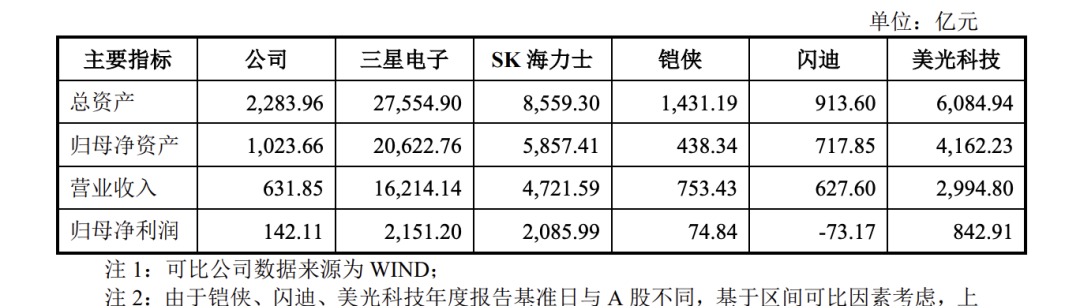
In just three years, YMTC has transformed from a company losing nearly 20 billion yuan annually to a global storage giant earning over 30 billion yuan in a single quarter.
Its industry standing has also risen. According to prospectus data, by 2025, YMTC ranked third globally in the NAND Flash market by both sales value and shipment volume. Such achievements would have likely sparked significant investor imagination just six months ago.
Currently, YMTC is still in the queue. According to Shanghai Stock Exchange disclosures, YMTC Holdings' IPO application was accepted on August 21 and entered the inquiry stage on September 3. As of October 25, the review status remained "inquiry completed," with no progress to the listing committee review or registration stages.
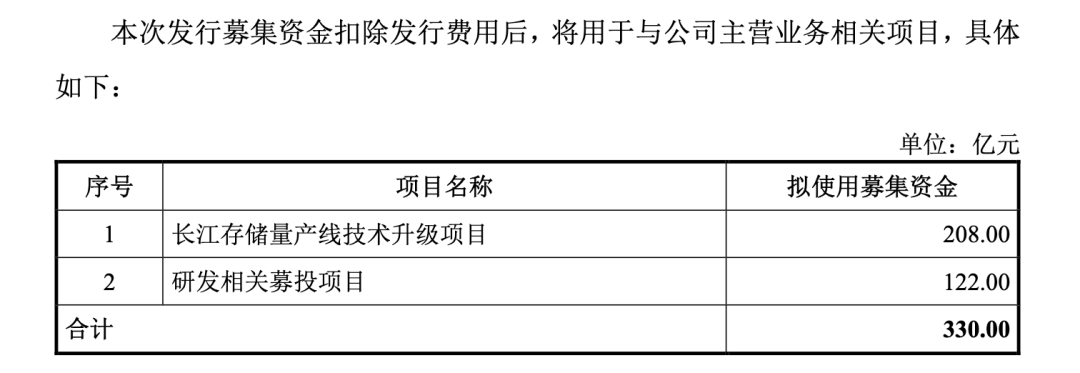
Of the 33 billion yuan it plans to raise, 20.8 billion yuan will be used for technology upgrades on its production lines, while another 12.2 billion yuan will fund R&D. Technology upgrades require capital, expansion requires capital, and next-generation NAND R&D also requires capital. International competitors are not slowing down their R&D efforts just because A-shares are declining.
More importantly, the IPO valuation is no longer as straightforward a question as it was a few months ago.
If YMTC's pre-issue valuation reaches 800 billion yuan, the 33 billion yuan raised would account for about 4% of the post-issue equity. If the valuation drops to 400 billion yuan, that proportion rises to nearly 8%.
For the same amount of financing, how much the market is willing to offer can directly affect how much equity existing shareholders need to cede.
YMTC's profits are growing rapidly, but this growth coincides with a high-demand cycle in the storage industry. If the listing is delayed further, even if capital market enthusiasm recovers, it may not align with the same storage price cycle.
It is almost certain that, while both are domestic storage giants, Changxin caught a decade-long capital feast, while YMTC may take much longer, by which time only scraps may remain.
However, perhaps even more eager than YMTC is Wuhan, which has accompanied it for nearly two decades.
02 Wuhan Waited for Two Decades: Early Bird, Late Arrival
Compared to Hefei, Wuhan's layout in the storage industry actually began earlier.
In 2006, the Hubei provincial, Wuhan municipal, and East Lake High-Tech Zone governments jointly invested 10 billion yuan to launch the Wuhan Xinxin 12-inch wafer manufacturing project. At the time, the global memory chip market was firmly controlled by international giants like Samsung, Toshiba, SK Hynix, and Micron.
Wuhan Xinxin's starting point was to establish a wafer fab with advanced process capabilities to lay the foundation for the local integrated circuit industry.
However, semiconductor manufacturing requires far more investment than ordinary industrial projects. A single wafer production line can cost tens of billions or even over 100 billion yuan. Equipment for photolithography, etching, and thin-film deposition is extremely expensive, and once operational, the line must continuously face pressures from depreciation, yield rates, and process upgrades.
More troublingly, chip production is not profitable simply by building a factory. Technology requires accumulation, products require validation, and capacity requires ramping up. By the time a generation of products matures, international competitors may have already launched the next generation.
Wuhan Xinxin spent a decade navigating this lengthy industrial cultivation period. By 2016, an opportunity finally arose.
That year, the National Memory Base project officially launched in Wuhan's Optics Valley, with a planned investment of $24 billion (approximately 160 billion yuan).
The project aimed to build on Wuhan Xinxin's existing 12-inch wafer manufacturing capabilities, introducing capital from the National Integrated Circuit Industry Investment Fund, Hubei Guoxin Fund, Hubei Science and Technology Investment, and Tsinghua Unigroup to establish a memory industry ecosystem covering chip design, manufacturing, and packaging testing.
In July 2016, Yangtze Memory Technologies (YMTC) was officially established. For Wuhan, this meant more than just adding another semiconductor company—it was finally an opportunity to transform a decade of wafer manufacturing accumulation into a globally competitive memory industry.
However, seizing market share from international giants was no easy task.
In 2018, YMTC released its self-developed Xtacking architecture, attempting to improve storage density and product performance by manufacturing peripheral circuits and memory cells separately before wafer bonding. In 2019, the company announced mass production of 64-layer 3D NAND; in 2020, it succeeded in developing 128-layer products; subsequently, it progressively advanced Xtacking 3.0, 4.0, and higher-generation NAND products.
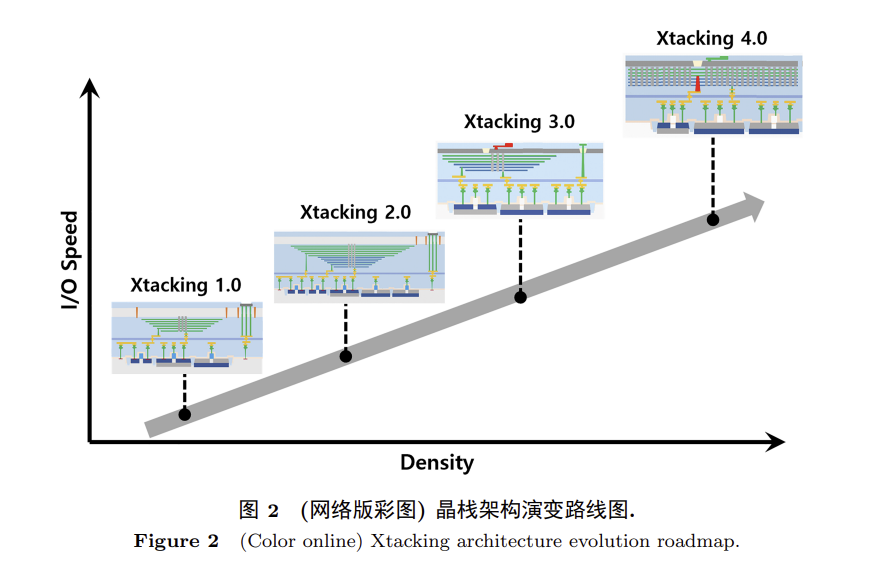
Today, these years are merely technical milestones in YMTC's development history. But at the time, each step forward required massive R&D investment and competition with Samsung, SK Hynix, and Micron for technological and cost advantages.
Moreover, YMTC's technological pursuit was accompanied by external supply chain restrictions.
In December 2022, the U.S. added YMTC to the Entity List, imposing stricter restrictions on access to advanced semiconductor equipment, components, and technology. This meant that a semiconductor company already requiring sustained heavy investment now faced additional costs from supply chain reconfiguration and equipment localization.
However, before fully resolving its technical challenges, YMTC encountered capital issues.
In its nascent stages, Tsinghua Unigroup served as a pivotal investor and industrial integrator for YMTC. Zhao Weiguo, its inaugural chairman, embarked on an ambitious endeavor to construct a semiconductor industry empire, encompassing memory, chip design, and manufacturing, through extensive capital operations.
Regrettably, before YMTC could achieve peak profitability, Tsinghua Unigroup succumbed to a debt crisis. In 2021, the conglomerate entered bankruptcy reorganization, introducing fresh uncertainties regarding YMTC's equity structure and future financing strategies.
Ultimately, Hubei's local capital stepped up to the plate once again. Under Tsinghua Unigroup's reorganization blueprint, Hubei Science and Technology Investment acquired pertinent YMTC project assets for 5.1 billion yuan in cash and assumed corresponding guarantee liabilities.
Hubei's local capital continued to deepen its commitment. In February 2023, YMTC's registered capital surged from 56.275 billion yuan to 105.27 billion yuan, marking an increase of nearly 87%. Among these contributions, Hubei Changsheng injected 30.069 billion yuan in capital, emerging as YMTC's largest single shareholder.
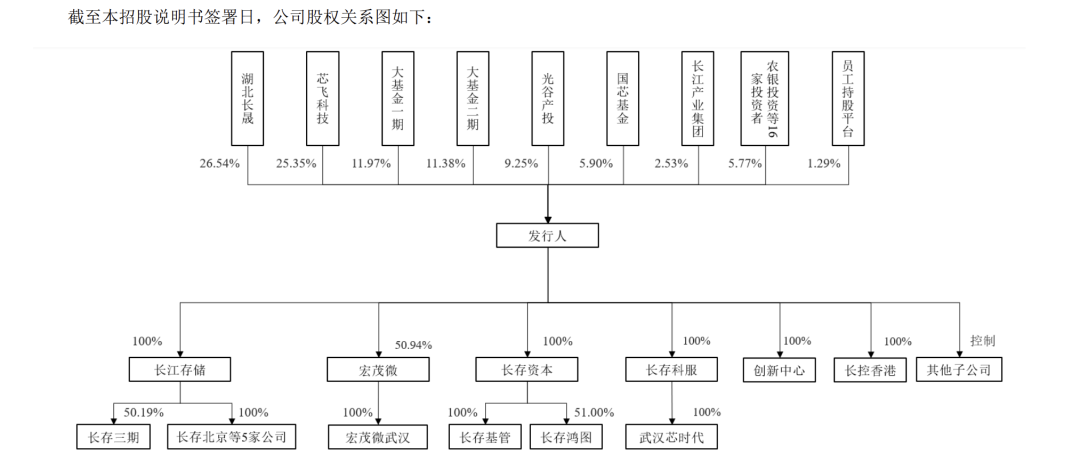
From its initial involvement in the factory's establishment, through its takeover during Tsinghua Unigroup's restructuring, to its continued capital infusion in 2023, local state-owned capital has been omnipresent in nearly all of YMTC's most pivotal development phases. This also signifies that YMTC's listing will directly influence the market value of a significant asset held by local industrial capital in Hubei.
However, the dedicated Wuhan Venture Capital did not always reap positive news. In 2020, the Wuhan Hongxin project encountered substantial setbacks, dampening local enthusiasm for semiconductor investment.
Established in 2017, the company had earmarked 128 billion yuan for constructing an advanced process chip production line and had even enlisted Jiang Shangyi, a former executive at TSMC and SMIC, as a senior leader.
On one hand, there was a multi-billion investment plan; on the other, there was talent from the international semiconductor industry. It appeared as though they were on the verge of replicating the success of chip behemoths.
However, by 2020, Wuhan Hongxin was plagued by severe funding issues. According to Wuhan's previously disclosed major project construction plans, by the end of 2019, the Hongxin project had completed a cumulative investment of 15.3 billion yuan. Yet, when the National Business Daily conducted an on-site visit in the latter half of 2020, they discovered that construction at the factory site had halted, and some subcontractors had yet to receive payment for their services. The highly anticipated multi-billion-yuan project ultimately failed to materialize as envisioned.
For Wuhan, the lessons imparted by Hongxin were particularly profound. The semiconductor industry demands patient capital, but colossal investments can also fail to yield tangible production capacity due to the project's operational and governance challenges.
While the Hongxin project languished, Yangtze Memory Technologies Co. (YMTC) continued to strive for technological advancements.
Wuhan had no alternative but to persist with its bets. However, even if a company successfully develops products and reaches the capital market, it does not ensure a smooth voyage. The IPO experience of XMC (Wuhan Xinxin Semiconductor Manufacturing Corporation) this year aptly illustrates this point.
In September 2024, XMC submitted its application to list on the Shanghai Stock Exchange's STAR Market, aiming to raise 4.8 billion yuan. According to the company's business orientation, XMC primarily focuses on specialty memory, mixed-signal, and 3D integration, boasting strong competitiveness in the NOR Flash wafer foundry sector.
XMC is a semiconductor enterprise with years of technological accumulation, operational production lines, and a robust business foundation. However, after one and a half years of review, on May 19, 2026, XMC and its sponsor opted to withdraw their IPO application, and the Shanghai Stock Exchange subsequently terminated the review. Coincidentally, on the same day, YMTC Holdings officially commenced IPO counseling and filing.
Subsequently, Wuhan's semiconductor assets underwent another round of restructuring. In June, YMTC Holdings planned to transfer its 39% stake in XMC to the Optics Valley state-owned asset platform, facilitating a change in control over XMC. By September, the relevant equity transfer was officially finalized. Hubei Science and Technology Investment, through platforms such as Optics Valley Semiconductor, regained control of XMC.
Following this adjustment, YMTC Holdings continued to pursue its STAR Market IPO, while XMC remained within the Optics Valley local state-owned asset system, concentrating on developing specialty process wafer foundry services.
For Wuhan, the business strategies of the two companies have gradually become more defined, but the process of capitalization still necessitates patience.
From XMC's IPO application in 2024 to its withdrawal in 2026, and then to YMTC Holdings assuming the IPO mantle, the journey toward listing for Wuhan's semiconductor assets has yet to reach its culmination.
03 The Company Finally Ranks Among the Global Top Three, but the Market Responds with Caution
Similar market indifference is not confined to the semiconductor industry.
On March 19 of this year, VOYAH, another high-end new energy vehicle brand headquartered in Wuhan and owned by Dongfeng Motor Group, officially listed on the Hong Kong Stock Exchange. In 2025, VOYAH's sales surpassed 150,000 units, and it achieved a net profit of 1.017 billion yuan for the full year, finally emerging from a phase of consecutive losses.
However, on its debut day, VOYAH's stock price still declined by 13.2%, leaving it with a market capitalization of only about 24 billion Hong Kong dollars. Previously, Dongfeng Motor Group had delisted through privatization and selected VOYAH as its new independent listing platform, attempting to provide clearer market pricing for its new energy assets. However, the price offered by investors was clearly less enthusiastic than what the company and its shareholders had anticipated.
From the stalling of Hongxin to XMC's withdrawn IPO, and then to VOYAH's tepid market reception, the twists and turns Wuhan has experienced in major industrial projects over the years are sufficient to pen another capital market saga.
Compared to Hefei, which has recently garnered significant capital market attention through projects like BOE and ChangXin Technology, Wuhan's industrial accumulation is no less remarkable. However, the process of converting long-term investments into public market value has proven more convoluted.
Today, YMTC may be Wuhan's most promising asset. It is no longer the semiconductor startup struggling for survival it once was, but the capital market has begun to retreat precisely at this juncture.
For YMTC, listing can continue to raise funds for next-generation technology and production line upgrades; for Wuhan, it holds additional significance.
Over the past two decades, local capital has continuously invested in the semiconductor industry. From the early days of XMC to the National Storage Base, and then to the equity takeover after Tsinghua Unigroup's restructuring, capital has been continuously accumulated in production lines, factories, technology, and equity. If YMTC can successfully list, these long-term industrial assets will also reach an important capitalization milestone.
The listing of one company may also unlock new funding opportunities for the next round of industrial investment in Wuhan. However, at present, Wuhan confronts more than just the simple question of whether to list.
Proceeding with the issuance may require confronting financing and equity dilution pressures due to declining market valuations; if it waits for the market to recover, the high-profit cycle of the memory industry may not endure until then, as the memory industry is no stranger to cyclical fluctuations.
In 2023, YMTC still incurred losses of nearly 20 billion yuan; by the first quarter of 2026, its net profit exceeded 33 billion yuan. No one can guarantee that today's high prosperity and high profits will persist indefinitely.
Moreover, YMTC's next round of technological investments cannot be halted.
When Wuhan invested in constructing the factory, international memory giants were several generations ahead of Chinese companies; today, YMTC has ascended to the global top three, but there is still a technological and scale gap to bridge compared to competitors like Samsung and SK Hynix.
The closer a company gets to the global pinnacle, the less likely its next round of investments will diminish, making Wuhan's situation particularly delicate.
When the industrial foundation was fragile, it needed to contribute funds; later, when shareholders faced debt crises, it needed to take over; now that the company has finally gained global competitiveness, the capital market has begun to deem it too expensive.
For SK Hynix, Solidigm's suspension of its IPO merely postponed a financing plan to a later date, but behind YMTC lies nearly two decades of waiting by Wuhan. From the construction of the wafer fab in 2006, the establishment of YMTC in 2016, the restructuring of Tsinghua Unigroup in 2021, the continued investment by local state-owned capital in 2023, to finally reaching the IPO inquiry stage in 2026.
Hefei waited a decade for a capital feast, and Wuhan, after two decades of waiting, seemed poised to join the table. However, by the time it was YMTC's turn, the diners had lost their appetite.
- END -
-
![]()
Alibaba Cloud and Volcano Engine Compete in Automotive Cloud Market
-
![]()
“After Testing K3.1 Pro Overnight, It Seems Kimi Is Truly Advancing Towards Embodied AI”, “K3.1 Pro, Speed, Task Execution, Allowance, Embodied AI”
-
![]()
BYD Registers Decline in Six Models, Xiaomi Undergoes Leadership Shuffle! Comprehensive Review of BEV Sales Rankings from January to September
-
![]()
DeepSeek’s Product Department Entrusted to a Quantitative Trader
-
![]()
After Two Decades of Anticipation, Wuhan and YMTC Face a Cooling A-Share Market
-
![]()
Why Are Automakers Pivoting to Battery Swapping Amid Rapid Advances in Ultra-Fast Charging?
-
![]()
From Lucent to NVIDIA: When History Echoes
-
![]()
Thermal Effects on Femtosecond Filamentation and Supercontinuum Generation in YAG Crystals: Insights from Ultrafast Nonlinear Optics Study No. 105