Jensen Huang’s Vision Unfolds: China’s AI Pathways Unveiled Post Three-Year Chip Ban
 04/30 2026
 566
566
Layout | Xiaoxi
Jensen Huang’s prophecy has materialized.
On April 24, 2026, DeepSeek V4 made its official debut, boasting an unprecedented 1.6 trillion parameters and the capability to handle ultra-long contexts of up to 1 million tokens.
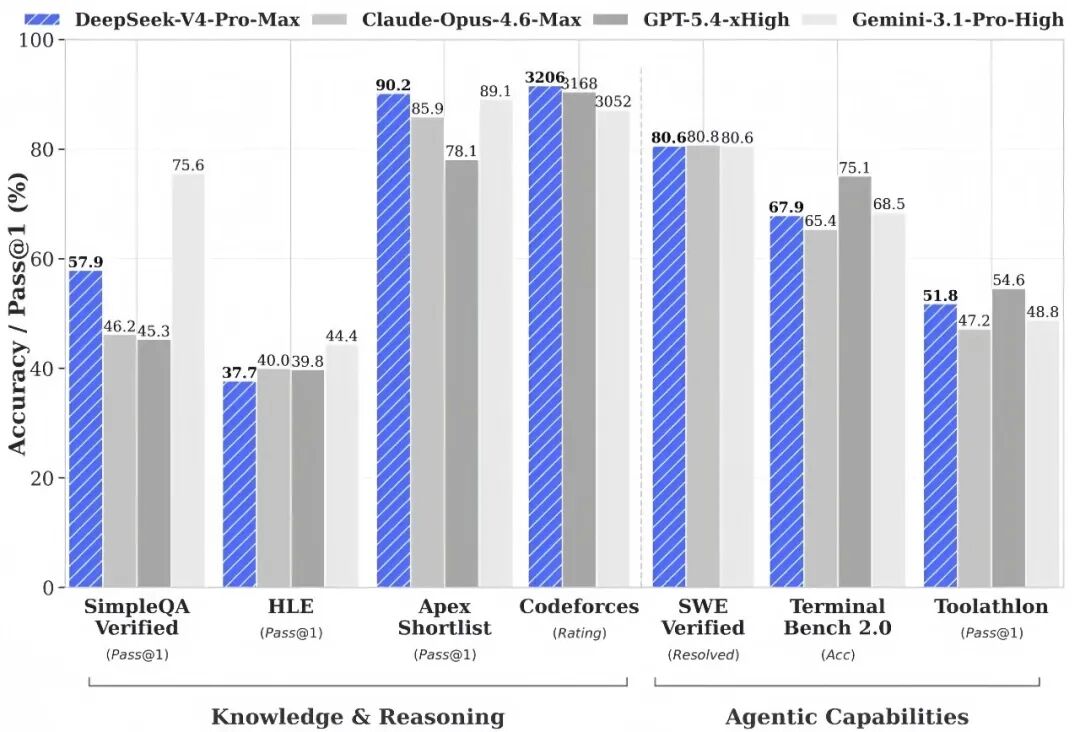
Beyond its technological prowess, DeepSeek V4’s seamless integration with Huawei Ascend chips marked a significant milestone. This signified that, at least in terms of inference, China’s leading large models were breaking free from their dependence on NVIDIA chips.
On the day this news broke, chip stocks listed in Hong Kong soared, while NVIDIA’s stock price experienced a downturn.
In addition to DeepSeek, China witnessed the emergence of several promising AI companies, including Zhipu, MiniMax, and Moonshot AI.
Just three years prior, in 2023, the landscape of China’s AI industry looked vastly different.
At that time, the U.S. began imposing restrictions on the sale of high-end AI chips, such as NVIDIA’s H800 and A800, to China. This move sparked widespread anxiety, with many questioning whether China could develop its own large models.
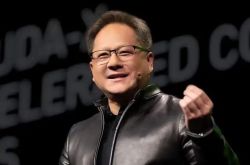
However, Jensen Huang foresaw the potential. He later stated on multiple occasions that China would seize this opportunity to nurture local entrepreneurs and develop its own chips.
He may have been referring to these four emerging forces.
In this remarkable resurgence, DeepSeek’s ascent during the 2025 Spring Festival marked a pivotal moment for China’s AI industry. Liang Wenfeng was honored on Time’s “100 Most Influential People” list and Nature’s “Top 10 Scientific Figures of the Year.” Silicon Valley began to scrutinize DeepSeek’s technical reports, discussing the industry impact of the “V3/R1 Moment.”
| Rising Against the Tide |
In early 2023, Yang Zhilin was conducting research at Carnegie Mellon University. As the first author of the Transformer-XL and XLNet papers, he possessed a deep understanding of large model technology. The advent of ChatGPT made him realize that a technological paradigm shift might be underway.
Meanwhile, Liang Wenfeng was managing High-Flyer Quantitative in Hangzhou. The quantitative hedge fund he founded had just surpassed 10 billion yuan in assets under management. He began to ponder: Could the technical expertise and computational resources accumulated by High-Flyer be leveraged for grander AI explorations?
In Beijing, Yan Junjie was steering MiniMax’s technological development. His company, one and a half years old, was still exploring its technical direction, facing critical strategic choices.
Simultaneously, Professor Tang Jie at Tsinghua University was reviewing test reports for GLM-4. As the leader of the “Wudao” large model project, he understood better than anyone China’s position in foundational models—lagging but within reach.
In 2023, the destinies of these four individuals quietly converged amidst the turmoil sparked by ChatGPT.
On November 30, 2022, OpenAI founder Sam Altman posted a succinct announcement on Twitter: “We’re launching ChatGPT!”
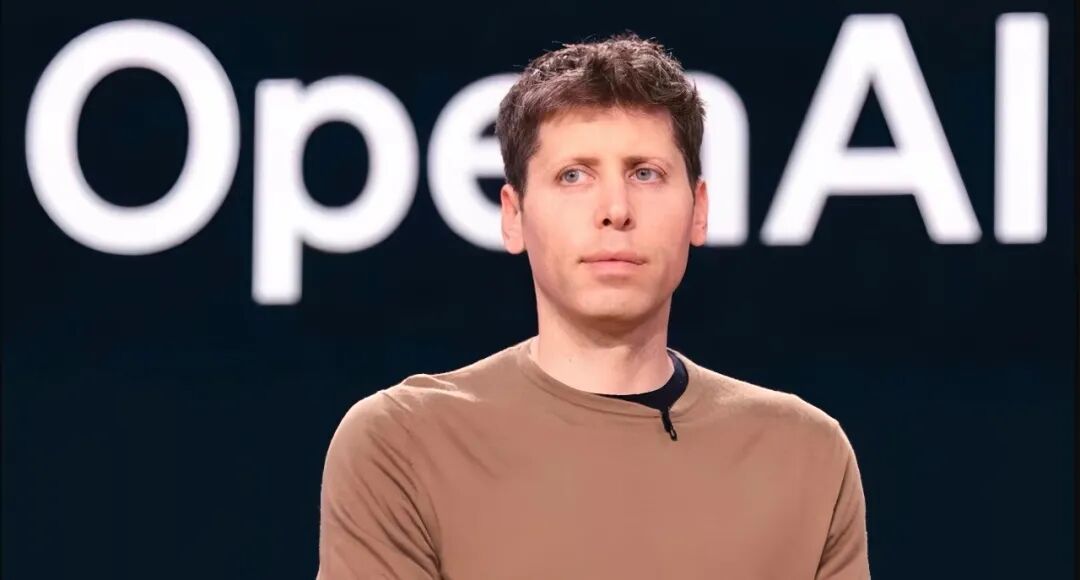
▲ Photo: OpenAI founder Sam Altman
This announcement barely qualified as a product launch. Yet, just five days later, ChatGPT surpassed 1 million users; two months later, it reached 100 million monthly active users.
NVIDIA CEO Jensen Huang likened this moment to the “iPhone moment.”
ChatGPT’s success was no fluke. It was built on years of OpenAI’s technological accumulation. From GPT-1 to GPT-3.5, from InstructGPT to RLHF (Reinforcement Learning with Human Feedback), each step laid the groundwork for this breakthrough. What surprised the world was its ability to write code, poems, and essays, understand context, and exhibit unexpected capabilities.
On March 14, 2023, OpenAI released GPT-4. This time, there were no disclaimers like “research preview” or cautious wording. Instead, there was a 98-page technical report and an impressive fact: GPT-4 ranked in the top 10% of the simulated bar exam and approached human-level performance in standardized tests like the SAT and GRE.
Microsoft promptly announced the integration of GPT-4 into the Office suite. Windows 11 began shipping with an AI assistant. Bill Gates remarked, “This is the most disruptive tech demo I’ve seen in my life.”
Meanwhile, in Beijing, a launch event was in the making.
On March 16, 2023, Baidu founder Robin Li took the stage to unveil “ERNIE Bot.” His tone carried a hint of nervousness: “Expectations are high—we’re benchmarking against ChatGPT and GPT-4. That’s a high bar.”
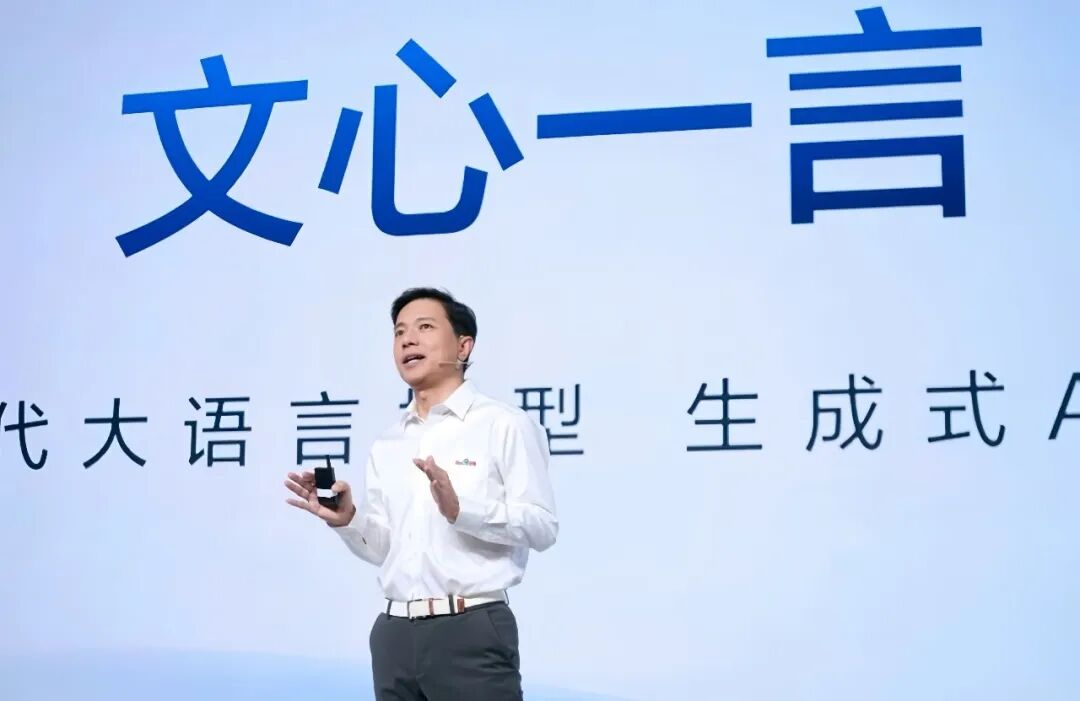
The event featured pre-recorded demos instead of live Q&A. Some in the live chat remarked, “This reminds me of my graduation defense.” During the event, Baidu's Hong Kong-listed shares fell 6.36%, with a peak decline of nearly 10%, wiping out billions in market value.
However, what truly worried the market wasn’t the technological gap—it was the shrinking time window.
While the technological gap could be bridged with time and investment, chip restrictions posed a more formidable challenge. In October 2022, the U.S. Department of Commerce imposed export controls on advanced AI chips to China, banning exports of high-end GPUs like the A100 and H100. On October 17, 2023, the restrictions tightened further, covering slightly lower-performance chips.
This meant Chinese AI companies could no longer access the core computational resources needed to train large models.
Internet giants like Alibaba, ByteDance, and Tencent took the safest route: stockpiling chips in advance to secure resources.
Liang Wenfeng later recalled in a rare interview: “We realized early on that compute would be an issue. So High-Flyer’s strategy was to stockpile chips before the restrictions.” High-Flyer’s Firefly-2 compute cluster was equipped with 10,000 A100 chips. But for companies that hadn’t planned ahead, chip shortages became a looming threat.
In 2023, China’s internet sector was gripped by a strange mix of excitement and anxiety.
Anxiety fueled a frenzy. Investors went “crazy” searching for “China’s OpenAI,” pouring money into any project labeled “large model,” “AGI,” or “AI.” In 2023, China’s AI sector saw record-breaking funding, exceeding 200 billion yuan.
At the center of this wave, the four founders made their decisions—none shying away from technological exploration.
| Living the Tech Faith |
In early 2023, Yang Zhilin faced the most critical decision of his life. During an internal discussion, he argued: “If this truly marks the start of AGI, the real window of opportunity might be just one month.”
For a large model project requiring years of development, what could be accomplished in a month?
Yang saw not just the technology itself but a structural opportunity. He made a bold decision: to abandon half his stake in Recurrent AI and go all-in on AGI. In March 2023, Moonshot AI was officially founded.
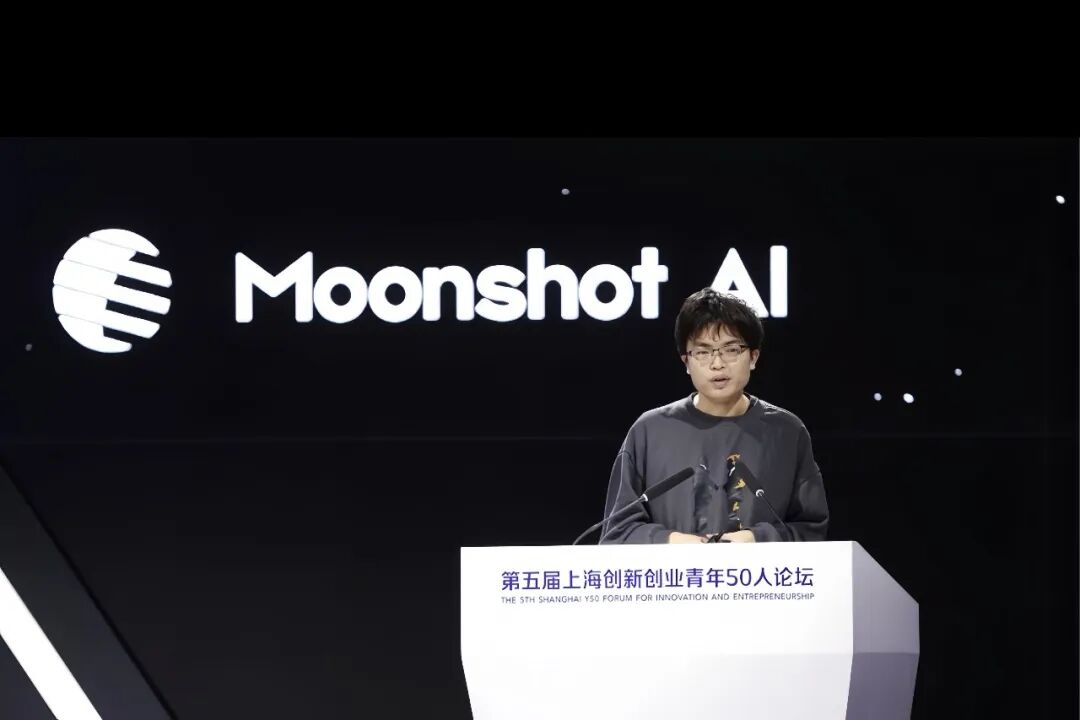
Why “Moonshot AI”? The name comes from Pink Floyd’s album The Dark Side of the Moon. During his time at Tsinghua, Yang had formed the band Splay as a drummer and songwriter—music remained a passion. But the deeper meaning was: While everyone chased the light (OpenAI), he chose to explore the overlooked corners.
Yang selected “long-context” as his breakthrough. At the time, GPT-4’s context window was just 8K tokens (~6,000 words), but he believed long contexts were undervalued. In October 2023, Moonshot AI released Kimi Chat, supporting ultra-long contexts of 200,000 Chinese characters.
When investors asked, “Why this direction?” he replied, “Because everyone thinks it’s impossible.”
In July 2023, DeepSeek quietly launched. Founded three months after Moonshot AI, its financial and technical reserves far exceeded most competitors.
Liang Wenfeng’s strategy was to use profits from High-Flyer Quantitative to fund DeepSeek’s R&D. But the real innovation lay in his technical approach.
While the industry pursued larger parameters and more compute, Liang asked a counterintuitive question: “Why does training GPT-4 cost $100 million? Why can’t we reduce costs to one-tenth?”
He demanded his team prioritize algorithmic efficiency over compute. Build stronger models with fewer chips and lower costs.
In mid-2023, MiniMax faced a critical technical fork. A year and a half old, the company still hadn’t settled on a direction. Should it continue scaling Transformers, or explore new architectures? Each choice led to a vastly different future.
Yan Junjie’s entrepreneurial journey began with a simple wish. In 2021, during Spring Festival, he returned to his hometown in Shangqiu, Henan. His 80-year-old grandfather wanted to write a memoir but couldn’t type. “If only a machine could help me write,” his grandfather said.
This simple wish became Yan’s starting point for going all-in on AI. Now, he faced a more critical decision. At a management meeting, he announced: “We’ll allocate 80% of our compute to MoE architectures.”
MoE (Mixture of Experts) was not mainstream at the time. GPT-4 used Dense Transformers, and while Google’s Switch Transformer had validated MoE’s feasibility, its performance was unstable.
An investor later recalled Yan’s decision: “Betting 80% of compute on a non-mainstream route was almost gambling.”
Subsequent events proved the bet correct. But before that, Yan endured three or four near-company-collapsing failures.
In October 2023, Zhipu AI secured over 2.5 billion yuan in funding. The investor list read like a who’s who of Chinese tech: Alibaba, Tencent, Meituan, Ant Group...

This marked Tang Jie’s first public appearance in the spotlight.
As a Tsinghua computer science professor and fellow of IEEE/ACM/AAAI, he had kept a low profile. Zhipu AI grew out of Tsinghua’s Knowledge Engineering Group (KEG), where Tang had worked for years on knowledge graphs and social network analysis.
But ChatGPT changed everything. “Technology must reach the heights, while markets must stay grounded,” Tang often said. KEG’s years of accumulation—including researchers’ knowledge graphs, the AMiner tech intelligence platform, and the self-developed GLM pre-training architecture—would remain mere papers if not commercialized.
In 2023, he took the boldest step: industrializing Tsinghua’s research with capital’s help to accelerate catching up. He bet that China’s unique linguistic data and scenarios could bridge the technological gap with OpenAI.
The four men’s choices would shape China’s AI future.
| Head-to-Head Competition |
In 2023, China’s GDP growth slowed to around 5%, and the internet sector faced layoffs. AI large models became one of the few “certain” growth stories—one overshadowed by Sino-US tech rivalry.
Liang Wenfeng once said in an informal setting: “We don’t need to replicate OpenAI. We need to prove that algorithm innovation can change the rules, even with constrained resources.”
This sentence encapsulated their technical route and answered the era’s question.
Now, DeepSeek V4 has responded with extreme technological innovation. Silicon Valley developers are using Kimi, MiniMax, and Zhipu’s models. Chinese compute has gone global.
Looking back at 2023, we should see not just the founders’ success and net worth but their choice to believe during a time of anxiety and expectation.
Liang Wenfeng, Yang Zhilin, Yan Junjie, and Tang Jie didn’t follow the previous generation’s path of “imitation + incremental innovation.” Instead, they competed head-on with the world’s best in original technology. They believed technology could change the world. They believed their seemingly crazy bets would be rewarded by time.
NVIDIA CEO Jensen Huang said in a podcast, a quote repeated by global media: “If China’s AI models run on Huawei chips, that’s a ‘terrifying’ outcome for the U.S.”
This prediction has come true. But we must also note Anthropic’s quiet rise. Its product, Claude, is proving a viable commercialization path. By 2026, Anthropic will be valued at $380 billion, becoming OpenAI’s strongest competitor—and our new rival.
The answer is never just an endpoint; it’s the starting point of the next story. The AGI awakening isn’t just a technological breakthrough but the moment countless people chose to believe.
The picture is from the Internet. It will be deleted if it constitutes infringement.
-
![]()
Tesla Restructures Its Balance Sheet
-
![]()
Accelerating the High-Speed Interconnection Upgrade of AI Computing Clusters! JONHON Releases ELSFP External Light Source Optical Connectors
-
![]()
Breaking the overseas blockade of volumetric holographic materials, this optical enterprise secures nearly 100 million yuan in financing!
-
![]()
Why Does Jensen Huang So Openly Praise China’s AI?
-
![]()
"Wudang" Unveiled: Arm China's Next-Gen AI VPU Redefines Video Encoding
-
![]()
From Energy Conservation and Carbon Reduction to AI Decision-Making: GECON East Intelligence and Chery Group Explore a New Green and Smart Paradigm for Automobile Manufacturing
-
![]()
WAIC 2026 Observation | AI Accelerates Towards the Core of Industries, Industrial AI Enters a Critical Phase
-
![]()
Volkswagen China Fires the First Shot in Foreign-Funded 'White Box Delivery'!