Hot Topic | Physical AI Takes Center Stage at MWC 2026, Powered by Chinese-Style Infrastructure
 03/10 2026
 633
633
Preface:
For the first time, MWC 2026 shifts its narrative core from [Connectivity] to [Intelligence].
Chinese companies now stand at the forefront, no longer confined to traditional strengths in telecommunications equipment and consumer devices. Instead, they span the entire physical AI industrial chain—from computing infrastructure, network connectivity, and core chips to precision components, industry solutions, smart devices, and complete robotic systems.
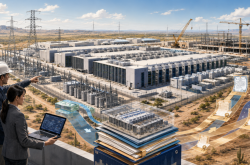
The Invisible Foundation: Intelligent Infrastructure for the Physical AI Era
Unlike previous years, when robotic products were mostly confined to laboratory demonstrations, this year's MWC robots are designed around real industrial, commercial, and consumer scenarios.
A deeper industrial transformation is underway, as the global tech industry reorganizes intelligent infrastructure around the systemic demands of physical AI.
Over the past decade, mobile internet computing has been highly centralized, with most computations occurring in remote data centers. User terminals were responsible only for data collection and result display, while the cloud handled all complex tasks.
However, as AI enters the physical world, the limitations of this architecture become apparent.
Robots require millisecond-level responses for dynamic obstacle avoidance in complex environments. Industrial equipment depends on deterministic low-latency connections for real-time control. Vehicle-infrastructure coordination and remote operations demand stable end-to-end communication.
These intelligent demands from the physical world cannot tolerate the delays and uncertainties introduced by cloud round trips.
Thus, a new computing architecture featuring cloud-edge-device collaboration has become the core foundation of the physical AI era.
The cloud handles large-scale training and global intelligent decision-making. Edge nodes perform real-time inference and data processing. Terminal devices possess basic sensing and execution capabilities. Together, they form a complete computing system for physical AI.
One of the core topics at MWC 2026 is how global companies are deploying computing power and networks around this architecture.
Huawei unveiled its next-generation AI computing solution, SuperPoD, overseas for the first time. Designed to support training and inference for embodied AI large models and multimodal physical world models, it provides a robust computing foundation for physical AI.
Huawei also proposed the Agentic Core network architecture for the AI era, upgrading traditional communication networks into intelligent operation platforms capable of supporting large-scale AI applications and enabling full-link connectivity between cloud 'brains' and terminal 'bodies.'
ZTE showcased a complete system integrating AI and ICT, launching its [AI Agentic Connectivity] framework, which embeds AI capabilities deeply into network architectures.
Through an agent-based approach, it achieves dynamic scheduling and self-optimization of network resources, enabling networks to autonomously adapt to the demands of physical AI applications.
Innovations in underlying hardware, such as chips and modules, also provide critical support for physical AI deployment.
ASR Microelectronics introduced a 6nm intelligent SoC platform offering up to 20 TOPS of on-device AI computing power, enabling ordinary terminals to run complex AI models smoothly locally.
Longsys presented storage solutions for smart devices, ranging from UFS 4.1 to ePOP5x designed specifically for AI glasses, addressing the challenge of balancing space and performance in lightweight smart devices.
Module manufacturers like Quectel, Fibocom, and SIMCom launched intelligent modules integrating connectivity, computing, sensing, and control.
Some even extended downstream, offering complete solutions for humanoid robots and serving as key entry points for physical AI deployment.
From computing infrastructure to communication networks, from core chips to intelligent modules, Chinese companies have completed a full-chain deployment of physical AI infrastructure.
This signifies that China's physical AI development is not a sporadic breakthrough in isolated technologies but a systemic growth built on a complete and mature infrastructure ecosystem.
The Backbone: Full-Industry-Chain Supply Chain Advantages
Behind a humanoid robot lie high-precision servo motors, lightweight structural components, high-density batteries, multi-dimensional sensors, edge computing chips, and a manufacturing system capable of rapidly iterating and assembling these parts.
Only when these elements form a complete and efficient industrial chain can robots transition from laboratory prototypes to scalable industrial and consumer devices. This is precisely where China's market holds its core advantage.
Take Zhiyuan Robot as an example. Over 70% of its core components are localized, with critical parts—from dexterous hand drive modules to torso structural components—supplied through precision manufacturing systems in the Yangtze River Delta and Pearl River Delta regions.
This highly mature industrial collaboration allows companies to maintain product performance while significantly reducing costs and accelerating iteration cycles.
Unitree Technology's development path also highlights the unique strengths of China's supply chain. Its G1 humanoid robot achieves high-dynamic motion performance while keeping overall costs within a more market-accessible range.
Dubbed a [price dimension reduction strike] by the industry, this achievement underscores the cost-control and mass-production capabilities accumulated over years in China's robotics supply chain.
While star robotics companies receive attention on stage, numerous upstream supply chain enterprises are emerging as the [unsung heroes] of China's physical AI industry.
Leading Tech, a precision manufacturing giant that grew out of the consumer electronics sector, made its MWC debut this year, showcasing core robotic components such as harmonic reducers and planetary roller screws, along with dexterous hands and joint structural components manufactured using CNC and MIM processes.
As a key supplier to Zhiyuan Robot, BrainCo, and other companies, Leading Tech entered into a strategic partnership with Zhiyuan in 2023 and began providing large-scale production services in 2025.
Its Beijing Embodied Intelligence Mega Factory, with a planned annual capacity of 500,000 units, has already secured contracts with multiple robotics companies, including Magic Atom.
As physical AI moves from technical validation to large-scale deployment, cost control and delivery capabilities will increasingly become the core variables determining market outcomes.
On this front, Chinese companies hold a relatively advantageous global position.
Over the past two decades, China has developed the world's most mature and efficient precision manufacturing system and full-industry-chain collaboration capabilities in sectors like consumer electronics and new energy vehicles.
These capabilities can be seamlessly transferred to the physical AI sector, enabling Chinese companies to rapidly progress from R&D to mass production while continuously driving down costs through economies of scale.
AI is acquiring a body—and increasingly, the bones, muscles, nerves, and blood that support it are coming from China.
The Physical AI Boom: An Inevitable Outcome of Development Paths
The Western approach prioritizes technology-driven scenarios: achieving technical breakthroughs in laboratories, stacking large model parameters, and pursuing algorithmic perfection before seeking market applications.
This path gained traction during the generative AI era, as training data was readily available online, eliminating the need for physical infrastructure or real-world scenarios.
However, in the physical AI era, this approach encounters insurmountable bottlenecks. Without ubiquitous networks, distributed computing power, and sufficient real-world scenarios, even the most advanced technologies cannot be deployed in the physical world.
In contrast, China's approach relies on infrastructure to support scenarios, with scenarios driving technological iteration.
Over two decades, China has built the world's most comprehensive new infrastructure, laying the [digital highways] for the modern world.
Subsequently, the digital transformation across industries has generated vast real-world scenario demands, which in turn have propelled continuous technological innovation.
This resembles the explosion of China's e-commerce and express delivery industries a decade ago, which would not have been possible without the supporting transportation infrastructure of high-speed rail, highways, and rural road networks.
Similarly, without China's new infrastructure, even the most advanced physical AI technologies could not enter factories, mines, or the real physical world.
Conclusion:
The competition in physical AI is fundamentally a contest of system integration capabilities.
Whoever can integrate perception, computing, execution, connectivity, and energy management into a reliably functioning whole will dominate the next decade of industrial development.
Chinese companies' comprehensive capabilities in this dimension are now being reevaluated by global peers.
Partial Sources: Industrial Insight: [China's Moment in Physical AI Arrives at MWC 2026], Yicai Global: [Over 350 Chinese Companies Shine at MWC: From Smartphones to Robots, AI Goes Global], ChipMaster: [Chips Bringing Intelligence Down to Earth Shine at MWC], People's Posts and Telecommunications News: [CES 2026 Reveals AI's Next Destination: How Physical AI Reshapes the Real World], Zhengjie Bureau: [From Performance to Business: Chinese Robots Make a Collective Debut in Barcelona], QHOME: [In-Depth Analysis of Embodied Intelligence: Breakthrough Year for Robotics Industry Seen at MWC 2026]
-
![]()
AI Giants Start Borrowing to Fuel Computing Power Race
-
ByteDance Initiates Largest B2B Structural Adjustment, This Time It's Truly Different
-
![]()
Let's Talk About Kingsoft Office's Mid-Year Outlook and the True Strength of Its AI-Powered Office Solutions
-
Despite 150 Million Users, Struggles Persist: AIShige Faces Tough Competition from Seedance and Kling in AI Video Monetization
-
![]()
Ensuring Safe Gear Shifting in the Automotive Industry: Transitioning from 'Product Oversight' to 'Full-Chain Governance'
-
![]()
Net Profit Soars to $133.7 Billion! Azure Revenue Tops $100 Billion, with AI Fueling Microsoft's Growth
-
![]()
Before 6G Hits the Market, the U.S. Forges a 'Rules Alliance': What Challenges Await Chinese IoT Enterprises?
-
![]()
Intelligent Driving's 'Little Blue Light' Faces Ban: Night Glare and Cut-in Risks Prompt Official Action