Behind Amazon's $50 Billion Bond Issuance: The AI Boom is Fueling a Corporate Debt Crisis
 03/12 2026
 641
641

*The content is solely for presenting diverse market perspectives and research viewpoints and does not imply endorsement of the views or conclusions expressed in the article by this official account.
Every technological revolution is accompanied by a wave of capital frenzy. And when that frenzy reaches its peak, balance sheets often become a more critical concern than the technology itself.
Historically, the railway revolution, the dot-com bubble, and the shale oil boom all left behind heavy debt legacies at the height of their technological narratives. The technology may have been real, but the way the bills were paid often determined the severity of the outcome.
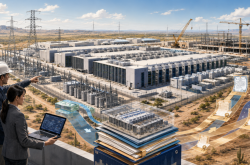
Amazon's latest bond issuance plan, totaling nearly $50 billion, once again exposes a neglected issue in the AI infrastructure race—this computing power war is increasingly reliant on debt financing. In capital market narratives, AI is portrayed as the 'next internet,' symbolizing unlimited marginal returns and asset-light expansion. But from a balance sheet perspective, it resembles an unprecedented corporate debt expansion cycle. Tech giants are using industrial-era capital intensity to chase information-age growth dreams.
If this trend continues, the endgame of the AI bubble may not be a technological collapse but a stress test of debt structures. When interest rate fluctuations meet asset depreciation, the most leveraged players may fall first, just before dawn.

$50 Billion Financing: The AI Computing Power War Enters the 'Debt Era'
Amazon's latest financing scale is substantial enough to be etched into corporate financing history.
The $37 billion in U.S. dollar bond issuance, combined with a planned €10 billion in euro-denominated bonds, brings the total financing to nearly $50 billion. This ranks as the fourth-largest corporate bond issuance in U.S. history and the largest-ever non-M&A financing bond. Unlike typical borrowing for acquisitions, Amazon is raising funds for 'construction' itself.
Equally noteworthy is market demand. The bond offering attracted approximately $126 billion in orders, reflecting global bond investors' strong confidence in tech giants' creditworthiness. Despite high interest rates, capital continues to flood into tech debt, underscoring market conviction that AI is the only certain growth engine of the future. Investors would rather lend to giants for data center construction than hold cash.
On the surface, this appears to be a typical low-cost financing move. Leveraging its AAA credit rating, Amazon secured relatively favorable interest rates. However, in the current industrial context, the funds are almost certainly earmarked for one purpose: AI infrastructure. Over the past year, Amazon, Microsoft, Google, and Meta have nearly simultaneously announced historic capital expenditure plans. AWS, Azure, and Google Cloud are all racing to build new data centers with one core objective—seizing AI computing power.
This signifies a critical shift: cloud computing competition is evolving from software-based to capital-based. Previously, cloud providers competed on code efficiency, service stability, and ecosystem richness. Now, the race hinges on who can raise more capital fastest to build larger-scale clusters. Financing capacity determines data center construction; more data centers mean more AI training contracts.
Thus, the tech industry is entering an unprecedented cycle: technological revolution + capital intensity. This is no longer a story of a few engineers changing the world from a garage but of trillion-dollar capital stacks creating computing power barriers. Debt has become the fuel for this race.

Tech Giants' 'Debt Expansion': The Hidden Ledger of the AI Era
Amazon is not alone in using debt to fuel AI expansion. In fact, Silicon Valley as a whole is undergoing a collective balance sheet expansion.
Over the past year, nearly all tech giants have simultaneously ramped up capital expenditures. Microsoft's capital spending for fiscal 2025 is projected to approach $80 billion, mostly for AI data centers. Google's capital expenditures have already surpassed $50 billion, while Meta has announced plans to invest $65 billion in AI infrastructure over the next few years. Combined, these figures represent a potential multitrillion-dollar debt pool.
These investment scales now rival traditional heavy industries. Steel, energy, or telecommunications have long been considered capital-intensive sectors, but tech giants were originally valued as 'asset-light' businesses. For decades, they relied on software margins and platform monopolies to sustain high cash flows, achieving growth without heavy fixed assets.
AI has changed that. Training an advanced large model requires tens of thousands—or even hundreds of thousands—of GPUs, with each AI data center construction costing billions of dollars. This isn't just chip expenses but also includes land, power infrastructure, cooling systems, and network architecture. Essentially, these are digital-era 'power plants.'
Critically, these assets have far shorter lifespans than traditional infrastructure. Under classical accounting, servers are typically depreciated over 5–6 years. But in the AI era, this assumption is rapidly becoming obsolete. Computing power technology is evolving much faster than before. When a company takes on massive debt to build data centers, it assumes stable cash flows for years to come. However, if technological iterations render equipment obsolete prematurely, the risk of cash flow disruption multiplies.

When Computing Power Depreciates Faster Than Debt: The Real Risk of the AI Bubble
Moore's Law once provided a stable rhythm for the semiconductor industry: equipment replacement cycles of roughly five to six years. In the AI era, this rhythm has been shattered.
Six years ago, NVIDIA's A100 was the cutting-edge AI chip. Today, almost no major AI company uses A100s for core model training. H100s, B100s, and even more advanced architectures are rapidly replacing older equipment. The pace of generational upgrades in computing power now far exceeds traditional server cycles. Each new chip generation's efficiency gains often render previous generations commercially obsolete at breakneck speed.
This creates a dangerous financial mismatch: debt cycles span decades, while computing equipment value cycles may last only two to three years. Amazon's latest bond issuance even includes 50-year maturities. But in 50 years, those GPUs will be electronic waste, with power connectors potentially incompatible with future standards.
Such asset-liability mismatches are hallmarks of many financial crises throughout history. The 2008 subprime mortgage crisis essentially followed a similar pattern: long-term financial assets built on rapidly depreciating underlying assets. Back then, banks assumed housing prices would rise indefinitely, justifying long-term loans. Today, tech giants assume AI demand will grow perpetually, justifying long-term bonds to purchase rapidly depreciating hardware.
If AI computing demand continues surging, this risk may remain concealed. High growth can offset high depreciation, and high profits can service high interest costs. But once the industry enters a cyclical downturn, problems emerge—data center depreciation speeds may far outpace debt repayment. When revenue growth slows while fixed debt service obligations remain unchanged, free cash flow turns sharply negative.
From this perspective, the AI bubble may not be a traditional tech bubble. It's more likely a new capital experiment: financing the computing power revolution with corporate debt. Over the next few years, what determines the AI industry's landscape may not just be model capabilities but something else entirely: which balance sheets can survive until the next computing revolution.

Conclusion: The Survival Game on Balance Sheets
We stand at a critical crossroads. AI's potential is undeniable, but the capital structures supporting it are fraught with fragility.
For investors, evaluating an AI company requires more than examining its model parameters or computing scale. The critical question is whether its debt maturities align with asset lifespans. In this arms race, the last companies standing may not be the most technologically advanced but those with the most robust financial structures.
When the tide recedes, debt doesn't disappear. Companies financing three-year-lifespan assets with 50-year debt will eventually face accounting reckoning. AI's future is bright, but the path forward may be paved with shattered balance sheets. In this survival game of financial statements, cash flow is the only passport.
-
![]()
AI Giants Start Borrowing to Fuel Computing Power Race
-
ByteDance Initiates Largest B2B Structural Adjustment, This Time It's Truly Different
-
![]()
Let's Talk About Kingsoft Office's Mid-Year Outlook and the True Strength of Its AI-Powered Office Solutions
-
Despite 150 Million Users, Struggles Persist: AIShige Faces Tough Competition from Seedance and Kling in AI Video Monetization
-
![]()
Ensuring Safe Gear Shifting in the Automotive Industry: Transitioning from 'Product Oversight' to 'Full-Chain Governance'
-
![]()
Net Profit Soars to $133.7 Billion! Azure Revenue Tops $100 Billion, with AI Fueling Microsoft's Growth
-
![]()
Before 6G Hits the Market, the U.S. Forges a 'Rules Alliance': What Challenges Await Chinese IoT Enterprises?
-
![]()
Intelligent Driving's 'Little Blue Light' Faces Ban: Night Glare and Cut-in Risks Prompt Official Action