The Runaway Cost Crisis is ‘Squeezing’ the Entire Electronics Market
 07/10 2026
 412
412

It turns out that if you spend sufficient time online, you’ll witness just about everything.
From the absurdity of ‘buying a $5,000 computer for $8,000’ to the complete collapse of the market adage ‘early buyers enjoy benefits, while latecomers get discounts.’
The Cost Crisis Engulfs the Electronics Market
“The mobile phone industry is facing its toughest challenge in a decade, with runaway costs sweeping across the entire market.”
On July 2, Lu Weibing penned these words on his personal homepage. He further acknowledged that the impact of rising costs is particularly acute in the highly competitive ‘sub-$150 smartphone’ segment.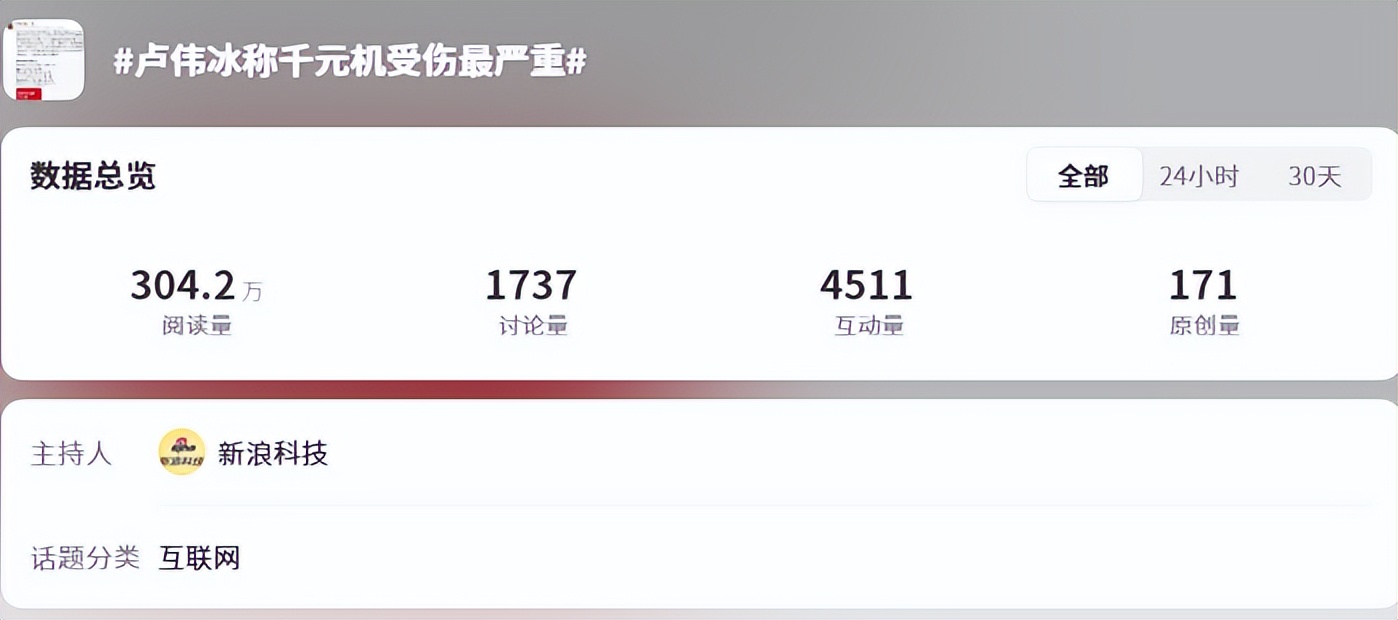
After all, the core appeal of a ‘sub-$150 smartphone’ lies in its affordability.
Consequently, as costs soar, features like OLED screens, top-tier water resistance, and high-strength glass are becoming increasingly scarce.
It’s worth noting that after Lu Weibing’s remarks, his former colleague Wang Teng also stepped forward to say that, despite no longer being in the mobile phone industry, the ‘price hike trend’ has also ‘squeezed’ his new company.
“Nowadays, not only are memory prices surging, but PCBs, resistors, and capacitors are also in short supply, driving up prices. Mobile phone costs are expected to keep rising, and other consumer electronics are starting to feel the pinch as well.”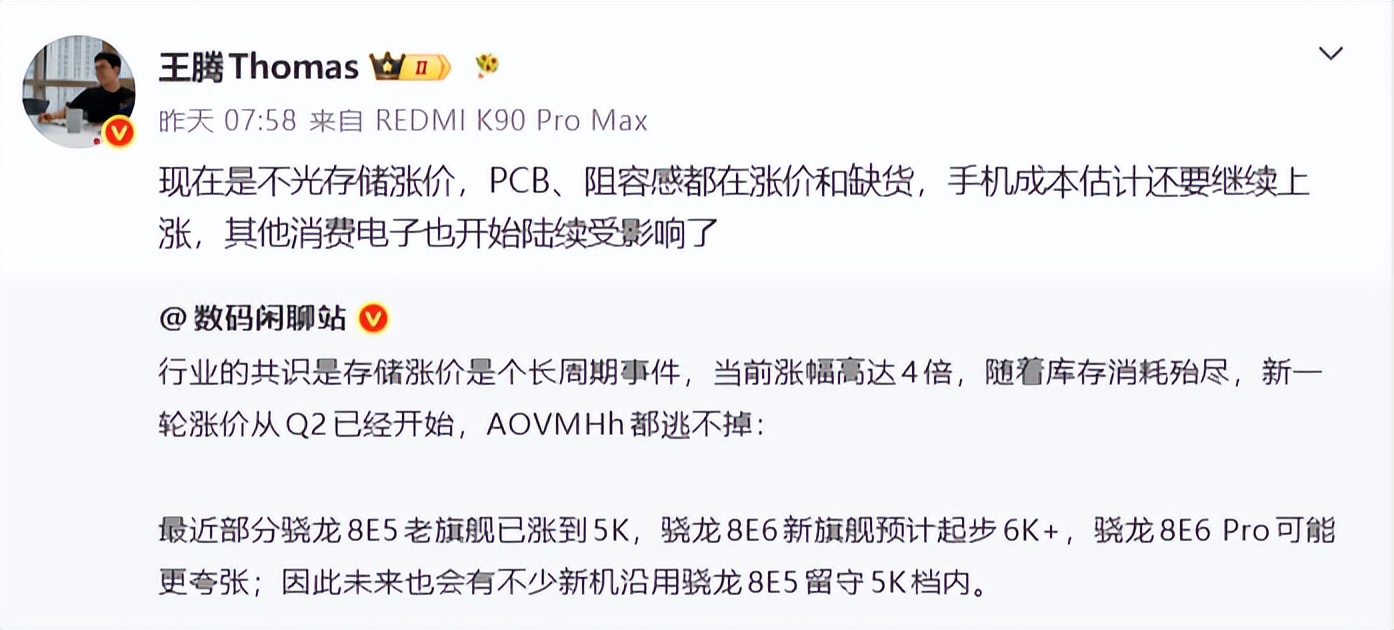
Following Wang Teng’s comments, a keyword search revealed that
In addition to price adjustments for certain products from brands like OPPO, OnePlus, Honor, and Vivo, two major ‘post-college entrance exam spending options’—laptops and tablets—have also witnessed significant price hikes. Even more shockingly, Sony’s PS5 series, Nintendo Switch 2, and Microsoft’s Xbox gaming consoles have all seen price increases of several hundred dollars.
What does this imply?
Suppose Aqiang’s father promised him, ‘Do well on your college entrance exams, and I’ll treat you to a full set of electronics afterward.’ In that case, the cost of just a mobile phone, laptop, and tablet (all mainstream models) would be thousands of dollars higher than last year.
Even Apple Can’t Escape the ‘Squeeze’ from Memory Manufacturers
Recently, in addition to news about SK Hynix employees’ soaring average salaries, jokes about computer assembly have also been widely circulated on various forums↓
2023: ‘Hello, I have a $5,000 budget. How much computer can I build?’ ‘Get lost if you’re going to cause trouble.’
2025: ‘Hello, I have a $5,000 budget. How much computer can I build?’ ‘Hello, with this budget, you can build a $3,000 computer.’
The sole reason for this is the explosive growth in demand for AI servers. Leading global tech giants (such as Google and Microsoft) are frantically securing memory production capacity to avoid falling behind in the AI race and ultimately losing their chance to ‘stay in the game’ in the future.
But...
Compared to traditional servers, an AI server requires 8 times more DRAM and 3 times more NAND. Moreover, these buyers are generally well-funded. If Samsung and SK Hynix can’t provide immediate inventory, it doesn’t matter—they’re willing to pay upfront to lock in the suppliers’ production capacity for the next few years.
Under such circumstances, driven by the simple mindset that ‘not making money when you can is foolish,’ memory manufacturers are reducing production capacity for mobile phone memory chips and consumer-grade storage products, fundamentally shifting their factory production focus.
With this confluence of factors,
Not only are domestic manufacturers feeling the heat, but even Apple, which wields top-tier bargaining power and priority supply rights, has recently announced price increases of 15%-25% for products like the Mac, iPad, and HomePod due to rising costs (with limited chip production capacity, companies must either pay more for immediate inventory or pay to secure production capacity).
Even a financially robust company like Apple is being ‘squeezed’ by soaring component prices and is crying out in pain.
The situation for secondary-tier, mid-tier, and even lower-tier manufacturers goes without saying...
2028 May Mark a Critical Turning Point
The market is dynamic. When mobile phone, laptop, and even gaming console manufacturers proactively adjust prices to stabilize supply, memory manufacturers are instead entering their ‘golden age.’
In the past, since memory chips rarely failed, the memory people purchased was more akin to a ‘non-consumable’ piece of equipment. Without consumption, there was no new demand (as long as there was no physical damage, memory could be used indefinitely by deleting unnecessary information).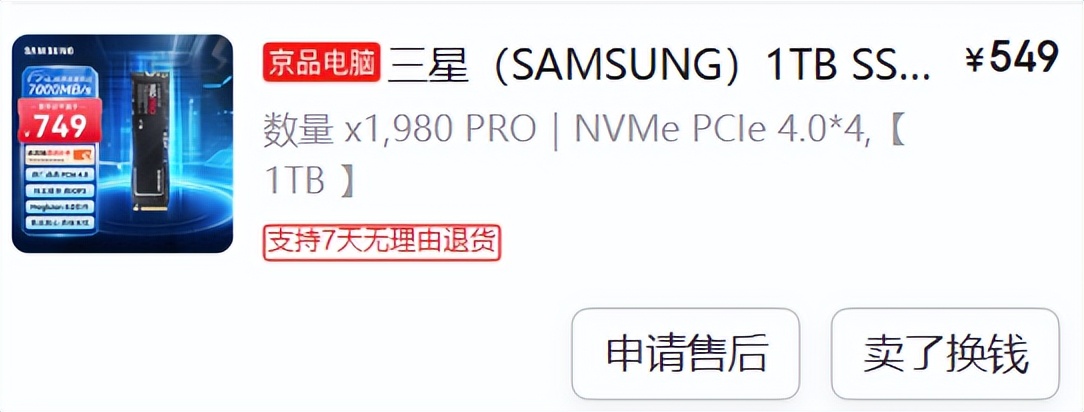
So, in 2023, Samsung’s flagship 1TB SSDs mostly sold for around $70, compared to today’s prices starting at $200—a stark contrast.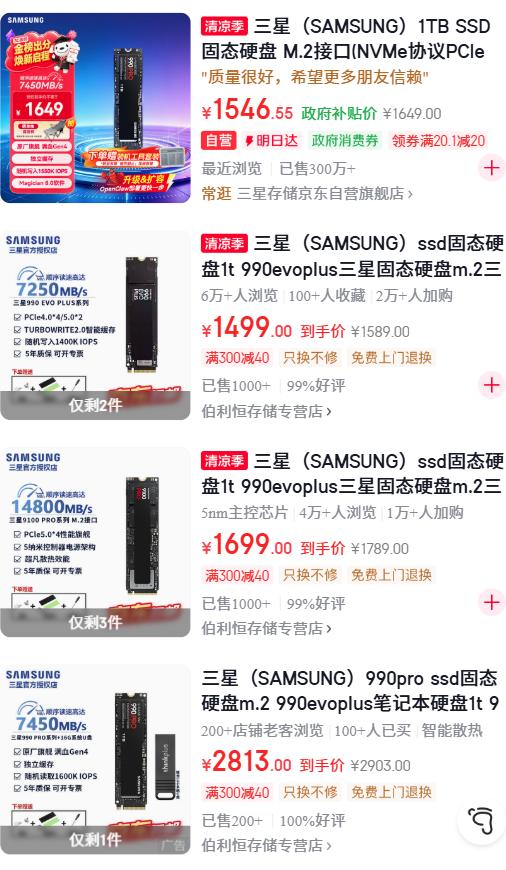
In terms of financial data,
In the third quarter of fiscal year 2026, Micron’s revenue reached $41.456 billion, a staggering year-over-year increase of 346%. Its net profit was $28.857 billion, up over 1200% year-over-year.
Correspondingly, China’s memory giant ChangXin Technology not only achieved remarkable results in 2026, with ‘operating revenue of $15.4 billion to $16.8 billion, a year-over-year increase of 612.53% to 677.31%,’
but its net profit attributable to shareholders also increased more than 22-fold year-over-year, indicating that the memory market is tilting toward a ‘seller’s market,’ where demand significantly exceeds supply capacity.
Returning to the current issue of widespread price hikes for electronic products,
As we are currently in the heated phase of the AI race, the only question we need to ask ourselves is: ‘Is replacing XX right now a necessity?’
Memory production lines typically require heavy capital investment and take several years from layout to full-scale production. With upgrades in production capacity across various manufacturers and the stabilization of the AI narrative, Micron’s CEO’s prediction of a ‘memory crisis easing by 2028’ is highly likely to become a reality.
Coupled with the widespread belief in the industry that after ChangXin ramps up production, it will prioritize supplying local core customers, 2028, which is not far away, may well become the year when manufacturers ‘achieve ultimate cost-effectiveness.’
References:
Guancha.cn: Xiaomi’s Lu Weibing: The mobile phone industry is facing its toughest challenge in a decade
Jining News: A ‘graduation electronics bundle’ costs $700 more—when will the price hikes for digital products end?
Jiupainews: Lu Weibing discusses mobile phone price hikes, saying that prices for flagship domestic smartphones may exceed $1,400 in the second half of the year, with memory price hikes potentially lasting until 2028
-
![]()
Li Bin Claims, 'Denying the Pure EV Trend is Like Ostrichism.' What's Li Xiang's Take?
-
Lenovo: Liu Jun Turns Left, Yang Yuanqing Turns Right
-
Lenovo: Liu Jun Goes Left, Yang Yuanqing Goes Right
-
![]()
MiniMax Shares Unlock: Cornerstone Shareholders Show Long-Term Optimism, Yet Stock Plummets Nearly 30% in Two Days; Zhipu Also Sees Nearly 20% Drop Today
-
![]()
Single-Day Plunge of 40%: The 'First AGI Stock' Faces More Than Just Share Price Concerns
-
![]()
Ricoh and Fuji Hike Prices on Legacy Edge; Insta360 Poised to Disrupt Mirrorless Camera Market
-
![]()
Ricoh and Fujifilm Raise Prices in Tandem, Relying on Established Reputations; Insta360 Poised to Disrupt Mirrorless Camera Market
-
![]()
Strategic Shift in Photoelectric Sensing: Maxvision Secures Controlling Stake in CAS Optotech