The Next Decade for BMW's New Leader: China Holds the Key to Success or Failure
 12/15 2025
 514
514
Introduction
The upcoming decade will pose significant challenges for BMW's new leader.
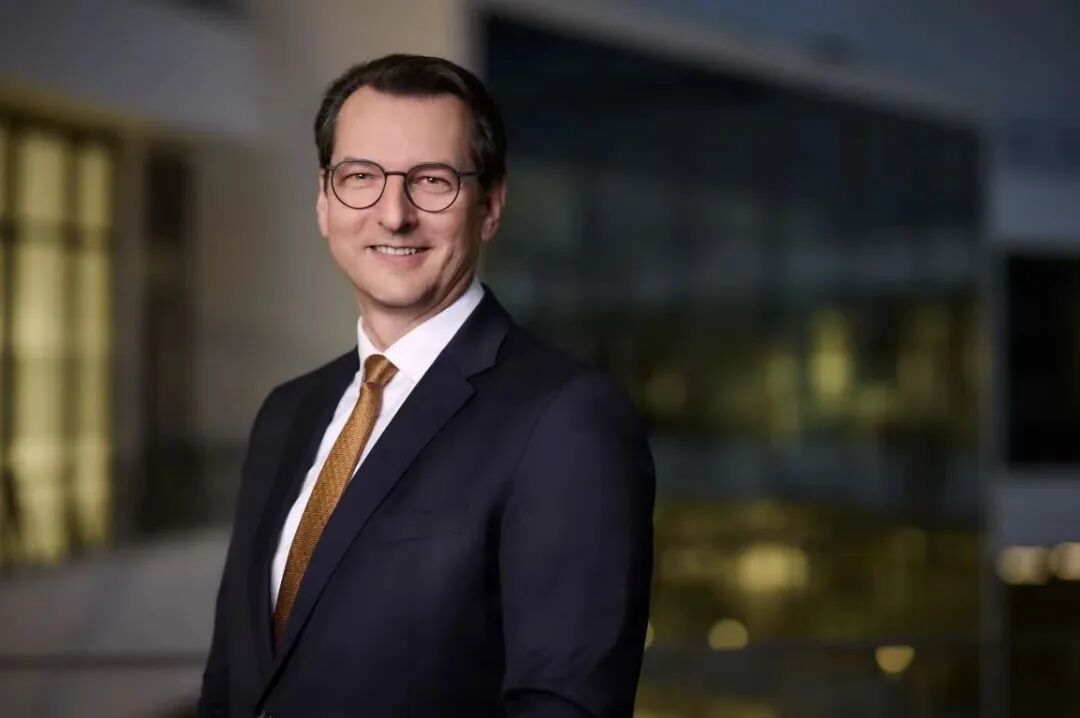
BMW Group recently announced the appointment of seasoned executive Milan Nedeljkovic as its new Chief Executive Officer. Nedeljkovic will officially assume his role on May 14, 2026, for a five-year term.
At that time, Oliver Zipse, who has long led the BMW Group, will step down upon the completion of his tenure. Nedeljkovic, aged 54, currently serves as the Head of Production at BMW Group and boasts over 30 years of experience with the company.
If Zipse's succession of Harald Krueger in 2019 was viewed as an 'early leadership shift' aimed at providing BMW with clearer strategic direction and a more defined transformation roadmap, then Nedeljkovic's appointment appears to represent a seamless internal transition.
Zipse, born in 1964 and now 61, has already exceeded the typical retirement age for European automotive executives. As his contract nears its end, the establishment of a new leadership team under Nedeljkovic's guidance reflects a typical internal promotion and seasoned succession, showcasing the group's smooth and orderly management transition.
01 From Intern to CEO in 30 Years
Nedeljkovic's appointment marks him as the fourth BMW Group leader to ascend from the position of Head of Production.
A graduate of RWTH Aachen University and the Massachusetts Institute of Technology (MIT), Nedeljkovic later earned a doctorate from the Technical University of Munich. He joined BMW in 1993 as an intern and steadily climbed the ranks within BMW's manufacturing department, overseeing body shop planning, stamping plant operations, and the management of the Oxford and Leipzig plants.
Navigating an increasingly complex production system, Nedeljkovic established himself as a manufacturing expert within the group, garnering a strong reputation and eventually being appointed as the head of BMW's iconic Munich plant. At this historic facility, which embodies the brand's heritage, Nedeljkovic assumed responsibility for overseeing core production operations.
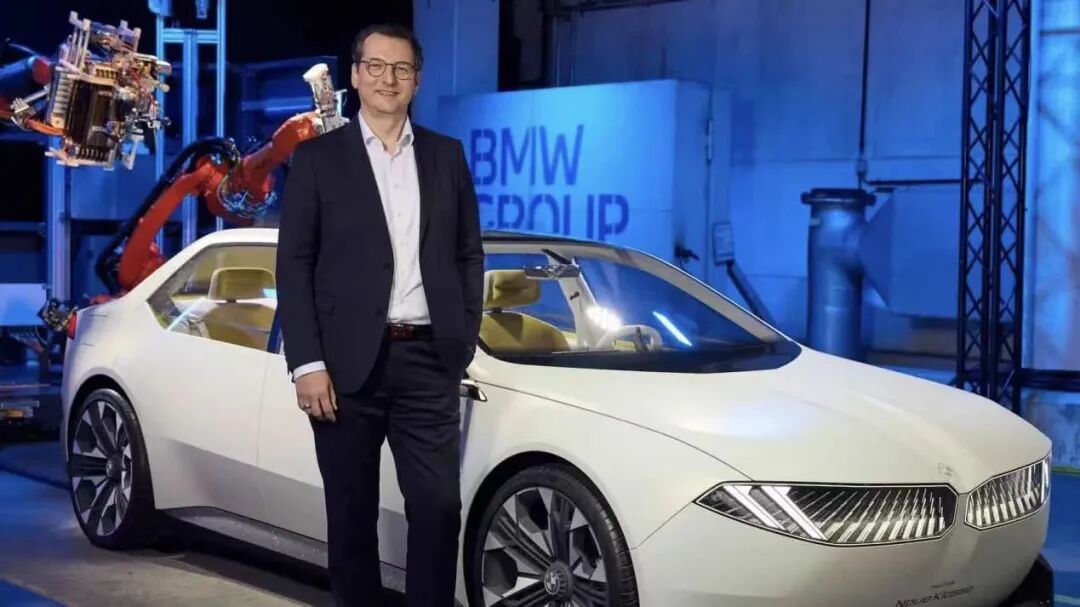
At the Munich plant, Nedeljkovic spearheaded a comprehensive transformation and upgrade, enabling this historically significant production base to achieve mixed production of both fuel-powered and electric vehicles.
This pioneering transformation not only laid the production foundation for BMW Group's strategic 'parallel multi-power routes' layout but also built technological resilience and strategic flexibility for the company amidst an uncertain industry transformation cycle.
Choosing Nedeljkovic as the new leader reflects full recognition by the BMW Group of his achievements and capabilities.
Nedeljkovic's contributions to BMW extend beyond production-level innovations. In recent years, he has driven the group's electric transformation, become the core leader of the Neue Klasse electric vehicle platform, and successfully leveraged NVIDIA's cutting-edge technology to create a digital twin model for BMW's future factories.
As early as 2021, when artificial intelligence had not yet become a buzzword in automotive manufacturing, Nedeljkovic, then the Head of Production at BMW Group, had the foresight to opt for using NVIDIA's virtual technology to plan future factories.
He selected a digital emerging tool still in the experimental stage but with greater future potential, rather than Siemens' proven factory software suite. This decision was undoubtedly a bold gamble at the time.
Bernstein analyst Stephen Reitman commented, "The Neue Klasse represents BMW's most significant leap in investment and technology to date. As the core leader, Nedeljkovic has successfully guided and gradually advanced the project's implementation. With practical experience in key future-oriented areas such as embodied intelligence, he is the ideal candidate to helm the group."
02 The Chinese Market: A Crucial Battleground
In recent years, European legacy automakers have faced sustained pressure due to challenges such as the industry's new four modernizations transformation and geopolitical and trade conflicts. Both Stellantis and Volkswagen Group have experienced the harsh reality of abrupt leadership departures and large-scale management reshuffles.
In contrast, the leadership transition at BMW Group appears more stable and orderly. Nevertheless, Nedeljkovic's task for the next decade will not be easy.
For BMW today, no challenge looms larger than the Chinese market. Moritz Kronenberger, a portfolio manager at BMW shareholder Union Investment, told Reuters, "The success or failure of the Nedeljkovic era will hinge on the Chinese market."
For a long time, the Chinese market has been a key region contributing the highest profits to the BMW Group. However, the market landscape of the high-end luxury car segment, once dominated by Mercedes-Benz, BMW, and Audi (BBA), is undergoing a quiet transformation—the market share of Chinese domestic automakers continues to rise, posing significant competitive pressure.
More notably, Chinese automakers have achieved global competitiveness in terms of innovation pace, technological capabilities, and cost control, even surpassing traditional automotive giants in certain areas.
For BMW, the strategic core position of the Chinese market in the next decade is undeniable. The new leader steering the group must confront these challenges head-on and cannot afford to sustain further losses in market share.
Matthias Schmidt, an analyst at Schmidt Automotive Research in Germany, issued a similar warning, telling Automotive News Europe,
"BMW faces dual pressures in China. To compete, the company needs to develop two different new vehicle architectures—one for the Chinese market and another for the rest of the world. However, this approach also has a downside: it dilutes production scale and increases development costs, clearly unfavorable to improving profit margins."
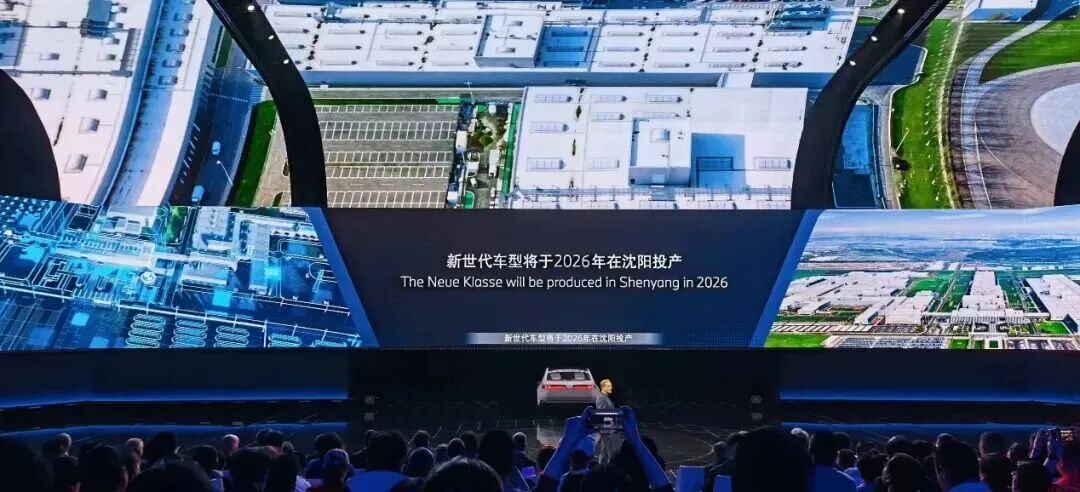
Regardless of tactical and strategic planning, for Nedeljkovic, stabilizing and developing the Chinese market has become a matter of survival.
In fact, during Zipse's tenure, the BMW Group deepened its connection with the Chinese market with unprecedented intensity. Zipse was the most frequent visitor to China among multinational automotive CEOs in the past year. On many public occasions, he frequently emphasized that "China is BMW's second homeland," elevating the importance of the Chinese market to an unprecedented level.
Another challenge lies in the electric transformation.
Schmidt commented that the Neue Klasse is a gift from Zipse to his successor, but it is also a massive gamble. If BMW wants to maintain its profit margins against faster-developing, lower-cost Chinese competitors, this bet must deliver financial returns for the company as soon as possible.
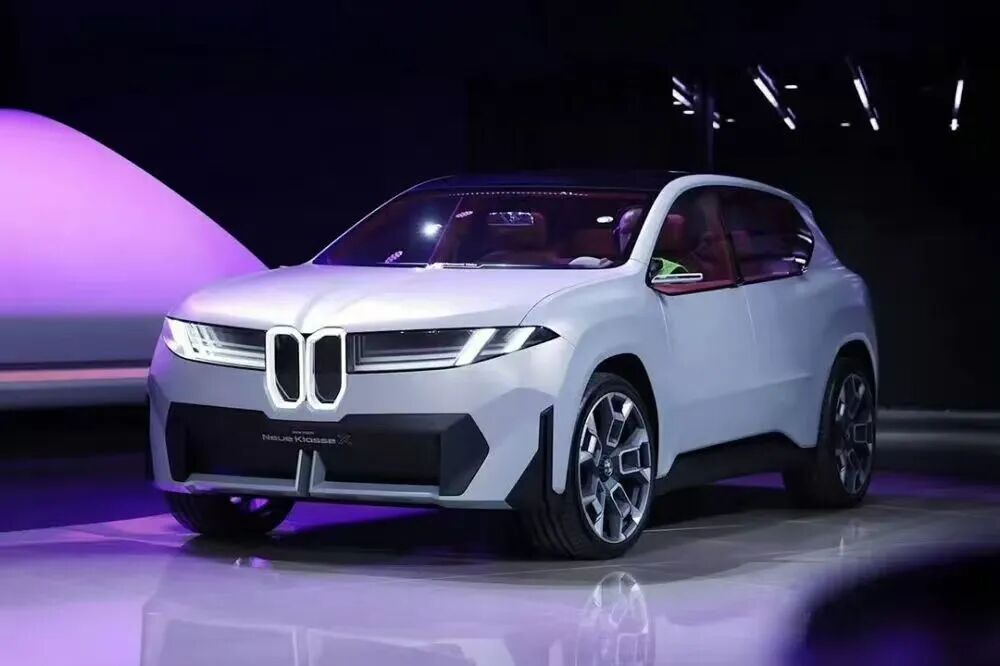
The BMW Neue Klasse electric vehicle platform has comprehensively reformed vehicle electronic and electrical architectures, software stacks, and manufacturing systems, becoming the largest product and technology investment in BMW's history. Naturally, the associated risks are also significant, as any decision-making errors could impact the group's profitability.
The Neue Klasse crafted by Zipse is a double-edged sword. From the moment he took over this sharp blade from his predecessor, Nedeljkovic could only move forward, as there is no turning back.
Regardless of the success or failure of the Neue Klasse models, Nedeljkovic will face a do-or-die battle in the coming years.
Editor-in-Chief: Du Yuxin Editor: Chen Xinnan
THE END
-
![]()
Registered Capital Slashed to 372 Million Yuan! Yutong Optical Finalizes Industrial and Commercial Change Registration
-
![]()
Zhuque-3 Successfully Lands, and 'Time Traveler' Secures Another ¥100 Million in Funding: China's Commercial Space Industry Experiences a 'Dynamic August'
-
![]()
Autohome Faces a Shrinking Window of Opportunity
-
![]()
Even a Titan Like Musk Has Faced Setbacks in Fulfilling Promises
-
![]()
AI Office: The End of the Racing Era, Context Becomes the Key to Success
-
![]()
Domestic Vehicle Chassis Revolution ②: The Steering Wheel Remains, But Mechanical Connections in the Steering System Are Decreasing
-
![]()
Exploring MiniMax Design: Can Video Editing Be as Simple as Speaking?
-
![]()
Why Can SenseTime Achieve Profitability While CloudWalk Still Faces Challenges, Despite Both Adopting Large Models?