Nissan is on the Hunt for Its Next Alliance
 12/15 2025
 703
703
Introduction
At the crossroads of a century-long transformation in the automotive industry, no single company can dominate every aspect of the supply chain on its own.
From the aggressive integration phase during the Ghosn era to the challenging balancing act in the post-Ghosn period, and now to the 'Re:Nissan' revival plan under Espinoza's leadership, Nissan has been relentlessly searching for the most suitable path for its survival and growth. By reducing its stake in Renault, Nissan marks the end of an old era. Meanwhile, its proactive pursuit of allies, armed with its electrification and autonomous driving technologies and based on the principle of reciprocity, initiates a new chapter.
Nissan may no longer boast an alliance title as illustrious as in the past, but it is striving to construct a cooperative ecosystem that better aligns with the current logic of automotive industry transformation. This is no longer an old story centered around equity and control; rather, it's a new narrative about sharing, complementarity, and symbiosis.
On one hand, the company must maintain the viability and profitability of its current business. Ponz Pandikuthira, Nissan's head of product planning for the Americas, believes that Nissan can forge ahead independently and build a business that sells 3.2 to 3.4 million vehicles globally each year. On the other hand, Nissan also acknowledges the significance of economies of scale.
At the crossroads of this long-standing transformation in the automotive industry, no company can go it alone in every link. For Nissan, the next 'alliance era' may not fly under a unified banner, but it must feature a robust network that can connect to the future and ensure its continuous advancement.
01 Nissan Seeks Allies with Its Technologies
After experiencing its largest annual loss in 25 years, Nissan has come to realize that independent development alone makes it challenging to achieve long-term competitiveness.
Pandikuthira clearly stated, 'We are open to cooperation, but it must be reciprocal. They possess what we desire, and we have what they need.' This emphasis on a mutually beneficial and win-win cooperation philosophy marks a significant transformation for Nissan, shifting from technological isolation to open collaboration.
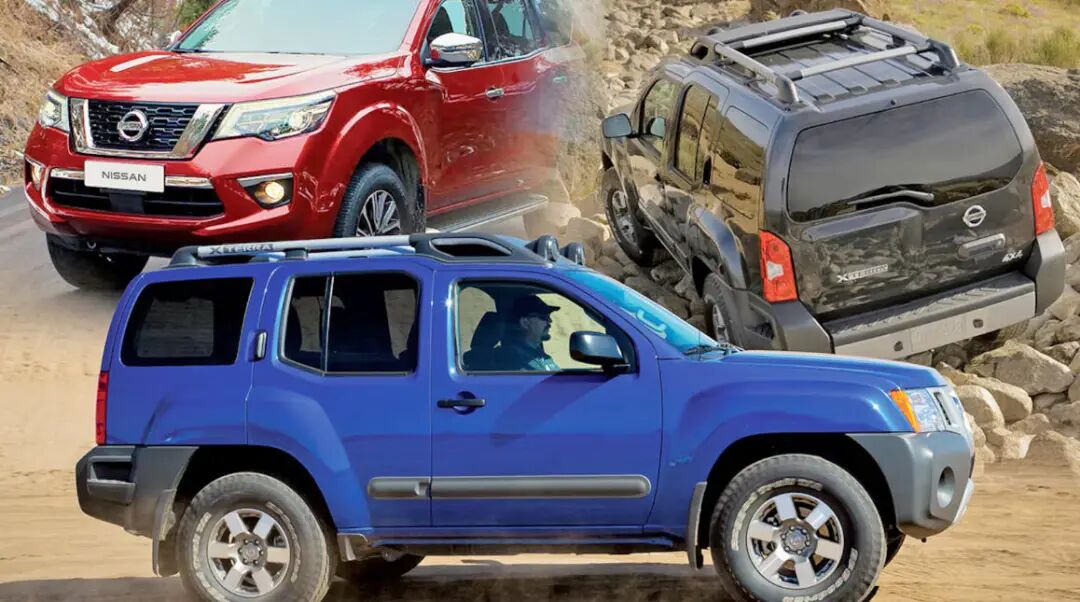
Currently, Nissan is in discussions with several automakers, including Ford, Stellantis, Honda, and Mitsubishi. Cooperation may revolve around Nissan's core technological assets: its popular Rogue crossover electric platform, e-Power hybrid system, and the electric vehicle body frame platform currently under development, which will be utilized for the next-generation Frontier pickup, Pathfinder, and Xterra.
Mitsubishi has expressed interest in developing electric crossovers based on Nissan's platform and producing them in U.S. factories.
The fundamental driving force behind Nissan's search for partners stems from its pursuit of economies of scale. Its setbacks in the U.S. electric vehicle market, with the Ariya withdrawing due to tariffs and subsidy cancellations and the Leaf's sluggish sales, have made Nissan acutely aware of the necessity for economies of scale in electric vehicles. Pandikuthira admitted, 'We understand that electric vehicles require economies of scale.'
By jointly developing platforms to share R&D costs, Nissan hopes to alleviate the economic pressure of its electrification transformation while providing mature technological solutions for its partners. Moreover, Nissan brings attractive technological bargaining chips to the negotiation table:
For instance, the flexibility of the electric platform. Nissan emphasizes that the cooperative models can achieve a high degree of differentiation. 'From the interior and exterior to the electrical architecture, the two models are entirely distinct. 95% of customers cannot discern that they are jointly developed.' This ensures brand uniqueness for its partners.
For example, the e-Power hybrid system. This system has garnered industry attention, and some automakers may be inclined to directly purchase the technology or commission Nissan to produce vehicles.
Take, for instance, U.S. localization production capacity. For automakers aspiring to expand into the North American market, Nissan's manufacturing bases and supply chain systems in the United States hold practical value, helping partners circumvent trade barriers.
Consider the potential of the pickup platform. The next-generation Frontier pickup platform is particularly well-suited for partners seeking to enter the North American pickup market. The model is slated to be produced in Mexico, offering both pure electric and hybrid options.
While pursuing cooperation, Nissan is secretly advancing an ambitious plan: to develop an autonomous driving system priced at half of Tesla's, with the aim of launching an advanced 'ProPilot' system priced at around $4,000 in early 2028.
In terms of technological path, Nissan has opted to collaborate with British AI company Wayve, adopting a pure vision solution to avoid the high costs of lidar. Wayve's self-learning AI technology can self-optimize with every mile driven, handling complex road conditions without relying on high-precision maps. Pandikuthira evaluated the technology as 'comparable to Tesla's latest system.'
It is reported that cost control is Nissan's key advantage. Tesla's FSD system is priced at $8,000, whereas Nissan aims to keep the target price around $4,000 by simplifying hardware, with the goal of making autonomous driving technology 'accessible to mainstream users.' The system will be rolled out in stages: initially requiring drivers to keep their eyes on the road, and in the future, when regulations permit, a lidar version will be introduced to provide a more liberated autonomous driving experience.
The motivation for R&D is not merely to catch up with Tesla. Nissan believes that autonomous driving represents the future of 'active safety' and can significantly enhance the road trip experience. Although the company is facing financial pressure and autonomous driving is not its 'ultimate goal,' Pandikuthira stated that 'there is no reason to halt research' because it is integral to future competitiveness.
02 Is the Next Alliance Era Coming?
It is evident that as the Renault-Nissan-Mitsubishi alliance, which once rescued Nissan from the brink of bankruptcy, transitions from deep integration to capital loosening, Nissan's business acumen is evolving. This Japanese automaker with nearly a century of history no longer regards clinging to an old alliance as its strategic cornerstone but seeks to establish a series of new-era partnerships based on complementary advantages on a global scale, using its own technologies as bargaining chips.
As we all know, the Renault-Nissan-Mitsubishi alliance, which commenced in 1999, was once hailed as one of the most successful examples of cross-border cooperation in the global automotive industry. However, the long-standing unequal equity relationship sowed the seeds of instability for the alliance. In recent years, a series of loosening operations have marked the alliance entering a new phase.
This series of operations is not a mere financial separation but Nissan clearing the path for its strategic autonomy. As industry analysts have pointed out, this move aims to diminish the deep capital-level binding relationship with Renault and pave the way for Nissan to engage more freely with other partners.
However, capital loosening does not signify the end of cooperation. Business-level collaboration within the alliance remains robust, particularly in electrification transformation. In July 2025, the alliance announced that it would jointly invest 23 billion euros over the next five years to construct five shared electric platforms, with the ambition of launching 35 new electric models by 2030. This low-binding, high-autonomy model provides a blueprint for Nissan to explore wider cooperation and leaves a valuable legacy of technological collaboration.
As the capital ties with Renault loosen, Nissan casts its gaze toward a broader horizon. Its actions in seeking new partners adhere to a clear principle: reciprocity.
'We will not forge connections with partners merely to acquire vehicles, platforms, or technology products. This is a long-term commitment, not just a transaction.' Pandikuthira's statement sets the tone for new cooperation. This implies that Nissan is not seeking a simple technology buyer or seller but a strategic ally capable of forming complementary advantages in specific areas.
If the electric platform is the ticket to enter the new-era cooperation club, then autonomous driving technology is the pricing power that Nissan endeavors to grasp. As mentioned earlier, in competition with Tesla, Nissan has chosen a differentiated path: vigorously pursuing cost controllability while ensuring comparable performance.
The significance of this technology extends far beyond a product feature; it represents Nissan's resolve to build independent capabilities in the core area of intelligence. Once successful, this will become a highly influential basis for Nissan's discourse power in any future cooperation. It can not only be utilized for itself but may also be offered to partners as 'something they desire,' truly achieving reciprocity.
Overall, what Nissan is seeking is by no means a simple replication of another 'Renault-Nissan-Mitsubishi'-style close alliance tied by cross-shareholdings. It is outlining a more flexible, open, and purpose-driven vision of 'Alliance 2.0'.
The characteristics of this new-era alliance are decentralization and modularity. Nissan no longer confines itself to a single axis but is prepared to establish bilateral or multilateral relationships with multiple partners across different dimensions: sharing pickup platforms with Company A in North America, jointly developing electric vehicles with Company B in Europe, and collaborating with Tech Company C on autonomous driving software.
Each type of cooperation is grounded in specific business needs and technological complementarity rather than forced capital binding.
The advantage of this model lies in its immense flexibility, enabling Nissan to swiftly respond to the demands of different regional markets, share substantial R&D costs, and avoid the risk of placing all its eggs in one basket. As Pandikuthira said, independent survival is feasible, but cooperation is aimed at 'becoming a money-printing machine that shields you from the next economic downturn.'
Of course, this path is also fraught with challenges. Simultaneously managing multiple complex cooperative relationships is a monumental test for a company's strategic resolve, execution capability, and cultural openness. Additionally, how to preserve its own brand and technological uniqueness amid numerous collaborations and avoid becoming a mere contract manufacturer is also a challenge that Nissan must overcome.
Editor in Charge: Du Yuxin Editor: Wang Yue
THE END
-
![]()
Registered Capital Slashed to 372 Million Yuan! Yutong Optical Finalizes Industrial and Commercial Change Registration
-
![]()
Zhuque-3 Successfully Lands, and 'Time Traveler' Secures Another ¥100 Million in Funding: China's Commercial Space Industry Experiences a 'Dynamic August'
-
![]()
Autohome Faces a Shrinking Window of Opportunity
-
![]()
Even a Titan Like Musk Has Faced Setbacks in Fulfilling Promises
-
![]()
AI Office: The End of the Racing Era, Context Becomes the Key to Success
-
![]()
Domestic Vehicle Chassis Revolution ②: The Steering Wheel Remains, But Mechanical Connections in the Steering System Are Decreasing
-
![]()
Exploring MiniMax Design: Can Video Editing Be as Simple as Speaking?
-
![]()
Why Can SenseTime Achieve Profitability While CloudWalk Still Faces Challenges, Despite Both Adopting Large Models?