Tesla Faces Renewed Scrutiny: Short Sellers Predict 60% Stock Plunge
 04/08 2026
 522
522
Exercise Caution When Investing
Author|Wang Lei
Editor|Qin Zhangyong
Tesla short sellers are once again on high alert.
While Wedbush remains bullish on Tesla, maintaining a target price of $600, long-time bear JPMorgan Chase has reiterated its "underweight" rating, cautioning investors: "We advise exercising extreme caution with Tesla stock."
In simpler terms, this suggests that purchasing Tesla stock is not advisable due to the high risk of substantial losses.
JPMorgan Chase has set its latest target price at just $145, a stark contrast to Tesla's current closing price of $352.82. This indicates a potential 60% decline from the current level, according to their analysis.
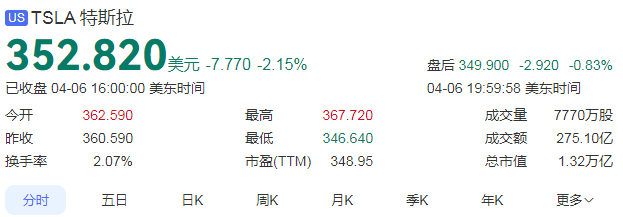
Even when compared to the market's average target price of $360, Tesla's recent closing performance falls short of expectations.
However, JPMorgan Chase is not the most pessimistic voice. Recently, HSBC further reduced Tesla's target price from $133 to $119, also assigning a "Reduce" rating.
With a nearly fivefold difference between $110 and $600, Tesla has long been a focal point of contention on Wall Street. Some short sellers have incurred significant losses, while speculators have reaped substantial profits. At least for now, Tesla's stock price continues to show resilience.
01
Sluggish Vehicle Sales
JPMorgan Chase's low target price is closely linked to Tesla's Q1 delivery figures.
In Q1, Tesla delivered 358,000 vehicles globally, representing a 6.3% year-over-year increase but a 14% quarter-over-quarter decrease, falling short of the market's anticipated 370,000 units.
Notably, in Q1, production of Tesla's flagship models, the Model Y and Model 3, exceeded sales by 50,000 units. The last time Tesla experienced such a significant production-sales gap was in Q1 2024, when the difference was 46,000 units.
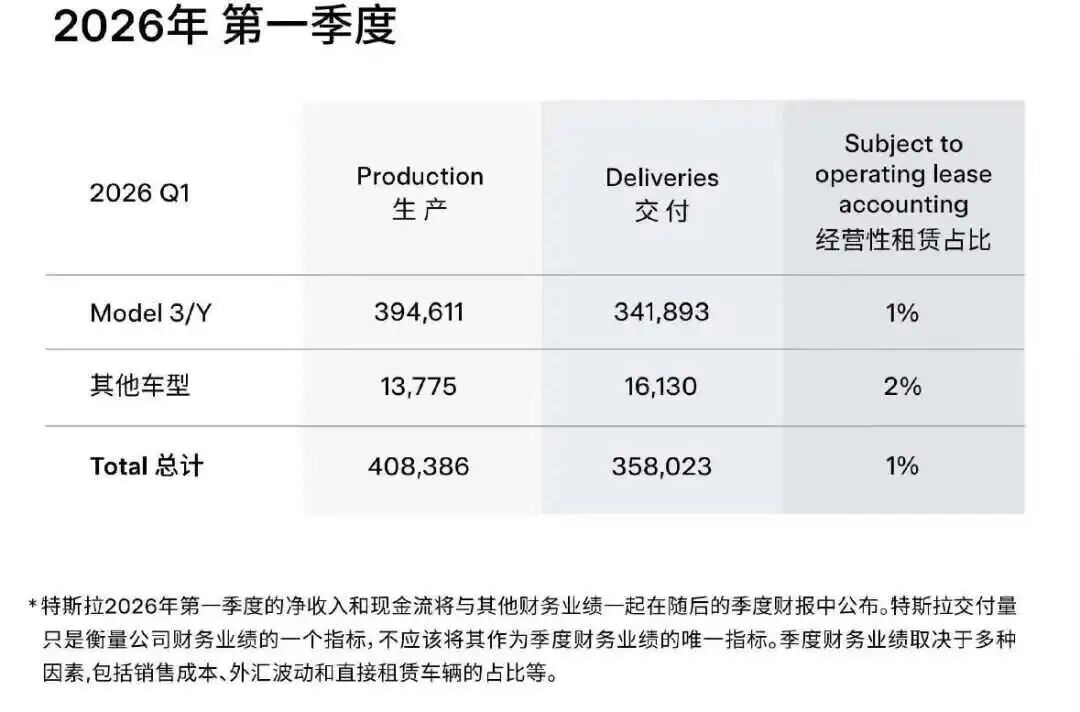
The 50,000-unit discrepancy between production and deliveries signals weakening demand at the consumer level, indicating that Tesla is facing challenges in selling its vehicles. The record-high unsold inventory serves as a key basis for JPMorgan Chase's bearish outlook.
JPMorgan analyst Ryan Brinkman stated bluntly in a research note: "The surge in unsold new vehicle inventory further exacerbates Tesla's free cash flow challenges. In Q1 2026, Tesla produced 50,363 more vehicles than it delivered, marking a historic high for quarterly inventory accumulation."
He also pointed out that since Q1 2023, Tesla's production has increased by 80%, while auto sales have declined by 15% during the same period. This suggests that Tesla's growth has significantly slowed since its delivery peak in June 2022.
Despite sluggish delivery growth, "remarkably," Tesla's current stock price remains more than 50% higher than when deliveries peaked in June 2022.
In his research note, Brinkman also highlighted earnings per share (EPS), a key profitability metric, projecting Tesla's EPS for Q1 at 30 cents, while the market's average expectation for the quarter was "once as high as $3.68."
He noted that this is just one example of Tesla's significantly downgraded expectations over the years, a trend that "undermines confidence in the company's ability to achieve its ambitious future goals." He pointed out that market expectations for EPS in 2030 are now about 38% lower than in 2022.
"While Tesla's stock price rally reflects a significant strengthening of market expectations for its earnings in the coming years, at the same time, consensus expectations for all performance metrics have sharply declined until at least 2030. Therefore, investors must fully account for execution risks and the time value of capital. Even if the optimistic future envisioned by bullish investors fully materializes... its timing may differ significantly from expectations."
Based on this analysis, he believes Tesla's stock price could decline by 60%, setting a target price of $145 through December 2026.
Additionally, the unexpected decline in Tesla's energy storage business also contributed to investment firms' immediate rating adjustments. Tesla's Q1 energy storage deployments plummeted to 8.8 GWh, down 15% year-over-year and nearly 40% from the previous quarter's record high of 14.2 GWh.
This led Baird to lower Tesla's target price from $548 to $538, stating that the underperformance may exert downward pressure on the stock price in the short term.
02
Shift in Valuation Logic
Interestingly, as the market interprets these data points as signs of Tesla's weakening position, Elon Musk disagrees. He shared a set of data on X comparing Q1 2026 delivery figures among major pure EV automakers.
Tesla delivered 350,000 vehicles, BYD about 310,000, NIO and XPeng 80,000 and 60,000 respectively, while Rivian, Ford, and Lucid delivered only 10,000 or fewer.
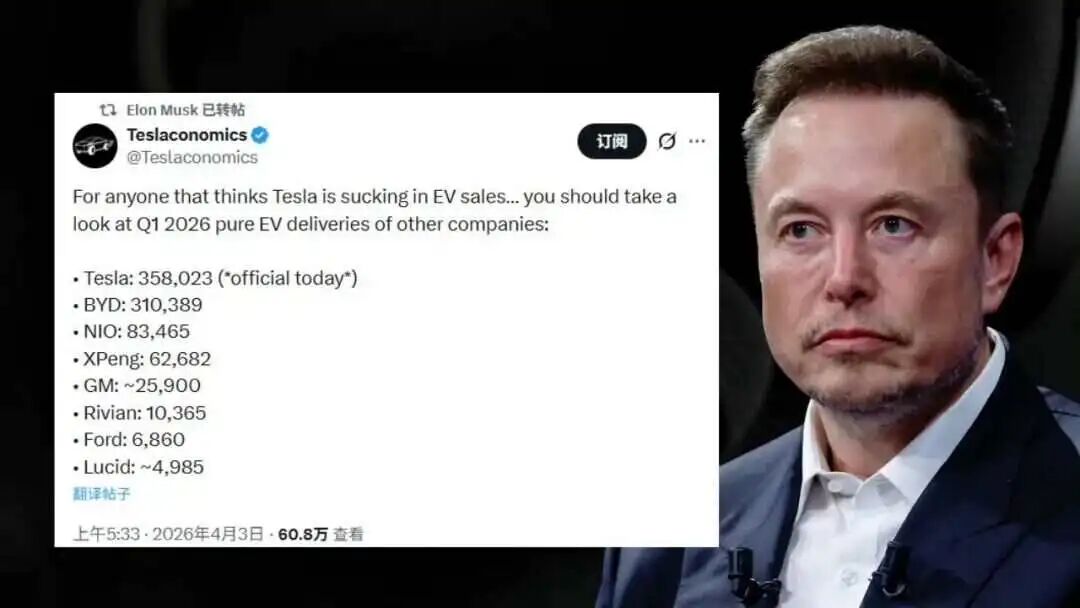
Musk's message was clear: While Tesla's quarter-over-quarter and consensus expectations may appear problematic, when viewed holistically across the industry, it remains the "relatively strongest" player.
Despite Tesla's weak Q1 sales data triggering immediate rating adjustments from multiple firms, JPMorgan Chase is not the only extreme bear. However, the bullish camp remains vocal.
Earlier, renowned U.S. "big short" investor Michael Burry announced that he was shorting Tesla's stock, calling its valuation "absurdly high."
Additionally, HSBC repeatedly lowered Tesla's target price, reducing it from $133 to $119 and assigning a "Reduce" rating, arguing that the AI/Robotaxi premium assigned to Tesla is entirely unreasonable.
In contrast, many place their hopes on projects like autonomous taxis and humanoid robots.
For example, Wedbush star analyst Dan Ives maintained a $600 target price for Tesla, believing it could reach a $2 trillion market cap by mid-2026 in a bullish scenario. He emphasized that the AI era is the most critical chapter in Tesla's growth story.
New Street Research analyst Peter Vogel also set a $600 target price, citing optimism about the expansion of robotaxi services and Cybercab mass production.
Cantor Fitzgerald analysts stated that Tesla's recent stock weakness provides investors with "a good entry point." They view FY2026 as a transformative year for the company, with shifts toward autonomous driving, AI, and robotics. They assigned an "Overweight" rating with a target price of $510.
Morgan Stanley maintained a $410 target price, taking a cautiously optimistic view of Tesla's technology roadmap. Analyst Andrew Percoco believes the advancement of robotaxi services will be Tesla's most important catalyst this year, with vertical integration endowing it with superior unit economics.
Bank of America raised Tesla's target price from $341 to $471, maintaining a "Neutral" rating, noting that robotaxis and the Optimus robot now account for nearly 45% of its segmental valuation.
While Goldman Sachs and Morgan Stanley lowered their target prices—the former from $405 to $375 and the latter from $425 to $415—both maintained a "Hold" rating.
An analysis of target prices from 41 analysts shows a median target of $458, implying about 23% upside from the current stock price.
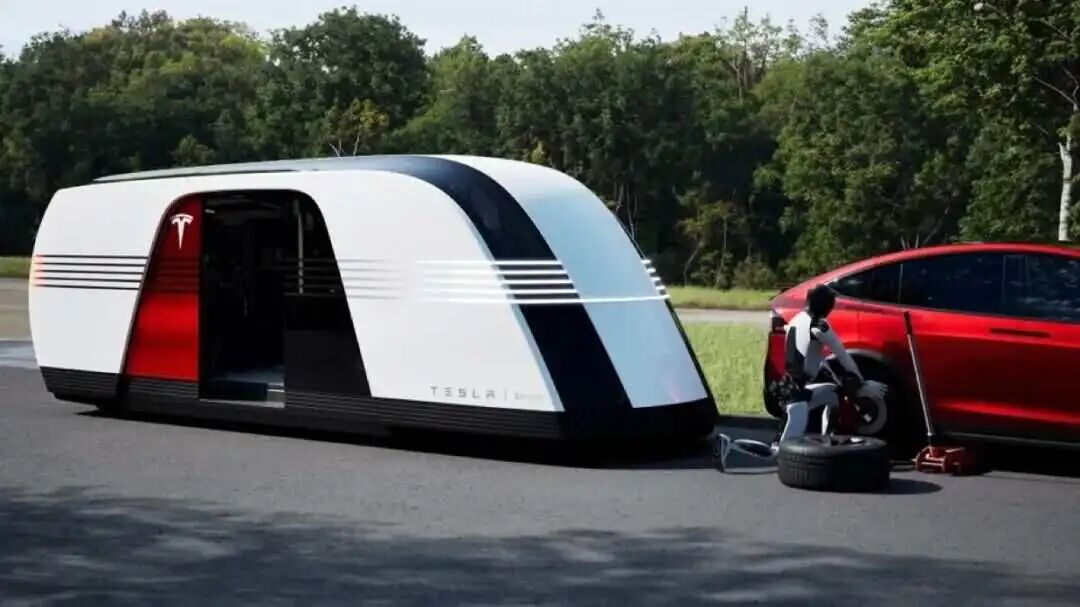
Despite weak sales, bullish institutions remain unshaken, as they believe Tesla's core logic has shifted from "how many vehicles it sells" to three longer-term visions: Cybercab robotaxis, Optimus robots, and a space AI blueprint.
Whether Tesla will return to earth or soar to space on Musk's "promises" may take time to verify.
-
![]()
AIS-3700 Integrated Module | Synchronous Monitoring of PM2.5 and CO₂ for a High-Quality, Healthy Cabin
-
![]()
Alibaba and Google March Together in the Agent Era
-
![]()
"National Shrimp Farming": 50 Days of AI Arbitrage Frenzy and Its Sudden End
-
![]()
NetEase’s Timeless Classics Shine in Q1, Reinforcing Global Expansion
-
From 'Construction' to 'Effective Management': Shenzhen's Innovative Approach Tackles the 'Last Mile' Challenge in Telecom Governance
-
![]()
A New Yardstick in the AI Era Measures the Path of Tech Giants
-
![]()
Daily Earnings of $650 Million Fall Short: What’s Next for NVIDIA’s Growth Trajectory?
-
![]()
Industrial Integration: Kepler Chooses a Smarter Path