An Underestimated Covert Chip War: Before the Dividends of Public SoC Peak, the AI Glasses Industry Needs to Produce the Next Huawei
 04/08 2026
 478
478
According to forecasts by Runto Technology, overall smart glasses sales in China are projected to exceed 3.2 million units in 2026, marking a 120% year-on-year increase. The industry's brand landscape will continue to reshape amidst fiercer competition.
However, when dissecting the smart glasses industry from a supply chain perspective, a fact concealed by the hype emerges: Over 70% of models rely on SoCs from the same series platform by a single vendor. In essence, all players' core 'brains' come from the same supplier.
Could the SoC solutions that mainstream smart glasses rely on become a chip bottleneck for all players?
01 The Mysterious Component Hidden in Glasses
In public perception, the visible appearance and specifications of smart glasses define the minimum user experience. However, the reality differs. As a niche within the consumer electronics industry, the performance of smart glasses is influenced by the unassuming SoC embedded in the temples.
SoC, or System on Chip, refers to a system that integrates all functions required for microelectronic applications onto a single chip. SoC eliminates signal transmission delays between chips and signal interference on circuit boards.
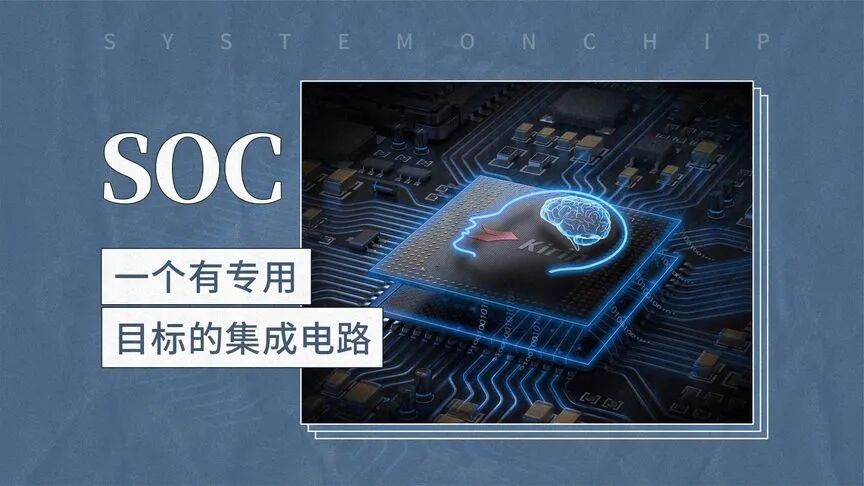
Many people's understanding of SoC is limited to mobile phone processors. However, the SoC for smart glasses follows a completely different design logic compared to mobile phone SoCs.
To be frank, it is not a single computing unit but a complete system that integrates multiple core modules—such as CPU, GPU, ISP, NPU, Bluetooth communication, and power management—onto a single chip.
Compared to mobile phones, smart glasses impose far stricter requirements on SoCs: The limited space in the temples demands ultimate (extreme) integration. Additionally, the close-to-face wearing scenario requires chip heat dissipation to stay within human-perceptible thresholds. The need for all-day wear demands the chip's energy efficiency to be at least twice that of mobile phone chips.
Counterpoint's 2025 Global Smart Glasses Hardware Cost Report reveals that SoC accounts for 28% of the BOM cost in consumer-grade smart glasses, second only to the display module's 34%, making it the second-largest core cost component.
Thus, the capabilities of this chip directly determine the product's foundational experience:
Every 10% improvement in energy efficiency extends battery life by over 15% for the same capacity. Each leap in integration reduces temple diameter by 1mm and overall device weight by over 3g. Every 1TOPS increase in NPU computing power enables one additional real-time AI function—whether real-time translation, eye tracking, or spatial positioning, all require NPU support.
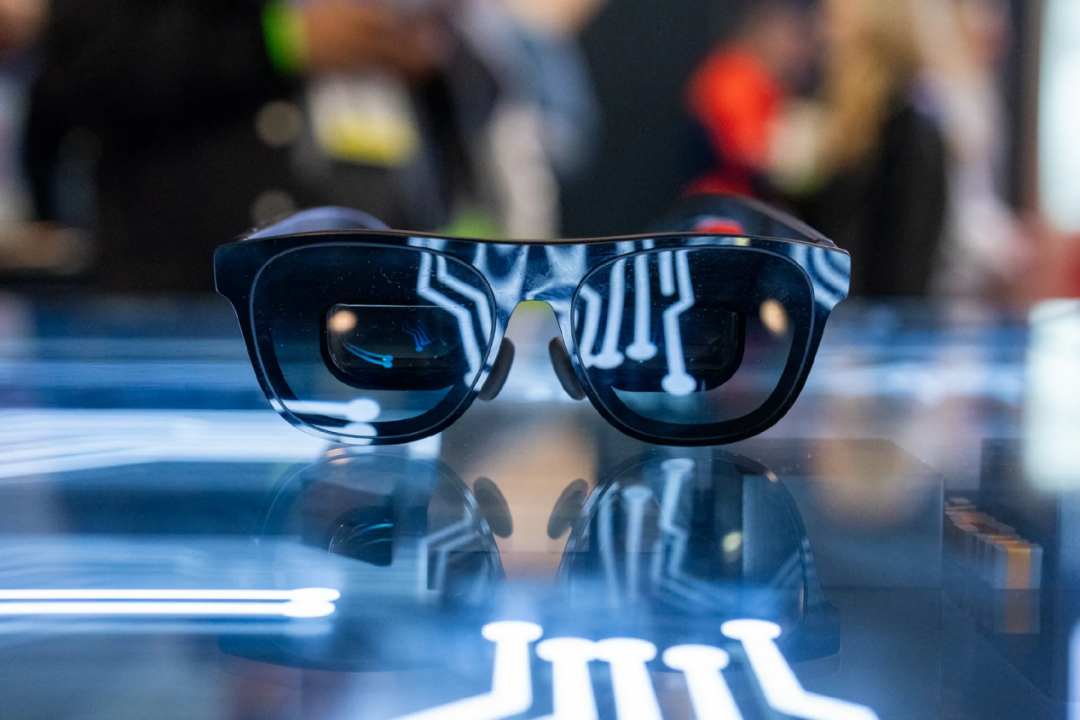
Many terminal manufacturers invest heavily in optimizing appearance, adjusting weight distribution, and upgrading display effects, only to find that an SoC with insufficient energy efficiency leads to temple heating during wear, shorter-than-advertised battery life, and laggy AI functions—undermining all surface-level optimizations.
For smart glasses, SoC is never an optional accessory but the foundational cornerstone defining product capabilities. Its upper limit directly determines the value ceiling of the entire supply chain.
02 Public Brain: Qualcomm Leads the Pack
Currently, AI glasses offer three chip solutions: SoC, MCU-level SoC + ISP, and SoC + MCU. SoCs typically use Qualcomm products, while MCUs employ options like BES2500YP from Bestechnic or W517 from Unisoc.
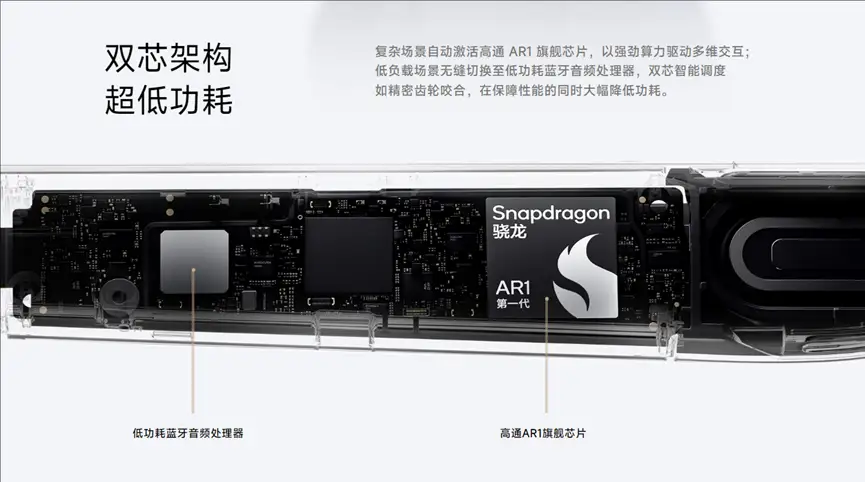
Notably, multiple high-end AI glasses launched in 2025 adopt a 'dual-chip' design. For example, Xiaomi's AI glasses feature a dual-chip architecture combining Qualcomm's AR1 flagship chip with Bestechnic's BES2700. Alibaba's Quark AI glasses use Qualcomm's AR1 flagship chip + Bestechnic's BES2800 coprocessor, paired with a 'dual-battery + battery swap compartment' design supporting hot-swappable main batteries for up to 24 hours of endurance (battery life).
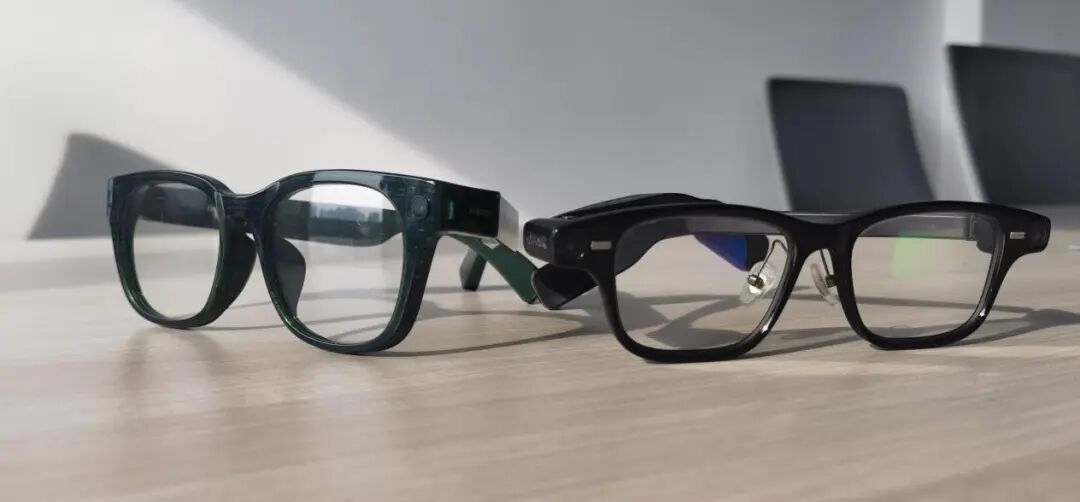
Xiaomi AI Glasses & Quark AI Glasses S1. Source: VRAR Planet
This collaborative design approach stems from practical constraints: A single SoC struggles to simultaneously meet high-performance AI computing and all-day standby demands. By having the coprocessor continuously monitor sensors like microphones and accelerometers—only waking the main chip upon keyword detection—standby power consumption is drastically reduced, extending usage time.
The current smart glasses SoC market is highly concentrated, mirroring the smartphone industry's past. Qualcomm's dominance has become the norm.
Canalys' 2025 Global Smart Glasses SoC Market Tracking Report shows Qualcomm commanding a 68% market share. In other words, 7 out of every 10 smart glasses sold globally rely on Qualcomm for their core 'brain.'
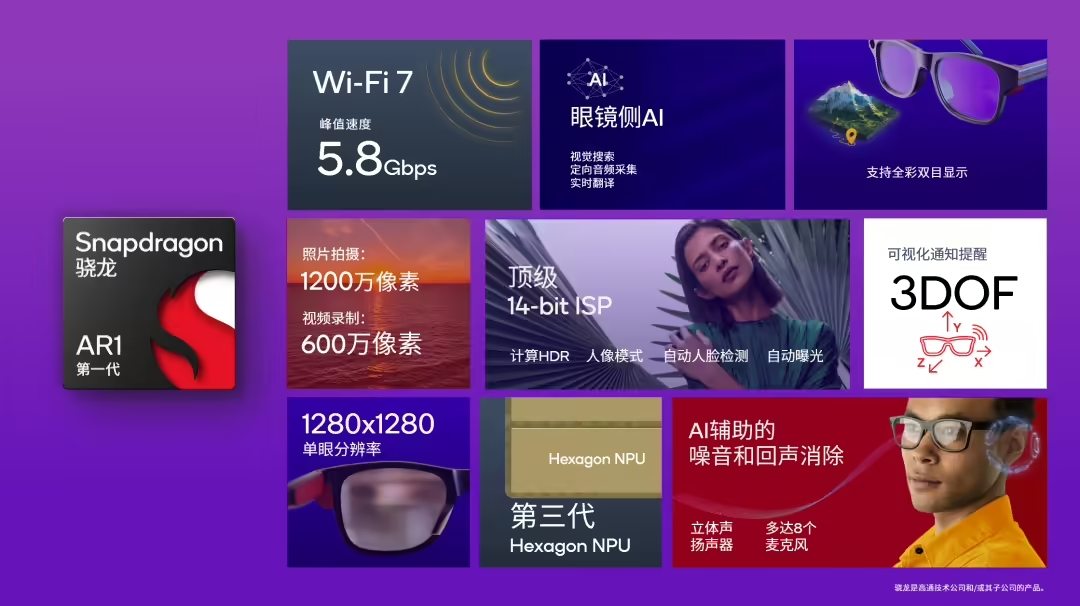
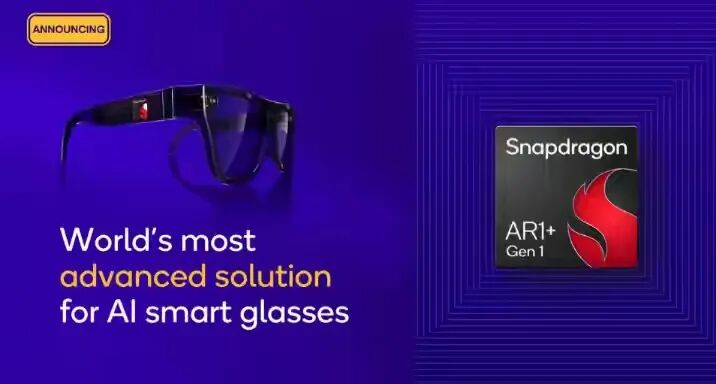
In particular, Qualcomm's AR1 Gen1 has become the de facto mainstream platform. Launched in September 2023, it is Qualcomm's first dedicated processor for lightweight AI/AR glasses, featuring a 6nm advanced process technology with high integration and energy efficiency.
Its core specifications include a multi-core CPU+GPU architecture, third-generation Hexagon NPU (AI computing power ~4 TOPS), support for single-eye 1280×1280 resolution full-color Micro-OLED displays, and an integrated ISP enabling multi-camera synchronous input for spatial positioning and environmental understanding.
Currently, AR1 Gen1 has been adopted by multiple leading manufacturers, including Xiaomi AI Glasses, Alibaba AI Smart Glasses, Thunderbird V3.X3 Pro, Rokid AI Glasses, and select models of Meta Ray-Ban Display. AR1 Gen1 has effectively established a 'platform effect' in the high-end market.
03 History Repeats Itself
Theoretically, SoC compatibility directly defines a product's ecological boundaries.
Models using generic platform solutions can directly access Android-based AR application ecosystems, lowering the barrier to ecosystem development but sacrificing customization autonomy. Conversely, manufacturers using self-developed chips must build their own application ecosystems but achieve deeper hardware-software synergy, enabling experiences unattainable with public solutions.
Counterpoint's 2025 smart glasses model statistics reveal that over 70% of mainstream consumer-grade AR glasses launched globally that year adopted Qualcomm Snapdragon AR series platforms.
If the majority of terminal products rely on the same core chip, product differentiation is confined to superficial layers like appearance, accessory combinations, and marketing rhetoric, making industry homogenization inevitable.
In other words, when the entire industry's core hardware is bound to a few chip vendors, terminal players can only compete within existing constraints. To break this cycle, the battle must return to SoC—the core battlefield—to seek true differentiation.
Comparing this to the smartphone industry's stratification a decade ago, a similar pattern emerges in smart glasses: SoC and other layers of differentiated innovation are the key variables driving high-end differentiation.
This speculation has historical precedent. Around 2010, as the smartphone industry boomed, most terminal manufacturers adopted Qualcomm's public SoC solutions, resulting in minimal product differentiation and intensifying price wars.
As the industry evolved, manufacturers with self-developed SoC capabilities gradually pulled ahead. Apple's A-series chips consistently outperformed Android counterparts by 1–2 years, directly supporting iPhone's premium pricing and brand premium (premium). Huawei's Kirin series chips leveraged deep hardware-software synergy to create differentiated advantages in imaging, battery life, and communication, securing its position in the global high-end market.
IDC 2015 data shows that in the $800+ premium smartphone market, Apple and Huawei combined for over 80% share, with self-developed SoCs serving as their core barrier (barriers).
Today's smart glasses industry bears striking similarities to the smartphone industry of yore. Most terminal manufacturers rely on public SoC solutions, leading to superficial parameter competition and declining industry average prices.
04 Differentiating High-End Offerings Requires a New Game-Changer
IDC's 2025 China Consumer Smart Glasses Market Report reveals that the average product price dropped from 1,899 yuan in 2024 to 1,499 yuan, a decline exceeding 20%. However, the mid-to-low-end market's share continues to rise, with over 85% of shipments coming from models priced below 2,000 yuan.
We argue that all consumer electronics' high-end competition ultimately hinges on foundational technological game theory (game). Without technological barriers, sustained high-end positioning is difficult. Whoever controls SoC discourse will dictate the industry's iteration pace and profit distribution.
However, surpassing the self-developed SoC threshold is far more challenging than imagined.
According to 2025 data from the China Semiconductor Industry Association, SoCs using 3nm processes cost over hundreds of millions of yuan per tape-out. A mature consumer-grade SoC requires at least 2–3 tape-outs for validation, plus ongoing architectural R&D, IP procurement, and software adaptation—imposing prohibitively high upfront costs that exclude smaller manufacturers.
Even leading players with self-developed chip experience in the smartphone industry are still nascent in AR SoC development, making it difficult to disrupt the status quo quickly.
The ultimate battle for smart glasses will revolve around the 'brain.' As the experience dividends of public SoCs peak, homogenized competition will only drag the industry into a price war.
True high-end differentiation cannot bypass foundational technological innovation. Whoever first achieves SoC differentiation will truly define the next computing platform's form—rather than merely serving as a 'premium assembler' for chip giants. This is not just a technological breakthrough but a decisive battle for brand destiny.
-
![]()
The Surprisingly Significant Impact Difference Between Quiet and Noisy Cars!
-
![]()
Breaking Through Storage Cycle Barriers: How AI Large Models and Coding Technology Synergize to Drive Transformation in the Security Industry
-
Facilitating the Slimming of Camera Modules! O-film Obtains Utility Model Patent for Periscope-Type Reflective Component
-
![]()
Hikvision Raytine’s Millimeter-Wave Body Imaging Security Inspection Device Achieves ECAC SSc Category A Standard Level 2.1 Certification for European Civil Aviation
-
![]()
Global Market Share for Security Windows Hits 26%! This Optical 'Little Giant' Makes Its Debut on NEEQ
-
![]()
The Evolutionary Path of Agent Engineering: From Prompt to Harness by Zhang Yutao, Co-founder of Moonshot AI
-
![]()
Profits and stock prices are both declining, so why are executives from these auto companies increasing their purchases?
-
![]()
Burning Tens of Billions of Dollars, Yet No Unified Definition for World Models