AI Meets Optics: Tsinghua Smart Vision Secures A+ Round Funding Led by Hillhouse Capital
 06/05 2026
 465
465
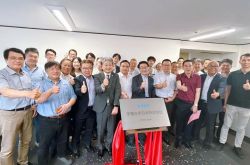
Beijing Tsinghua Smart Vision Technology Co., Ltd. has recently announced the successful completion of its A+ round of financing, with participation from prominent investors including Hillhouse Capital, 5Y Capital, Brizan Ventures, OneTeam Group Co., Ltd., and August Technology Co., Ltd.
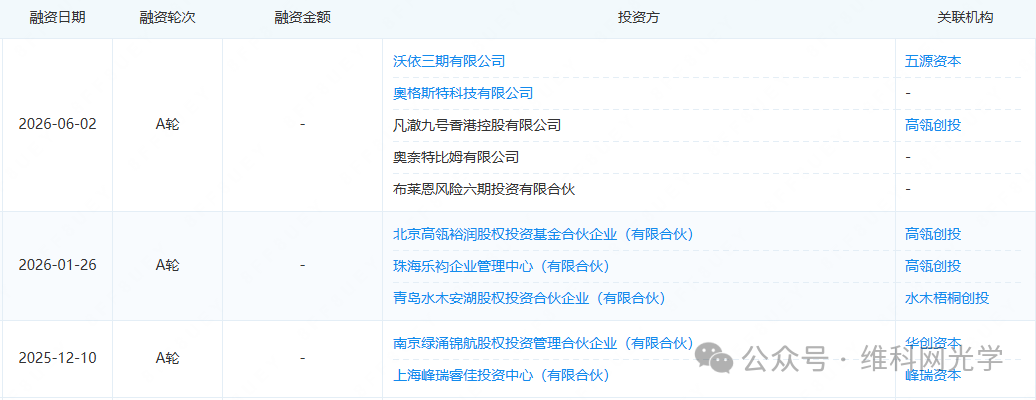
According to data from Cailian Press Venture Capital Tong—ZhiZhong, with June 2026 as the forecast baseline, there is a 93.12% probability that the company will secure financing within the next two years. How has Tsinghua Smart Vision, a company established just over three years ago, managed to attract investments from top-tier capital firms?
The core technologies underpinning Tsinghua Smart Vision are the result of over a decade of scientific research by Professor Chen Hongwei's team from the Department of Electronic Engineering at Tsinghua University. This research has fostered a comprehensive self-developed capability that spans optics, mechanics, electronics, algorithms, and software. From high-speed imaging technology to ISP algorithms, and extending to full-scale mass production and consumer-end applications, the team's extensive experience provides a multifaceted depth.
The company is committed to leading the research, development, and manufacturing of next-generation visual modules through its dual "AI+Optics" engines. This strategy involves directly addressing the needs of final commercial applications, employing reverse design techniques, and optimizing the fundamental structures of visual modules to deliver versatile and efficient visual products for various scenarios.
In terms of product innovation, Tsinghua Smart Vision's independently developed MetaCam is recognized as the world's first "pixel-level light-control imaging system." By integrating innovative spatial optical encoding devices within the optical system, MetaCam achieves ultra-high-speed, high-resolution, and high-precision pixel-level light intensity modulation. This represents a significant upgrade from traditional cameras' uniform global pixel control to per-pixel encoded control.
This technological leap is grounded in the research findings of "pre-sensing computation" from Professor Chen Hongwei's team at Tsinghua University's Department of Electronic Engineering. Here, signal processing and computation are accomplished at the optical level, rather than through the conventional method of sensing followed by digital computation. Additionally, the trial production model of Spark, the first domestically produced high-speed camera manufactured by Pixboom, an affiliated company of Tsinghua Smart Vision, came off the production line in early 2026, marking a significant acceleration in the project's industrial transformation.
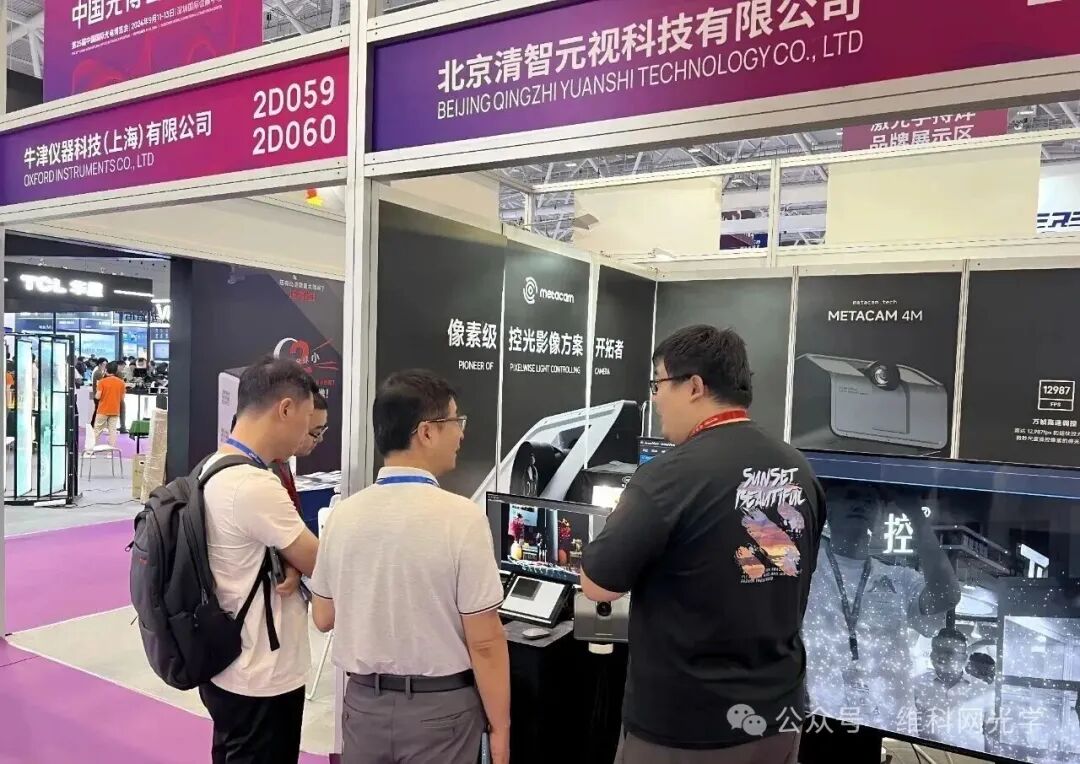
Currently, the optics industry is at a significant juncture: AI is reversely propelling the evolution of the sensing layer from the computational layer, with complex visual demands such as multispectral, high dynamic range, and ultra-high-speed imaging emerging in large numbers. Industrial inspections require sensing material compositions and micron-level defects, intelligent cockpits need accurate recognition under backlight and nighttime conditions, and medical imaging must balance signal-to-noise ratio and resolution under low exposure conditions. Traditional visual sensors often fall short in these scenarios.
Tsinghua Smart Vision's technologies are primarily applied in high-speed, high dynamic range, spectral, and other scenarios with large pixel throughput. By the end of 2025, the company had successfully completed the delivery and acceptance of imaging products for multiple clients, including both research institutions and industrial customers.
From a market perspective, China's multispectral AI market has expanded from 6.3 billion yuan in 2020 to 20 billion yuan in 2025 and is projected to further grow to 25.7 billion yuan in 2026. The market segment that Tsinghua Smart Vision targets is far from reaching its saturation point.
Judging from current developments, the narrative of "AI+Optics" has transcended mere capital speculation and is now tangibly moving towards production line implementation, as evidenced by the trial production of the first domestically produced high-speed camera, multiple client deliveries of MetaCam, and accelerated industrial transformation. In this context, the investments in Tsinghua Smart Vision by numerous renowned institutions are no longer just speculative bets but rather represent relatively precise industrial predictions.
For Tsinghua Smart Vision, the A+ round of financing marks just a new beginning. Looking ahead, whether this entrepreneurial team, originating from Tsinghua University, can successfully transform laboratory-level optical innovations into commercially viable products for large-scale deployment remains a question that OFweek Optics will continue to monitor closely.
-
On the Eve of Its IPO, Avatr Finds Itself Embroiled in a 'Farce of Controversy and Belittlement'
-
![]()
Yutong Optics' Japanese Subsidiary Unveiled in Tokyo, Shifting Strategic Focus to Technology-Driven Growth
-
![]()
Half-Year Revenue Outstrips Last Year’s Total! Zhongrun Optics Forecasts 80.2% H1 Revenue Growth
-
![]()
Why Does AI Competition Start with Computing Power?
-
![]()
Apple AI Finally Makes Its Debut in China, Yet iPhone's 'AI Autonomy' Faces Uncertainty
-
![]()
Apple AI and QianWen Make Up Lessons: Alibaba Has Its Own 'Doubao Phone'
-
![]()
QianWen Joins Apple, Signal for Large Models to ‘Fade into the Background’
-
![]()
The ‘Anchor’ Strategy of Google Hidden Behind the Bleeding Financial Report