XREAL Sprints, Rokid Closely Follows, Thunderbird Ambushes: The Countdown to the First AI Glasses IPO
 07/10 2026
 371
371
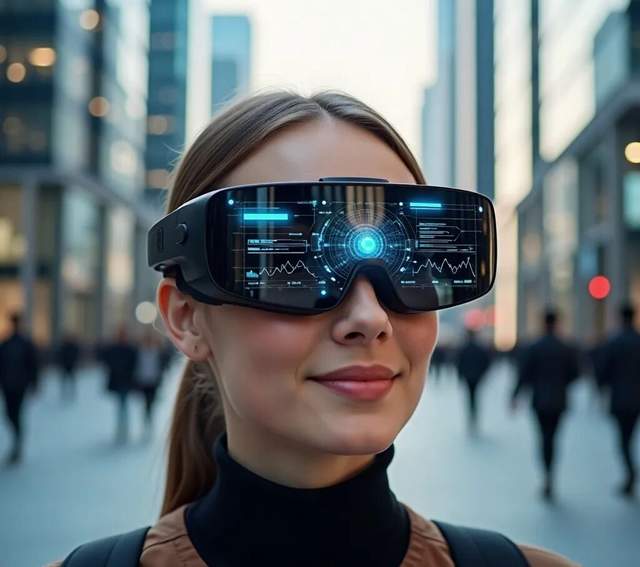
In 2026, the smart glasses sector will fully blossom.
On the policy front, local governments in China have, for the first time, included smart glasses in subsidy programs for trade-in promotions. On the capital front, XREAL has officially submitted its Hong Kong Stock Exchange prospectus, Rokid has completed preparations for going public through shareholding reform, and Thunderbird Innovation has quietly signaled its readiness for capitalization. The race to become the "first AI glasses IPO" is entering its final countdown.
Facing this intense competition, the five major players—Thunderbird Innovation, Rokid, XREAL, Kwark, and Xiaomi—have each revealed their unique strengths.
Thunderbird Innovation: The Hardcore Tech Enthusiast, the "Optical Flow" Champion
Among the five leading smart glasses brands, Thunderbird Innovation stands out as one of the few with strong research and development capabilities.
Thunderbird's technological moat runs deep, primarily centered in the field of optical technology. It is one of the few head manufacturers in China's AR smart glasses market with full in-house R&D capabilities for core optical components and the ability to achieve large-scale production. Its self-developed binocular full-color MicroLED waveguide solution significantly outperforms industry averages in optical efficiency, effectively avoiding the homogenized competition of "public models."
On the channel front, Thunderbird has chosen a differentiated route by leveraging "state-owned enterprise shareholder endorsements." In January of this year, Thunderbird secured over 1 billion yuan in investment from China Mobile and China Unicom, allowing it to join the shareholders' "contract phone" channels. This not only diversifies its customer base but also further lowers the purchase threshold for its AR glasses.
In terms of product experience, Thunderbird has not pursued broad scenario coverage but instead focused on breakthroughs in commercial applications. Its products prioritize optimizing essential business functions such as translation, teleprompters, and cross-border navigation, establishing strong user loyalty among business professionals and cross-border travelers.
However, Thunderbird's extreme product design focus sometimes limits its appeal. Due to high material costs, its AR glasses are positioned in the mid-to-high-end market, making it difficult to penetrate the sub-1,000 yuan price range, thus targeting a relatively niche audience.
Another weakness is its heavy reliance on external software. As a mid-sized tech company, Thunderbird cannot cover all R&D aspects, so its AR glasses rely on AI models and system software supplied by external partners like Alibaba and Tencent. If these giants decide to enter the market directly, Thunderbird could face significant challenges.
A longer-term challenge lies in user education—how to translate complex AR technology into tangible experience advantages for ordinary users. In other words, can AR, as an augmented reality technology, improve efficiency in daily work and life scenarios like photography, navigation, and office tasks? This is a question Thunderbird needs to explore deeply.
Rokid: The Cross-Ecosystem "Diplomat," Racing Ahead Before IPO
If Thunderbird Innovation is a dedicated tech enthusiast, Rokid (Rokid Technology) is a cross-ecosystem diplomat, adept at navigating relationships with major industry players.
Rokid is also preparing for a Hong Kong IPO, and every move it makes now attracts investor attention.
Rokid's most distinctive label is openness. Its smart glasses can freely switch between global mainstream large models like QianWen, DeepSeek, and Gemini, offering users a high degree of software freedom—a rarity in today's IT industry. This "non-aligned" approach provides Rokid with a certain level of risk resistance.
This flexible business strategy is also reflected in Rokid's supply chain. Before its Hong Kong IPO, the company brought in upstream and downstream supply chain enterprises like Lens Technology and Conant Optics as shareholders. By turning suppliers into stakeholders, Rokid has secured supply chain stability and priority, serving as a safeguard against price wars.
Rokid's first-mover advantage cannot be overlooked. As one of the earliest entrants in the AI glasses market, Rokid has built significant brand recognition. The company also places great emphasis on marketing, having partnered with CCTV to become the AI glasses broadcasting partner for the 2026 World Cup—a first for global top-tier sports events.
However, with great influence comes great responsibility. Rokid's massive marketing presence also amplifies its operational vulnerabilities.
Investors have expressed concerns about Rokid's profitability. The company has never publicly disclosed any profit-related data. For reference, XREAL, a peer that has already submitted its prospectus, reported a net loss of 456 million yuan last year. Rokid, at a similar development stage, likely faces a similar situation.
Additionally, Rokid's open approach to software is a double-edged sword. While it saves on development costs, it also means Rokid glasses lack an "independent soul," leaving the company passive in user acquisition and scenario integration. Under pressure from tech giants, Rokid risks becoming a mere hardware carrier.
The bottleneck in interaction smoothness hinders the development of the smart glasses industry, and Rokid is no exception. In noisy public spaces, voice control and eye-tracking interactions are not necessarily more convenient or accurate than smartphones—a fact that cannot be ignored and a common challenge for the entire smart glasses industry.
XREAL: Betting on Self-Developed Chips, Can the "Lone Ranger" Break Through?
As a strong contender for the "first smart glasses IPO," XREAL is currently the fastest-moving, having already submitted its prospectus to the Hong Kong Stock Exchange.
XREAL's lead is largely attributed to its management's decisiveness in choosing an extremely challenging asset-heavy development path—self-developing spatial computing chips.
Similar to smartphone CPUs, spatial computing chips are the core brains of AR smart glasses, largely determining product performance limits. While established players like Qualcomm and NVIDIA dominate this niche, few companies like XREAL directly target end consumers.
Perhaps due to its direct access to the frontline market, XREAL's self-developed X1 series high-end chips precisely address user pain points.
XREAL's high-end AR glasses excel in field of view and display latency, delivering immersive spatial experiences while alleviating two major pain points for first-time users: dizziness and visual fatigue. This makes them highly attractive to productivity users who need to wear AR glasses for extended periods.
XREAL also leads in global expansion. In an interview with 36Kr, XREAL founder Xu Chi stated that overseas revenue accounts for over 70% of the company's total. This "overseas-first, domestic-later" strategy effectively avoids domestic market "involution" and provides broader growth opportunities.
However, XREAL's financial pressure from betting on self-developed chips cannot be ignored. Its prospectus shows cumulative losses exceeding 2 billion yuan over the past three years. More concerningly, the company has only 63.63 million yuan in cash on hand and has not yet achieved self-sustaining profitability.
Meanwhile, XREAL's software ecosystem lags behind. Despite its hardware and chip leadership, its NebulaOS system is an open-source ecosystem, resulting in low software service revenue. Last year, XREAL's total revenue was 516 million yuan, with services and other income at 40 million yuan, accounting for only 7.8% of total revenue.
A more hidden risk is path dependency. XREAL is deeply tied to Google's Android XR ecosystem. If Google adjusts its AR ecosystem strategy or tightens interface permissions, XREAL's global narrative will face direct impacts. Given cross-market factors between China and the U.S., this scenario is possible.
Kwark: Backed by Alibaba's Legacy, How Strong is the "Butler Hero"?
As an internet giant, Alibaba would not miss out on this hot market. With the release of Kwark smart glasses last December, the smart glasses market was shaken up.
In the smart glasses market, Kwark's lineage advantage is unmatched. Leveraging Alibaba's complete app ecosystem, Kwark glasses integrate high-frequency scenarios like navigation, payment, and shopping. This highly agentified smart experience resonates more with mainstream consumers.
Kwark smart glasses position themselves as more "down-to-earth." Using a superhero movie analogy, Kwark is not Jarvis from Iron Man but rather Alfred, Batman's loyal butler. While Alfred doesn't fight, he handles life's practicalities.
To address battery life issues, Kwark offers a straightforward solution: eyeglass frame batteries. This hot-swappable design has merit in outdoor scenarios where charging is difficult.
However, an overly strong Alibaba DNA is not necessarily beneficial. A common issue for internet giants venturing into hardware is their lack of experience, and Kwark smart glasses are no exception. Facing challenges in supply chain refinement management (fine management) and production line yield control, Kwark glasses still have significant room for improvement. The delayed release in January this year serves as a cautionary tale.
Another issue is brand migration costs. After Alibaba's internal restructuring in March, the smart glasses business was merged into QianWen, and future products will bear the "QianWen AI Glasses" name. However, due to timing, the initial products still carry the "Kwark" brand, potentially confusing users and requiring additional marketing costs.
Finally, ergonomic improvements are needed. Compared to similar products, Kwark smart glasses are slightly heavier, making nose bridge pressure more noticeable after prolonged wear.
Xiaomi: The Frugal Choice, Affordable "Style Enthusiast"
Unlike other players betting on AR technology, Xiaomi takes a relatively conservative approach, focusing on camera-centric smart glasses.
Xiaomi's core strength lies in extreme cost control. By leveraging its mature smartphone supply chain, Xiaomi can significantly reduce smart glasses costs. The result is an AI glasses starting price of 1,999 yuan, replicating the blockbuster success of the Mi 1 smartphone.
Another trump card for Xiaomi smart glasses is seamless integration with its "human-vehicle-home" ecosystem. Xiaomi AI glasses are not just cameras but mobile remotes for the Xiaomi ecosystem. For example, upon detecting the user waking up, the glasses can open bedroom curtains and start the living room coffee maker. When approaching a Xiaomi car, they automatically unlock the doors and turn on the AC, delivering frictionless smart experiences.
Aesthetically pleasing design is another key to Xiaomi smart glasses' popularity. Drawing inspiration from Ray-Ban Meta's success, Xiaomi prioritized fashionable eyewear design, using classic sunglasses styling to lower the barrier for mainstream adoption.
However, this conservative approach has limitations. Abandoning AR display functionality means Xiaomi smart glasses are easily perceived as advanced action cameras rather than next-gen productivity tools. With relatively low technical barriers, Xiaomi smart glasses face many competitors and will likely face price competition over time.
Due to the nature of Xiaomi's ecosystem, its glasses' customer base is highly tied to "Mi Fans," making it difficult to break out. Additionally, rapid scaling has led to quality control issues, with product details still needing refinement.
AI Glasses: Where Is the Future Headed?
From current industry trends, 2026 may become a "watershed" for the smart glasses sector, with three clear development paths:
First, shifting from "specs competition" to "ecosystem competition." Just as in the smartphone industry, hardware performance will eventually become excessive for average users, and the same applies to smart glasses. The future will hinge on who can dominate users' digital lives, testing not just AI capabilities but also software ecosystem strength.
Second, supply chain stability will determine survival. Advancing product hardware performance requires a stable supply chain. Whether through in-house production or strategic partnerships, smart glasses manufacturers must maintain sufficient influence and priority within their supply chains to avoid being eliminated during industry shakeouts.
Third, AR and camera-centric approaches will coexist long-term. The smart glasses market needs both high-end and mainstream offerings. Not all consumers are core productivity users; for many, smart glasses serve as a new way to document life. Manufacturers should consider targeting this broader market.
As for which of the five major smart glasses manufacturers will win consumer favor in the future? The answer will reveal itself in time.
-
![]()
Li Bin Claims, 'Denying the Pure EV Trend is Like Ostrichism.' What's Li Xiang's Take?
-
Lenovo: Liu Jun Turns Left, Yang Yuanqing Turns Right
-
Lenovo: Liu Jun Goes Left, Yang Yuanqing Goes Right
-
![]()
MiniMax Shares Unlock: Cornerstone Shareholders Show Long-Term Optimism, Yet Stock Plummets Nearly 30% in Two Days; Zhipu Also Sees Nearly 20% Drop Today
-
![]()
Single-Day Plunge of 40%: The 'First AGI Stock' Faces More Than Just Share Price Concerns
-
![]()
Ricoh and Fuji Hike Prices on Legacy Edge; Insta360 Poised to Disrupt Mirrorless Camera Market
-
![]()
Ricoh and Fujifilm Raise Prices in Tandem, Relying on Established Reputations; Insta360 Poised to Disrupt Mirrorless Camera Market
-
![]()
Strategic Shift in Photoelectric Sensing: Maxvision Secures Controlling Stake in CAS Optotech