RMB 10.3 Billion! Guangzhou Computing Power Company Bags Two Major Contracts, Yet Reaps Only Slim Profits
 09/29 2026
 551
551
On the evening of September 28, Feng Assist unveiled yet another significant contract. The company inked a computing power server procurement deal with Company C and a computing power service agreement with Company D. The former is valued at RMB 3.96 billion, while the latter stands at RMB 5.717 billion, summing up to a staggering total of nearly RMB 9.677 billion.
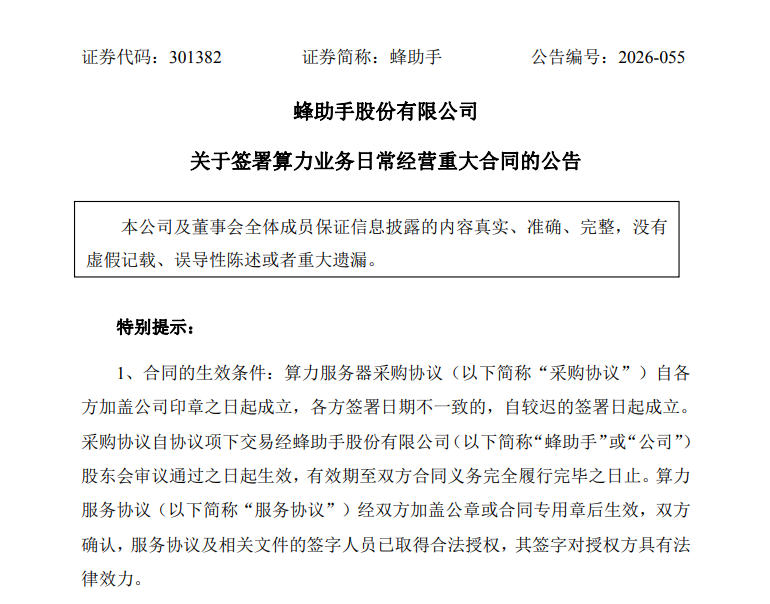
This achievement marks the second major contract secured by the company within the past two months. Rewind to August 4, when Feng Assist's wholly-owned subsidiary, Ya'an Yun Suan, had already clinched a similar pair of procurement and service agreements, worth RMB 3.062 billion and RMB 4.608 billion, respectively. Altogether, these orders have propelled Feng Assist's computing power service contracts to exceed RMB 10.3 billion.
While the figures are indeed eye-catching, the market's reaction on September 29 painted a contrasting picture. On the day of the previous contract signing, August 4, Feng Assist's stock soared by 15.49%, hitting the daily limit and closing at RMB 41, with its market capitalization briefly surging to RMB 11.7 billion. This time around, however, the market's response was more subdued, though this could be attributed to pre-holiday trading dynamics.
What accounts for the market's divergent reactions to orders of comparable magnitude from the same company?
Established in Guangzhou in 2012, Feng Assist initially specialized in the comprehensive operation of digital goods, aiding operators and internet platforms in aggregating and distributing virtual goods such as phone credits, data plans, and memberships. By 2025, this business segment had come to constitute 90% of the company's revenue. Out of a total annual revenue of RMB 2.09 billion, digital goods contributed RMB 1.88 billion, with the remaining revenue stemming from IoT data operations and a minor portion from cloud terminal technical services.
Feng Assist has traditionally operated as a service provider, and its foray into computing power sales adheres to its established modus operandi. The company neither manufactures chips nor constructs data centers to amass assets. Instead, it purchases servers, assembles them into computing power, and leases them to clients.
However, the crux of the issue lies in the word "purchases."
In this contract worth nearly RMB 9.677 billion, procurement accounts for RMB 3.96 billion. Feng Assist stated in its announcement that the funds were raised through a blend of its own capital, financial leasing, and supporting working capital loans. Its own capital contributes a mere 5% to 20%, with the remaining 80% to 95% covered by financial leasing.
In simpler terms, it leveraged nearly RMB 4 billion worth of equipment with just 10-20% of its own capital.
Financial leasing may seem straightforward, but it represents a long-term interest-bearing liability. The equipment's ownership remains with the leasing company, and Feng Assist is obligated to pay rent on schedule. The advantage lies in the low initial investment, enabling rapid scaling. The trade-off, however, is a significantly higher asset-liability ratio, with interest and leasing expenses eating into profits in the years ahead.
In reality, this business is inherently low-margin.
For the August service contract worth RMB 4.608 billion, the company provided a set of estimated figures in its announcement, stating that if successfully fulfilled, the average annual net profit would likely range between RMB 60 million and RMB 72 million. A rough calculation reveals that with a RMB 4.6 billion contract spread over five years, the annual revenue would hover around RMB 920 million, yielding a net profit margin of just 6% to 7%. When considering the RMB 10.3 billion in contract value alongside annual profits in the tens of millions, it becomes evident that these computing power leasing companies profit through scale and service stickiness rather than through high margins.
Feng Assist, of course, has its own story to tell. Chairman Luo Hongpeng has extensively elaborated on the company's vision at events like the Yunqi Conference and the Ciyuan Globalization Conference, emphasizing the transformation of underlying computing power into standardized Tokens and their on-demand sale to government enterprises and developers through its self-built MaaS platform—a concept now widely recognized as the Token factory.
-
![]()
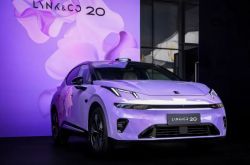
Starting at 118,800 yuan with standard LiDAR, the new Lynk & Co 20 is all business this time around.
-
COSTAR Auto Optoelectronic Display Branch Passes Supplier Admittance Review by a Leading Headlamp Enterprise!
-
![]()
Domestic Memory Behemoth Unveils Plan to Invest 34.9 Billion Yuan in Production Scale-Up
-
![]()
Why Is Luxshare Precision Covering the Costs for Chenling Optics, Despite Harson’s Aborted Acquisition?
-
![]()
Dialogue with Phoenix Optics: Riding the 'Optics + AI' Wave with Six Decades of Expertise
-
![]()
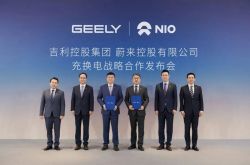
Competing on Assets, Not Just Price: 10 Key Insights from NIO and Geely's Battery Swap Integration
-
![]()
Fliggy is Becoming More and More Like a Plugin
-
![]()
RMB 10.3 Billion! Guangzhou Computing Power Company Bags Two Major Contracts, Yet Reaps Only Slim Profits