Zhipu Secures Nearly US$5 Billion in Funding
 09/15 2026
 332
332
In-Depth Financial Review: Highlights from September 14th
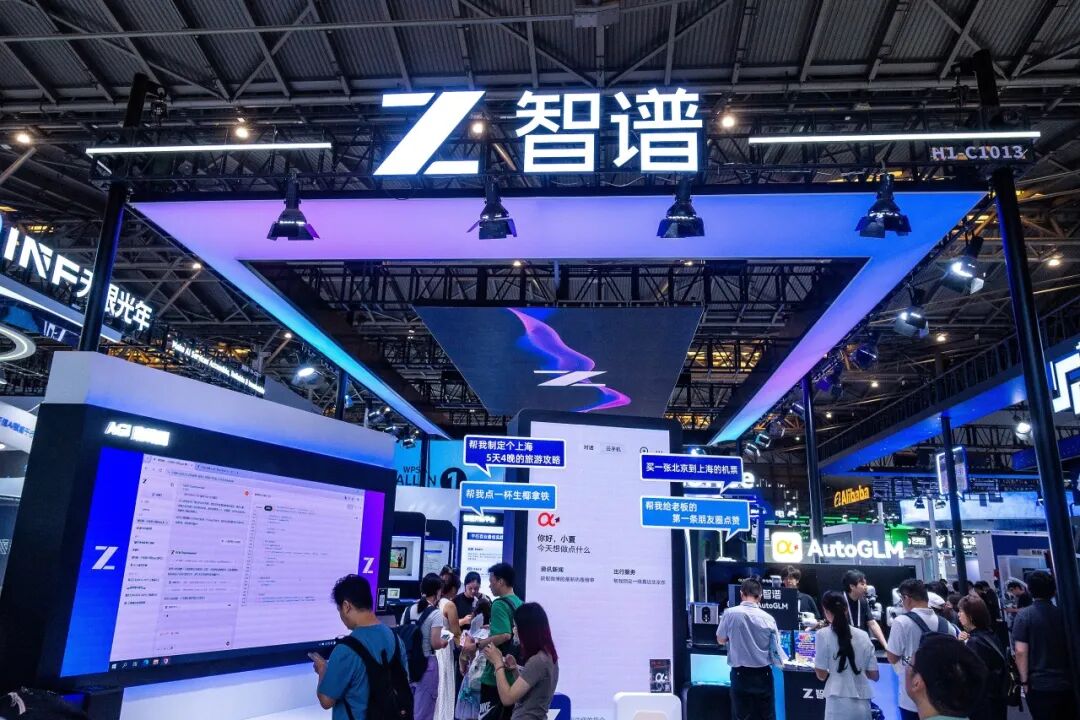
Zhipu Secures Nearly US$5 Billion in Funding
On September 13th, Zhipu revealed that it had successfully raised approximately US$5 billion through a combination of share placements and convertible bond issuances. Specifically, the company raised about US$2 billion from share placements and an additional US$3 billion via convertible bonds. The share placement was priced at HK$714 per share, offering a discount of roughly 9.96% from the closing price before the announcement. The convertible bonds, structured as zero-coupon instruments, have an initial conversion price of HK$892.50 per share, marking a 25% premium over the placement price. The net proceeds from this funding round will be primarily allocated to the development of Zhipu's next-generation GLM model, the establishment of a fully self-trained system, and the enhancement of related computing infrastructure.
Chief Analyst's Perspective: This financing round not only confirms the primary market's valuation of leading domestic large-scale AI models but also signals the resurgence of financing opportunities for AI assets in the Hong Kong stock market. A notable feature of this financing is the zero-coupon plus premium conversion structure: investors forgo immediate coupon payments in exchange for a 25% conversion premium, effectively substituting equity pricing for debt pricing. This arrangement underscores long-term investors' willingness to shoulder duration risk in anticipation of the option value associated with model iteration. The combination of a 9.96% discount on the placement price and the high premium on the convertible bonds provides a safety net for placement participants while conveying management's confidence in future share prices to the market. The explicit allocation of funds to computing infrastructure suggests a strategic shift in capital expenditures for large-scale models, from training to self-training systems and cluster construction, thereby enhancing the visibility of domestic computing orders.
In terms of implications for A-shares, sectors such as domestic AI chips, servers, optical interconnects, and IDC power are poised to benefit most directly. In the Hong Kong stock market, investors should closely monitor the revaluation trajectory of AI platform assets. The primary risk lies in the potential clash between the completion of financing and the prevailing narrative of an AI slowdown, which could lead to short-term sector sentiment trading based on valuation rather than fundamentals.
Central Bank Conducts Overnight Reverse Repo Operations for Four Consecutive Days to Maintain Liquidity
The People's Bank of China announced its intention to conduct overnight reverse repo operations for four consecutive working days, from September 14th to September 17th, utilizing fixed-rate and quantity-based bidding with a daily operation volume not exceeding 600 billion yuan. This week, the central bank faces maturities of 8.5 billion yuan in reverse repos, along with 500 billion yuan in 182-day outright reverse repos and 70 billion yuan in treasury cash deposits.
Chief Analyst's Perspective: Overnight reverse repos serve as a precision tool for liquidity management. During tax payment deadlines, corporations tend to concentrate on tax payments, occasionally leading to one- or two-day tightness in interbank funding. Traditionally, 7-day tools were employed, akin to addressing daily fluctuations with weekly funds, resulting in significant maturity mismatches. Since the introduction of overnight reverse repos at the end of June this year, the tool's granularity has better aligned with actual funding fluctuation rhythms. Three key points warrant clarification: first, the 600 billion yuan represents an operational ceiling, with actual injections dynamically adjusted based on market funding demand, reflecting flexible regulation; second, this does not equate to reserve requirement ratio or interest rate cuts, nor does it alter the long-term supply of base money or imply an overabundance of liquidity in the market; third, the four consecutive days of operations cover critical tax payment and government bond settlement periods, aiming to maintain stable short-term interest rates.
For the market, this translates to worry-free funding conditions during tax periods, with short-term interest rates and interbank liquidity unlikely to become variables that suppress risk appetite. Against the backdrop of high oil prices, high interest rates, and geopolitical disruptions, the independence of domestic liquidity represents a relative advantage, providing bottom-up support for interest rate-sensitive sectors.
Saudi Oil Pipeline Disruption Leaves Yanbu Port with Limited Export Inventory
Traders and sources reported that Saudi Arabia's east-west oil pipeline was shut down following a drone attack, leaving Yanbu Port with only 5 to 7 days' worth of export inventory. If transportation is not restored within days, global oil supply could face a loss of approximately 4%. Tensions in Yemen have escalated, with Houthi forces and Saudi Arabia engaging in reciprocal attacks; Oman announced the postponement of a regional conference originally scheduled for September 14th, while Iran stated it is not at war with Saudi Arabia.
Chief Analyst's Perspective: This incident represents a classic verifiable supply-side shock, with the crux lying in the inventory days. Yanbu Port's limited export buffer of 5 to 7 days means the pipeline disruption has escalated from a transportation issue to an inventory depletion problem. If restoration is delayed beyond this period, the 4% global crude deficit will transition from an expectation to an actual reduction in physical flows, which explains Brent crude's rise back to US$107 at Monday's opening. However, Oman's conference postponement and Iran's statement indicate that diplomatic channels remain open. Trump's remark that hostilities may end after the midterm elections also provides the market with a narrative buffer, resulting in Brent crude's characteristic wide-range fluctuations of surging and then retreating.
For A-shares, there are two primary implications: first, oil and gas exploration and oil services may experience short-term catalysts, but chasing highs carries significant risk; second, cost-sensitive sectors such as chemicals, aviation, and logistics face clearer downward pressure and should be avoided. More critically, the macro implication is the secondary transmission of oil prices to inflation expectations. If Brent crude remains above US$100, global interest rate cut paths will be delayed, implicitly suppressing growth stocks. Key observation points include the pipeline repair progress and Houthi forces' actual actions in the Red Sea.
- END -
-
![]()
Zhipu Secures Nearly US$5 Billion in Funding
-
![]()
Goldman Sachs Sets Its Sights on a City: Ulanqab!
-
![]()
The City in Goldman Sachs’s Spotlight: Ulanqab!
-
How Should Gas Stations Adapt Amid Declining Fuel-Powered Vehicle Sales?
-
![]()
Should GAC Shareholders Be Concerned: FAW Opts Not to Invest Cash but Lightens Its Joint Venture Load to Become Second-Largest Shareholder!
-
![]()
Wuling, a Two-Decade Overseas Market Pioneer, Appoints Han Dehong as Party Secretary
-
![]()
Trading Suspended! GAC Group Launches Significant Restructuring
-
Cloud Computing in the Sky: Satellites Evolve from Eyes to Brains