The Next Arena: AI Smartphones?
 09/20 2026
 438
438
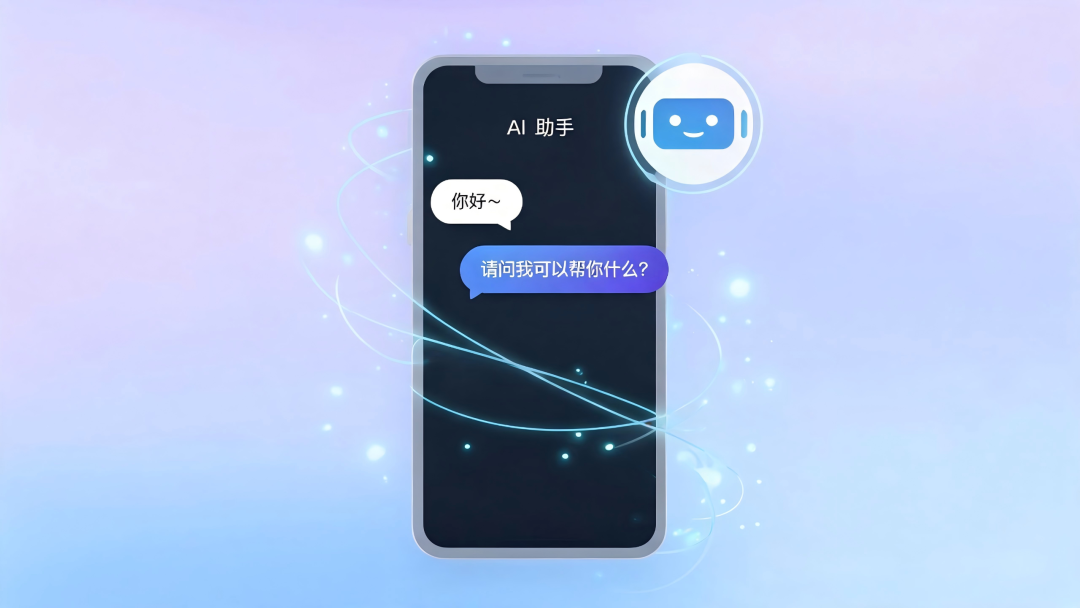

AI Smartphones: The Industry’s New Focus
Image source | Internet (please contact us for removal if infringement occurs). Partially generated by AI.
In late 2025, an engineering prototype priced at 3,499 yuan quietly went on sale with little large-scale preheat (pre-heating/promotion). The initial stock of around 30,000 units sold out on the first day, with prices in the secondhand market surging to as high as 13,000 yuan.
This device lacked a top-tier imaging module, a foldable screen hinge, or even a particularly stunning design. Its sole selling point was an AI agent integrated into the phone’s system that could truly "work on your behalf."
Nine months later, an updated version officially entered mass production with stock levels raised to 200,000 units and a starting price of 5,999 yuan. This time, however, the market did not replicate its initial frenzy.
Except for a few color variants that sold out, most versions remained readily available, and resale activity on platforms like Xianyu remained subdued.
The shift from "impossible to find" to "easily available" is intriguing in itself.
It does not indicate a decline in enthusiasm for AI smartphones. On the contrary, when a product transitions from a "scarce topic" to a "normal commodity," it often signals its entry from the early adopter phase into the true competition phase.
And the direction of competition is undergoing fundamental change.

The Focus of Computing Power is Shifting from the Cloud to the Palm
Rewind two or three years, and the fiercest battles in the tech world were fought in the cloud. Companies raced to release large models with hundreds of billions of parameters, competing on training data volume, parameter scale, and benchmark scores.
It was a classic "arms race," with the goal of proving whose model was smarter.
But the intelligence of models quickly ceased to be the differentiating factor. As the capabilities of multiple foundational models converged, competition shifted downward—from "whose model is better" to "where the model originates and where it lands."
The object of contention shifted from the models themselves to the entry points.
The first round of entry point competition occurred in office scenarios. By mid-2026, internet giants intensified their efforts in the AI office space, shifting from "parameter competition" to "entry point capture," with rapid escalation in the battle for workplace desktop dominance.
The logic was clear: office work represents a high-frequency daily scenario for users and a Rigid demand (rigid demand) market where enterprises are willing to pay.
Whoever could dominate the first touchpoint for workplace tasks would control the most direct pathway to AI commercialization.
However, the office scenario has an inherent ceiling, as it only covers a portion of users' waking hours.
The device that truly accompanies users 24/7, handles the most interactions, and collects the richest sensor data is the smartphone.
Thus, the second migration of computing power focus was almost inevitable: from office desktops to the palm of the hand.
2026 has been dubbed the "first year of AI-native smartphones" by many industry insiders. That year, regulators publicly released Record Filing Information (filing information) for seven on-device generative AI services, marking the transition of on-device AI from a gray area to a regulated pathway.
The maturation of on-device computing power, breakthroughs in lightweight large models, and the gradual clarification of regulatory frameworks converged to propel AI smartphones from concept to reality.
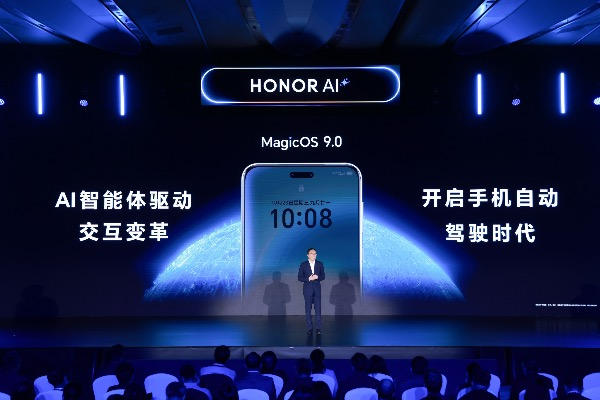

Two Paths, One Question
As smartphones become the primary battleground for AI entry points, a fundamental question arises: How should AI and smartphone operating systems integrate?
This question is tricky because it touches on the power structure that has defined the smartphone industry for nearly two decades. Traditionally, hardware and systems were controlled by phone manufacturers, application developers built services on top of them, and users accessed different apps by tapping icons.
This order was stable and efficient, but it rested on one premise: humans were the primary operators.
AI agents aim to replace humans as the operational subject . When a user says, "Book me a high-speed rail ticket to Shanghai tomorrow," the AI must understand the intent, open the ticketing app, fill in information, and complete payment—all while navigating across multiple apps and invoking system permissions previously triggered manually by users.
This process requires the AI to span multiple applications and access system permissions originally controlled by users, shaking the foundations of the existing order.
Different camps have provided starkly different answers.
Apple chose a "borrow brains, not control" approach. In its latest system version, Apple introduced a new generation of Apple Intelligence and a revamped Siri AI. While the underlying models partially come from external partners, Apple retains full control over how AI integrates into the system, what permissions it obtains, and how it invokes app capabilities.
Apple even built a dedicated private cloud computing architecture to ensure that user data is "never stored or shared by Apple with anyone, including Apple itself," during processing.
The core logic of this approach is: models can be externally sourced, but distribution and control at the operating system level must remain firmly in-house.
The Android camp’s exploration has been more diverse. One leading manufacturer unveiled three AI technology pillars at its latest developer conference, including on-device large models natively supporting 128K context windows, memory usage reduced by 48% compared to the previous generation, and energy efficiency improved by 55%.
Another manufacturer introduced what it claimed to be the industry’s first commercially deployed system-level intelligent agent execution framework, enabling AI assistants to perform complex tasks spanning hundreds of steps.
Yet another set its pre-research target for on-device models at the 30B parameter level, aiming to provide stronger local reasoning capabilities for agents.
These paths may seem different, but they all respond to the same question: When model capabilities become public infrastructure, where does differentiated competitiveness lie?
The answer is becoming clear: it lies not in the models themselves but beyond them. Whoever controls the operating system, dominates the app and service ecosystem, and deeply understands user habits and scenario demands will hold the advantageous position in the AI smartphone race.
Models can be purchased or collaboratively developed, but operating system-level integration capabilities cannot be bought.
Conversely, large model companies entering the smartphone arena face the opposite situation. While they control model development, the operating system, hardware, and many system permissions remain outside their grasp.
This is precisely the core challenge faced by the AI smartphone that triggered the buying frenzy. Its model capabilities were strong, and system-level permissions were obtained through deep collaboration with hardware manufacturers. However, whether third-party apps would open interfaces and cede data and operational permissions was entirely at the discretion of individual app developers.
Behind this lie genuine concerns over data security and privacy compliance, as well as negotiations over the redistribution of traffic entry points and commercial interests.
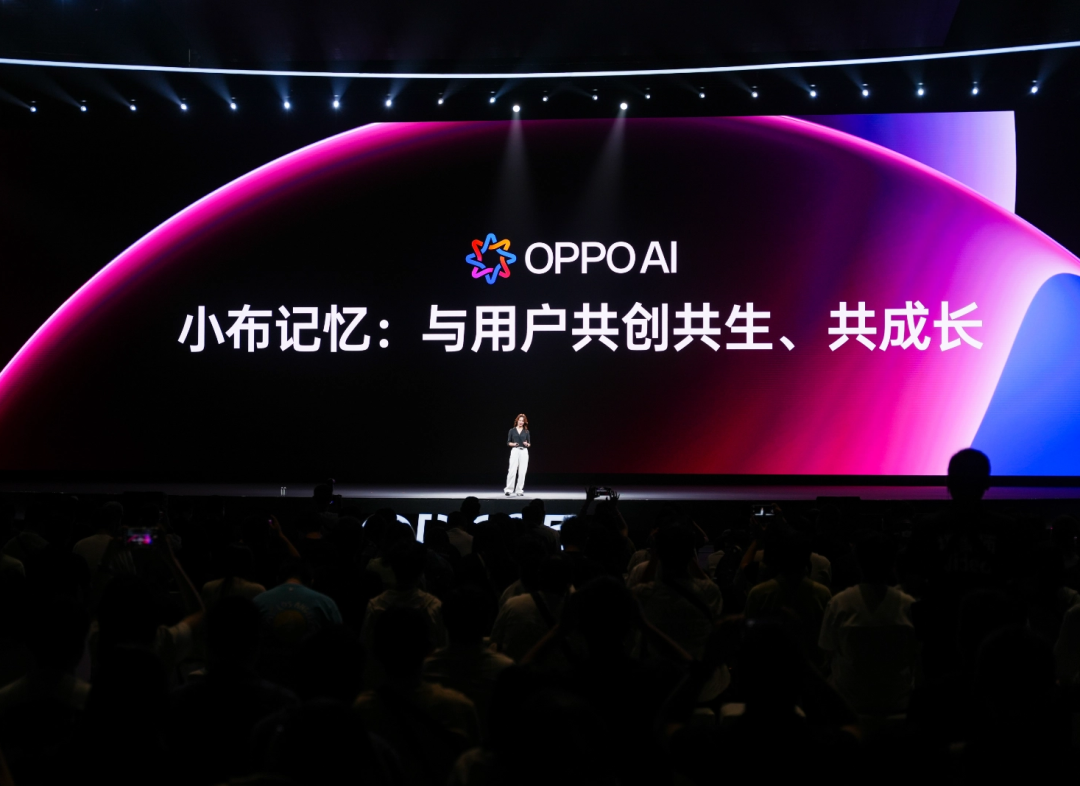

The Real Barrier Lies Beyond Technology
When discussing AI smartphones, many habitually focus on technical metrics, such as on-device model parameter size, response latency in milliseconds, or task success rates.
While important, these are not the decisive factors for whether AI smartphones will truly take off.
The real challenges lie at the ecosystem level.
The first generation of AI smartphones captured significant attention largely because they demonstrated a radical new possibility: AI could "understand" smartphone screens like humans, simulate taps and swipes, and complete complex tasks across apps.
This technical approach, known as GUI Agent, has an intuitive advantage: it does not require every app to develop dedicated AI interfaces. As long as the AI can "read" the screen, it can operate all existing apps.
However, this approach quickly exposed vulnerabilities. Multiple mainstream apps and banking applications rapidly imposed technical and risk control restrictions on automated operations.
The reasons are not hard to understand: if AI can simulate operations, capture screen content, and modify data without users’ knowledge, where do the boundaries of data security and privacy protection lie?
More pragmatically, if AI assistants can directly complete tasks that previously required users to open apps, what happens to app daily active users, ad impressions, and user engagement time? This strikes at the core interests of business models.
Second-generation products have clearly adjusted their technical approach, shifting from reliance solely on GUI simulation to incorporating protocol-based invocation methods.
At the same time, teams have introduced a screen automation operation declaration protocol, returning control over whether to allow AI-driven automation to app developers.
This is a pragmatic choice, but it also means the capabilities of AI smartphones have effectively been constrained.
Currently, agents on the latest AI smartphones can smoothly invoke all products within their own ecosystem and a limited number of third-party services. However, leading apps like WeChat, Taobao, and JD.com do not yet support related operations.
This situation represents a multi-sided negotiation. Phone manufacturers hope AI will become a super entry point, controlling the allocation of user attention. Large model companies aspire for their model capabilities to become operating system-level infrastructure. App developers worry about their traffic and business models being bypassed. Users want both convenience and privacy.
Whether on-device AI can truly become the super entry point of the AI era depends on whether these four parties can find a balance of interests.
Some analysts point out that after technical conditions like large-scale deployment of on-device models and system-level commercialization of agent execution frameworks mature, the most critical factor remains the redistribution of interests in developing the AI app ecosystem. Once this issue is resolved, other problems will cease to be the main contradictions.
This assessment is sober. Technical problems can ultimately be solved through engineering means, but interest distribution is structural. It requires new protocol standards, new revenue-sharing mechanisms, and new trust frameworks—none of which can be accomplished by a single company alone.

The Underlying Logic of Arena Shifts
If we zoom out, the rise of AI smartphones is not an isolated event but an inevitable node in the ongoing migration of competition focus within the AI industry.
Initial competition revolved around models. Whoever had more parameters, larger training datasets, or higher benchmark scores dominated the conversation.
While intense, this phase was logically simple—essentially a contest of resource investment.
Competition then shifted to the application layer. As model capabilities became commoditized, it became clear that smart models alone were insufficient; scenarios where models could "work" were also needed.
AI office applications became the first large-scale battleground, with competition moving from technical parameters to scenario experience and ecosystem positioning.
Now, competition is sinking further to the device level. As the most frequently used smart device with the richest data dimensions, smartphones naturally serve as the ideal carrier for AI agents.
They possess a full suite of sensors—microphones, cameras, GPS, accelerometers, biometric sensors—that continuously collect multidimensional data on users’ locations, behaviors, health, and social interactions.
Fed into on-device models, this data enables far more precise user profiling and scenario understanding than cloud-based models.
From large models to AI office applications to AI smartphones, this evolutionary trajectory follows a clear logic: AI’s value is shifting from "generating content" to "executing tasks," and task execution requires a physical carrier close to users. Smartphones fit the bill perfectly.
Some industry observers describe this shift as moving from "cloud-based dialogue" to "on-device execution," predicting that 2026 could be a pivotal year for AI agents, with innovative products reshaping the development logic of the internet over the past decade.
However, it is important to recognize that the current stage of AI smartphones differs from when smartphones first replaced feature phones.
The driving force behind the feature phone-to-smartphone transition was a revolutionary change in interaction methods—from physical keyboards to touchscreens—that fundamentally altered user habits.
The change brought by AI smartphones is more about shifting the operational subject from humans to AI. While potentially more profound, this transformation may be less immediately perceptible to users.
This raises a practical question: Why should users pay a premium for a smartphone that "operates on their behalf"? For routine tasks like sending messages, ordering food, or checking the weather, existing smartphones already suffice.
To truly resonate with consumers, AI smartphones must offer experiences that only become possible with deep AI integration, such as cross-app complex task automation, personalized proactive services based on long-term memory, and seamless smart collaboration across multiple devices.
In other words, AI smartphones cannot merely be "smartphones with an added AI assistant." They must be "smartphones that exist because of AI."

Having written this far, we might as well return to the question in the title: Is the AI smartphone the next track?
From an industry trend perspective, the answer leans towards 'yes.' The continuous improvement of edge computing power, the maturation of lightweight large model technologies, the gradual clarification of regulatory frameworks, and the concentrated investment of strategic resources by major manufacturers are all pointing in the same direction.
The penetration rate of generative AI smartphones has reached 36% in 2025 and is expected to exceed half by 2027. Edge AI is transforming from a differentiated selling point for high-end models into an industry standard.
When a technology shifts from being a 'selling point' to a 'standard feature,' it means it no longer needs to be proven but rather to be surpassed.
However, the term 'track' may not be entirely accurate. A track implies a racecourse with a starting point and an endpoint, where competitors race along the same line.
The changes brought about by AI smartphones are more akin to the opening of a new gateway. They redefine the relationship between users and devices, redistribute power along the mobile phone industry value chain, and redefine the boundaries of the 'smartphone' product form.
In the face of this new gateway, every company needs to rethink its position.
Mobile phone manufacturers need to answer: When AI can operate everything on behalf of users, do operating systems still need desktops and icons? App developers need to answer: When users no longer open your App but complete tasks through AI assistants, how is the value of your product measured?
Large model companies need to answer: When model capabilities become a public good, where is your competitive moat?
There are currently no standard answers to these questions.
But what is certain is that whoever can do better, deeper, and safer in 'enabling AI to truly complete tasks for users' will Occupy a favorable position (zhànjù yōulì wèizhì, occupy a favorable position) in the next decade.
AI smartphones may not be the final destination, but they are likely the door to it.
What lies behind the door depends on the sincerity and patience of those standing at the threshold today in allocating ecological benefits, building trust mechanisms, and innovating user experiences.
-
Three-Way Struggle for Market Share: BYD, Chery, and Geely Challenge Great Wall, Posing Immediate Risks to Wei Jianjun
-
![]()
The Reason Behind Valve's Headset Price Surge of 2400 Yuan: The End of an Era of Selling at a Loss
-
![]()
Decoding the '4S' Architecture | Report on Enterprise-Level AI Services in China
-
![]()
Li Auto Aims to Sell Three Technologies, First Buyers Unlikely to Be Major Automakers
-
![]()
Liu Zongcheng Declares Haste Makes Waste in Car Manufacturing, Yet Seres Seems to Be Rushing Headlong!
-
![]()
Did Trump Make Concessions? Chinese Automakers Are Invited to Establish Factories in the U.S., but Importing Fully Assembled Vehicles Is Off the Table
-
![]()
More Terrifying Than Runaway AI: The Tsunami of AI-Generated Vulnerabilities Has Arrived
-
AI Giants Hit the Brakes Collectively? They're Scared of Their Own Speed