The Reason Behind Valve's Headset Price Surge of 2400 Yuan: The End of an Era of Selling at a Loss
 09/20 2026
 369
369
In recent days, a surge of premium resale listings has appeared on the overseas secondhand platform eBay, all related to pre-ordering the Steam Frame headset. Among these listings, there are even some scammers: they haven't actually secured a pre-order for the Steam Frame but use photoshopped images to pretend they have in order to defraud buyers.
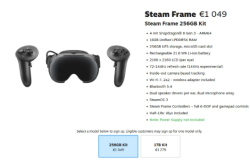
The incident began on the evening of September 14 (US time) when Valve officially opened pre-order registration for its new headset, Steam Frame. The final prices have already been reported in detail by Planet News: the 256GB version is priced at $1,059 (approximately 7,104 RMB), while the 1TB version costs $1,299 (approximately 8,714 RMB). Both storage versions include the headset itself, tracking controllers, and a USB receiver. (For more details, read "Starting at 7,104 Yuan! The Most Anticipated Headset for Steam Players is Released, Breaking Free from PC Constraints to Independently Run AAA Titles")
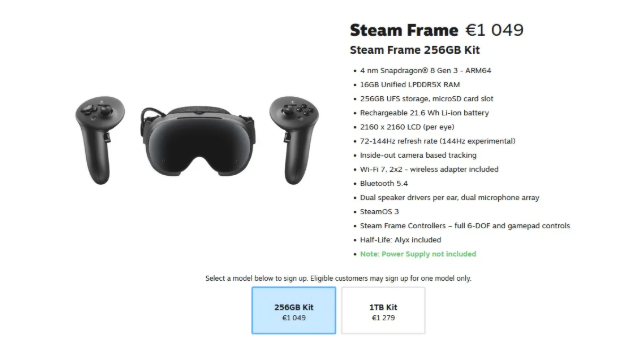
It's worth noting that seven years ago, the Valve Index was priced at $999; now, a headset initially expected to be cheaper than the Index is instead $60 more expensive. The underlying reasons may be even more intriguing than the headset's specifications and actual performance.
First, let's clarify the details of this release.
The official pricing for the Steam Frame (including VAT) is as follows: the 256GB version costs $1,059 / 1,049 euros / 889 British pounds, while the 1TB version is priced at $1,299 / 1,279 euros / 1,089 British pounds. Steam will directly ship to the United States, Canada, the United Kingdom, the European Union, and Australia; for Japan, South Korea, Hong Kong (China), and Taiwan (China), authorized distributor KOMODO will handle sales.
Not surprisingly, mainland China is not on the initial release list. Users in mainland China who want to try it out will have to rely on international shipping or purchasing agents, bearing the uncertainty of warranty and after-sales support.
After the announcement, KOMODO's sales page fluctuated between queueing and maintenance states, likely giving rise to the phrase "the reservation website crashed from heat." However, Planet Guy must clarify one thing: that page was for the lottery registration, not the payment page.
In terms of process, Valve has reused the random reservation mechanism from the Steam Machine: registration was open from September 14 until 10:00 AM Pacific Time on September 17 (1:00 AM Beijing Time on September 18), followed by a one-time random sorting. Those selected received purchase emails starting September 18, with a 72-hour deadline for payment before the offer expired and the spot was given to the next person.
Accounts must have made a purchase on the Steam platform before April 27, 2026, to qualify, and only one unit can be purchased per account. Valve explicitly stated that duplicate registrations would be removed using payment methods and shipping addresses as criteria (scalpers are welcome to try their luck).
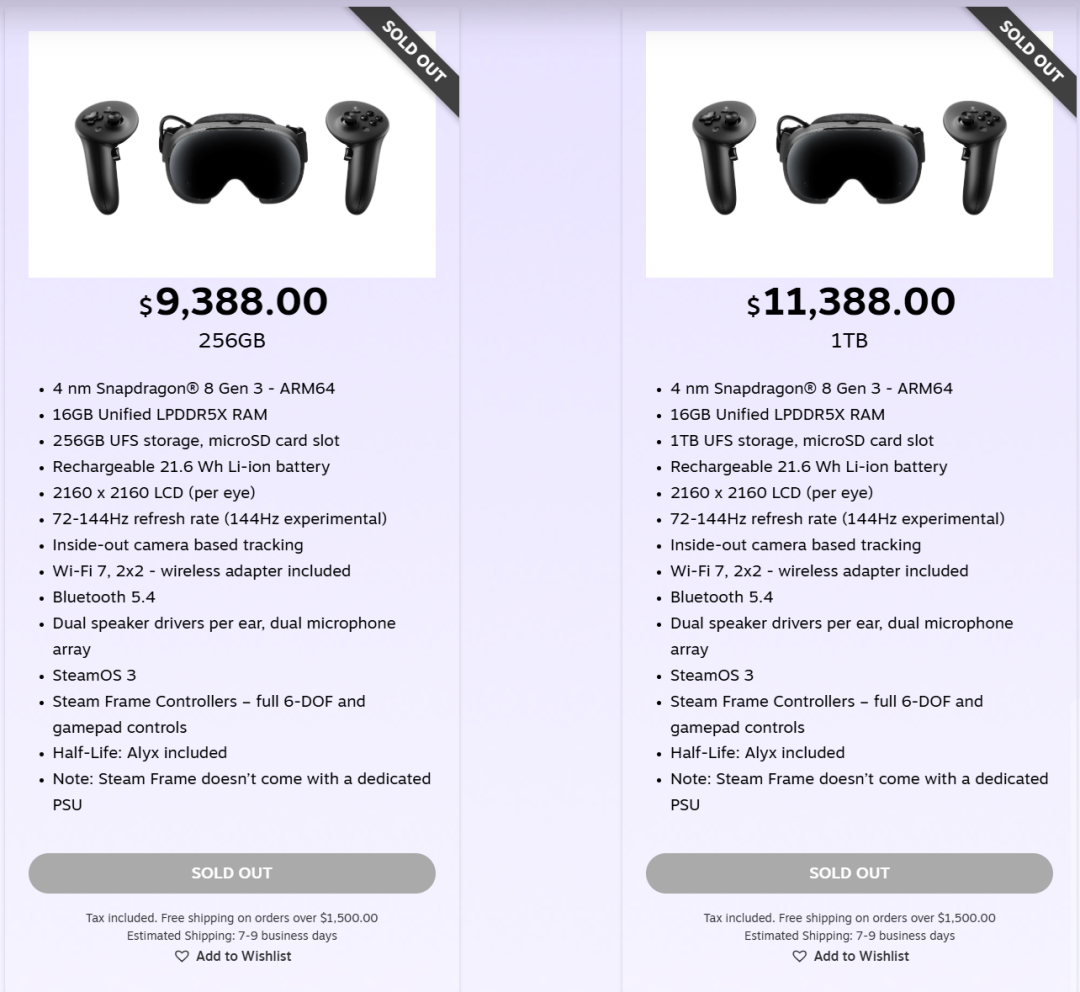
Note: Registration itself is free and does not affect priority (since it's random anyway). In other words, at this point, regardless of the buyer's intentions, their cost is zero. The page crashing only proves high interest, not actual demand, let alone that it's "selling like hotcakes."
It's worth mentioning that the new headset's packaging does not include a power adapter; the 45W USB-C charger is sold separately for $29. Upgrading from black-and-white passthrough to color requires purchasing the Arcturus Vision camera module for $149. If you want Index-style wrist straps and a top headband, the ergonomic accessory kit costs $59.
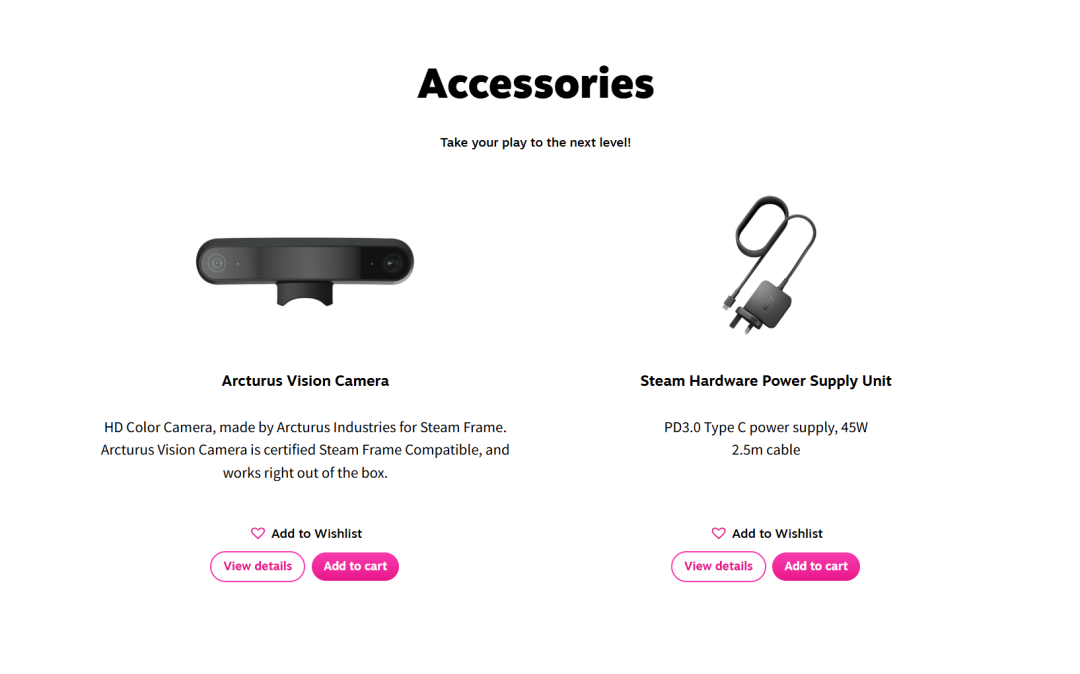
Added together, the base price of $1,059 becomes $1,296—approximately 8,700 RMB, matching the official price of the 1TB version.
"We Originally Wanted to Sell It Cheaper"
In fact, Valve has never hidden the fact that prices have increased.
Official developer Jeremy Selan stated bluntly in an interview with the BBC: "Our initial goal was to release an affordable device. But global changes in the RAM market hit us, just like they hit everyone else."
IGN's report was even more specific: Frame's original price target was around $750, based on the Steam Deck's price increase from $549 to $789 (a 43% rise). Applying the same ratio to Frame would place it around $750. Valve engineer Pierre-Loup Griffais also confirmed to IGN that the Steam Deck's price increase could serve as a reference for Frame's original pricing.
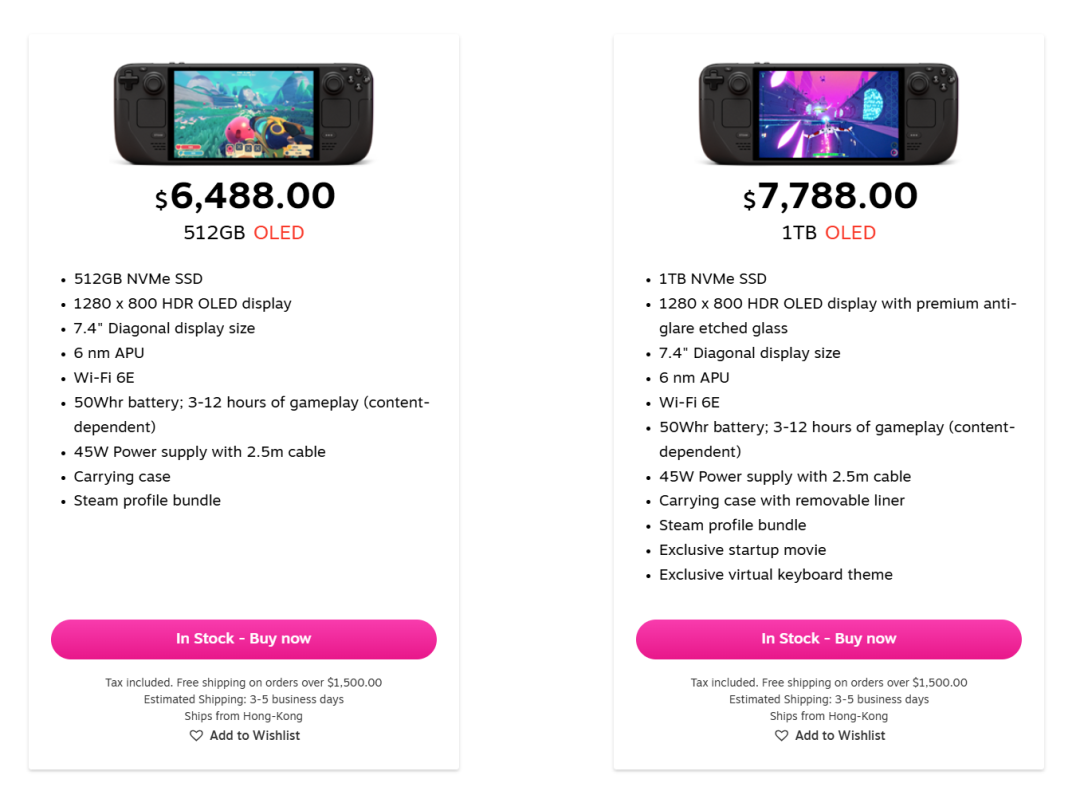
The difference between $750 and $1,059—over $300—likely wasn't a last-minute decision by Valve but rather a result of rising hardware costs. Therefore, we believe the root cause of this price increase lies outside the VR industry itself.
As everyone knows, AI data centers have absorbed global storage production capacity: HBM (High Bandwidth Memory) profits far exceed consumer-grade DRAM, leading Samsung, SK Hynix, and Micron to prioritize production there. SK Hynix even publicly stated that its 2026 capacity is almost fully booked.
The consequences directly impact consumers: from October 2025 to early 2026, DRAM prices more than doubled; third-party agencies estimate that DRAM contract prices rose nearly 60% quarter-over-quarter in Q2 2026. For a headset packing 16GB of LPDDR5X memory and up to 1TB of storage, this is a precise blow.
An Unavoidable Cost Storm
If you're familiar with the hardware market, you'd say Valve isn't the only victim. Strictly speaking, this is a passive repricing across the entire industry.
As the undisputed leader in the XR industry, Meta took the first step on April 19, raising the Quest 3 (512GB) from $499.99 to $599.99 and the Quest 3S (128GB) from $299.99 to $349.99, citing storage chip costs as the reason. The "reasonable price point" of $300, cultivated by Meta through massive subsidies over several years, is gone.
Meanwhile, Apple raised the price of the Vision Pro M5 by $200. Former king HTC notified European customers that the VIVE Focus Vision commercial edition would increase from 1,499.99 euros to 1,650 euros starting September 1. PICO's entire product line also saw price adjustments in Europe through distribution channels in July.
Through detailed supply chain investigations, we believe the real cost pressure comes from upstream suppliers.
On July 29, Qualcomm released its Q3 2026 fiscal year earnings: revenue reached $9.947 billion (up 4% year-over-year), but net profit fell 25% to $2.002 billion due to rising costs in wafer manufacturing, packaging, testing, storage, and other materials.

CEO Cristiano Amon put it bluntly: "Costs have risen, so prices will follow. We're simply passing on the significant cost increases we face." According to Bloomberg, Qualcomm raised prices across its product line by double-digit percentages starting September 1, with the Snapdragon 8 Gen 3 increasing by over 10%.
Coincidentally, Valve's Steam Frame is powered by the Snapdragon 8 Gen 3.
Putting this all together, Valve's pricing logic becomes clear: the decade of XR hardware being sold at a loss to profit from ecosystems officially ended in 2026. From now on, manufacturers will struggle to use subsidies to grow their user base because cost control is no longer in their hands. This shift will have a more profound impact on the industry's pricing models and the strategy of "using entry-level devices to attract new users" than the success or failure of any single product.
Frame Is Not the VR Savior
If we focus solely on hardware, the Steam Frame is indeed a precisely positioned machine (a traditional strength of Valve): Snapdragon 8 Gen 3, 16GB unified memory, dual 2160×2160 LCDs, Pancake optics, 72–144Hz refresh rate, 110° field of view, eye tracking, and a total weight of 440 grams (with the front core module weighing just 185 grams). The 21.6Wh battery is mounted at the back of the headband for balance, a weight distribution praised by nearly all reviewers. For comparison, the Meta Quest 3 weighs 515 grams.
However, the $1,059 price tag significantly diminishes the value of these specifications. From Planet's perspective, Valve doesn't seem to intend to use this headset to attract new users.
Look closely: Valve hasn't prepared any first-party blockbusters for Frame. Seven years ago, the Index launched with *Half-Life: Alyx* as its flagship title; this time, there's nothing like that. Instead, Valve offers three compatibility layers: Proton for running Windows games, FEX for translating x86 instructions to ARM64, and Lepton for directly porting existing Android ARM64 versions. Combined with the "Great on Frame" certification (officially over 100 titles verified for standalone operation, with third-party estimates nearing 130 as of September 11), Valve's goal is clear: to cram the entire Steam library into this headset.
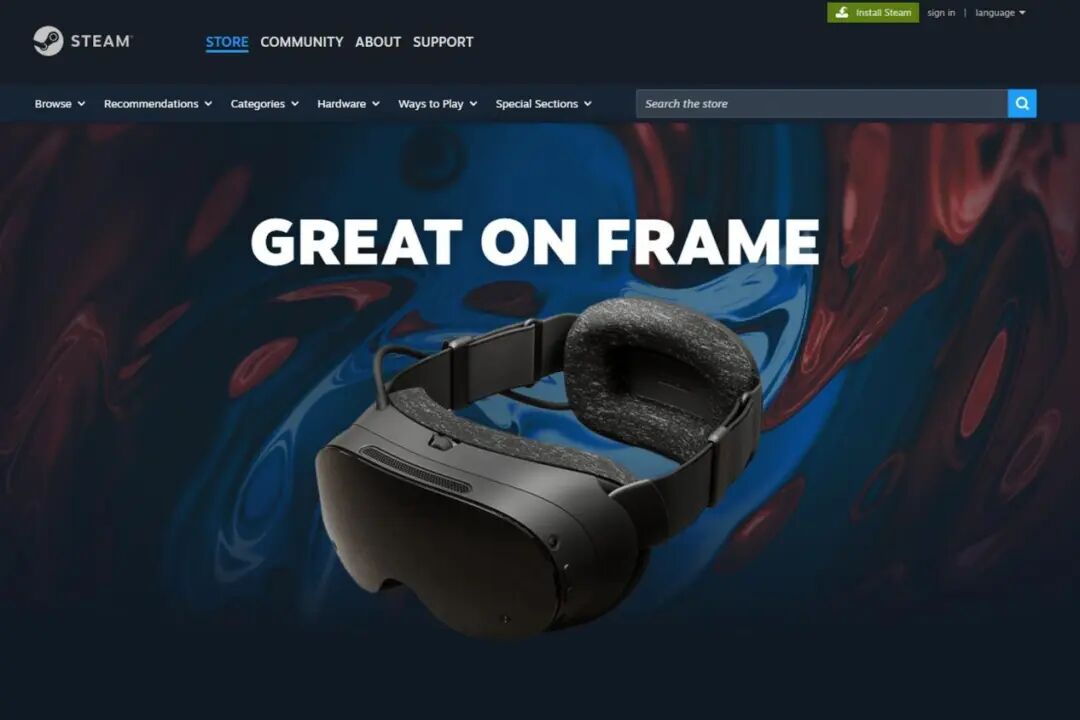
A word on the "Great on Frame" certification: Valve's standards require VR games to reach 72fps at 1728×1728 resolution and 2D games to maintain 30fps at 1280×720. Both thresholds are lower than the headset's native 2160×2160 panel capability. The conservative standards suggest Valve prioritizes "just running" over "running well."
Next, Frame's mission is even more straightforward: it serves only those who have already spent money on Steam, not VR newcomers.
In the initial batch of reviews (primarily from foreign media), focus centered on two aspects: battery life and tracking.
PC Gamer's real-world testing: *Half-Life: Alyx* ran locally for 63 minutes at 72fps, or 114 minutes when streamed from a PC. Locally, just over an hour; streamed, nearly two hours. CNET put it more bluntly: "At most two hours, often just one."
An IGN reviewer noted spending entire days wearing it without playing VR games, eventually using it as an "enhanced gaming monitor." CNET's headline was harsher: "a framework for evolving beyond the present"—an ongoing experiment rather than a finished product.
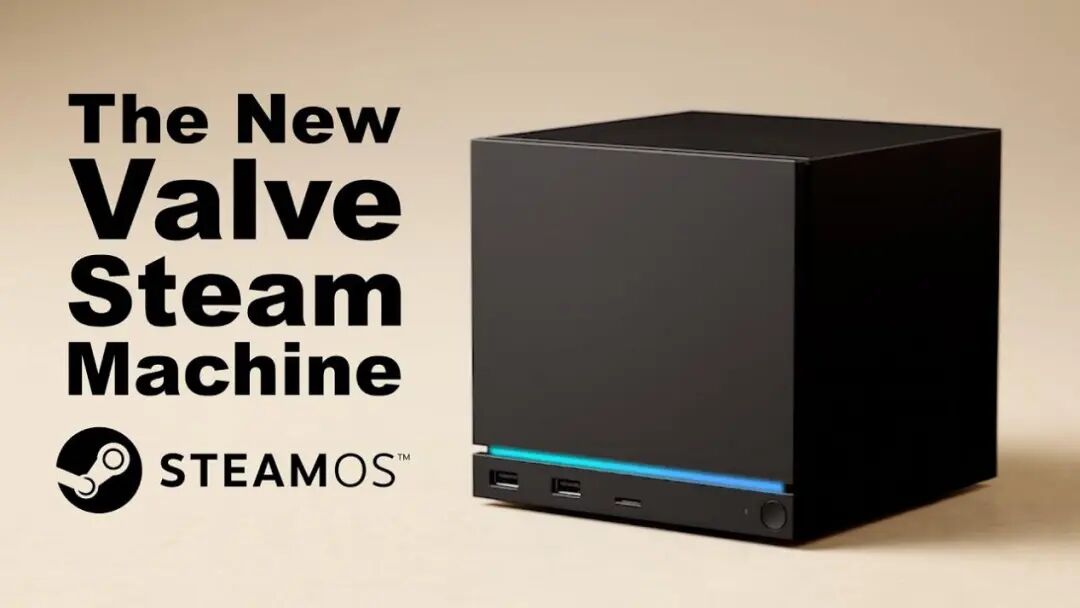
Another easily overlooked comparison: the previously criticized Steam Machine started at $1,049. See the pattern? This headset costs $10 more than Valve's own gaming console.
Final Thoughts
Seven years ago, Valve demonstrated with *Half-Life: Alyx* what high-end VR gaming could achieve. Seven years later, with the Steam Frame, Valve shows what VR hardware cannot do: it can't be cheap, it can't attract new users, and it can't rely on content to drive the market.
True to form, Gabe Newell remains an industry beacon. Planet says this because Valve's approach is actually wise and healthy: since attracting new users is impossible, focus on serving existing ones and minimizing developers' costs to enter the platform.
Players who understand the Steam Deck experience know that the essence of the three compatibility layers—Proton, FEX, and Lepton—is to save money for developers. In a year when VR game studios are shutting down one after another (Polyarc ended nearly twelve years of operation, Breachers: Outbreak suspended development, and Schell Games laid off staff for the first time in over two decades), this matter may hold even greater, and no small, value.
For domestic manufacturers, the reference value of $1,059 is even more significant.
When Qualcomm's chips, Samsung's memory modules, and even the entire upstream costs are no longer determined by the XR industry itself, the strategy of relying on entry-level machines to pave the way at a loss is dead. The remaining questions are: Who are your existing users? What will you use to retain them? What should VR large-space experiences and XR films do?
Valve's current answer is hardcore: the Steam library accumulated over more than two decades and a compatibility layer that allows old games to keep running.
So, what is the answer from domestic manufacturers?
-
Three-Way Struggle for Market Share: BYD, Chery, and Geely Challenge Great Wall, Posing Immediate Risks to Wei Jianjun
-
![]()
The Reason Behind Valve's Headset Price Surge of 2400 Yuan: The End of an Era of Selling at a Loss
-
![]()
Decoding the '4S' Architecture | Report on Enterprise-Level AI Services in China
-
![]()
Li Auto Aims to Sell Three Technologies, First Buyers Unlikely to Be Major Automakers
-
![]()
Liu Zongcheng Declares Haste Makes Waste in Car Manufacturing, Yet Seres Seems to Be Rushing Headlong!
-
![]()
Did Trump Make Concessions? Chinese Automakers Are Invited to Establish Factories in the U.S., but Importing Fully Assembled Vehicles Is Off the Table
-
![]()
More Terrifying Than Runaway AI: The Tsunami of AI-Generated Vulnerabilities Has Arrived
-
AI Giants Hit the Brakes Collectively? They're Scared of Their Own Speed