OpenAI Unleashes Game-Changer: Chinese Robots Already Working 24/7 in Factories, Igniting a Trillion-Dollar Race
 09/30 2026
 478
478
From OpenAI's agents to humanoid robots capable of handling material boxes, a race for 'intelligent implementation' is quietly accelerating. The trillion-dollar race has just begun, and the real winners will be those who can balance technological ambition with commercial reality.
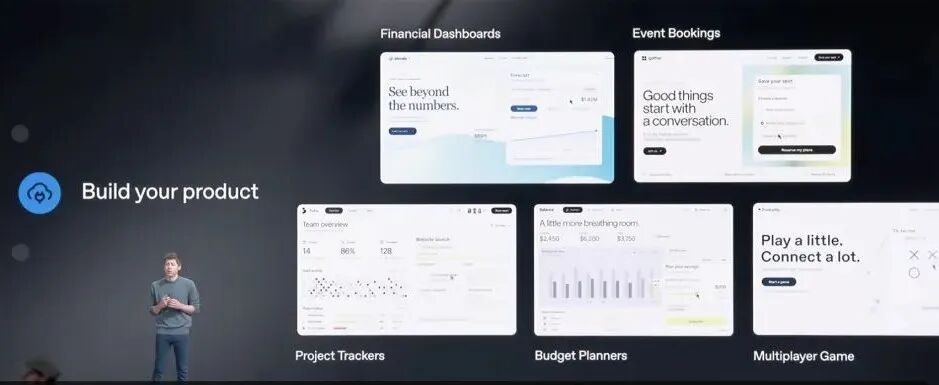
On September 29, 2026, during OpenAI's Developer Day, CEO Sam Altman made a statement that silenced the room: 'We've been waiting for this product for many years.'
He wasn't talking about a new model but an AI agent called 'Dots.' Each Dot has its own cloud-based computer and browser, capable of operating over 4,000 applications and continuing to work even after you shut down your laptop. Altman envisioned a scenario where you notice a competitor launching a new product after work, call Dot with a voice command, and find a new launch plan and materials ready by the next morning.
On the same day, across the ocean in Yichang, Hubei, a humanoid robot with a fully domestic electronic architecture was officially unveiled. Developed jointly by LimX Dynamics and Kyland Technology, this robot achieved the first-ever integration of domestic industrial-grade real-time communication capabilities into a complex humanoid robot system, seen by the industry as giving robots an autonomous 'nervous system.'
On one side, we have 'AI employees' in the digital world; on the other, 'robot workers' in the physical world. In 2026, AI is growing 'limbs' in both directions simultaneously.
01 From 'Chatting' to 'Working': AI's First Real Job
For a long time, AI was essentially 'you ask, it answers.' But Dots changed that logic.
OpenAI defines Dots as 'proactive intelligence'—you set goals and permissions, and it advances the work independently. Examples include monitoring defects, adjusting schedules, and tracking project dependencies. Multiple Dots can form teams for collaborative work, with enterprises uniformly configuring identities and permissions, acting like highly specialized virtual colleagues.
Underpinning all this is the simultaneously released GPT-6.1Sol model, which shows significant improvements in agent programming, computer usage, and professional complex tasks, yet costs just one-fourth the price of the flagship Astra standard model.
This pricing strategy speaks volumes: OpenAI isn't just selling smarter models but betting that 'affordability' is the true barrier to large-scale agent adoption.
The sharp drop in reasoning costs is transforming AI from a 'demonstration piece' into a 'productivity tool.'
This trend is equally clear domestically. Kingsoft Office launched its AI assistant 'Lingxi' in July and integrated it into WPS, planning to release agent-based products overseas in the second half of the year. iFlytek's Spark large model continues to land in scenarios like agents and MaaS. CSC Securities' research report notes that improved performance and lower reasoning costs of overseas AI models provide solid support for application expansion, with the industrial mainline remaining unchanged.
But Dots' pricing also reminds us: the $500 monthly Pro500 plan means the current hiring cost for an 'AI employee' far exceeds most people's salaries. The commercialization of autonomous agents still needs to cross the cost-effectiveness threshold.
02 Steel Bodies Enter Factories: From 'Performance' to 'Production Line Regulars'
If AI agents are the 'brain,' then humanoid robots in the physical world are the 'body.' In 2026, this body is rapidly maturing.
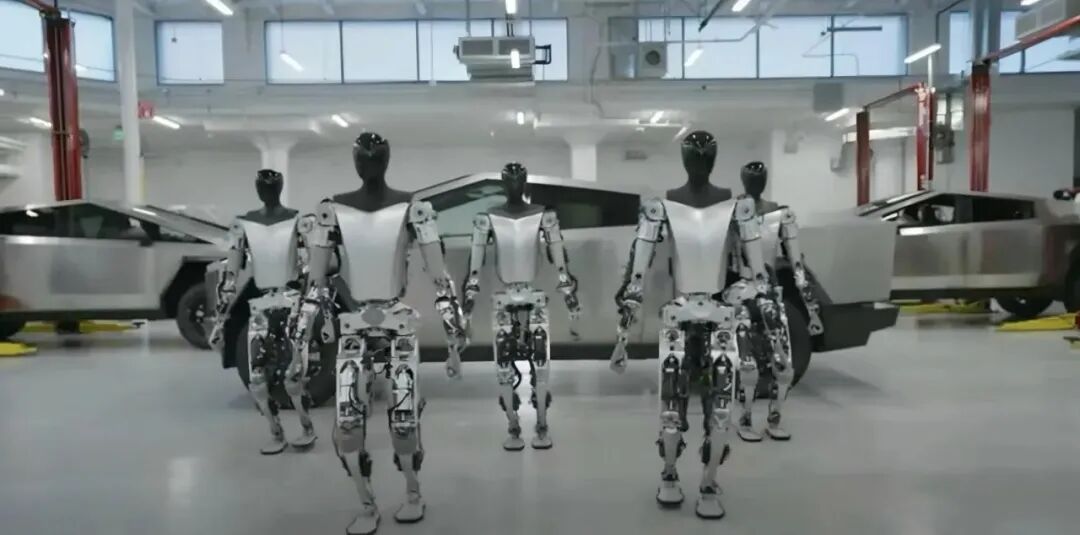
At a smart terminal equipment factory in Nanchang, Jiangxi, four humanoid robots have successfully integrated into traditional mass production lines. Each robot completes a process in about 18 seconds, producing around 300 products per hour with an overall operation success rate exceeding 98.5%. They can quickly adjust without custom tools to adapt to different product models.
This is not an isolated case. Universal Robots' industrial embodied intelligence robot G2 completed an 8-hour, 2,283-task flawless practical test at a leading domestic 3C enterprise. On an automotive safety production line, G2 improved the production rhythm of tapping aluminum safety belt components from about 18 seconds to a fastest 12.9 seconds, boosting efficiency by about one-third.
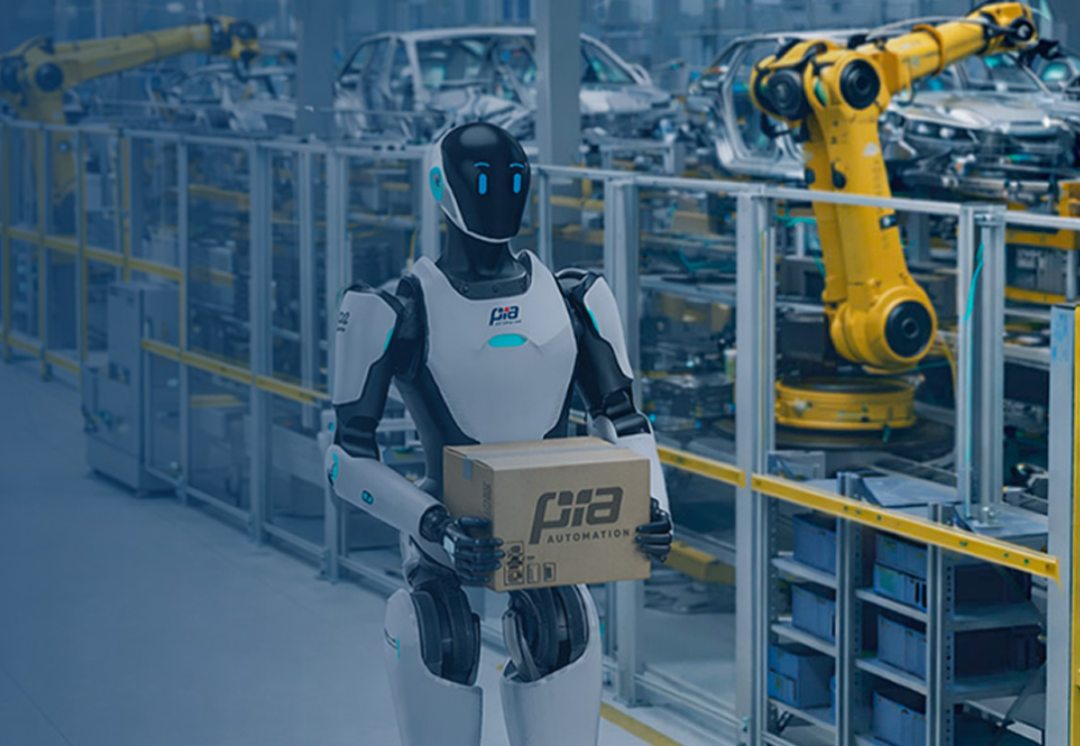
More critically, unlike traditional automation equipment, G2 can gradually master grasping and placing different models and products using vertical models, handling various working conditions like a 'veteran technician.'
Another notable case comes from battery giant CATL. Beijing Humanoid Robot Innovation Center announced that since its acceptance in March 2026, Galbot S1 has worked continuously 24/7 for over three months on CATL's production lines, ensuring uninterrupted operation.
Data disclosed at the Industrial Mother Machine Industry Chain Conference further confirms the trend: China's industrial mother machine industry revenue surpassed 1.6 trillion yuan in 2025, with the machine tool industry achieving 530.9 billion yuan in revenue in the first half of the year, up 7.6% year-on-year. Zhou Ji, an academician at the Chinese Academy of Engineering, stated that the deep integration of next-generation AI and advanced manufacturing will lead machine tools through another revolutionary transformation.
From 'capable of completing tasks' to 'creating real value for customer businesses,' humanoid robots are crossing a critical threshold.
03 DeepSeek + Unitree: The Critical Battle to Bridge 'Brain' and 'Body'
One of the most noteworthy industrial events in 2026 was Chinese AI large model leader DeepSeek's strategic investment of 140.8 million yuan in Unitree Technology, with a lock-up period of 36 months—the longest among all external strategic investors.
This is no simple financial investment. According to the signed Strategic Cooperation Memorandum, the collaboration focuses on three areas: joint research and development for general artificial intelligence, deep cooperation on high-performance general-purpose robots, and in-depth collaboration on AI large models. Unitree Technology Chairman Wang Xingxing clearly stated during a roadshow: 'In future adaptations, calls, and integrated development related to large models, we will prioritize business cooperation with DeepSeek under equal conditions.'
Behind this lies an industry consensus: the true bottleneck for embodied intelligence lies not in the 'body' but in the 'brain.'
Unitree Technology shipped over 5,500 humanoid robots in 2025, validating its hardware mass production capabilities. However, increased shipments do not equal Intelligent (intelligentization) leaps. Nearly half of the funds raised in Unitree's IPO will go toward model research and development, while betting on WMA and VLA technology routes, marking this hardware leader's official transformation into an integrated enterprise combining 'brain + data + hardware.'
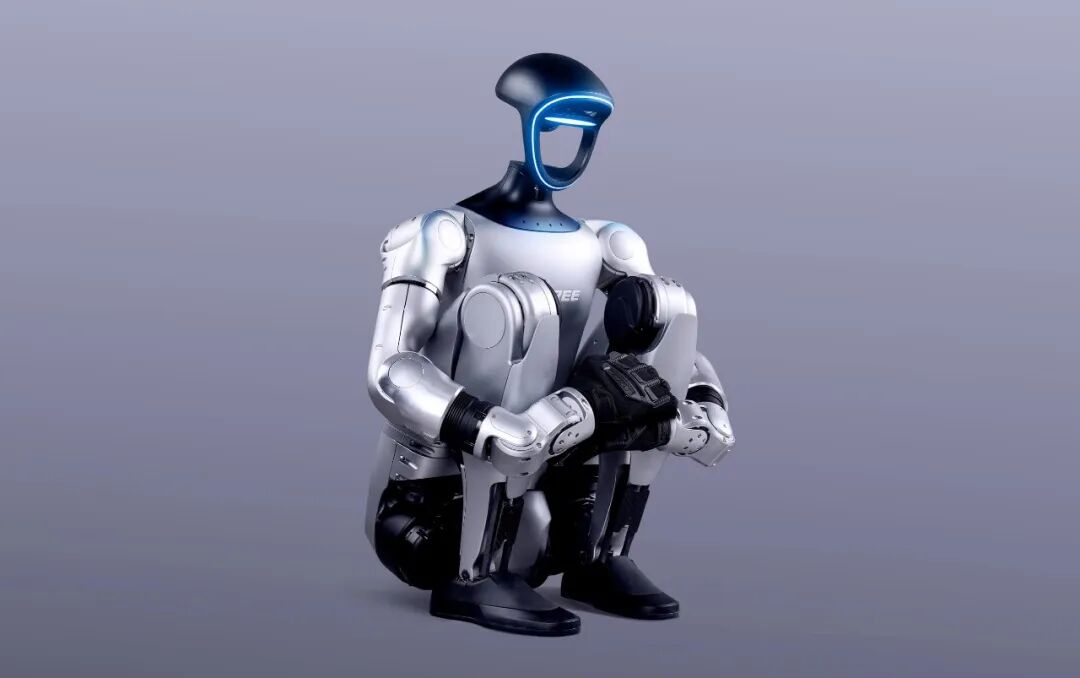
The partnership with DeepSeek essentially aims to solve the hardest problem: enabling robots to understand unfamiliar environments and reliably translate instructions into physical actions. China has developed relatively inexpensive robots capable of walking, running, and even performing choreographed dances, but truly useful autonomous work requires training models on scarce physical world data.
Can the DeepSeek-Unitree alliance enable the 'brain' to keep pace with the 'body'? This may be the most compelling suspense ( suspense : cliffhanger) in the embodied intelligence race in 2026.
04 A Trillion-Dollar Race: Opportunities and Bottlenecks Coexist
Industry reports predict global humanoid robot shipments will reach 62,500 units in 2026, up nearly 247% year-on-year, with Chinese manufacturers dominating the market share. IT Juzi data shows that in the first four months of 2026 alone, financing in the embodied intelligence sector exceeded last year's total, reaching 52.534 billion yuan. First-half financing surpassed 90 billion yuan.
However, calmness is needed amid the heat. Qu Daokui, President of the China Association for Mechatronics Technology and Application, pointed out that the industry faces challenges such as core component breakthroughs, low adoption in real-world scenarios, and lack of unified standard systems. 'Crossing from capital frenzy to value realization' will be the hardest leap.
During a roundtable discussion at the Bund Summit, Xu Huazhe, founder of Poke Robotics and assistant professor at Tsinghua University, offered a thought-provoking judgment: the industry currently overestimates data volume to some extent. 'One million hours' or 'several million hours' do not inherently mean better models. At current market prices, one hour of data may cost several hundred yuan, with one million hours potentially reaching several hundred million yuan in investment. If ultimately unusable for model training, the cost is substantial.
More noteworthy is the divergence in technological approaches. Shen Yujun, Chief Scientist at Ant Group's Lingbo Technology, made a provocative judgment: rather than focusing solely on 'Sim-to-Real' (simulation to reality), perhaps 'Real-to-Sim'—scaling complex and fragmented physical characteristics from the real world into simulators—deserves greater attention.
This implies that the future's truly valuable data competition may not be about who has more hours of data but who can acquire and organize experiences containing genuine 'physical intelligence.'
Industry insiders suggest a pragmatic path: 'maturing while landing'—even if generalization bottlenecks haven't been fully solved, robots don't need to wait for 'brains' to reach full maturity before deployment. Instead, 'use a 3-year-old's brain for 3-year-old tasks,' accumulating real-world work data to feed back into model training and gradually advance 'brain' development.
First, let robots 'work' on real production lines, then use the accumulated data to make them smarter. Once this flywheel starts spinning, the speed may exceed everyone's expectations.
From OpenAI's Dots to DeepSeek's partnership with Unitree, from intelligent upgrades in industrial mother machines to humanoid robots becoming production line 'regular employees,' a clear trend is emerging: AI is moving from 'virtual' to 'physical,' with embodied intelligence at a critical juncture transitioning from technical validation to large-scale commercialization.
This is not a sprint but a marathon. Every link in the current industrial chain—from core chips to precision components, from model algorithms to scenario solutions—is undergoing rapid iteration. Shenwan Hongyuan's strategic research report recommends focusing on storage, high-end CCL, PCBs, and capacitors, which directly benefit from rising demand for computing hardware.
For investors, the trillion-dollar track ( track : race track) is thrilling, but greater attention should be paid to core players with genuine technological barriers and commercialization capabilities. For the industry, establishing standard systems, exploring data-sharing mechanisms, and advancing scenario openness will determine the speed and quality of this race.
Intelligence is growing 'limbs.' And true industrialization has only just begun.
-
![]()
China Launches the Narrative of Space-Based Computing Power: Over 1,000 Satellites to Form a ‘Data Center’ in the Sky
-
Meta Launches Enterprise Version of Muse, Prompting CEO of $10 Billion Listed Company to Make the Switch
-
【Insight】Black-light Optoelectronic Tweezers Can Be Used in the Development of Antibody Drugs, with Xinguang Biotechnology as a Representative Enterprise in China
-
![]()
AMD Bets $8.2 Billion on Fei-Fei Li, ByteDance is Also 'Creating Worlds,' Is XR About to Change?
-
![]()
Huawei Qiankun ADS 5 Integrated: The 2027 Zongheng G700 Makes a Bold Statement
-
It’s Quite Surprising: Just Three Days Post-Launch, iPhone 18 Pro Catapults Apple to the Top, Outpacing Huawei and Xiaomi
-
![]()
Price Soars 30-Fold: Are Internet Cafes Making a Comeback?
-
This Is Unexpected: Apple Initiates Layoffs Less Than a Month After New CEO’s Appointment!