China Launches the Narrative of Space-Based Computing Power: Over 1,000 Satellites to Form a ‘Data Center’ in the Sky
 09/30 2026
 449
449

This is the 133rd original article from the Thinking AI Community.
Approximately 1432 words in total. Estimated reading time: 5 minutes.
It may seem hard to believe, but in the future, satellite-captured images might not be transmitted back to Earth at all. Instead, they could be processed and analyzed directly in space, with only the analytical results being sent back.
At the recent Hangzhou Digital Trade Expo, two companies unveiled the ‘blueprint’ for this ambitious endeavor.
WeiEarth and Orient Link jointly announced the ‘Strings of Space’ computing constellation, positioning it as China’s first space-based computing infrastructure, designed to be both globally accessible and deep-space capable. In simpler terms, they plan to dismantle traditional data centers and relocate them to over a thousand satellites.
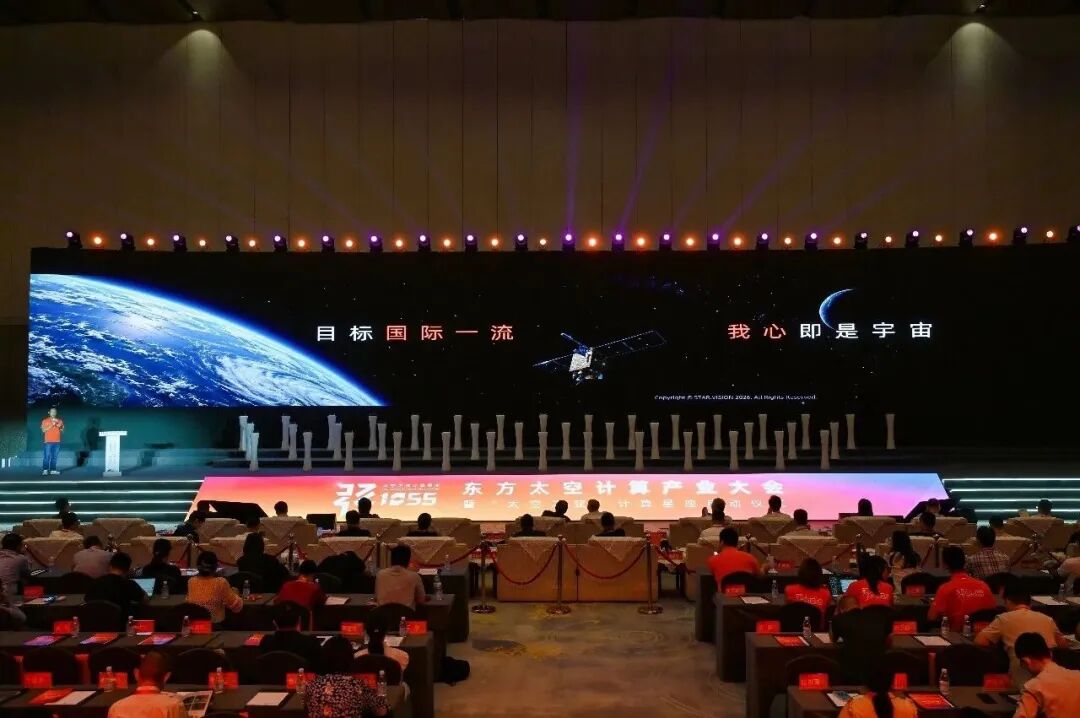 Image source: Orient Link
How will this ‘string’ of satellites be constructed?
Let’s examine its architecture, which divides the satellites into two distinct layers.
The upper layer, known as the service layer, will consist of over 720 ‘data satellites,’ also referred to as inference satellites. These satellites will be responsible for capturing data and performing specific tasks, such as monitoring crops or detecting fires.
The lower layer, termed the computing layer, plans to deploy over 360 ‘computing power satellites,’ also known as training satellites, in dawn-dusk orbits. These satellites will be dedicated to providing computing power, with the flexibility to add more as needed. The two layers will be interconnected via inter-satellite laser links, enabling seamless communication and data transfer.
Do you see the pattern? The terms ‘inference’ and ‘training,’ which were previously associated with ground-based data centers, are now being replicated in space. If one satellite cannot handle a task, it can offload it via laser to an idle satellite, effectively forming a massive orbital data center.
The implementation of this plan will proceed in three stages: G1 verification satellites, G2 standard satellites, and G3 flagship satellites. The first G1 satellite is not scheduled for launch until the fourth quarter of 2027.
The design power of the three generations of satellites will increase from 11 kilowatts to 140 kilowatts, with design computing power jumping from 40 to nearly 1,000 petaFLOPS (quadrillions of floating-point operations per second). However, it’s important to note that these are currently paper estimates, not actual in-orbit performance figures.
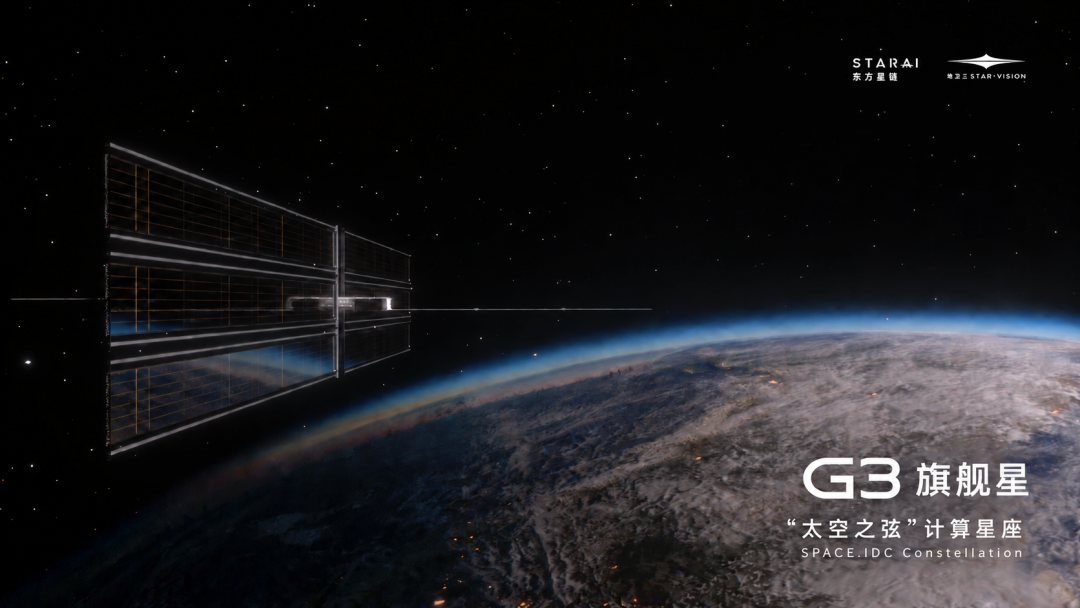
Image source: Orient Link
Why must computing power be sent to space?
Some may ask, why not stick with ground-based data centers? Academician Wang Jianyu provided three practical reasons.
First, there are simply too many satellites. In the past, ground control issued individual instructions to satellites, specifying when and where to take photos. With large constellations, this approach becomes unmanageable. Instead, satellites will need to calculate and schedule tasks autonomously based on given objectives.
Second, data transmission is a bottleneck. Modern remote sensing satellites capture increasingly detailed imagery, with wavelength bands expanding from a few to hundreds, resulting in explosive data growth. Transmitting all this data to Earth overwhelms bandwidth. Processing data in space first and transmitting only relevant information resolves this bottleneck.
Third, there’s a long-term cost advantage: space-based solar energy is virtually inexhaustible. If space electricity becomes cheaper than ground-based power, relocating data centers to space becomes economically viable.
This is not mere speculation. On August 5th of this year, two hyperspectral satellites were launched, each weighing 300 kilograms and equipped with 400 teraFLOPS (trillions of operations per second) of onboard computing power.
The results? Previously, data had to be transmitted to Earth for analysis, taking hours or even days. Now, processing occurs in space, with conclusions transmitted in minutes, boosting data utilization from less than 10% to over 80%. One satellite monitors cotton in Uzbekistan, while another provides disaster warnings for Indonesia, both operating with real-world contracts.
The Gap Between Ideals and Reality
The grander the blueprint, the more critical it is to focus on execution.
This is not the only player in the field. The Santichi Computing Constellation, led by the Zhejiang Lab, launched its first satellites in 2025 and has already detected wildfires in northwest China from space. NationSky’s ‘Star Computing’ plan envisions 2,800 satellites and has deployed general-purpose large models on in-orbit satellites. The competition is fierce.
The most pressing issue: the first verification satellite won’t launch until late 2027, leaving the current plan of over a thousand satellites on paper.
Formidable challenges remain. Without air in space, chip cooling relies solely on radiation; high-end radiation-resistant AI chips lag behind; inter-satellite lasers and multi-satellite coordination require real-world testing.
Then there’s the matter of funding and launch capacity. The Agricultural Bank of China and Industrial and Commercial Bank of China have jointly extended 10 billion yuan in credit, with an initial tranche of 1 billion yuan—a rare large-scale commitment.
For launches, partnerships with Galactic Energy and Orient Space provide custom launch services, but the industry faces a ‘more satellites than rockets’ dilemma. Launching a kilogram of payload to 500-kilometer orbits costs around 40,000 yuan with expendable rockets, driving the race for reusable rockets.
My assessment is straightforward: the plan’s merit lies not in the number of satellites promised but in whether the first satellite launches on schedule and functions in orbit.
Don’t be dazzled by terms like ‘thousand satellites’ or ‘hundred-petaFLOPS.’ The performance of the G1 satellite after its 2027 launch will determine whether ‘Strings of Space’ becomes a functional network or just an attractive slideshow.
By then, satellites will not merely ‘see’ Earth but truly ‘understand’ it—a step worth waiting for.

All content is sourced from publicly available information.
-
![]()
New-Type Battery '15th Five-Year Plan' Launched! All-Solid-State Batteries on Track for Vehicle Integration by 2027, with Lithium Sulfide Pricing as the Last Barrier
-
![]()
China Launches the Narrative of Space-Based Computing Power: Over 1,000 Satellites to Form a ‘Data Center’ in the Sky
-
Meta Launches Enterprise Version of Muse, Prompting CEO of $10 Billion Listed Company to Make the Switch
-
【Insight】Black-light Optoelectronic Tweezers Can Be Used in the Development of Antibody Drugs, with Xinguang Biotechnology as a Representative Enterprise in China
-
![]()
AMD Bets $8.2 Billion on Fei-Fei Li, ByteDance is Also 'Creating Worlds,' Is XR About to Change?
-
![]()
Huawei Qiankun ADS 5 Integrated: The 2027 Zongheng G700 Makes a Bold Statement
-
It’s Quite Surprising: Just Three Days Post-Launch, iPhone 18 Pro Catapults Apple to the Top, Outpacing Huawei and Xiaomi
-
![]()
Price Soars 30-Fold: Are Internet Cafes Making a Comeback?