SZSE Works Overtime During National Day, Issuing Inquiry Letter Swiftly After ColoredChinese Announces Plan to Raise 2.8 Billion Yuan, Over 10 Times Its Net Assets
 10/09 2026
 446
446
As people return to work after the National Day holiday, many are still getting back into the swing of things. This is especially true for those who had to work overtime during the holiday, missing out on a complete break.
On September 30, ColoredChinese, dubbed the “pioneer of Chinese digital publishing stocks,” unveiled its 2026 proposal for issuing A-shares to specific investors. The plan involves a private placement to no more than 35 selected investors, aiming to raise approximately 2.833 billion yuan.
Just two days after the announcement, on October 2, the Shenzhen Stock Exchange (SZSE) promptly issued an inquiry letter. The letter raised a series of pointed questions from five key perspectives: the appropriateness of the fundraising amount, the feasibility of the proposed projects, the potential impact on financial indicators, historical financing activities, and the concurrent financing plans with the Hong Kong IPO. ColoredChinese was required to provide a written response and make it public by October 8.
This rapid regulatory inquiry brought ColoredChinese's ambitious private placement under the spotlight, sparking discussions in the market: Why is the company proposing such a massive financing plan at this juncture? Where exactly is the money intended to be spent? What do the regulatory follow-up questions reveal?
1
Fundraising Amount Planned to Exceed Net Assets by Over 10 Times
Founded in December 2000, ColoredChinese stands as one of China's trailblazers in digital publishing. The company focuses on digital content creation, copyright distribution, and IP derivative development, boasting a roster of over 4.5 million contracted authors.
After more than two decades in the digital publishing arena, ColoredChinese has amassed a vast collection of digital content assets. It has also ventured into the overseas market with its short drama platform, FlareFlow, securing a foothold in online literature exports and AI-driven short dramas.
However, the competitive landscape of the industry has undergone a seismic shift. Simply stockpiling online literature copyrights is no longer sufficient to build a competitive edge. With the rise of micro-short dramas and AI-driven comics sweeping the market, and AIGC permeating the entire content production, adaptation, and global distribution chain, the industry now hinges on a blend of copyright reserves, large model capabilities, and global operations.
On one hand, prices for high-quality online literature IPs have skyrocketed, while older copyright libraries are aging, making it difficult for existing reserves to continuously supply fresh content for new ventures like AI-driven short dramas and interactive dramas.
On the other hand, although the company has launched self-developed tools such as “Xiaoyao AI” and “Ciyuan Shenbi,” training underlying large models and constructing multimodal platforms demand sustained investment.
ColoredChinese's decision to raise funds at this time is essentially a bet on the AI cultural and entertainment sector, aiming to address its business shortcomings and erect new competitive barriers. Yet, the real-world pressures it faces compel it to seek substantial external funding.
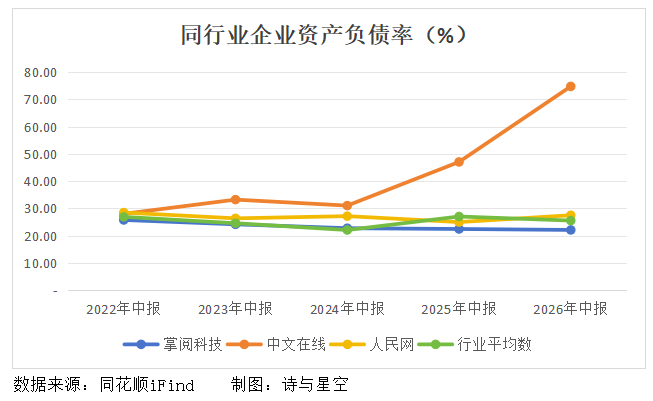
Additionally, the significant upfront investment required for customer acquisition and localized adaptation in overseas markets, coupled with a lengthy return cycle, has left the company burdened with 428 million yuan in interest-bearing liabilities. Its internal cash flow struggles to cover expenses across multiple fronts, including copyright procurement, AI R&D, and overseas expansion. Thus, private placement financing has become a vital option for securing funds.
A closer look at the fund allocation reveals that 864 million yuan will be invested in upgrading digital copyright content resources, primarily for acquiring original literary copyrights. Another 575 million yuan will be earmarked for IP derivative content development projects, focusing on the production, procurement, and overseas distribution of AI-driven short dramas, medium-length dramas, and interactive dramas to unlock IP monetization potential.
Technology R&D takes center stage in this financing round, with nearly 1 billion yuan allocated across three major projects. AI large model technology R&D and upgrades primarily aim to iterate the underlying capabilities of “Xiaoyao AI”; AIGC multimodal content platform technology upgrades seek to streamline production pipelines for text, images, audio, and video; the intelligent middleware technology upgrade project focuses on building a data asset platform to enhance internal business collaboration efficiency.
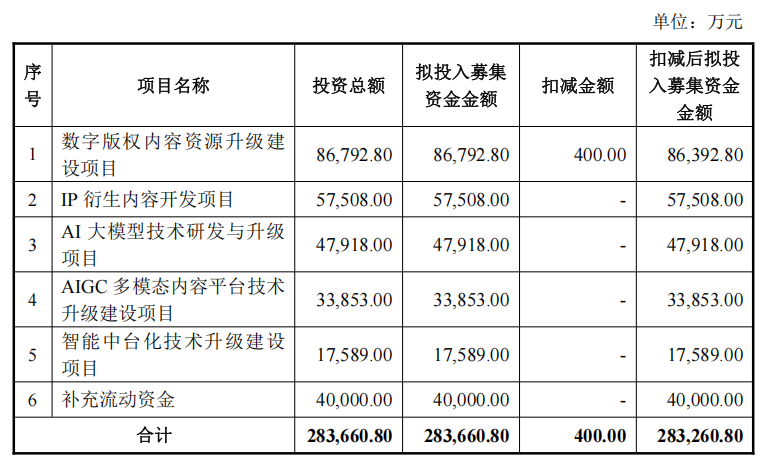
While the overall fund allocation appears reasonable, aiming to establish a complete chain from copyright procurement and AI production to IP global monetization, it is noteworthy that as of the end of June 2026, ColoredChinese's net assets stood at just 263 million yuan. The planned fundraising amount exceeds net assets by more than tenfold, prompting the SZSE to swiftly issue an inquiry with five critical questions.
2
What Do the Inquiry Letter's Questions Reveal?
The first major concern centers on the glaring imbalance between the fundraising scale and the company's size. The planned fundraising exceeds net assets by more than ten times, while the company holds 277 million yuan in cash and 428 million yuan in interest-bearing liabilities, and was still operating at a loss in the first half of the year.
Under such circumstances, why does the company believe it deserves funds far exceeding its own financial capacity? More worryingly, is there a risk of blind financing expansion, leading to idle or wasted capital and harming shareholder interests?
Regarding the 864 million yuan copyright procurement project, regulators demanded disclosure of the quantity, unit price, and suppliers of the copyrights to be acquired. They also required an explanation, based on the utilization rate and revenue contribution of the existing copyright library, of how the company plans to avoid leaving the newly acquired copyrights unused.
Faced with the 479 million yuan investment in large model R&D, regulators questioned how the substantial investment was calculated, given that the company's total R&D expenses for 2025 were just 72 million yuan. They also inquired whether the new projects complement or duplicate the already launched “Xiaoyao AI” and “Ciyuan Shenbi,” and how technological achievements would be allocated.
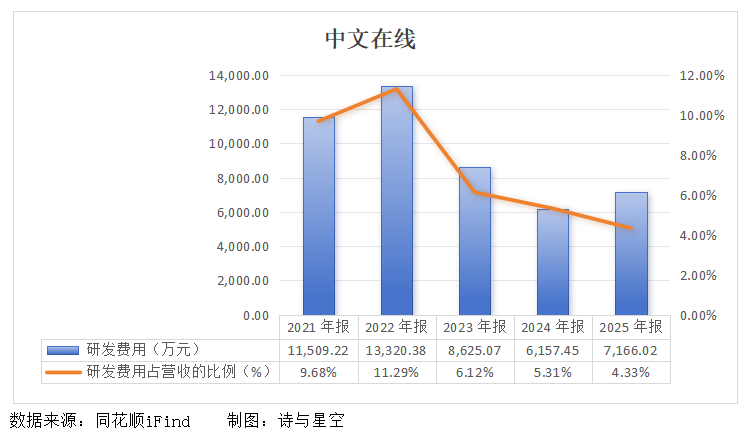
For each invested project, regulators required detailed revenue, profit, and return on investment projections based on industry conditions to prevent financing schemes that rely solely on AI and short drama concepts.
More surprisingly, ColoredChinese reported losses totaling approximately 900 million yuan in 2024 and 2025. However, the private placement projections assumed a profit of 10 million yuan for 2026 and a net profit range of 20 million to 100 million yuan for 2027.
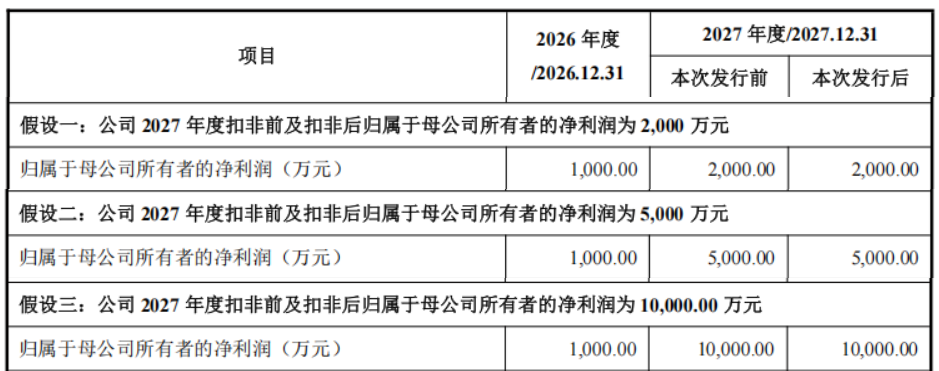
To back such bold claims, regulators demanded the company provide complete evidence supporting these optimistic profit assumptions, compare them with industry peers, and quantify the actual impact of immediate return dilution following the private placement. They also required verification of whether the company's proposed measures to offset diluted returns could be effectively implemented.
Furthermore, the company had previously planned a private placement in 2023, which was terminated in August 2025. Regulators asked for a comparison of the old and new fundraising plans to clarify the true reasons for the prior termination and current restart.
Additionally, the company submitted an application for a Hong Kong IPO in February 2026, which is currently under review. With simultaneous efforts to list on the H-share market and pursue a private placement exceeding 2 billion yuan on the A-share market, regulators demanded an explanation of the differences in funding purposes between the two venues and a justification for the rationale behind dual equity financing.
The entire inquiry progresses layer by layer, covering financing scale, project implementation, performance projections, and past and future capital operations. It underscores that under the registration-based system, for cultural, entertainment, and technology companies still in the loss-making transition phase, refinancing approvals no longer rely solely on strategic narratives but place greater emphasis on financial fundamentals, project verifiability, and strict prevention of conceptual financing.
3
First-Half 2026 Performance
Turning to the company itself, ColoredChinese's first-half 2026 performance showed a significant reduction in losses but has not yet fully escaped the loss-making quagmire, which is why regulators are highly concerned about its financing plan.
The company reported revenue of 578 million yuan in the first half of 2026, up slightly by 3.85% year-on-year, primarily driven by contributions from overseas short dramas and IP derivative businesses. Net profit attributable to shareholders stood at a loss of 42.9953 million yuan, a substantial narrowing of 81.01% year-on-year.
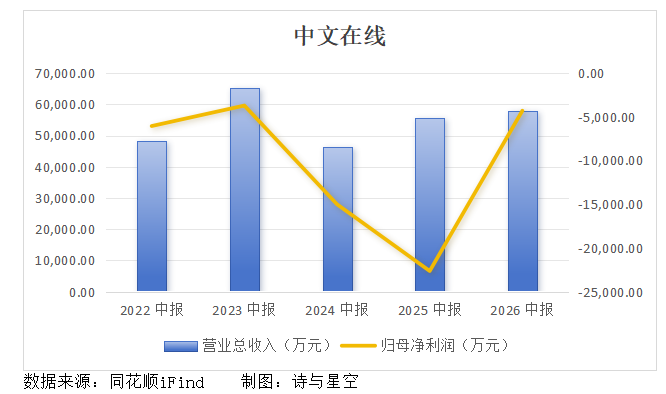
Breaking it down by quarter, the company achieved a net profit of 2.8334 million yuan in the second quarter of 2026, marking a brief single-quarter profit. This suggests faint signals of cost reduction, efficiency gains, and potential dividends from the AI business.
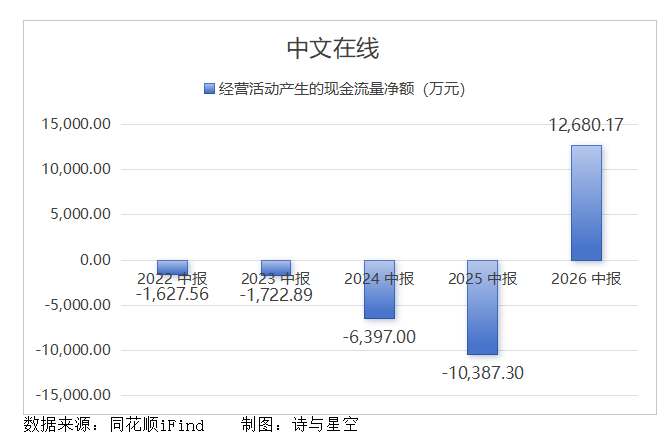
Cash flow performance was one of the few bright spots in the first half. The company reported a net operating cash inflow of 127 million yuan, indicating that its core business can generate positive cash flow and is not entirely reliant on financing to sustain operations.
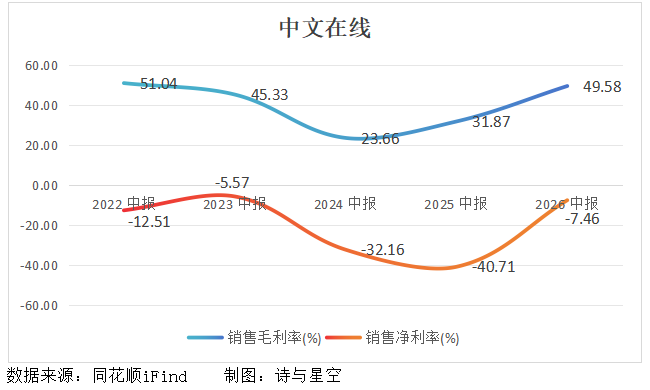
However, it remains uncertain whether the single-quarter profit in the second quarter can be replicated into stable full-year profitability. Although the overall gross margin approached 50%, heavy R&D investment and overseas marketing expenses continue to erode profits, resulting in a situation of high gross margins but negative net profit margins.
Under such circumstances, if the 2.8 billion yuan private placement proceeds, the share capital will expand significantly. If the invested projects have long construction cycles and fail to generate short-term benefits, it will directly dilute returns for existing shareholders—a major concern in the market.
4
Conclusion
Objectively speaking, ColoredChinese's current private placement aligns with the development needs of its core business. However, the company has a thin financial base, has not yet achieved stable annual profitability, and faces long return cycles for its large-scale invested projects. Both technological R&D and copyright commercialization carry certain uncertainties.
Leaving aside the need to respond to the SZSE's inquiry, even if the financing succeeds, the real test lies in whether the substantial funds can be converted into tangible revenue and profits after investing in copyrights and AI technologies.
-END- Disclaimer: This article is based on the public company attributes of listed companies and centers on information disclosed by the companies in accordance with their legal obligations (including but not limited to interim announcements, periodic reports, and official interaction platforms). Poetry and the Starry Sky strives for fairness in the content and viewpoints presented but does not guarantee their accuracy, completeness, or timeliness. The information or opinions expressed in this article do not constitute any investment advice, and Poetry and the Starry Sky assumes no responsibility for any actions taken based on this article.
Copyright Notice: The content of this article is original to Poetry and the Starry Sky and may not be reproduced without authorization.
-
![]()
Why Do Flagship Smartphones Exhibit Reduced Stability Despite Achieving Higher Benchmark Scores?
-
![]()
Despite Rising Benchmark Scores, Why Are Flagship Smartphones Becoming Less Stable?
-
![]()
SZSE Works Overtime During National Day, Issuing Inquiry Letter Swiftly After ColoredChinese Announces Plan to Raise 2.8 Billion Yuan, Over 10 Times Its Net Assets
-
PC Manufacturers Feel the Pinch as Memory Prices Surge and Sales Dive by 20%
-
![]()
Net Profit Soars by 269%! Inspur Information Unveils 9 Billion Yuan Investment Plan to Boost Computing Power, Capitalizing on Large-Scale Agent Deployment
-
Bangze Chuangke: 30% Revenue from OEM, Eyes Export Sales, Leans on Overseas E-commerce, but Faces Slowing Growth in Revenue and Profit
-
![]()
Big Tech Borrows to Buy Future
-
![]()
Has the AI-Driven Advertising Age Dawned? ChatGPT Launches Image Ad Trials, Boosting Sales Through Enhanced Visibility