Why Do Flagship Smartphones Exhibit Reduced Stability Despite Achieving Higher Benchmark Scores?
 10/09 2026
 384
384
Imagine this: your newly bought smartphone abruptly restarts to a black screen in the midst of an intense gaming session, erasing all your progress. Or, while casually scrolling through Douyin or chatting on WeChat, the device unexpectedly freezes.
Splurging thousands, or even tens of thousands, on the latest annual flagship model, only to find it failing to meet the most fundamental requirement of stability, is indeed frustrating.
This scenario is far from unique.
In the autumn of 2026, numerous flagship smartphones powered by TSMC's cutting-edge 2nm process chips encountered a wave of malfunctions.
01 iPhone 18 Pro
Unlocking Triggers Restart
Numerous early adopters reported that the iPhone 18 Pro and Pro Max would momentarily freeze and then restart, displaying the Apple logo, under specific conditions such as low-light unlocking, certain holding angles, or during Face ID payment verification via WeChat or other payment apps.
Some users reported experiencing up to five restarts in a single day.
Apple later acknowledged that the issue stemmed from a memory allocation error in the facial recognition sensor's depth map processing algorithm within the new system—a software glitch rather than a hardware defect.
The problem was rectified with the release of iOS 27.0.1 on September 29.
However, no sooner had the Face ID issue been resolved than signal problems surfaced.
According to public reports, some U.S. versions of the iPhone 18 Pro Max abruptly lost cellular connectivity, with the status bar displaying "SOS". Users were unable to make calls, send texts, or access mobile data, relying solely on Wi-Fi.
The affected models predominantly utilized Qualcomm's Snapdragon X80 modem in conjunction with AT&T networks, whereas iPhones equipped with Apple's proprietary C2 modem remained unaffected.
More concerningly, this issue could not be rectified through software updates. Apple confirmed it as a hardware defect, leaving affected users with no option but to replace their devices.
02 Android Camp
Gaming and Douyin Scrolling Lead to Restarts?
The woes were not limited to iPhones; Android flagships also faced significant issues.
Users on platforms like Coolapk and NGA reported a slew of problems with new devices, including overheating, freezing, and automatic restarts.
Some users reported sudden black screens during team battles in Honor of Kings, necessitating a long press of the power button to recover—and resulting in the loss of all game progress. Others encountered restarts while scrolling through Douyin. Some users, after examining system logs, discovered that their phones had secretly restarted eleven times within a week.
Where Does the Problem Lie?
Qualcomm pushed the core frequency to an impressive 5.01GHz, while MediaTek's Dimensity 9600 Pro settled at a more conservative 4.55GHz.
This 10% frequency differential resulted in a power consumption disparity far exceeding 10%. The relationship between chip power consumption and frequency is non-linear; higher frequencies lead to exponentially greater increases in power draw.

Image Source: Internet
Test data reveals that peak power consumption at 5.01GHz is approximately 30% to 50% higher than at 4.55GHz. All this additional power is converted into heat, while the phone's internal cooling space remains constant.
Once heat generation surpasses dissipation capacity, the chip reaches its thermal threshold, triggering protective throttling or, in severe cases, immediate restarts.
Qualcomm's decision to push frequencies to 5.01GHz was driven by a desire to lead in benchmark scores and peak performance.
MediaTek's choice of 4.55GHz represented a more cautious balance between power consumption and heat generation.
Both chips are based on TSMC's 2nm process, but Qualcomm operates with narrower safety margins and less tolerance for errors.
When cooling fails to keep pace, problems inevitably arise.
Industry insiders note that some flagship models, in pursuit of sleek designs, have drastically reduced internal space, impairing cooling under high loads and triggering protective restarts due to overheating.
This mirrors the Snapdragon 888 era, when pushed frequencies led to runaway power consumption, necessitating OTA frequency locks to stabilize performance.
03 Immature 2nm Process
The root cause of these failures can be traced back to TSMC's 2nm process itself.
As a completely new iteration, the 2nm process upgrades transistor architecture from FinFET to GAA (Gate-All-Around), achieving unprecedented transistor density. However, this squeezes tolerance margins for leakage, heat generation, and computational scheduling.
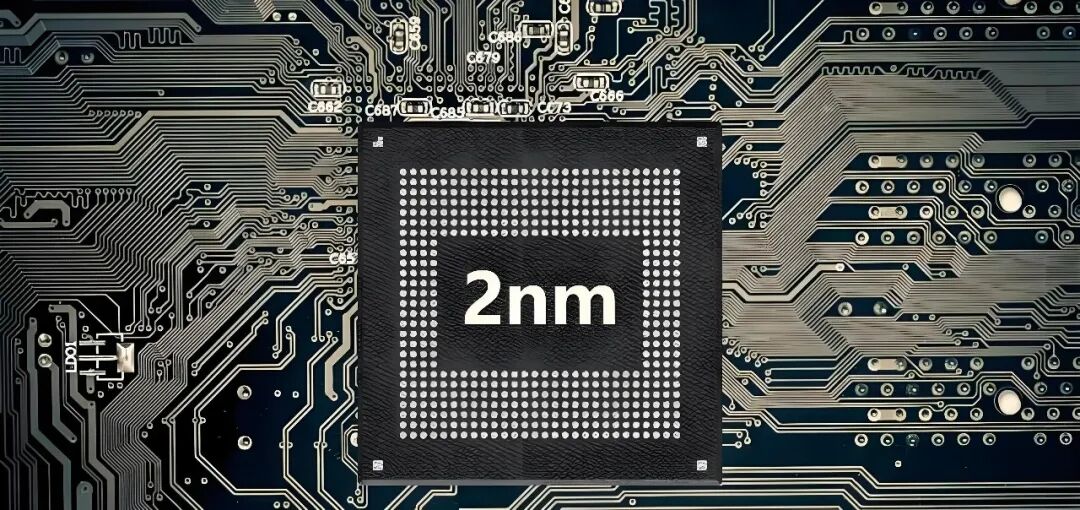
Image Source: Internet
Market information from April 2026 indicates that TSMC's initial N2P process yield stabilized between 60% and 70%. Manufacturers rushed into mass production before fully comprehending the physical characteristics.
Smartphone brands, as end-users, rely on chips from foundries and require complex system adaptations.
When underlying chip uncertainties arise, neither Apple nor domestic high-end models are immune.
04 How Can Consumers Protect Themselves?
First, Avoid First Releases.
The initial batch of products utilizing new processes is prone to the highest yield fluctuations and software adaptation issues. Wait one or two months, observe real user feedback, and then make an informed decision.
Second, Prioritize Stability Over Peak Performance.
Impressive benchmark scores do not necessarily translate to smooth daily use. Avoiding black screens during gaming or restarts while scrolling through videos is far more crucial than scoring 100,000 points higher in AnTuTu.
Third, Promptly Protect Your Rights When Issues Arise.
The iPhone 18 Pro Max's signal problem constitutes a hardware defect, and Apple has opened replacement channels. For Android devices with chip stability issues unresolved by software updates, demand replacements or refunds.
Specifications are merely numbers for press conferences; stability is what you experience daily. A smartphone may lack a 200MP camera or a 165Hz refresh rate, but it must not restart mid-game. #FlagshipSmartphones
-
![]()
4G Intelligent Lighting Module Selection, Deployment, and Common Issues
-
![]()
Must Adapt to iPhone Duo! Apple’s Mandate Puts Pressure on Small and Medium-Sized Developers
-
![]()
Laying Off 30% of Staff and Reverting to Fuel-Powered Vehicles: Decoding Porsche's '2035 Mid-term Strategy'
-
![]()
Why Do Flagship Smartphones Exhibit Reduced Stability Despite Achieving Higher Benchmark Scores?
-
![]()
Despite Rising Benchmark Scores, Why Are Flagship Smartphones Becoming Less Stable?
-
AI Industry Weekly Review: Model Going Global, Computing Power Breakthrough, AI Ascends to Divinity
-
![]()
SZSE Works Overtime During National Day, Issuing Inquiry Letter Swiftly After ColoredChinese Announces Plan to Raise 2.8 Billion Yuan, Over 10 Times Its Net Assets
-
PC Manufacturers Feel the Pinch as Memory Prices Surge and Sales Dive by 20%