Manus Returns to the Domestic Market with a $4 Billion Valuation: What's Next?
 10/12 2026
 395
395
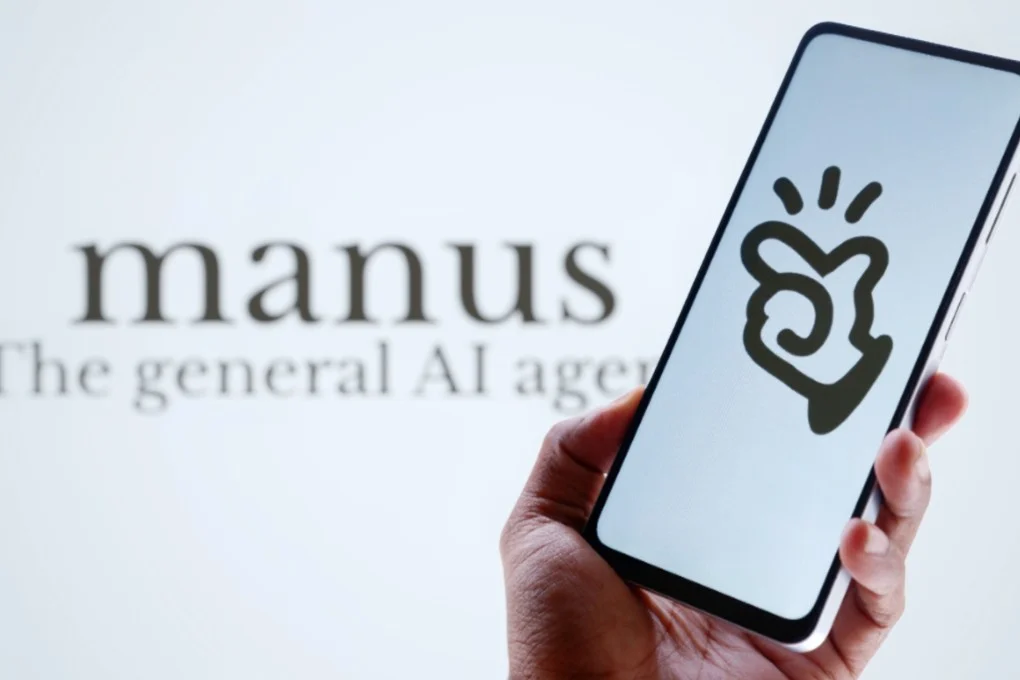
On October 8, a financing announcement brought Manus back into the spotlight.
Over $500 million, with a post-investment valuation of approximately $4 billion. Boyu Capital and IDG Capital co-led the round, with continued support from Tencent, Sequoia China, and ZhenFund. This marks Manus' first major financing since regaining independence and the largest single-round funding for a domestic AI application startup to date.

Image source: Internet
The numbers are staggering. But what truly takes one's breath away is the timeline.
Just five weeks ago, it had completed its "emancipation" from Meta.
On September 1, Manus officially announced its return to independent operations; on September 28, version 2.0 was launched; and on October 8, $500 million was secured. From "parting ways" to "re-financing," the entire process took just over thirty days. Why is it still worth investing in? The capital market's response was decisive: the company's business data had not faltered amid the cross-border acquisition turmoil.
Behind this lies a story of technological sovereignty, capital maneuvering, and the journey home. And the second half of this story is just beginning.
Breaking Down the Financing Round: Where the Money Came From and Whether It's Worth It
First, let's examine where the money came from.
The lead investors are Boyu Capital and IDG Capital, both top-tier domestic firms. Among the follow-on investors, Tencent, Sequoia China, and ZhenFund are all existing shareholders.
A notable detail is that Tencent has become Manus' largest external institutional investor.
Looking back at the timeline, during Manus' share buyback from Meta, Tencent acquired the stake initially held by Benchmark, accounting for about 20%. Benchmark, the earliest Silicon Valley venture capital firm to back Manus, exited with multiple times its initial investment. Tencent's continued investment after the acquisition demonstrates its commitment with real capital.
Existing shareholders doubled down, while new institutions clamored to join. Capital's attitude is more honest than any PR statement.
Now, is it worth it? Supporting the $4 billion valuation is a steep revenue growth curve.
In December 2025, Manus' annual recurring revenue (ARR) was approximately $100 million. By the end of June 2026, this figure had surged to between $400 million and $500 million. In less than a year, revenue had quadrupled or quintupled.
But the more intriguing aspect is the change in valuation multiples.
When Meta acquired Manus, the valuation was $2-3 billion, corresponding to an ARR of about $100 million, with a price-to-sales (P/S) ratio of 20-30x. Now, with a $4 billion valuation and $400-500 million in ARR, the P/S ratio has contracted to 8-10x.
Image source: Internet
The valuation doubled, but "expensive" became "cheap."
Such is the power of growth. When the denominator outpaces the numerator, bubbles are absorbed by performance. For an AI Agent company still in hypergrowth, an 8-10x P/S ratio remains within a reasonable range.
However, the calculation cannot stop here.
Tian Feng, Dean of the Fast Thinking Slow Thinking Research Institute, highlighted a key point: beyond valuation changes, the sustainability of revenue growth and profitability after regaining independence must be observed.
ARR is an "annualized" projection, not actual profit. In the Agent business, token consumption is a hard cost, and computing bills loom like a sword of Damocles. No matter how fast revenue grows, if costs surge synchronize (synchronously), profitability remains a mirage.
The $4 billion valuation is a vote of confidence from capital. But the exam begins only after the vote is cast.
Returning to China: Three Hurdles Manus Must Overcome
On the same day as the financing announcement, Manus posted 17 new job openings, all based in Beijing.
Judging by the job structure, this is not merely setting up a "representative office." Product designers, Agent product managers, full-stack engineers, business analysts, evaluation engineers, user growth managers—the roles span a complete team from R&D to growth. Xiao Hong revealed on social media that thousands of resumes were received within a day of posting the jobs.
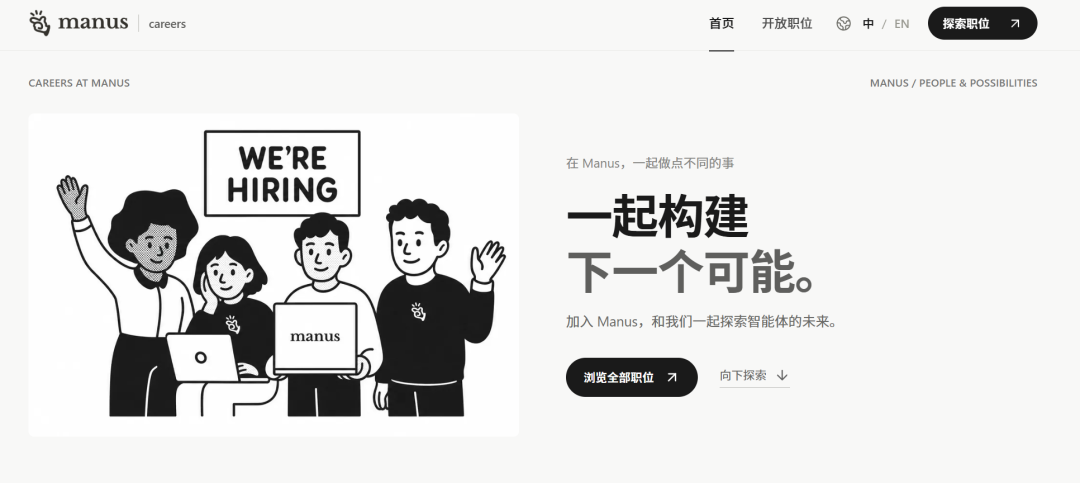
Image source: Manus official website
The posture is one of "serious business."
But posture is one thing; the market is another. The home Manus is returning to is nothing like the one it left.
Hurdle 1: Rebuilding User Trust from Scratch
In January, Manus terminated all services for mainland Chinese users. At the time, it relocated its headquarters to Singapore, laid off domestic staff, and was labeled as "fleeing."
Now, returning, the first hurdle is not technology but trust.
Users will ask: Is this for real this time? Will you leave again? After the cycle of departure, acquisition, and buyback, Manus must prove to domestic users and partners that it is here to stay.
Fortunately, it is not starting from zero. Xiao Hong graduated from Huazhong University of Science and Technology, and the company established a Wuhan Optics Valley subsidiary in 2022, with a team once exceeding 50 people. Early development of Monica and Manus was primarily conducted in Wuhan. This local R&D foundation means it is not entering from scratch.
Hurdle 2: Direct Competition from Tech Giants
This is the toughest hurdle.
In the general-purpose office AI agent track (sector), Alibaba's Qianwen Office, ByteDance's Doubao Work, Tencent's WorkBuddy, and Baidu's DuMate are rapidly iterating. These giants possess massive user bases, mature cloud infrastructure, and self-developed large models, giving them overwhelming advantages in traffic access and cost control.

Tencent WorkBuddy Image source: Internet
The pie is indeed growing. Data from the China Communications Industry Association shows that China's enterprise-grade AI agent market is expected to expand from RMB 21.2 billion in 2025 to RMB 44.9 billion in 2026, and could surpass RMB 332 billion by 2029, with a compound annual growth rate (CAGR) of 107%.
But the bigger the pie, the more competitors join. Manus' strengths lie in its first-mover branding, product accumulation in general-purpose agents, and engineering capabilities honed overseas. Its weaknesses are equally apparent: as an application-focused startup, it relies on large model providers, putting its bargaining power and differentiation at risk.
Hurdle 3: Misaligned Business Models
This hurdle is the most subtle yet fatal (fatal).
Overseas, Manus followed a C-end personal assistant route with a subscription model, which worked. But domestic market dynamics repeatedly prove: C-end payment willingness is weak; B-end is the primary arena for agent commercialization.
IDC data shows that the domestic enterprise-grade AI agent market is expected to reach RMB 44.9 billion in 2026, while the C-end market is worth just billions of RMB—a difference of orders of magnitude.
This means that for Manus to commercialize successfully in China, it may need a product logic entirely different from its overseas approach: shifting from individual-focused to organization-focused enterprise agents.
And this is precisely where domestic giants have the deepest ecological moats.
Three hurdles, each tougher than the last. Manus holds cards, but its opponents are all heavyweights.
The Delicate Relationship Between Muse and Manus
If returning to China represents Manus' "internal challenges," then Meta is its "external threat."
The relationship between these two companies can be summed up as: once partners, now the most familiar foes.
The story begins during the integration period. From February 2026, Manus teams gradually relocated to Meta's Singapore office, completing the transition of identities and work environments by March. Reports indicate that over 100 employees received Meta corporate accounts and internal system access, writing code in Meta's training clusters and running Agents in Meta's data pipelines.
This "close contact" sowed seeds of doubt for later controversies.
After the acquisition was halted, Meta swiftly launched its self-developed agent platform. What truly shocked the industry was Meta's Muse.

Image source: Internet
Muse and Manus' Cue (Manus' benchmark product) were launched almost simultaneously, with highly overlapping positioning: both are device-resident personal AI assistants emphasizing "persistence, 24/7 availability, and handling daily tasks." One comes from a startup just ousted from Meta's orbit; the other from the giant that expelled it and "replicated" its logic.
The key suspicion lies in timing. Meta disclosed that Muse's internal R&D began in early 2026—precisely during the acquisition integration period. Bloomberg reported in June that before the split, Meta employees used Manus for internal projects; only after the split initiation did Meta instruct employees to halt new projects on Manus and migrate existing ones.
In other words, during Muse's conceptual phase, Meta and Manus were still under the same corporate umbrella, with real product usage and system-level interactions.
Even more nuanced is the product philosophy. Manus is defined by "spinning up a cloud-based virtual computer for each task, enabling Agents to operate autonomously in isolated environments." This Cloud Computer architecture is alleged to have directly influenced Meta's subsequent product DNA. After the acquisition halt, Meta's self-developed platform advanced at a pace inconsistent with a "ground-zero" start.
However, close contact within the same corporate framework is undeniable. Yet direct code inheritance remains unproven.
Public information does not conclusively show that Muse directly inherited Manus' code, models, or product designs. Similar product logics may stem from philosophical "adoption" or industry consensus on agent forms. Without evidence, equating "resemblance" with "copying" is risky.
What is certain is that these two companies now stand at opposite ends of the same track (sector). One must prove it can survive without the giant; the other must prove it can win without buying it out.
Manus' Report Card: A Mirror for China's AI Applications
Plotting Manus' valuation curve reveals a steep upward trajectory.
$500 million, $2 billion, $4 billion.
In a year and a half, it experienced meteoric rise, sale, buyback, and independence. After Figma's failed acquisition by Adobe, Manus is among the rare companies to be bought back and see its valuation rise further.
This curve proves one thing: Chinese teams' capabilities in AI application layers are recognized by global capital. From Monica to Manus, from "providing answers" to "getting things done," this team has bridged the "last mile" from models to users with engineering resilience.
But it also exposes another issue: divergent domestic and international perceptions of AI application value.
Domestic giants once offered Manus acquisition deals worth just tens of millions of dollars, a fraction of Meta's billions. This valuation gap warrants industry-wide reflection: have we underestimated what our own teams can achieve?
Image source: Internet
Now, Manus returns with a $4 billion valuation. But doubling its valuation ≠ victory.
The real test lies not in financing announcements but in the domestic market: can it carve out a viable commercialization path amid giant encirclement?
That matters more than the $4 billion figure.
Manus has written half its report card. The remaining half must be completed in the Chinese market, stroke by stroke.
References:
Manus Secures Over $500 Million in Financing. Source: Huxiu
Manus Valuation Tops $26 Billion: How Will It Respond to the New Agent War? Source: Kechuangban Daily
Partial data collected via AI
Click "Recommend" for good luck!
- END -
-
![]()
Comprehensive PPT Analysis of CAAM Production and Sales Data: A Slight Dip in Auto Production and Sales Over the First Three Quarters; Steady Growth in New Energy Vehicle Sales Share; Auto Exports Sur
-
![]()
Tech Titans' Strategy Divergence, AI Budget Shifts, and Globalization Hurdles for Chinese Open-Source AI Models | AI Weekly Review
-
![]()
Manus' Second Price
-
![]()
September Vehicle Sales Rankings Unveiled: BYD Song Outshines Tesla Model Y to Claim Top Spot
-
![]()
Manus Returns to the Domestic Market with a $4 Billion Valuation: What's Next?
-
![]()
India’s AI Glasses Revolutionize Payment Methods: Seamless Transactions by Conversing with QR Codes
-
![]()
Zhang Yiming’s World Model Can No Longer Remain Unnoticed
-
![]()
Zuckerberg, the Eyewear Seller, Becomes the Fourth Richest Person in the World