Apple "Returns Home", Siri Unlocks New Possibilities
 10/14 2026
 553
553
Author|Shen Ziyan
Editor|Lv Xinyi
Produced by|AI Chaos
Has Apple Lagged Behind in the AI Race?
Over the past two years, with each delay in Siri's advancements, the notion that Apple has fallen behind has grown more convincing.
On October 13, just six weeks after new CEO John Ternus succeeded Tim Cook, Apple dedicated its latest product launches to the "home" domain. There was no grand unveiling event; instead, the products quietly made their debut on the official website at the scheduled time.
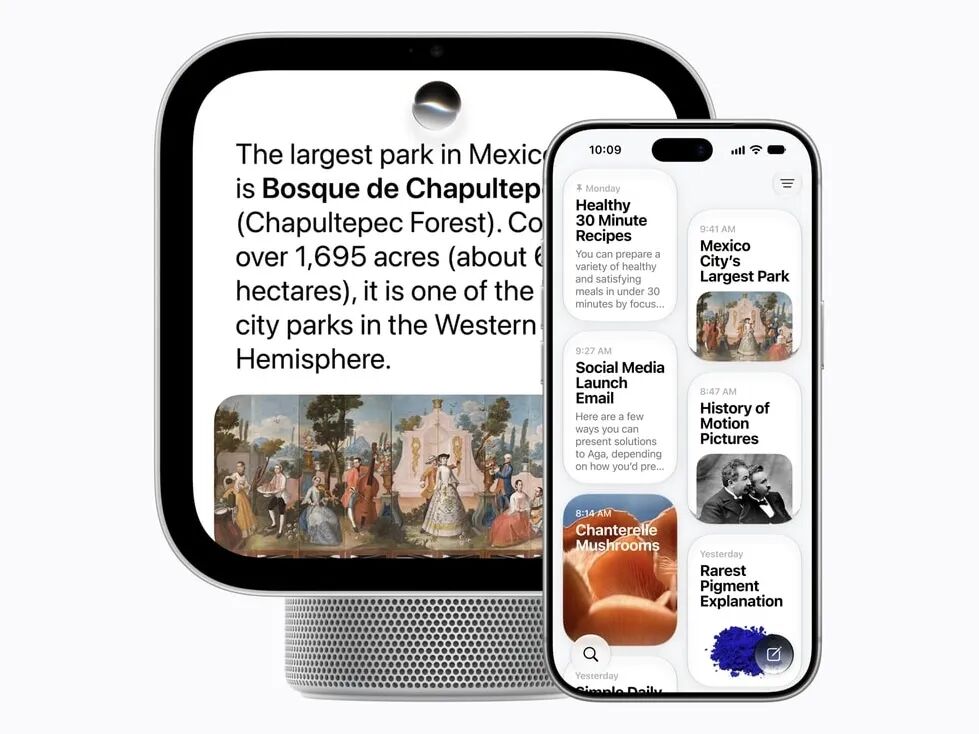
The standout product is HomeView, a 7-inch screen device priced at $299. It can recognize family members as they approach and switch to personalized interfaces for each individual. Also introduced were two updated offerings: the HomePod mini 2, which took six years for an upgrade, and the new Apple TV 4K, now featuring hands-free Siri support.
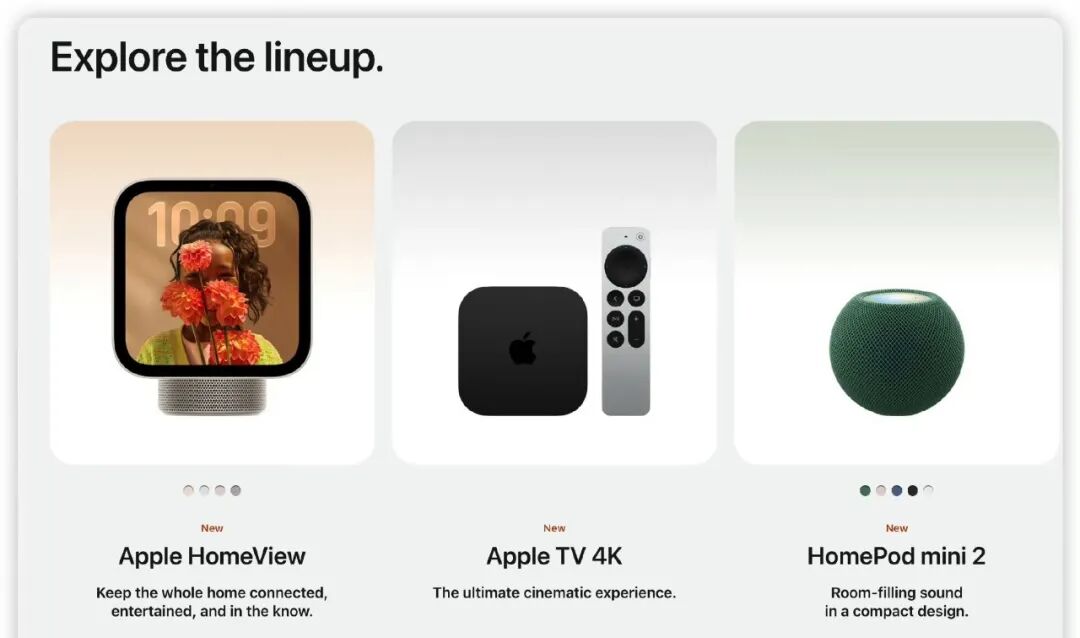
This product launch can be viewed as Apple's attempt to make up for lost ground in AI. Siri's promised enhancements were delayed for two years, advertisements were quietly removed, and Apple ultimately settled a lawsuit with users for $250 million.
HomeKit has been around for twelve years, and HomePod has seen two generations, yet the living room has never been Apple's primary focus. The long-anticipated home hub has only now truly stepped into the limelight.
However, viewing this solely as a make-up exam oversimplifies the situation. Apple is now leveraging Google's Gemini model capabilities, collaborating with partners like LG and Schneider Electric to develop doorbells, locks, and temperature control devices. Yet, what Apple cherishes most are still its system and user access points.
Ternus previously defined the iPhone as a "smart personal hub." Now, Apple is extending its sensing and interaction capabilities into the living room.
A company with fifty years of experience in personal computing is attempting to bring its product philosophy into the home. But can Apple's familiar skill set, honed for managing individual devices, suffice when it comes to organizing family life?
Transitioning from the pocket to the living room, this home布局 (layout) can be seen as Apple's quest for answers.
Hello, this is "AI Chaos."
Everything is evolving, yet dusk arrives as it always does.

Apple has spent nearly two decades transforming the hassles of device management, once requiring human intervention, into a repeatedly validated method.
In 2011, iCloud synchronized content across devices; in 2014, Continuity enabled seamless task handoff between devices; in 2016, AirPods made this method especially tangible. Open the charging case, tap once, and the earbuds are paired. Sensors detect wearing status, and the W1 chip manages connection and power consumption.
What users see are two white earbuds, but the real value lies in the elimination of steps that once required user intervention.
Apple's ecosystem premium stems from the relationships between devices. Today, this ecosystem still boasts a vast business foundation. In fiscal year 2025, the iPhone contributed approximately $209.6 billion in revenue, while services revenue reached about $109.2 billion. The phone is far from losing its growth potential; Apple is seeking new ways for users to continue engaging with the entire ecosystem while the phone remains strong.
Yet, the home market has proven challenging for this approach.
HomeKit debuted in 2014, and the first-generation HomePod was released in 2017, priced at $349, and discontinued in 2021. Although Apple later released a second-generation HomePod, after more than a decade, the home business has yet to replicate the success story of AirPods.
AI has reopened doors of opportunity.
From the ecological interconnection of phones, computers, tablets, and watches to home ecological interconnection, it seems like a natural progression on the surface. Moving a set of device collaborations that have been running for years into the living room appears to require only the addition of one more screen and a few rooms.
But "home" and "pocket" are two distinct realms.
The iPhone holds one person's life, but devices in the living room must serve an entire family. TVs, speakers, and hubs are shared, while schedules, photos, and private messages each have their owners. Phones can access calendars but cannot continuously perceive changes in the room. Devices left at home interact with the shared living environment.
Apple is no stranger to handling multi-user devices. HomePod has long supported multi-user voice recognition, and Apple Home has set different permissions for family members and guests. But when systems begin to access more personal information and even perform tasks on behalf of users, the rules built around identity and device access face more complex scenarios.
HomeView does recognize approaching individuals through facial recognition and switches interfaces for up to six family members. Personal information is only revealed when the person's paired iPhone or iPad meets security conditions. But this is just the first step.
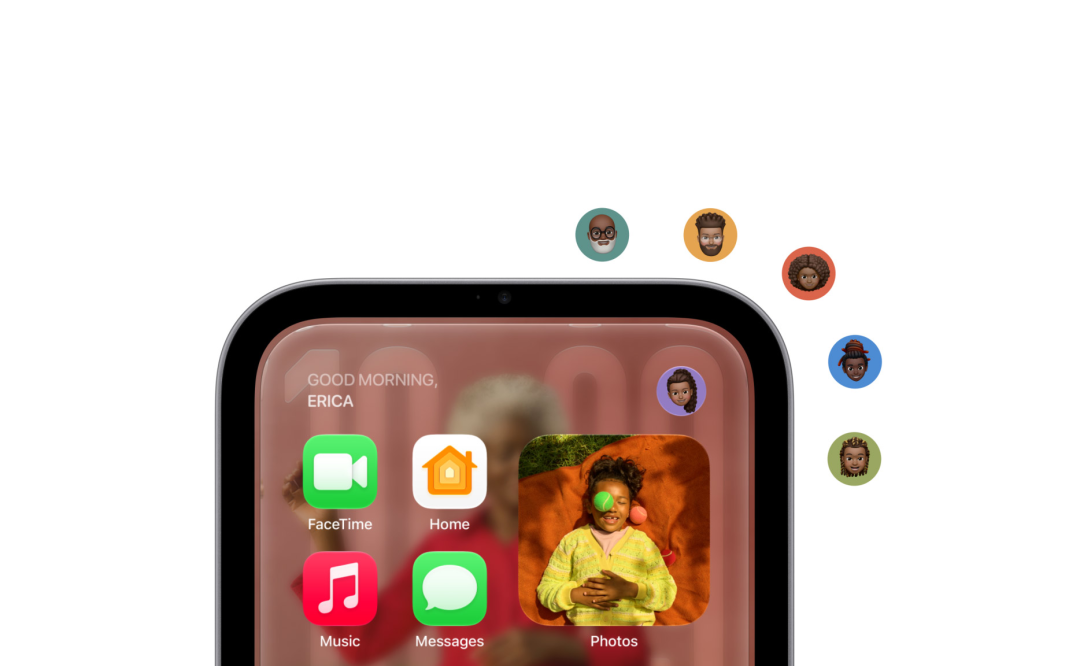
The challenge lies here. If Siri on the phone mishears a question, users can usually rephrase it. But if a screen in the living room misidentifies someone, it might display a partner's schedule to a child or treat a child's request as an adult's command. Even if it identifies the person correctly, it may not act appropriately. When someone says, "I'm leaving," the system can adjust the temperature, turn off the lights, and activate security. But if someone else is still resting at home, these actions cannot be carried out indiscriminately.
A model may understand one person's intentions but not necessarily the situation of an entire family.
Joswiak positions HomeView as "shared by everyone in the home while making each user feel completely personalized." It sounds ideal, but transitioning from personal devices to the home, Apple needs to coordinate not just devices but also the people living together. This new interface is precisely where Apple's original collaboration method is most valuable and hardest to replicate directly.
Now at the helm of Apple, Ternus once put the brakes on the home business a decade ago.
When Amazon Echo and Google Home were rising, he opposed adding cameras and complex sensors to the first-generation HomePod due to concerns about cost and market return. Later, he also shouldered part of the responsibility for Apple's lag in the home market.
Now, the home hub J490, security sensing device J450, and the desktop robot J595 with motion mechanisms are all on the list of projects he has helped push forward.
"We never release technology just for the sake of releasing it. We always think about how to use technology to deliver amazing products, features, and user experiences," Ternus said when discussing AI.
This home launch is not a script hastily written six weeks into his tenure. Apple began preparing during the Cook era, and now it's Ternus's turn to deliver it. Sensing hardware that Ternus was unwilling to add a decade ago now has new uses. What truly held back product releases was software.
Specifically, Siri.

Apple's greatest strength is turning a technology into a complete experience. The two years Siri was delayed were precisely because of this.
This delay was particularly glaring because Apple had an early start.
In 2011, Siri entered users' pockets with the iPhone 4S, but the first-mover advantage in voice assistants did not translate into leadership in the home market. Fifteen years later, what held back the new round of home hardware was still Siri.
The release plan for the home hub was long constrained by the development progress of the new Siri. Hardware projects could proceed at their own pace, but once product value highly depended on the same software capability, the entire product line might have to wait together.
Looking back at the past two rounds of Siri upgrades helps understand the differences.
In 2024, Apple Intelligence made Siri better at understanding natural language, handling user pauses and corrections, and answering a wider range of questions after integrating ChatGPT. But Apple's promised personal context understanding, screen awareness, and cross-app operations were never fully delivered. It wasn't until September this year that the new Siri AI architecture debuted with iOS 27 in beta form, beginning to fill these gaps.
Apple gave an example: when a user asks what a relative wants to do on their next visit, Siri can find baking suggestions from messages, retrieve previous recipes from emails, and add the required ingredients to a shopping list. Screen awareness also allows it to understand what the user is seeing and perform related operations directly.
In the past, users opened apps and decided what to do next themselves. Now, Siri must find relevant information from a natural language query, determine which app to call, and then execute the action. It needs to understand not just what people say but also the content and operation rules within apps.
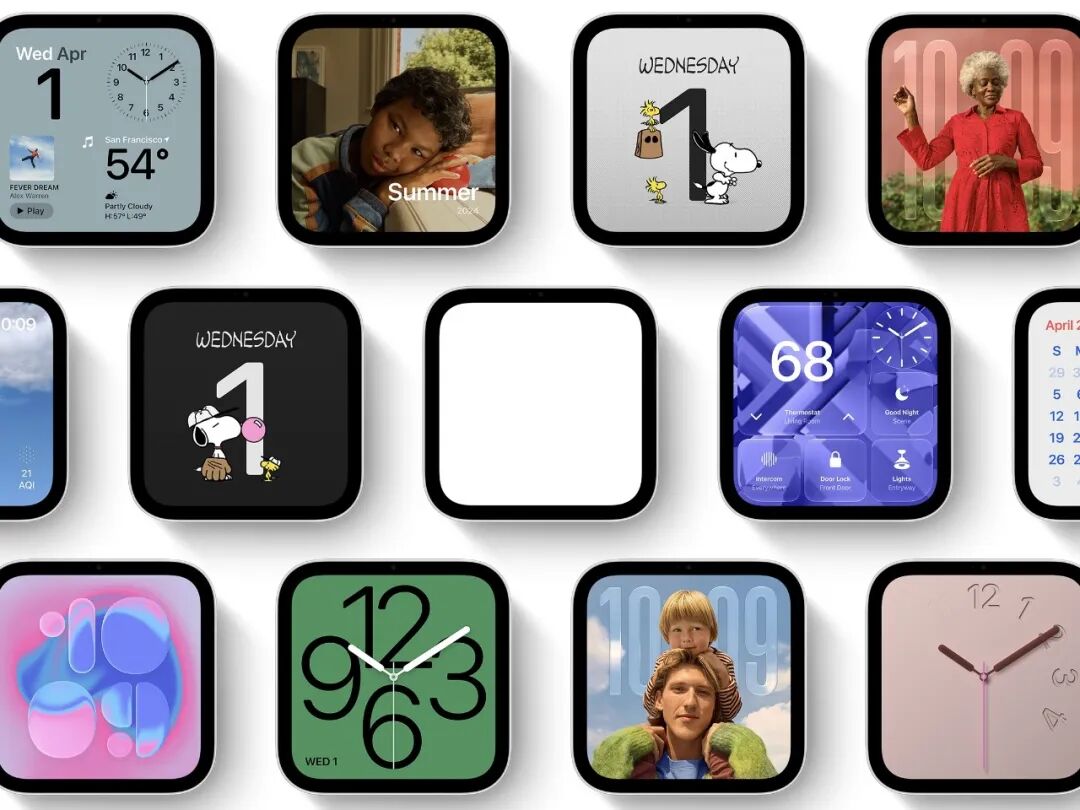
Apple's new architecture, disclosed at WWDC26, assigns these tasks to different system capabilities. Spotlight's semantic indexing helps Siri find relevant content, App Intents allows developers to expose information and actions from their apps to the system, and the device-side coordination layer completes the calls through mechanisms like App Toolbox.
The trickier part lies in permissions.
Even if an operation is technically feasible, it may not be appropriate to execute it immediately. Apple's developer courses specifically discuss confirmation mechanisms for shared content. Modifying one's private schedule has different consequences than modifying a meeting that invites others. The system must know who owns the content, whether it involves others, and when to ask the user for confirmation.
Apple already controls the operating system, accounts, security mechanisms, and developer ecosystem, but enabling AI to reliably operate across these links is still an engineering challenge that requires rethinking.
This has also changed Siri's position within the Apple ecosystem.
The new Siri has a standalone app, and conversation records can be synced across devices via iCloud. Unfinished conversations on the phone can continue on the Mac, from HomeView to the watch, or even to Vision Pro. In the past, users were accustomed to finding an app before using its functions. Now, some tasks can be directly handed over to Siri, which finds a way to complete them.
Apps still provide specific services, but how users access them is changing. For developers, a feature must not only be found by users but also understood and called by the system. Apple can set interface rules but cannot require all third-party apps to open up all their capabilities.
Apps are still there, but the entry points are shifting.
This is also the part that Google's cooperation cannot complete for Apple.
In January this year, Apple reached a multi-year agreement with Google, and the next generation of Apple Foundation Models will be based on Gemini models and cloud technology. Apple gains stronger model support while continuing to provide Apple Intelligence services through on-device computing and Private Cloud Compute.
But between model capabilities and system execution lie app interfaces, user authorizations, and real operation results. If third parties do not open up their functions, no matter how smart the model is, it cannot call them out of thin air. Apple can buy model technology from Google but still has to integrate the models with its entire software ecosystem itself.
Cooperation shortens the catch-up path, but the responsibility for delivery does not transfer.
This is precisely the lesson left by Siri's two-year delay. Apple once wrote a set of unfinished software capabilities into product promises prematurely. Now, as it begins to deliver, the beta label still hangs, and the stability of complex tasks still needs more real-world use to verify.
Siri AI on HomeView is only available in English for eight countries this time. Canadian French will come with a free software update, while the EU is entirely excluded from the initial launch. Even the HomePod mini 2, unveiled alongside, will only get it with a subsequent update.
For the home hub, Siri's completeness almost determines how much independent value this device can offer. Without sufficiently strong intelligent interaction, it could easily become just a small iPad fixed in the living room.
Apple has waited so long for the software capabilities that give this screen a reason to exist independently.
And the way Siri delivers its results also reveals another side of Apple's product approach: key capabilities can be obtained externally, but Apple is still responsible for organizing them into a complete product experience.
This division of labor is now extending from software to home hardware.

A six-inch screen is not hard to manufacture; the challenge is giving it a reason that cannot be easily replaced by an old iPad. The new Siri is beginning to fill this capability gap, but it also forces Apple to rearrange its work with external companies.
For models, Google is already involved. At home, even locks and cameras may not need to be made by Apple itself.
So, LG appears at the door.
Along with it comes Schneider Electric.
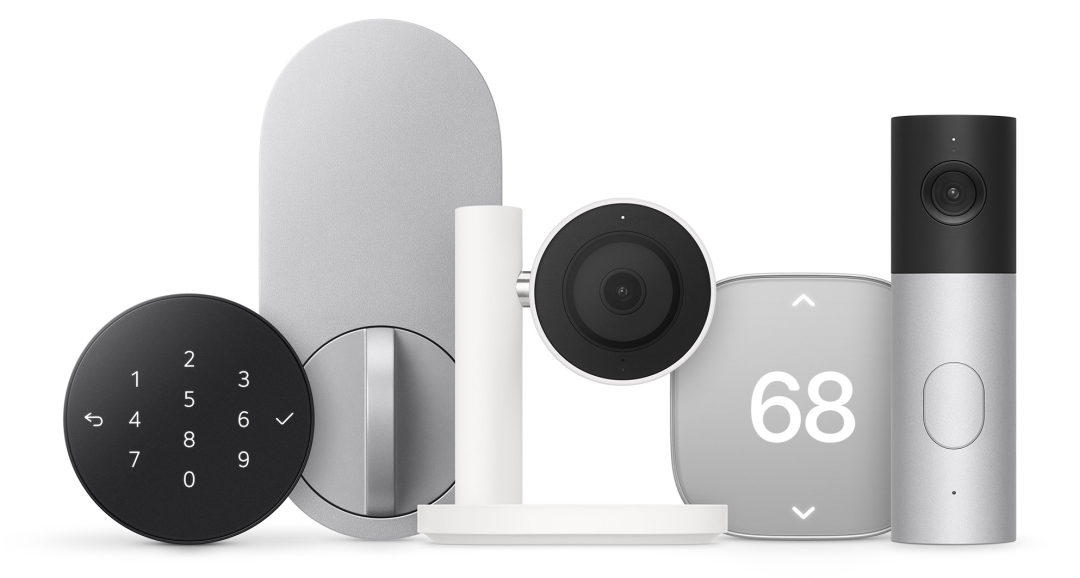
Apple has the capability to manufacture these devices but chooses to allow other brands to appear within its home ecosystem.
This approach marks a significant departure from traditional supply chain outsourcing. Consider Foxconn’s role in iPhone production: while Foxconn handles assembly, Apple retains control over the product’s definition, design, and sales. LG’s involvement, however, extends beyond manufacturing—it manages the operational lifecycle of specific product categories. For instance, door locks must accommodate diverse door structures, thermostats need to integrate with local HVAC systems, and doorbells require careful consideration of power supply, wiring, and installation. Unlike smartphones, which are replaced every few years, home security systems are long-term investments. This necessitates robust certification, maintenance, and after-sales service—a commitment that spans decades rather than years.
With the Apple Home Collection, Apple has brought the connection process into its own ecosystem. Users can initiate pairing with a single tap on their iPhone, eliminating the need for separate manufacturer apps or additional account registrations. While accessories bear the LG and Schneider Electric logos, daily operations are seamlessly integrated within the Apple Home platform.
Leveraging third-party hardware to enhance its own ecosystem is a familiar strategy for Apple.
Since the launch of HomeKit, brands like Philips Hue and Honeywell have gradually integrated their products into Apple’s framework. From the outset, Apple has never intended to manufacture every smart home device itself. Instead, it has focused on creating a cohesive ecosystem where third-party products can thrive.
In 2020, Logitech introduced the Circle View video doorbell, designed exclusively for HomeKit. Through HomeKit Secure Video, the doorbell can analyze footage via a home hub, identify visitors using facial recognition data from the Photos app, and send notifications to devices like the iPhone and Apple Watch. All videos are encrypted and stored in iCloud, ensuring privacy and security.
While Logitech manufactures the doorbell, visitor information is seamlessly integrated into Apple’s ecosystem, including accounts, devices, and services. The collaboration with LG represents a deeper level of integration: Apple has shifted from setting compatibility standards to actively participating in the design and development of partner products, while leaving branding and operational management to LG.
Changes in industry standards are also prompting Apple to expand this collaborative model.
Matter, a smart home connectivity protocol co-developed by Apple, Google, Amazon, and others, is breaking down barriers between different platforms. The 2025 release of Matter 1.5 introduced support for new device categories, such as cameras, while the 2026 update (1.5.1) further enhanced video streaming and doorbell functionality. Now, a single accessory can operate across multiple ecosystems, freeing users from the need to commit to a single platform when purchasing a smart lock or other device.
However, while connectivity barriers are lowering, competition between platforms remains fierce. Matter may standardize communication and control methods, but it cannot unify AI capabilities, account permissions, or service rules across companies. Once devices are connected, the platform users entrust with their data and tasks still depends on each platform’s unique value proposition.
LG, too, has its own strategic calculations.
In 2024, the company acquired an 80% stake in Athom, a Dutch smart home platform, with plans to integrate Homey’s cross-brand connectivity with its ThinQ ecosystem. Jung Ki-hyun, head of LG’s platform business center, stated at the time: “Acquiring Athom is the cornerstone of our AI home business.”
Co-developing accessories with Apple is one strategy; managing one’s own home entry point is another. While the two companies may collaborate on a smart lock, the question of which platform users ultimately trust to manage their devices and provide follow-up services remains tied to each company’s interests.
Apple is expanding its ecosystem by leveraging third-party hardware, but these partners are also vying for their own user base. Users may feel they’ve regained control, but another company might still hold a key to their data or services.
Apple can manage authorizations within Apple Home but cannot revoke permissions for other platforms. As more devices come under Siri’s control, the gap between what Apple can manage and what users perceive it manages begins to widen.
This gap will only grow with the lifespan of devices. Once door locks, cameras, and thermostats are installed, users expect them to function reliably for years. However, AI models, cloud services, and software interfaces may evolve significantly within months. While Apple can ensure compatibility at launch, it cannot guarantee that future updates from partners will remain seamless within its ecosystem.
“Hardware and software cannot be separated. Hardware is the vessel for the experience, and software defines the scenarios.” This is Nutes’ perspective on device collaboration and the integration of hardware and software.
Moreover, Amazon Echo, Ring, and Google Nest have already established a strong presence in U.S. homes. Apple faces a market filled with legacy devices, established rules, and ingrained user habits. Connecting new hubs to these devices is just the first step; ensuring long-term functionality is the next challenge.
The costs of this business extend beyond hardware delivery. Cloud inference, video storage, and ongoing software updates all require significant investment. While Apple has the opportunity to extend paid relationships with home users through services like iCloud+, it must also shoulder the long-term operational costs.
In China, this “homecoming” remains distant for now. The HomeView launch does not include mainland China, and new Siri AI features are still subject to regulatory and local service constraints. Meanwhile, Xiaomi Mi Home and Huawei HarmonyOS Connect have already built robust user bases and ecosystems around device compatibility and scenario automation. Even if Apple introduces similar hardware, it may struggle to deliver the same seamless experience in Chinese households.
Apple’s ecosystem is expanding, but what happens within it is increasingly beyond Apple’s sole control.
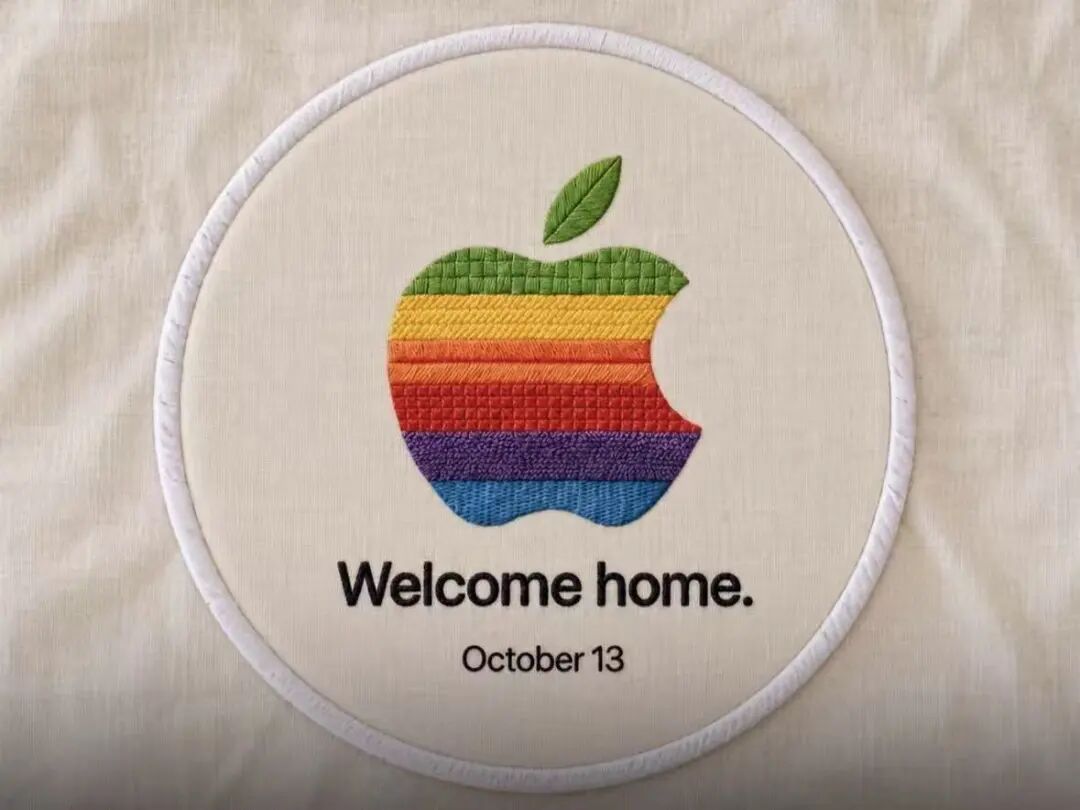
Apple has played a double meaning with the phrase “Welcome home.”
On the surface, it welcomes products “home.” Deeper down, it suggests Apple itself has come home.
Fifty years ago, the company began in Steve Jobs’ garage; fifty years later, it chose “home” as the venue for its first major post-succession launch.
Yet this homecoming is no less challenging than the original journey.
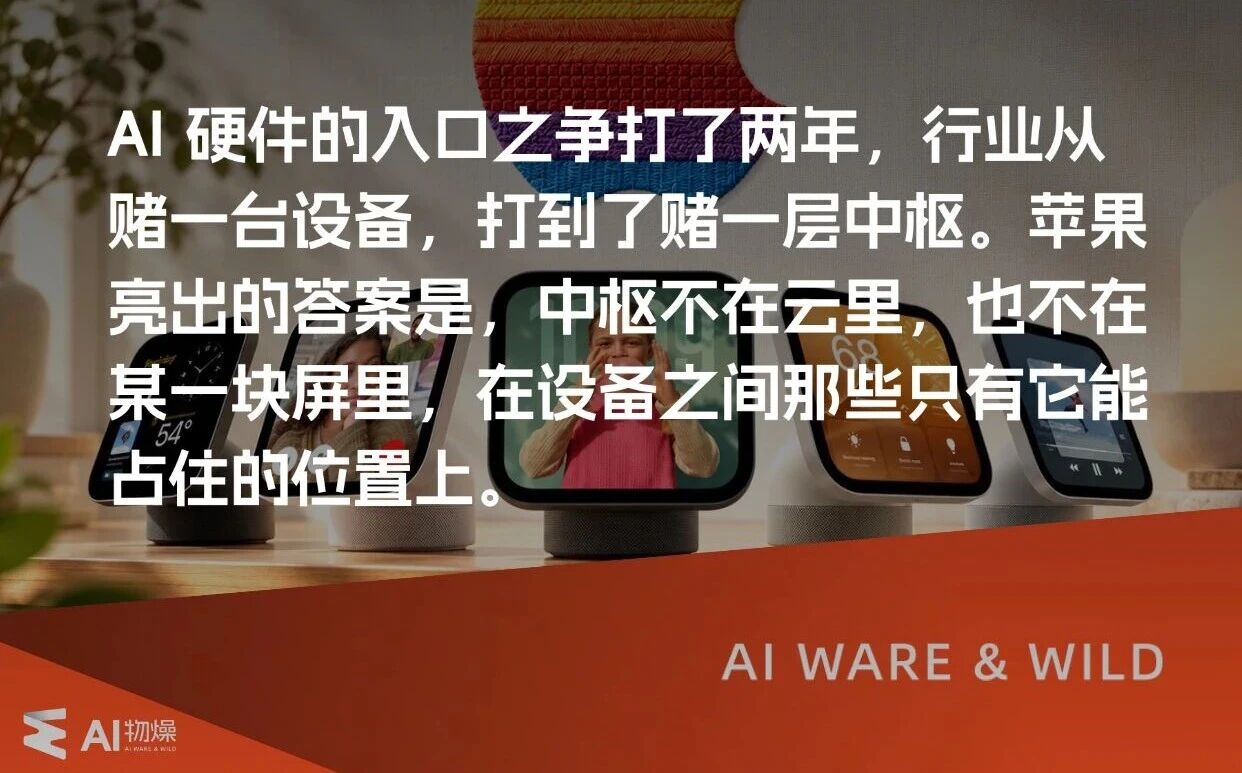
The battle for AI hardware entry points has raged for two years, shifting from wagering on individual devices to wagering on an entire layer of control. Apple’s answer is that the hub lies not in the cloud or a single screen but in the spaces between devices—spaces only Apple can occupy.
Its goal has never been to win solely in the large language model race. It simply needs to accustom millions of living rooms to one thing: ensuring every person who approaches its screens is treated appropriately. If it succeeds, the battle is mostly won. If not, the $250 million in “tuition” may be just the beginning.
Apple has opened the door, but the house is still far from fully operational.
-
![]()
GAC Toyota’s September Vehicle Registrations Reach 49,000 Units, with Camry Registering 6,898 Fewer Units Than Wholesale Volume
-
![]()
The Hidden Tycoon: Wang Xuning, the Powerhouse Behind Joyoung Co., Ltd.
-
![]()
V4 Pro Official Version Yet to Launch, Yet DeepSeek Opts for Price Hike
-
![]()
Green Bubble May Not Outshine Hongguo Yet, But This Step Is Vital
-
![]()
Top 20 Cities for Startups in Six Key Future Industries: First Three Quarters of 2026
-
![]()
Apple "Returns Home", Siri Unlocks New Possibilities
-
![]()
Bypassing Optical Waveguides? TDK Leads the Way in Retinal Direct Projection Optical Tech
-
![]()
From Connected Vehicles to All-Domain Collaboration: 6G Ushers in the Next Era of Automotive Connectivity