Nvidia Brings in Wall Street, Potentially Revolutionizing Valuation Logic for Computing Power
 10/20 2026
 345

Jensen Huang has proposed a new valuation approach for Nvidia, but the market has not fully accepted the two key premises.

On August 10, Nvidia announced on its official website that it had signed a memorandum of understanding with six institutions—Apollo Global Management, BlackRock, Blackstone, Brookfield, Goldman Sachs, and KKR—to jointly establish an independent computing power financing platform. The goal is to mobilize over $500 billion in third-party capital to provide loans to Nvidia's customers for purchasing Nvidia hardware and building AI data centers.
According to Nvidia's announcement and Jensen Huang's statements in an official blog post, the funds will operate as follows: the six institutions will contribute capital to establish a dedicated pool, offering financing at "attractive interest rates" to cutting-edge AI labs, large enterprises, and cloud service providers within Nvidia's ecosystem. Borrowers will use these funds to purchase Nvidia chips and build "AI factories" based on the DSX architecture. Lenders will receive long-term returns tied to the actual usage of computing power.
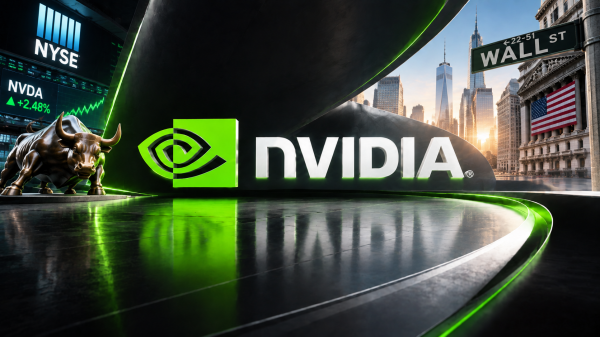
Image source: East Money Network (reference image)
However, even before the announcement, market professionals had interpreted Nvidia's multi-billion-dollar agreements with various parties in the AI ecosystem as "circular financing," questioning the authenticity of inflated demand and valuations.
01 Questioned Circularity
To understand why this deal matters, we must first examine how Nvidia has been spending money over the past two years.
According to Nvidia's public disclosures and statistics from multiple media outlets, from September 2025 to July 2026, Nvidia facilitated at least seven capital injections, procurements, or financing guarantees for AI ecosystem companies, totaling over $50 billion.
The largest deal was with OpenAI. In September 2025, Nvidia announced plans to invest up to $100 billion in phases to secure OpenAI's deployment of 10 gigawatts of Nvidia systems. Four months later, the plan changed—Nvidia ultimately participated in OpenAI's $110 billion funding round with $30 billion, with Amazon ($50 billion) and SoftBank ($30 billion) covering the rest. OpenAI completed this funding round at an $852 billion valuation.
The remaining deals decreased in scale but followed the same structure: in November 2025, Nvidia committed $10 billion to Anthropic (with Microsoft contributing an additional $5 billion), and Anthropic simultaneously committed to purchasing $30 billion in computing power on Microsoft Azure; in January 2026, Nvidia added $2 billion to CoreWeave; in March 2026, it invested $2 billion in Nebius; it had also previously injected $2 billion into Synopsys, committed up to $2 billion to xAI, and participated in Mistral's €1.7 billion Series C round.
These transactions share a common structure: Nvidia provides capital or guarantees, and the recipients use these funds to purchase Nvidia chips or cloud capacity in large quantities.
The most typical example is CoreWeave. Nvidia plays three roles in this company—shareholder, supplier, and customer. It holds approximately 13% of CoreWeave's shares and added another $2 billion in January 2026. Simultaneously, it signed a $6.3 billion agreement to purchase CoreWeave's unsold idle computing power by 2032. CoreWeave, in turn, uses the funds to procure chips from Nvidia and build data centers.
Money flows in a closed loop here. Financial media outlet *Fortune* wrote bluntly in a September report: Nearly all the money Nvidia invested in CoreWeave flowed back to Nvidia as revenue.
This loop continues to expand. CoreWeave's largest end customer is OpenAI, which is itself an Nvidia investee. OpenAI pre-purchases computing power from Oracle, which also buys Nvidia chips. U.S. dollars circulate among these companies, which are interconnected as shareholders, suppliers, and buyers.
Nvidia's critics have distilled this situation into a single question: Is Nvidia selling chips, or is it spending money to buy demand for its own chips?
This question directly challenges Nvidia's business valuation: if a significant portion of Nvidia's growth is driven by its own capital, the authenticity of this growth—and the valuation multiples the market assigns—must be discounted.
History provides a ready reference. Jim Chanos, a short-seller known for accurately shorting Enron, endorsed comparisons between Nvidia and Lucent Technologies at the end of the last century. Lucent provided financing to customers to boost sales, ultimately collapsing after the dot-com bubble burst. Research firm Hammerstone Markets was even more pointed, describing such circular transactions as "distant relatives of Ponzi schemes, requiring continuous infusions of new capital and sustained hype to keep running."
Nvidia has not remained silent on these criticisms. In a memorandum to Wall Street analysts, it refute (rebutted) that customer payment cycles are short—about 53 days—far from the multi-year payment collection (receivables) periods of traditional supplier financing, and that its revenue does not rely on long-term supplier financing to inflate figures. It argued that its business fundamentals are healthy, its reporting transparent, and that it does not depend on such arrangements to drive growth.
But this raises a more fundamental question: If demand is truly so authentic and rigid, why does Nvidia need to spend hundreds of billions of dollars to "prove" it?
02 Unclear Valuation Logic
The answer to this question lies in the true significance of the $500 billion financing platform deal announced on August 10. It attempts to replace "Nvidia providing the money" with "third parties providing the money."
If Nvidia funds the transactions itself, no matter how it explains, the capital flow forms a loop—money goes out, becomes chip orders, and returns as revenue, making it impossible to verify demand authenticity. But if the money comes from independent institutions like BlackRock, Blackstone, and KKR, each conducting its own due diligence, bearing its own credit risk, and deciding whether to provide financing, then the funds are no longer "Nvidia moving money from left hand to right hand" but rather "third-party capital independently judging AI infrastructure as worthy of investment."
In other words, Jensen Huang's goal is not to keep adding money to the loop but to transfer this loop from Nvidia's balance sheet to a platform underwritten independently by Wall Street.
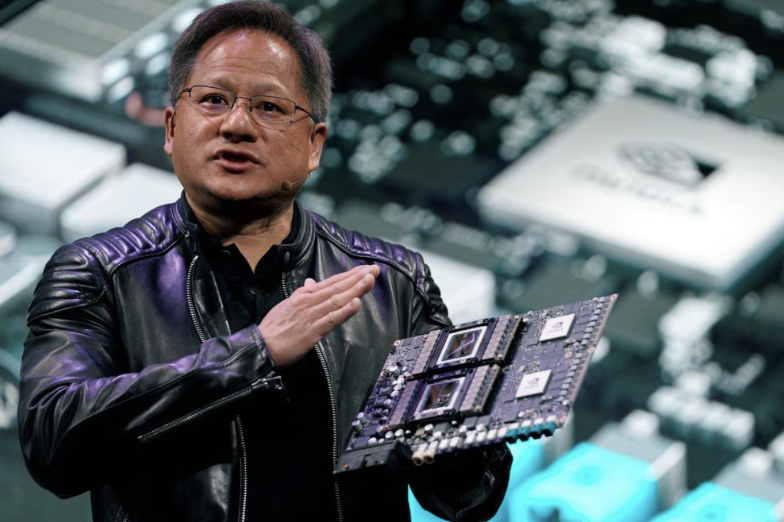
For this substitution to hold, the fundamental logic of Nvidia's asset valuation would shift from hardware attributes to the concept of computing power infrastructure. However, this transformation requires two premises, both of which currently harbor uncertainties that the market has not fully absorbed.
The first is the depreciation curve of the collateral itself.
Mortgage securitization works because real estate and land typically do not lose all value and their useful lives align with loan terms. GPUs do not meet this condition, but their depreciation path is not a straight, uniform decline.
According to the residual value index released by secondhand GPU trading platform ServerBuyBack in June 2026, the secondhand transaction price of an H100 SXM5 80GB ranges from $15,000 to $28,000, retaining 75% to 85% of its original value after 24 months of service. This retention rate far exceeds the conventional rule that most IT equipment depreciates by 30% to 50% over two years, thanks to sustained inference demand for the Hopper architecture.
However, this figure applies to compliant channels with manufacturer or dealer warranties and complete records. According to data cited by secondhand market research firms, H100 transaction prices in channels without paperwork or through auctions have dropped to $8,200 to $12,500. Compared to the 2023 peak of $40,000, this represents an over 80% decline. Market estimates cited by industrial data firm Nexi.fund show that an H100 worth about $30,000 in 2023 had fallen to around $8,000 by early 2026. The industry generally expects H100 secondhand prices to face another 10% to 20% downward pressure this year as Rubin architecture supply normalizes.
The core issue is term mismatch: GPU-backed financing loans typically have terms exceeding five years, yet collateral begins accelerating depreciation in its third year. The industry has implemented structural protections—according to Nexi.fund, GPU-backed loans have advance rates compressed to 50% to 70% of hardware value, with principal repaid upfront and loan terms requiring real-time telemetry monitoring of GPU utilization.
Nvidia's hedge for the financing platform is a residual value guarantee of up to 25%. According to its SEC filing, Nvidia discloses a lease guarantee risk cap of $3.5 billion. Using a $3.5 billion backstop to match a $500 billion target size yields a coverage ratio of just 0.7%, far below the 8% to 20% credit enhancement levels typical of formal (regulated) asset-backed securities.
The second premise is whether cash flow on the liability side can cover expansion speed.
The platform's logic holds only if AI application revenue growth continues to outpace computing power investment expansion. Current public data presents a divergent picture.
On the investment side, according to financial data cited by Guocheng Investment Advisory, Microsoft, Amazon, Google, and Meta's combined capital expenditures in 2026 totaled approximately $745 billion, up over 70% year-on-year. Microsoft accounted for about $190 billion, Amazon increased to $220 billion, Google ranged from $195 billion to $205 billion, and Meta ranged from $130 billion to $145 billion. Including the world's top nine cloud providers, total capital expenditures in 2026 reached about $830 billion.
On the revenue side, according to calculations by Sequoia Capital's David Cahn, hyperscalers need $840 billion in terminal revenue to cover costs. According to Allianz Research, the divergence between AI capital expenditure and revenue growth has reached 46%, exceeding the approximately 32% level before the 2001 telecom bubble burst.
Disagreements thus center on one point: at the ecosystem level, the mismatch between investment growth and revenue growth continues to widen. According to *Forbes*, citing CreditSights, the capital intensity (capital expenditures as a percentage of revenue) of the five giants has risen to 45% to 57%, a level closer to utilities and industrial companies than traditional software firms.
Therefore, the market worries that if AI commercialization lags behind investment expansion, borrowers' cash flow will come under pressure, and financial institutions may recover collateral consisting of continuously depreciating secondhand GPUs. Institutional investors holding related bonds would then bear losses at the end of the chain. Whether this scenario materializes depends on whether, after the deal's implementation, the income realization speed of computing power assets can keep pace with their capital formation speed. At least based on the market's reaction on the announcement day, investors have not yet given a definitive affirmative answer to this prospect.
(Images and public data sources in this article are from the internet and public industry platforms. If there is any infringement, please contact us promptly for corrections.)
-
![]()
Self-Developed Chip Valued at 10 Billion Yuan: Can Li Auto’s Second Growth Curve Succeed?
-
![]()
The Year of High-Intensity Action: What Is Ant Group Betting On?
-
![]()
DeepSeek V4 Pro Officially Launches with Price Increase Effective August 17
-
![]()
Keynote Speaker | Li Yanming, Volcano Engine’s Senior Enterprise Solution Expert, Confirmed for WAIE (10th) 2026 AI Industry Conference & AI Agent Industry Application Conference
-
![]()
Nvidia Brings in Wall Street, Potentially Revolutionizing Valuation Logic for Computing Power
-
![]()
High-Profile Guest | Qiao Yuchuan, Director of Embodied Intelligence Solutions at SenseTime, Confirmed to Attend WAIE (10th) 2026 AI Industry Conference & AI Agent Industry Application Conference
-
![]()
Conant Optical Claims Spot in Alibaba’s Qianwen AI Glasses Core Optical Supply Chain!
-
![]()
Breaking Away from Integrated Assembly: What’s the Wager of This Domestic FTIR ‘Little Giant’?