Self-Developed Chip Valued at 10 Billion Yuan: Can Li Auto’s Second Growth Curve Succeed?
 10/20 2026
 511
How Did a Newly Launched Chip Secure a Valuation of 17.1 Billion Yuan?
After the market closed on October 16, Li Auto announced that its chip subsidiary, Shanghai MachXin Technology, had signed its first equity financing agreement, raising 1.625 billion yuan. If additional subscription rights are fully exercised, the company’s post-money valuation could reach up to 17.1 billion yuan.
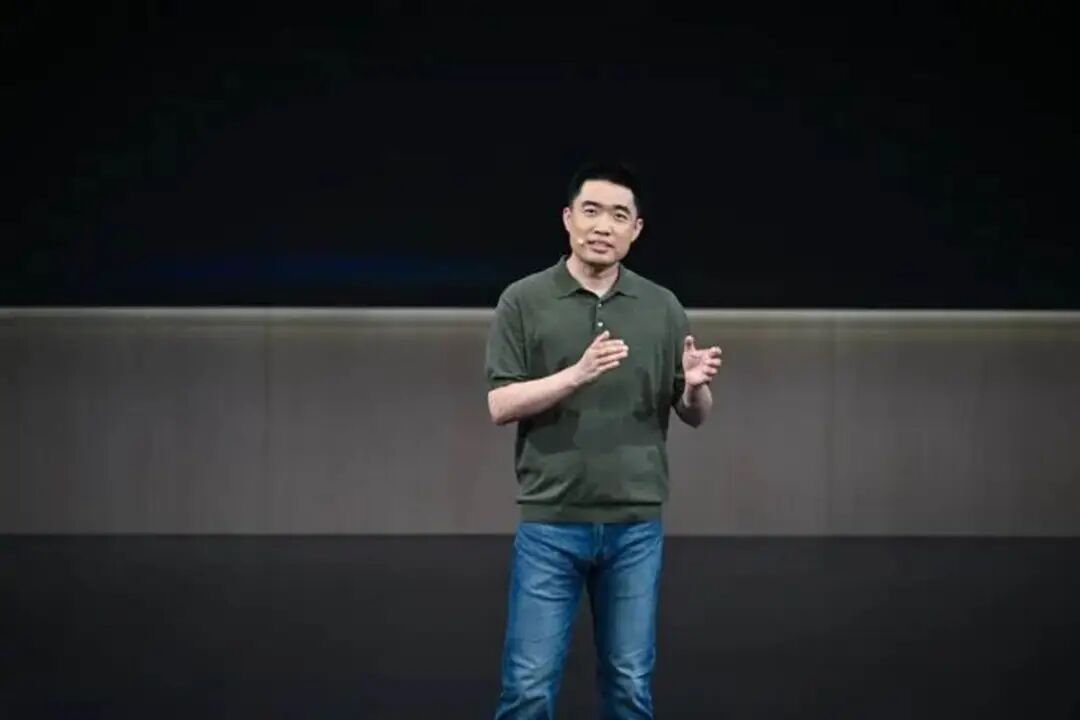
Caption: Li Xiang, Founder and CEO of Li Auto
It is worth noting that MachXin was only registered on August 12 of this year, and Li Auto stated in the announcement that it has not yet commenced substantial commercial operations. Currently, the company’s assets consist solely of a mass-produced 5nm chip already integrated into vehicles and a team of approximately 200 people.
How Did a Newly Launched Chip and a Company Yet to Begin Operations Secure a Valuation of 17.1 Billion Yuan?
A Five-Year Journey for a Single Chip
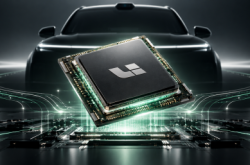
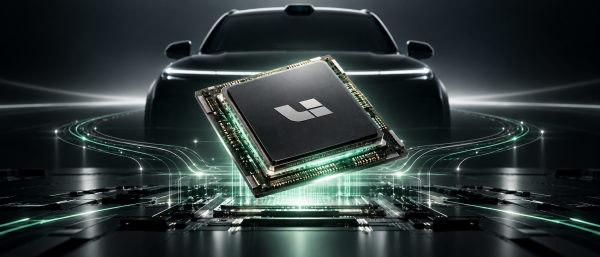
At Li Auto’s Livis Day event in June this year, Li Xiang held up a chip and jokingly invited the audience to take photos, suggesting that the caption should read, "The World’s Most Powerful AI Chip." The Mach M100 is a 5nm automotive-grade chip with a computing power of 1280 TOPS per chip. It has been installed in multiple new vehicle models, with over 50,000 units delivered as of August.
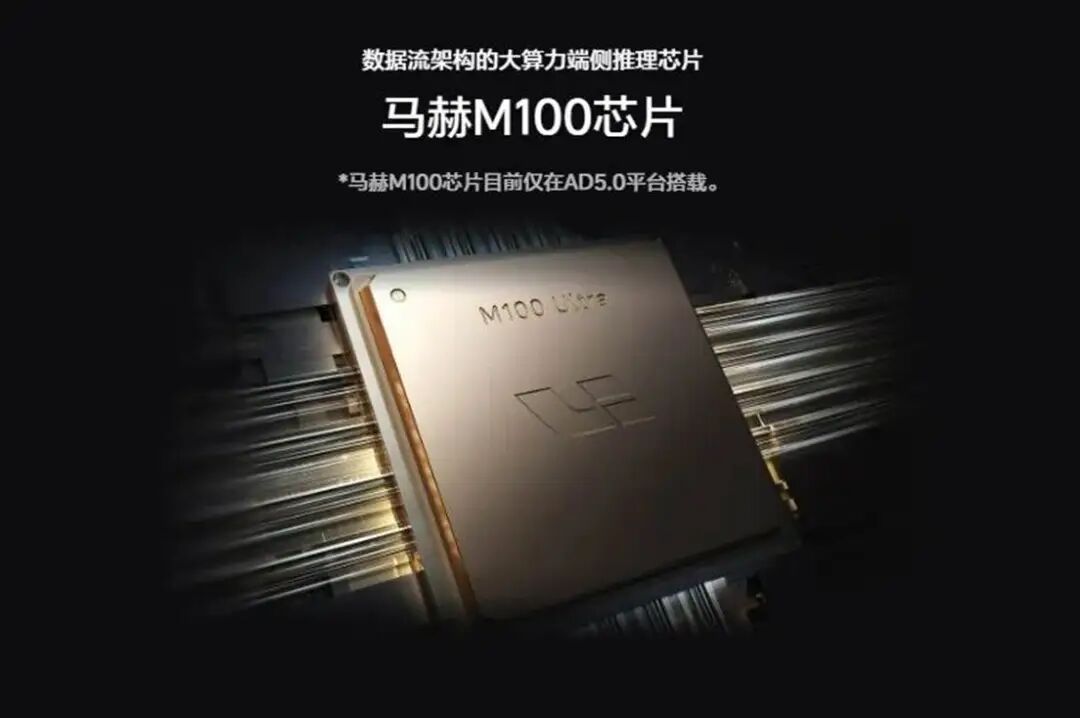
Caption: Mach M100 Chip
Li Auto began exploring self-developed chips in 2021. In July 2022, Xie Yan joined Li Auto and became CTO in December of the same year. In November, the chip project was officially launched, initially code-named "Schumacher." Xie Yan later recalled to LatePost Auto that two options were considered at the project’s inception: the first chip would directly compete with NVIDIA’s then-most powerful product, adopting a dataflow architecture instead of the mainstream GPGPU approach. This design allows data to directly drive computation, with efficiency increasing at larger scales.
Since entering the automotive industry, Li Auto’s advanced intelligent driving systems have relied on NVIDIA chips. The L series uses two NVIDIA Orin-X chips, with the upper limits of intelligent driving capabilities and the pace of new model iterations tied to NVIDIA’s roadmap. In 2022, NVIDIA announced its new-generation Thor chip, initially scheduled for mass production by the end of 2024 but delayed three times, finally delivering in August 2025 with computing power reduced from the advertised 2000 TOPS to 700 TOPS. Li Auto’s original plan to launch a refreshed L series in March 2025, with Thor as a core upgrade, was postponed to May. Media analysis estimated that this delay cost Li Auto approximately 6 billion yuan in lost revenue.
The M100’s progress, however, remained smooth. Testing began in the first quarter of 2025; in February 2026, Li Xiang announced that the new L9 would be equipped with two Mach chips; in May, the M100 entered mass production with the new L9. Li Auto claimed that models equipped with Mach chips saw a 40% reduction in end-to-end latency for intelligent driving. From testing to mass production, the most time-consuming automotive-grade verification process took just over a year. According to Li Auto’s real-world tests, the M100’s performance in large model tasks is three times that of NVIDIA’s latest-generation automotive chip, Thor-U. The goal set four years ago—to compete with NVIDIA’s then-most powerful product—has been achieved, as evidenced by real-world data.
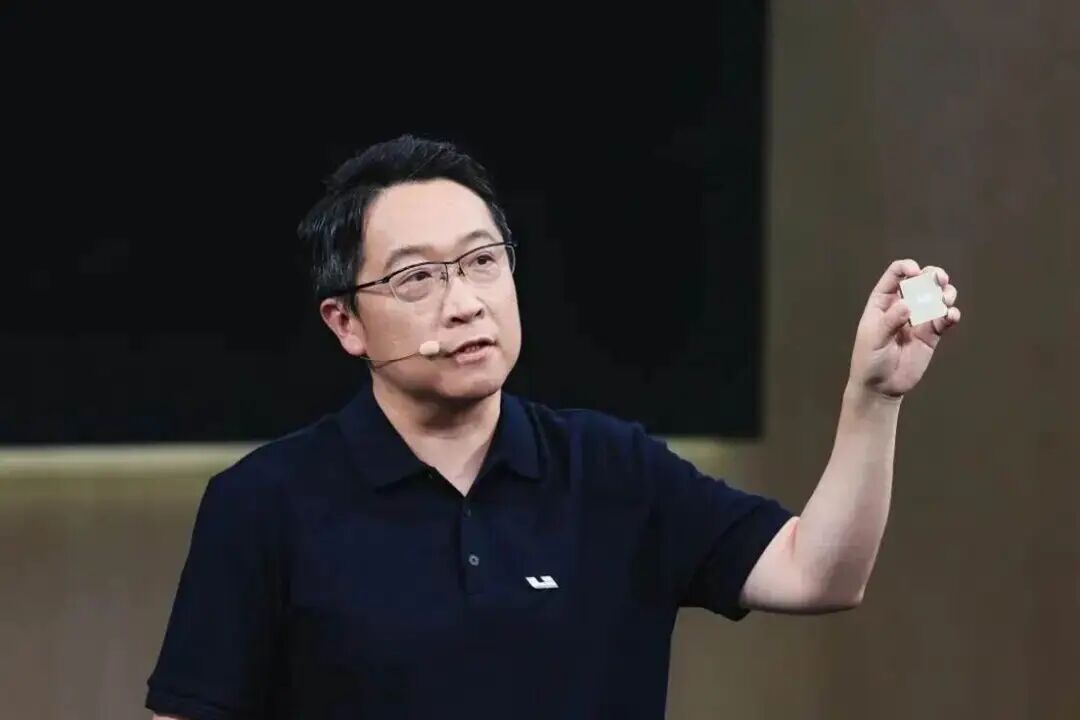
Caption: Li Auto CTO Xie Yan
From project inception to mass production, Li Auto took four years. With the first chip now in vehicles, the next step is already underway. According to LatePost Auto, the Mach team is developing a second chip, a cloud-based inference chip also using a dataflow architecture, aiming to take over inference tasks previously run on GPUs, expanding from vehicles to the cloud. As chip development continues, so do the costs.
A 17.1 Billion Yuan Price Tag
Chips hold a prominent position in Li Auto’s strategy for this year. On January 26, Li Xiang stated at a company-wide meeting that 2026 represents the final window for Li Auto to become a leading AI company. He noted that no more than three companies globally would simultaneously develop foundational models, AI chips, operating systems, and embodied AI, and Li Auto aims to be one of them.
These initiatives come with significant costs. According to Cailian Press, Li Auto’s R&D investment reached 11.3 billion yuan in 2025, a record high, with AI-related spending accounting for about half. Self-developed chips are a key focus. According to CSIS, citing industry data, the average design cost for a 5nm chip is approximately $449 million, with additional costs of tens of millions of dollars per tape-out. Meanwhile, Li Auto’s financial capacity is weakening. In 2023 and 2024, Li Auto was the top-selling new energy vehicle brand by annual deliveries; in 2025, deliveries fell 18.8% year-on-year to 406,300 units, with net profit down 85.8% year-on-year to 1.1 billion yuan. According to LatePost Auto, Li Auto reported a net loss of 3.98 billion yuan in the first half of 2026.
Under sustained investment pressure, Li Auto spun off its chip business for independent financing, introducing external capital to share R&D and expansion costs. According to Li Auto’s October 16 announcement, among the four external investors, Hangzhou Jingtao, BlueRun Ventures, and Huaye Tiancheng each invested 200 million yuan, while Miracle Plus invested 25 million yuan, all at a subscription price of 23.35 yuan per unit of registered capital, corresponding to a pre-money valuation of 15 billion yuan. After the financing, MachXin’s post-money valuation reached 16.63 billion yuan. Among the investors, only Hangzhou Jingtao secured additional subscription rights, allowing it to purchase up to 500 million yuan more at the current round’s price within the year; if fully exercised, the valuation would reach 17.1 billion yuan. Li Auto’s stake in MachXin would dilute from 100% to approximately 76%, maintaining absolute control. Li Auto stated that the funds would support R&D and expansion of the chip business, describing chips and domain controllers as the group’s second growth curve.
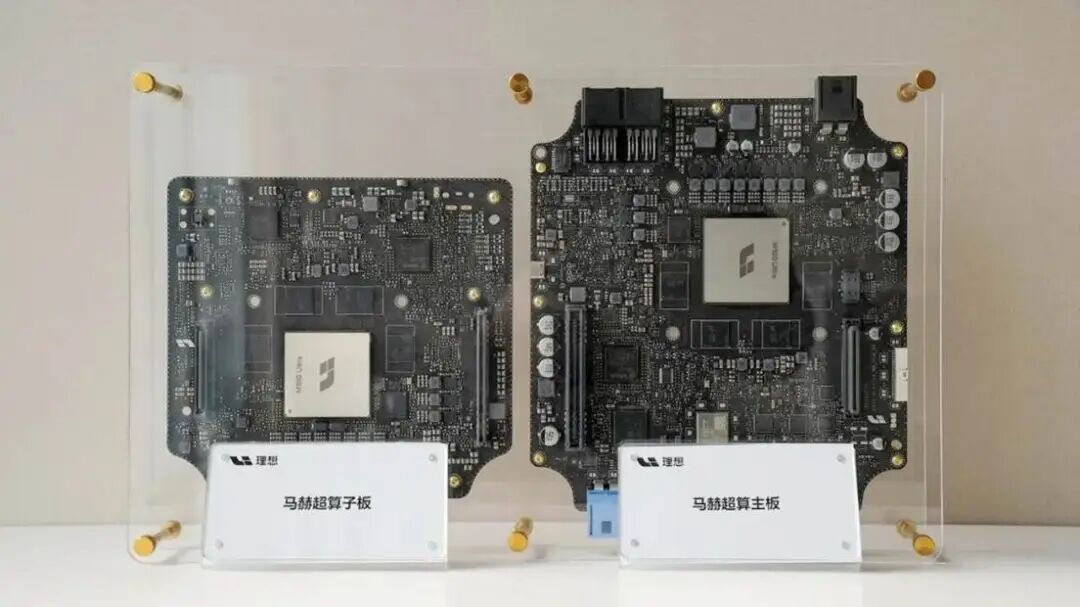
Caption: Mach Supercomputing Sub-Board and Main Board
Of the 1.625 billion yuan raised, 1 billion yuan was subscribed to by Li Auto itself. According to the Sci-Tech Innovation Board Daily, the lead investor, Hangzhou Jingtao, is backed by Matrix Partners China’s new fund targeting 7 billion yuan in size. Matrix Partners led Li Auto’s Series B funding in 2017 under its former name, Chehejia, while BlueRun Ventures invested in its Series A in 2016. The investors in this round are primarily long-term shareholders of Li Auto.
MachXin has thus become the first asset in Li Auto’s AI Layout (AI strategy) to be independently valued. The valuation serves not only as a funding tool but also, according to the announcement, introduces a two-tier equity incentive plan to attract core technical talent, tying their gains to the company’s valuation. For the first time, Li Auto’s AI plans have a specific price tag.
From Buyer to Seller
However, for the 17.1 billion yuan valuation to translate into revenue, MachXin must sell chips beyond Li Auto. Li Auto delivers approximately 400,000 vehicles annually; even if every new vehicle were equipped with two Mach chips, annual shipments would not exceed 1 million units. According to CITIC Securities, self-developed chips become economically viable when total lifecycle shipments reach the million-unit level.
To bridge this gap, MachXin must seek customers outside Li Auto. Yet, chips developed by automakers face significant challenges in selling to peers. NIO’s chip subsidiary, Shenji, has completed three rounds of external financing, reaching a valuation of 12.25 billion yuan. However, Li Bin stated on an earnings call that NIO’s chip revenue amounts to just a few hundred million yuan, with most coming from technology licensing. Shenji has shipped over 300,000 chips, but the primary buyer remains NIO itself. XPeng has made further progress, with its Turin chip shipping over 200,000 units and securing a fixed point (design win) from Volkswagen in February this year. In the first half of this year, XPeng’s service and other revenue reached 4.73 billion yuan, up 67.1% year-on-year, with a gross margin of 71.4%, while its automotive gross margin stood at just 12.1%. Selling technology is replacing vehicle sales as XPeng’s most profitable business. However, XPeng’s largest current buyer, Volkswagen, is also a shareholder.
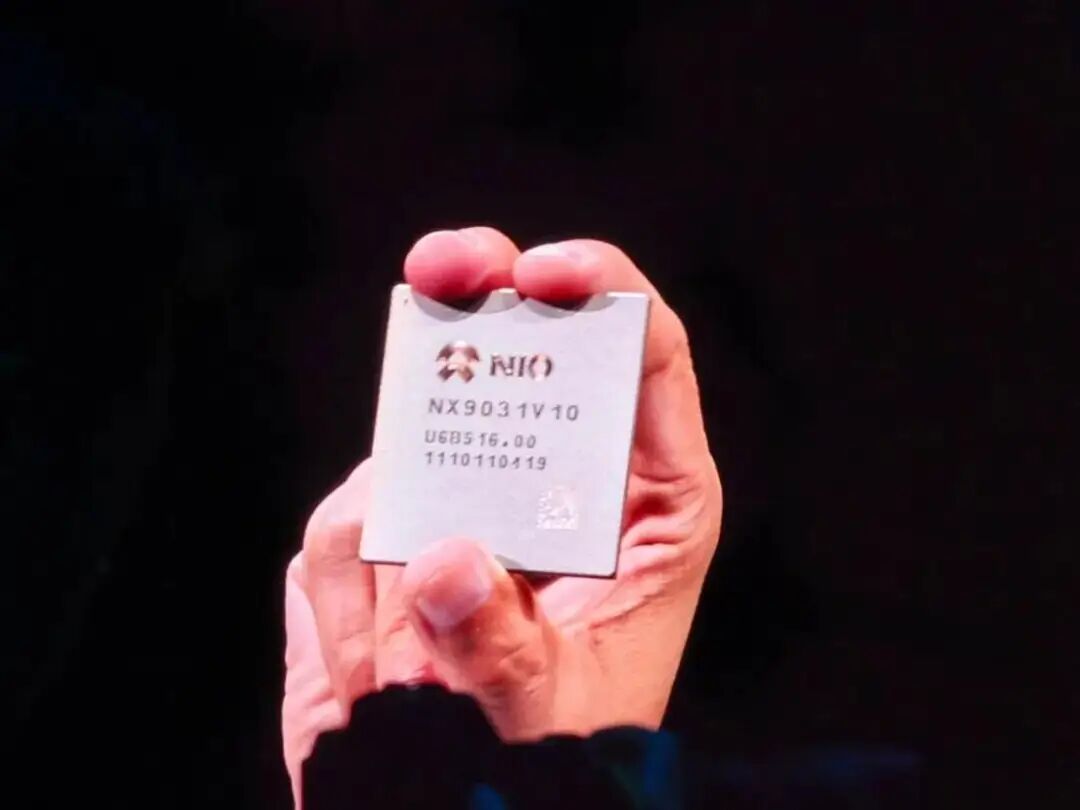
Caption: Shenji NX9031 Chip
The difficulty in selling lies in the fact that no automaker is willing to entrust the core hardware of intelligent driving to a competitor. To address this, Huawei’s HiAuto invited Seres and Avatr to each invest 11.5 billion yuan for a 10% stake and board seats, turning customers into shareholders. NIO is trying a different approach: its self-used NX9031 is not directly supplied to third parties. Instead, it collaborated with AiXin YuanZhi to re-tape-out a dedicated M97 chip for third parties based on its core architecture, operated by a joint venture that downplays NIO’s branding. According to 36Kr, Geely is evaluating a dual-M97 solution for L3 models but has not yet signed a formal fixed point agreement. MachXin has not yet explored either approach.
Nevertheless, MachXin has completed mass production verification. The M100 has been installed in multiple models, including the all-new L9 and L8, with over 50,000 units delivered. Its application scenarios and mass production experience are readily available. According to the announcement, MachXin will build a full-stack technology system around chips, domain controllers, and operating systems. Hangzhou Jingtao’s additional subscription rights of up to 500 million yuan can still be exercised this year.
Where is MachXin’s market? Li Auto itself has provided several directions. The announcement states that MachXin will expand into applications beyond automotive. President Ma Donghui recently said in an interview that self-developed components such as Mach chips and silicon carbide modules could be supplied externally. Xie Yan revealed that multiple robotics companies have expressed interest in Mach chips. Li Xiang mentioned in a May podcast that former colleagues who had left to start their own ventures had approached him about supplying Mach M100 chips. None of these directions has yet resulted in a public order.
MachXin’s second growth curve is just beginning. How far it can go depends on the emergence of the first external buyer. In chip development, Li Auto has proven it can create and deploy chips in vehicles. On the path to selling chips, it must now prove it can convert its 17.1 billion yuan valuation into revenue.
-
![]()
Self-Developed Chip Valued at 10 Billion Yuan: Can Li Auto’s Second Growth Curve Succeed?
-
![]()
The Year of High-Intensity Action: What Is Ant Group Betting On?
-
![]()
DeepSeek V4 Pro Officially Launches with Price Increase Effective August 17
-
![]()
Keynote Speaker | Li Yanming, Volcano Engine’s Senior Enterprise Solution Expert, Confirmed for WAIE (10th) 2026 AI Industry Conference & AI Agent Industry Application Conference
-
![]()
Nvidia Brings in Wall Street, Potentially Revolutionizing Valuation Logic for Computing Power
-
![]()
High-Profile Guest | Qiao Yuchuan, Director of Embodied Intelligence Solutions at SenseTime, Confirmed to Attend WAIE (10th) 2026 AI Industry Conference & AI Agent Industry Application Conference
-
![]()
Conant Optical Claims Spot in Alibaba’s Qianwen AI Glasses Core Optical Supply Chain!
-
![]()
Breaking Away from Integrated Assembly: What’s the Wager of This Domestic FTIR ‘Little Giant’?