Will Doubao Mobile Trigger a New Round of 'Soul Theory' Debate?
 10/23 2026
 379
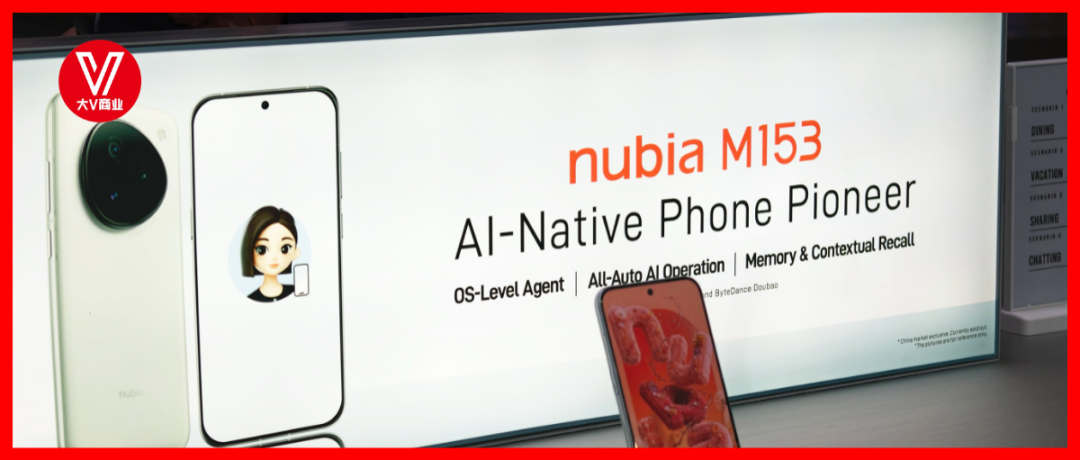
The emergence of AI mobile phones has once again stirred up the landscape of mobile hardware and internet software.
On October 14, Doubao Mobile announced that the 30-day public comment period for the Screen Automation Operation Declaration Protocol (SAEP) had ended, and it would gradually open up screen automation operation permissions for third-party applications.
Notably, the announcement listed a roster of 153 apps that have refused to integrate with Doubao Mobile, including 66 from Tencent, 23 from Alibaba, as well as independent apps like Zhihu, Pinduoduo, Xiaohongshu, Didi, DeepSeek, Kimi, and Trip.com.
There is a saying in the market that 'half of the internet has rejected Doubao Mobile.'
Looking further ahead, it's not just half of the internet; mobile phone companies also have a nuanced attitude towards the integration of AI and mobile phones.
Around the time Doubao Mobile was launched in December 2025, rumors circulated that OPPO had refused to cooperate with ByteDance on Doubao Mobile. Subsequently, OPPO representatives stated that they 'had never rejected such cooperation' and maintained an open attitude. Additionally, there were market rumors of ByteDance collaborating with vivo, Lenovo, and Tecno.
However, it is evident that currently, ByteDance's partnered companies and models are from the ZTE Nubia brand. Nubia's market share is no longer what it once was, making this collaboration reminiscent of Huawei and Seres.
▌1. Greater Resistance from Software than Hardware
Doubao Mobile has become a new catalyst in the internet industry.
Judging from the SAEP announcement released by Doubao Mobile, internet products exhibit greater resistance. The list of 153 rejected apps shows that Tencent, Alibaba, Pinduoduo, Xiaohongshu, and others mostly have competing businesses with ByteDance's products, such as e-commerce, short videos, and AI products.
On the 21st, Doubao Mobile's SAEP announcement was updated again, voluntarily adding 'financial-related applications,' including banking and payment apps.
In contrast, hardware manufacturers have a more moderate attitude. Apart from the rumored refusal of cooperation with ByteDance by OPPO, there have been rumors of collaborations between ByteDance and Tecno, Lenovo, and vivo.
Notably, Xiaomi and Huawei have never appeared on the list of rumored collaborations or rejections.
On one side is hardware, and on the other is software. ByteDance faces a 'soul theory' dilemma similar to that encountered by intelligent driving companies when partnering with automakers, but the issue is obviously more challenging.
The concept of 'soul' in the automotive sector originated from a public statement by SAIC Motor Chairman Chen Hong in 2021,
'Cooperating with a third-party company like Huawei on autonomous driving is unacceptable to SAIC. It would be like another company providing us with a complete solution, making them the soul and SAIC the body. SAIC cannot accept such an outcome; we must keep the soul in our own hands.'
The battle for automotive 'souls' has also sparked controversy over whether OEMs should choose in-house development or third-party solutions in recent years.
▌2. ByteDance's 'Friends and Foes'
From the current situation, ByteDance faces greater software challenges than hardware ones. The resistance or refusal from software companies stems from two main reasons.
Firstly, most software companies compete with ByteDance.
Tencent and ByteDance have direct competition in multiple businesses, including short videos and social media, with both sides engaging in multiple clashes. Tencent, out of concerns for user privacy protection, corporate data security, and trade secret protection, finds it difficult to grant GUI permissions to Doubao.
We can anticipate that Tencent will not open up core product permissions, such as WeChat and Honor of Kings, to Doubao for a long time to come.
Additionally, Alibaba, Pinduoduo, and ByteDance compete in e-commerce, while Xiaohongshu and Douyin also compete in content ecosystems.
Secondly, AI has a significant impact on software entry points.
Integrating with Doubao means that the core functions of software may be 'intercepted.' For example, if e-commerce ordering functions are integrated with Doubao, it could mean that the app may no longer appear on users' phones in the future, as users can complete services directly through the Doubao assistant.
Hardware companies have two attitudes towards functionality. For instance, Xiaomi and Huawei have never appeared on the list of collaborations or rejections, mainly because Xiaomi's AI assistant, Xiao Ai, and Huawei's Xiaoyi conflict with the Doubao assistant.
At the same time, Xiaomi's internet business once accounted for a high proportion of profits, which may also be one of the reasons why the two sides find it difficult to come together.
In contrast, manufacturers like ZTE, Tecno, and Lenovo rely more on hardware profits. Given the current market landscape dominated by Huawei, Xiaomi, OPPO, and vivo, it is understandable that they are willing to experiment with AI mobile phones to regain market share.
Whether ByteDance and mobile phone manufacturers will also engage in a 'soul theory' debate in the future hinges on whether the AI mobile phone market is a seller's or buyer's market.
Why are mobile phone manufacturers more receptive to AI assistants compared to software companies?
Firstly, mobile phone manufacturers earn money from hardware. In the short term, AI is a weakness for these manufacturers but not a must-have for consumers.
If AI becomes the core selling point of mobile phones, much like intelligent driving has become the main functional carrier of electric vehicles, then AI could potentially become the 'soul' of mobile phones.
If mobile phone manufacturers merely use AI as an entry point to preempt market share, then future collaboration models will resemble pre-installation deals of the past, where apps pay mobile phone manufacturers for pre-installation.
Secondly, Apple AI is entering the market, putting pressure on mobile phone manufacturers. With Apple Intelligence's entry into China imminent, OPPO and vivo face even greater pressure to rapidly enhance their AI capabilities.
▌3. How Can Doubao Mobile Break the Deadlock?
Another AI mobile phone player, StepFun, has also launched an AI mobile phone. Unlike Doubao, StepFun's AI mobile phone primarily adopts the MCP method to integrate with other ecosystem apps.
According to StepFun, its Amoo has partnered with nearly a hundred companies or products, including Alipay, Tencent, Ctrip, Didi, CapCut, Gaode, and Meituan, achieving underlying ecosystem connectivity in areas such as local life, travel, office efficiency, and content creation.
MCP can complete services by directly invoking models, rather than relying on GUI operations through image recognition.
It is reported that the second generation of Doubao has already opened up MCP access capabilities, complementing GUI and addressing the challenge of some leading apps being unable to integrate via GUI.
In fact, facing the current issue of multiple internet services being unable to interconnect, leading to software silos, Tencent's mini-programs provide a reference.
To address the challenge of multiple apps being unable to interconnect in the mobile internet ecosystem, causing information barriers, WeChat introduced mini-programs to attract different products to set up shop and achieve connectivity within the WeChat ecosystem.
Of course, other apps are attracted to WeChat's ecosystem traffic.
Now, ByteDance faces similar issues and advantages as WeChat.
Through methods such as Douyin's mini-programs and fast apps in the mobile ecosystem, it can bypass products that cannot provide services. For example, ride-hailing services can directly invoke aggregated service provider mini-programs, and e-commerce shopping can invoke Douyin Mall.
Whether ByteDance's traffic can attract merchants and platforms to set up shop will be a significant variable in determining whether Doubao Mobile can Perfect its ecosystem. For instance, it has been noticed that JD.com's apps are not on ByteDance's SAEP rejection list.
Despite the fierce rivalry between JD.com's procurement and sales teams and Douyin, with Douyin Mall's GMV surpassing JD.com to become the third-largest e-commerce platform in China in 2024, JD.com remains clear-headed about channels that can generate traffic.
- The End -
-
![]()
Will Doubao Mobile Trigger a New Round of 'Soul Theory' Debate?
-
![]()
Doubao Phone: Will It Spark a Fresh Wave of 'Soul Theory' Controversy?
-
![]()
When AI Creates Problems but No One Is Held Accountable: It Gave the Police a False Tip
-
![]()
From Doubao Mobile Phone to OPPO’s Partnership with Manus, and the Gradual Rise of Startups like Jieyue Xingchen: Who’s Riding the Wave of Opportunity?
-
![]()
Audi in Negotiations with Huawei: Developing Next-Gen A8 for China Using Huawei’s Platform, with Plans for Multiple New Models | Mirror Pro
-
![]()
People Trapped in Algorithms
-
![]()
Musk’s Computing Power Venture Recoups Investment Within a Year, Meta’s Muse Faces Uncertain Rollout Timeline
-
![]()
AI: From ‘Accelerator’ to ‘Paradigm Reconstructor’ in Metaphotonics