Nvidia Announces Jensen Huang Steps Down as CEO; Google Releases Gemini 4 Hydrogen
 11/17 2026
 442


Nvidia Announces Jensen Huang Resigns as CEO, CFO Colette Kress Appointed Interim CEO (China News Service)
On the evening of November 12 Beijing time, Nvidia announced that its board of directors has approved Jensen Huang's resignation from his roles as company president, chief executive officer and director, effective immediately. Colette Kress, the company's current executive vice president and chief financial officer, will serve as interim CEO while continuing in her CFO role until a permanent successor is named. The board will launch a search for a new CEO, considering both internal and external candidates. Nvidia's board also appointed Harvey C. Jones as the company's first board chairman. In pre-market trading, Nvidia's stock decline widened to 10%.
Alibaba: Has Formally Applied for T-Head Independent Listing (36Kr)
On the evening of November 10, Alibaba Group announced that it has submitted forms to the Hong Kong Stock Exchange to apply for the independent listing of its subsidiary T-Head. After the listing is completed, T-Head will remain a subsidiary of Alibaba. The announcement shows that on September 11, 2026, T-Head submitted a listing application to the Hong Kong Stock Exchange, planning to list independently on the Main Board through H shares. The specific scale of the IPO has not yet been finalized. As of April 2026, cumulative shipments of T-Head's Zhenwu series AI chips reached 560,000 units.
Tesla and SpaceX Merger Could Be Officially Announced as Early as Next Month (Yicai)
November 13 news: merger negotiations between Musk's SpaceX and Tesla are making progress, and the two parties may announce the deal as early as December this year. If the merger succeeds, Musk's artificial intelligence, robotics, electric vehicle and aerospace businesses will be integrated under a single company. Citing sources familiar with the matter, SpaceX and Tesla are advancing merger negotiations, with both boards and advisors discussing transaction terms, the governance structure of the merged company and other issues. However, the two companies have also discussed the possibility of delaying the announcement to early 2027. Based on market values on the most recent trading day, SpaceX is valued at approximately $1.90 trillion and Tesla at approximately $1.55 trillion, for a combined market value of about $3.45 trillion. If the deal is ultimately reached, it could become one of the largest transactions in the history of global corporate mergers and acquisitions.
ByteDance Prepares to Launch AI Agent Benchmarked Against Meta Muse (PingWest)
November 12 news: ByteDance plans to launch a new AI assistant within the next few weeks, positioned similarly to Meta's recently released personal agent Muse. Muse gained significant attention in the U.S. market after launch, with Meta saying it has attracted more than 10 million users and plans to integrate it into smart glasses and standalone hardware devices. It is not yet clear whether ByteDance will also pair the new product with a hardware form factor. ByteDance co-founder Zhang Yiming recently said at an internal AI team meeting that the company is capable of competing with institutions such as OpenAI and Anthropic in frontier AI, but truly catching up with industry leaders may take until 2029 or 2030. He emphasized that ByteDance's Seed large model still lags behind top competitors in pre-training data scale and should persist in long-term independent research and development.
Meta Forms Sales Team to Expand AI Enterprise Market (DoNews)
On November 10, Meta Platforms announced the formation of a dedicated sales team to sell AI products directly to small and medium-sized enterprises, and to partner with consulting firms and system integrators to serve large enterprise clients. The move aims to accelerate the commercialization of AI technology and strengthen competitiveness in the enterprise AI market. The team will initially focus on North American and European markets, then gradually expand to the Asia-Pacific region. Meta did not disclose a specific product list or timeline, but emphasized that the relevant AI tools have been integrated into its development platform and support customized deployment.
AMD Plans to Invest in Quantum Computing Company PsiQuantum (IT Home)
November 12 news: AMD and quantum computing company PsiQuantum announced an expansion of cooperation to jointly develop the infrastructure needed for practical quantum computers. AMD also plans to invest in PsiQuantum. Under the new agreement, AMD will co-design quantum computing infrastructure with PsiQuantum and develop applications integrating quantum computing, high-performance computing and AI technologies. As enterprises and governments seek to use quantum computers to solve complex scientific and commercial problems that traditional computers struggle with, the quantum computing field is attracting more and more investors. The U.S. Department of Commerce announced in May this year that it plans to invest $2 billion under the CHIPS Act to acquire minority stakes in nine quantum computing companies, including a $100 million (currently about 669 million yuan) transaction with PsiQuantum.
SpaceX Plans $74 Billion Data Center Projects in Arizona and Texas (Phoenix Tech)
November 13, according to Reuters: Elon Musk's SpaceX plans to build two supercomputing campuses in Texas and Arizona, with total investment expected to exceed $74 billion. Among them, the project at the Starship base in Texas plans to invest more than $24 billion, and the project in Cochise County, Arizona, about $50 billion. SpaceX said the two campuses will be used to expand artificial intelligence computing infrastructure and further extend the company's business from rocket launches and Starlink satellite internet into artificial intelligence. In the third quarter of this year, SpaceX's AI business contributed more than half of the company's total revenue.

Google Releases Gemini 4 Hydrogen (Phoenix Tech)
On November 12 local time, Google released its new-generation AI model Gemini 4 Hydrogen, focusing on improving the speed and efficiency of everyday programming and AI agent task execution. Google said the new model has begun rolling out to global users, and free users of the Gemini app can also use it through the automatic model selection feature. This is Google's third new model release in six weeks. Google said Gemini 4 Carbon and Argon are mainly aimed at more difficult tasks requiring long reasoning, while Hydrogen focuses on quickly completing everyday programming, tool invocation and multi-step agent tasks. In everyday use, Hydrogen can write emails, organize study materials or rewrite documents according to the tone, format and rules specified by users, and can also summarize materials and generate tables.
Google Releases Gemini Decisions API (Sina Finance)
Google has launched the Gemini Decisions API, a new endpoint powered by its Gemini Decision1 model that helps AI agents make fast preset decisions without generating lengthy text responses. The interface allows developers to evaluate up to 1,000 independent questions against shared multimodal inputs including text, images, audio, video and PDFs. Gemini Decision1 does not generate responses token by token; instead, it scores preset options in a single forward pass, returning probabilities and confidence scores with end-to-end latency of 150–250 milliseconds.
Anthropic Launches New Claude Fable and Mythos 5.2 Models (Tencent)
November 10 news: Anthropic released two new models, Claude Fable 5.2 and Claude Mythos 5.2. The company says the two models are built to tackle highly difficult technical challenges. According to the official statement, the new models have improved in coding, logical reasoning and visual capabilities, and generate faster than version 5.1 of Fable and Mythos. Anthropic said Claude Fable 5.2 excels at handling highly difficult software engineering problems, can coordinate collaborative teams of agents, and take on long-term projects. This new model has also solved several complex scientific problems, including two unsolved theoretical physics problems.
Meta Releases Smallest and Most Efficient AI Model Muse Ember (DoNews)
On November 10, Meta officially launched the lightweight AI model Muse Ember. The model is designed for complex agent reasoning and high-frequency tasks, with the smallest parameter count and highest energy efficiency. Its performance on the Artificial Analysis leaderboard rivals Claude Haiku 5.5, with per-task cost only one-third of that model, and it surpasses GPT-6 Luna in multiple agent and programming evaluations. The model supports 1 million token context and native multimodal understanding (text/image/audio/video), and has been evaluated through the Meta SI safety framework, with risk below the high-risk threshold. Starting today it is available on Meta Model API, Google Cloud and Oracle Cloud, with input pricing at $0.10 per million tokens and output pricing at $0.50 per million tokens.
Google Launches Two New TPUs (Wallstreetcn)
Google is mounting a systematic challenge to Nvidia's dominance in the AI chip market with an unprecedented product cadence. On November 9 local time, Google announced two new variants of its eighth-generation TPU: TPU 8tx and TPU 8i Max, respectively aimed at confidential AI computing and ultra-large long-context inference scenarios. Google's chip division previously launched a new TPU generation about every two years; this year marks the first time it has launched four TPUs in a single year. At the Google Cloud Next conference in April this year, Google had already launched two eighth-generation TPUs: TPU 8t for large model training and TPU 8i optimized for real-time inference.
DeepMind Releases Gemini Robotics 2.5 (Phoenix Tech)
Google DeepMind released the vision-language-action (VLA) model Gemini Robotics 2.5 on November 10 local time, calling it its most capable VLA model to date. The model is now open to Google's robotics partners. According to the official blog, the team evaluated the model across more than 200 real-world tasks, including portioning food with tongs, tying bows on gift boxes and liquid pipetting. The official statement says its task success rate improved by 30% to 100% over the previous baseline (depending on task type), and completion speed increased by 20% to 30%. The above are laboratory evaluation data.
MiniMax Open-Sources H3-Image Image Generation Model (Securities Daily)
November 10 news: MiniMax announced that MiniMax H3-Image is officially released with open weights. This is an image generation model derived from H3, with text-to-image, image reference and image editing capabilities. It is reported that it can generate a 4096 x 4096 pixel, approximately 16 MP (4K) high-resolution image within 10 seconds, while presenting rich, realistic details and possessing excellent instruction-following and multi-reference-image understanding capabilities. MiniMax says that building on the broad image capabilities endowed by H3 pre-training, H3-Image further strengthened the entire post-training pipeline, doing much solid work in data, reinforcement learning, step compression, PE, deployment optimization and other aspects. The combination of these efforts enables MiniMax H3-Image to be competitive in speed, image quality and instruction following simultaneously.
ByteDance Volcano Engine Releases Seedance 2.5 Flash Video Model (IT Home)
November 12 news: ByteDance Volcano Engine today officially launched Seedance 2.5 Flash. The official statement says this is currently the model whose results are closest to Seedance 2.5, with double the generation speed and a lower price, providing a more cost-effective option for batch content production. Taking text-to-video and image-to-video at 720P resolution as examples, Seedance 2.5 Flash's generation price is about 0.99 yuan/second, approximately 34% lower than Seedance 2.5. Seedance 2.5 Flash supports up to 30 seconds of video generation per segment, with up to 10 images, 5 videos and 5 audio clips as input per request, and offers 480P and 720P resolution options. Starting today, Seedance 2.5 Flash will gradually launch on platforms including Jimeng, LibTV, Updream, Creao AI and TapNow; the API will go live on Volcano Ark on November 15.
DeepL Launches New-Generation Real-Time Speech Translation Model Aure (PingWest)
November 12 news: translation technology company DeepL released its speech model Aure for real-time speech translation. The model can synchronously reproduce the speaker's speech rate, intonation and accent during cross-language communication, allowing tone and emotion to be conveyed along with the content. In terms of capabilities, Aure continuously imitates the speaking style in real time, dynamically matching timbre, emotional expression and accent presentation—distinguishing it from traditional voice matching technology that relies only on a small number of speech samples—and it never stores voices as voice profiles throughout the process. The model is fully available on DeepL Voice, supporting 8 languages: English, German, Spanish, French, Italian, Japanese, Portuguese and Korean, with no additional setup required.

Meta Muse Opens AI Merchant-Call Feature to Paid Users (TechCrunch)
November 13: Meta announced that the phone-call concierge feature of its consumer AI agent Muse is now available to paid subscribers in the U.S. The feature can call U.S. businesses on behalf of users to handle scenarios such as cable TV services, DMV matters and restaurants that do not support online reservations. The feature was previously tested on a small scale in September and is currently limited to paid users. Muse has surpassed 10 million users. Subscription plans start at $20 per month with 500 million tokens per week; heavy users can choose a $100 per month plan with 3 billion tokens per week. Meta Chief AI Officer Alexandr Wang said that Muse's email address creation feature will soon be opened to free users.
Xiaohongshu Tests 'Dada' App Internally (Dujia)
Xiaohongshu is internally testing a standalone app called Dada—a space for creating and meeting AI companions. Put simply, it is not a product built around private, exclusive Agents, but a community platform where ordinary people can create and distribute domain-specific Agents through a human-like experience; the Agents on the platform are also called "Dada." Dozens of Dadas—covering areas such as design aesthetics and job hunting—have already launched in the product, chatting through text-and-image conversations. Dada not only supports one-on-one conversations with a Dada, but the product also opens up group chat capabilities, allowing users to pull a Dada into conversations as a group member.
Spotify's AI DJ gets an upgrade with new voice and commentary options (Sohu)
On November 10, Spotify announced a major upgrade to its AI DJ feature, bringing a brand-new experience to Premium subscribers. The update not only lets users choose different voices and personalities, but also freely decide whether to enable commentary between songs, bringing music playback closer to what users want. The AI DJ voice options in this update are rich and varied, with seven different accents offered for English voices, covering distinctive pronunciations from the UK, the US, Ireland, Australia, and India. Spanish-speaking users also get two new voice options, overall improving the experience for multilingual users. Among the English voices in particular, users can choose among Casey, Tess, and Lane, each with distinct characteristics: Casey is relaxed and gentle, Tess is direct and sharp, and Lane has a Southern accent full of youthful energy.
Peacock tests a new mobile version (Viewpoint)
On November 12, NBCUniversal announced that its streaming platform Peacock is testing a new mobile experience, integrating vertical short videos, micro-dramas, games, and live content with its popular film and TV IP, with related updates continuing through early 2027. Peacock's short-drama content covers romance, fantasy, and other themes, usually 1 to 2 minutes per episode, and is already included in the subscription service at no extra charge. As for user data, among Peacock's 48 million subscribers, about 40% frequently use mobile; users can watch micro-dramas for up to 30 minutes in a single session.
Tencent's AI game companion app "E Ciyuan" opens its first test (Baijing Chuhai)
Tencent's AI companion app "E Ciyuan," aimed at PC gamers, recently opened its first test. The Windows version can be logged in with QQ or WeChat, and the first test offers 4 virtual characters with different voices and personalities. Players can have real-time calls with characters while playing games. The app understands scenes in supported games through screen recognition, with the first test covering titles such as Phantom Blade Zero. Conversations can also be conducted through text, voice messages, and images, and players can interrupt a character's speech during real-time calls.
Harman launches music social app Drops (TechCrunch)
November 9 — Samsung-owned Harman this week launched the music discovery app Drops, an attempt to make discovering new music social again, now available on iOS and Android in the US. Drops borrows the short-video-style infinite vertical swipe interaction, but what users browse is not videos, but 10- to 30-second song clips, accompanied by lyrics, album covers, artist photos, and descriptive text, with the aim of capturing listeners' attention in a short enough time. The app features tabs such as "For You," "Latest," "Showcase," and "Following," along with related and trending topic tags. Users can like, comment, repost, share, and save songs into collections called Droplists, and can also directly send songs to other users, follow others, and exchange private messages.
Lego's gaming arm strikes again, acquiring UK mobile game studio ForthStar Games (Baijing Chuhai)
Lego Group's independent company Lego Digital Play recently announced the acquisition of UK mobile game studio ForthStar Games, with the transaction amount undisclosed. ForthStar was founded in 2024 by Playdemic co-founders Paul Gouge and Alex Rigby, with the team based in Manchester, currently about 30 employees, and most core members from Playdemic. Playdemic became a global top mobile game studio with Golf Clash and was acquired by EA for $1.4 billion in 2021. Lego Digital Play was established in 2025 and, as an independent company under Lego Group, focuses on creating Lego's own digital entertainment experiences.

Amazon launches SMS shopping feature (Baijing Chuhai)
Amazon recently announced a new SMS entry point for its AI shopping assistant Alexa for Shopping, initially opened to some US users. After linking their phone number, users can send requests to "Alexa Shopping" via mobile SMS, such as restocking last month's laundry detergent, choosing birthday gifts, or sending outfit photos to find similar products. The assistant will search, compare products, and reply, and can also add items to the cart and complete purchases after user permission. In addition, users can also track product prices and check delivery progress via SMS.
Jysk launches omnichannel platform Unified Commerce in the Netherlands (AMZ123)
Jysk launched the omnichannel platform Unified Commerce in the Netherlands and Belgium, connecting store and online inventory and order data. Store staff can use mobile phones to check out anywhere in the store, and can also ship items available only online directly to customers' homes; online orders with in-store stock can be prepared directly without shipping from distribution centers, speeding up pickup. The platform is part of Jysk's digital plan to invest at least DKK 2 billion (about EUR 268 million) over the next three years. In the previous fiscal year, Jysk's Netherlands revenue grew 8.7%, with online revenue up more than 20%. Next spring, a highly automated distribution center will open in Lelystad, featuring a dedicated area where robots handle online orders.
JD.com completes acquisition of Ceconomy for EUR 1.335 billion (Jiemian News)
November 13 — JD.com Group announced the completion of its voluntary public takeover offer for European consumer electronics retail group Ceconomy, acquiring 59.8% of Ceconomy's share capital and voting rights for a total consideration of EUR 1.335 billion, and Ceconomy will become a subsidiary of JD.com Group. Together with the 25.3% stake retained by JD.com partner Convergenta, the acquisition brings the two parties' combined stake in Ceconomy to 85.2%. In the future, Ceconomy will continue to operate in Europe as an independent entity, maintain locally independent technical architecture, and will not make any adjustments to the existing employee team, labor agreements, or operating locations.
eBay launches AI photo listing feature (AMZ123)
eBay launched a new photo-first listing experience ahead of the holiday shopping season. The feature uses AI to recognize items and automatically pre-fill relevant information, so sellers only need to review, modify, and decide when to publish, without manually entering data. More than 10 million sellers have used eBay's AI features, with over 800,000 new listings created by AI every day. The feature is currently available in Australia, France, Germany, Italy, the UK, and the US, continuing last year's direction of simplifying the mobile listing process. eBay said this approach can effectively shorten the workflow from photo to publish. Such automation tools are gradually becoming a common means for platforms to improve seller operational efficiency, especially for mobile-first small and medium-sized sellers.
Temu signs agreement with Brazil Post to expand logistics and e-commerce cooperation in Brazil (Yien)
Temu signed a memorandum of understanding with Brazil Post (Correios) to expand logistics and e-commerce cooperation in Brazil. Under the agreement, the two sides will evaluate new delivery solutions and logistics services for Brazilian businesses selling products through Temu's local seller program (Programa de Vendedores Locais), expand delivery options through Brazil Post's nationwide network and infrastructure, and provide operational support to sellers on the platform. The president of Brazil Post said the agreement brings new business opportunities for e-commerce logistics cooperation and strengthens its role as the country's e-commerce logistics partner.
Kickstarter launches official Shopify app, enabling direct fulfillment of crowdfunding orders (Yien)
Kickstarter officially launched its Shopify app on November 11. The app can sync backers' orders after a crowdfunding campaign ends to an independent store for shipping, replacing the previous manual process of exporting spreadsheets and re-uploading them. Backers have a 48-hour window to confirm shipping addresses, after which orders can be transferred. Creators can match reward tiers to corresponding products one by one by SKU, and the app supports batch transfers, pausing sync, and partial shipping. After Shopify completes shipping, tracking numbers will be automatically sent back to the Kickstarter platform, and backers can directly check logistics progress on the original platform. The app mainly targets creators who use crowdfunding to validate market demand and then achieve ongoing sales through independent stores.
Walmart launches drone delivery in Memphis, delivery in as fast as 30 minutes (AMZ123)
Wing and Walmart officially launched drone delivery service in the Memphis area, marking Wing's first market in Tennessee. The service is operated by Wing, with Walmart providing products and store network support. Users can order thousands of Walmart products through the service, covering categories such as groceries, household goods, and baby products, with delivery to users' yards in as fast as 30 minutes. Currently, the service covers tens of thousands of households around three Supercenters in Tennessee and Arkansas. Previously, the two parties had already operated together in Charlotte, Orlando, Houston, Atlanta, and Dallas-Fort Worth.
TikTok Shop Southeast Asia launches sea freight direct mail service (AMZ123)
TikTok Shop Southeast Asia cross-border e-commerce officially launched a sea freight direct mail service on November 9. The first batch covers Singapore and Malaysia sites, with plans to expand to the Philippine market later. The service mainly targets large and heavy goods merchants, with logistics costs compressible by up to 80%. Large items include furniture, home appliances, and other categories with large volume or weight. This move fills the gap in cross-border fulfillment for large items—previously large goods mostly relied on air freight or dedicated line transportation, with higher costs and unstable timeliness. This sea freight direct mail service complements TikTok Shop's cross-border direct mail price adjustment launched in early November. Singapore and Malaysia, as mature markets for Southeast Asia cross-border e-commerce, have relatively high average order values. The platform said full-category sea freight services for the three countries will be launched gradually.
Taobao Flash Sale tests "Jiwa Canteen" (Dujia)
Taobao Flash Sale is testing "Jiwa Canteen" takeout stores in some areas of Shenzhen. These stores are not Taobao Flash Sale's own kitchens, but are actually operated by local catering merchants, possibly under a brand licensing cooperation model. In addition, according to public records from the National Trademark Office, Lazas Network Technology (Shanghai) Co., Ltd., the entity behind Taobao Flash Sale, submitted a trademark registration application for "Jiwa Canteen" on October 14, 2026, and the trademark image fully matches the brand logo on offline storefronts, proving that this is likely not a short-term traffic-driving campaign but a pilot project with clear brand planning. A platform-owned brand is equivalent to using platform credit to endorse dishes, with unified brand image and unified pricing strategy, making it easier to stably deliver cost-effective simple meals and attract price-sensitive users. For Taobao Flash Sale, this is also a step to fill the gap in regular meals.

AI startup Helix backed by Siri co-founder (TechCrunch)
On November 11, AI startup Helix announced the completion of a $6.2 million pre-seed funding round, while officially launching its voice-based human verification platform and beginning business with its first partners. The company plans to use voice recognition technology that can run locally on user devices to replace or supplement traditional CAPTCHA verification, determining whether a user is human without collecting sensitive personal information, estimating their age, and helping platforms block bot attacks. Siri co-founder Dag Kittlaus has supported the project and will serve as an advisor to the company. It is reported that Helix's model has extremely low deployment and operating costs, and can run locally even on an iPhone 13.
US prediction market platform Kalshi reportedly in talks for new funding round at valuation of up to $65 billion (36Kr)
According to people familiar with the matter, US prediction market startup Kalshi is in talks for a new funding round at a valuation of up to $65 billion. Just a few days ago, the company had just completed a funding round at a valuation of $40 billion. Sources said the previous round was originally considered the company's last round before an expected initial public offering (IPO), but Kalshi decided to raise again in the private market. At the end of last month, the company completed a new funding round, raising $1 billion. The move aims to push its business beyond event contracts and compete more directly with traditional exchanges.
Fractile completes $720 million funding round at a post-money valuation of $7 billion (Sina Finance)
UK chip startup Fractile's latest funding round has closed, with its valuation soaring to $7 billion. The round raised a total of $720 million from investors including Thrive Capital, Founders Fund, Conviction, Google's independent venture arm Capital G, and Lightspeed Venture Partners. People familiar with the matter revealed that after the round, the post-money valuation reached $7 billion, making it one of the UK's most valuable startups. Headquartered in London, the company develops its own AI chips with custom memory. According to people involved in the negotiations, Anthropic is interested in becoming the first customer of Fractile's chips.
AI Interactive Content Company Future Sequence Closes Multimillion-Dollar Seed Round (Whale Going Global)
Future Sequence, an AI interactive content company, has announced the completion of a multimillion-dollar seed funding round led by L2F Light Source Entrepreneurs Fund. Founded in 2025, Future Sequence is helmed by founder Qin Kai, who previously served as GM of the content ecosystem at Mini World and product lead for the GiiNEX engine at Tencent AI Lab. Its team includes former screenwriters and lead designers behind games such as The Invisible Guardian and Shengshi Tianxia, as well as members from Tencent AI and Mini World. The company's flagship product is NEX, an AI interactive content creation tool designed for novel authors, screenwriters, and everyday creators, enabling them to turn stories into playable works.
AI Data Center Startup Torus Completes $500 Million Funding Round (Sina Finance)
On November 11, US energy storage startup Torus announced the completion of a $500 million Series C round led by Magnetar, with participation from Iconiq Capital, Origin Ventures, Trinity Capital, and other institutions. The proceeds will go toward producing Foundry, a new modular AI data center product that integrates battery energy storage systems with AI computing equipment in container-sized modules. AI infrastructure company Hydra Host is among its customers.
Tongxin Intelligence Completes Hundreds of Millions of Yuan in Funding (DoNews)
Tongxin Intelligence has completed seed and angel funding rounds totaling hundreds of millions of yuan. Investors include the Tsinghua Alumni Seed Fund, Beijing Institute for General Artificial Intelligence, Songlin Technology, Pingzhi Information, Dark Matter Intelligence, and Yuzi Zhangquan. The funds will primarily support core architecture design and R&D ahead of chip tape-out. Tongxin Intelligence was incubated by the Beijing Institute for General Artificial Intelligence and founded in April 2026 at the initiative of AI scientist Zhu Songchun, director of the Beijing Institute for General Artificial Intelligence and chair professor at Peking University and Tsinghua University. Its first product is positioned as an inference chip supporting AGI algorithms, targeting applications such as large models, world models, and general agents, with FPGA prototype validation planned for early December this year.
"Yuansheng Technology" Secures Another Round of Over 100 Million Yuan (DoNews)
Yuansheng Xianda Technology (Shenzhen) Co., Ltd. (hereinafter referred to as "Yuansheng Technology") recently completed a new funding round of over 100 million yuan. Investors include top-tier institutions such as 5Y Capital, Linear Capital, Houxue Capital, and Xichen Capital, alongside industry players including RoboSense, a listed leader in lidar; Tuopu Group, an automotive Tier 1 giant with a market cap in the hundreds of billions; and Shangfu Dianji, a pre-IPO company in automotive intelligent driving sensors. Public information shows that Zhao Yuekai, CFO of European embodied intelligence unicorn Agile Robots, also participated in this round.
"Fan Hanshu" Completes Nearly 100 Million Yuan Angel Round (36Kr)
AI-native chip design company "Fan Hanshu" recently completed an angel funding round of nearly 100 million yuan led by Shanghai Future Industry Fund, with joint investment from Shanghai Information Investment, Shanghai Science and Technology Innovation Group, Fuhai Heavy Industry Fund, Xuhui Capital, Kuanqiao Hengsong, and Infinite Fund. The funds will focus on training vertical models for AI-native chip design, iterating the full-process toolchain, expanding core teams for chip engineering and AI algorithms, and customer joint delivery and market expansion. Since its establishment in March 2026, "Fan Hanshu" has completed multiple funding rounds.

Alphabet's Wing to Build New Delivery Drone Factory in Texas (Yi'en Net)
Alphabet's drone business unit Wing plans to invest up to $125 million over the next two years to build a new factory in response to rapidly growing on-demand delivery demand. According to reports, the new 15,000-square-foot factory in Fort Worth, Texas, will be capable of producing tens of thousands of drones per year and creating up to 100 manufacturing jobs. The factory will support Wing's expansion of delivery operations in the US. Wing has already entered five major metropolitan areas, including Dallas-Fort Worth, Atlanta, and Houston; through its partnership with Walmart, the company aims to expand to nearly 20 US markets by 2027.
Cambridge Technology Plans to Expand Optical Module Capacity in Malaysia, Mexico, and the US (Jiemian News)
On November 9, Cambridge Technology stated at its Q3 2026 earnings briefing that the company plans to expand its annual production capacity of high-speed optical module products by at least another 10 million units by the end of 2027, with the new capacity to be allocated to production bases in Jiashan, China, Malaysia, Mexico, and the US to meet expected demand for 800G, 1.6T, and NPO products. The company said demand for high-speed optical module orders is currently strong and that it has placed advance orders for multiple key materials to lock in capacity. As of early September 2026, the company had essentially established a production capacity of about 1 million units per month in design capacity. The Phase II high-speed optical module workshop of the Jiashan No. 2 plant was recently put into operation, and capacity expansion at overseas production bases is underway.
Nvidia Autonomous Driving Enters South Korea (Sina Finance)
According to reports, Nvidia has recently approached multiple South Korean autonomous driving companies for cooperation and has also proposed related concepts to South Korea's Ministry of Land, Infrastructure and Transport. The core plan is to introduce Nvidia's autonomous driving platform Hyperion and safety technology system HaloS into the unmanned taxi demonstration project being promoted by the Ministry of Land, Infrastructure and Transport. If this plan is implemented in the first demonstration area—Gwangju Comprehensive Special City in Jeollanam-do—autonomous vehicles built by Hyundai Motor based on the Ioniq 5 may be equipped with Nvidia's solution.
Honda Announces $3 Billion Investment in New Hybrid Factory in North America (DoNews)
On November 9, Honda announced it will build a new automobile factory in Ohio, USA, with an annual capacity of 240,000 vehicles, expected to start production in 2029, with a total investment of $3 billion. The plant will be Honda's fourth automobile-related base in Ohio and ninth in the US, and will be compatible with production of gasoline, hybrid, and battery electric vehicles. Meanwhile, Honda is renovating its Alabama plant to expand production of V6 hybrid engines, upgrading its Anna engine plant and transmission plant in Ohio and its Georgia transmission plant to adapt to next-generation hybrid systems; it is also investing 166 million Canadian dollars in Alliston, Ontario, Canada, to restart engine manufacturing to support hybrid and gasoline vehicles.
Stripe Completes Acquisition of OpenRouter (PingWest)
Payments company Stripe recently announced it has completed the acquisition of OpenRouter, the world's largest AI model API aggregation platform, with the transaction completed on November 10, 2026. The two parties announced the acquisition agreement in August this year; the transaction amount was not officially disclosed, and media reports put it at approximately $7.5 billion to $8 billion. OpenRouter provides a unified OpenAI-compatible interface through which developers can call more than 400 AI models from over 80 providers and route based on criteria such as price, speed, and reliability. The platform disclosed that it processed approximately 790 trillion tokens in October 2026, up 37% from September; agent-related API keys accounted for 76% of token usage that month, compared with 8% a year earlier.
OpenAI Acquires Travel Startup Odessia (GeekPark)
News on November 11: Odessia founder Francis Davidson announced today that OpenAI has acquired AI travel agent company Odessia, and that he has joined OpenAI to help the AI startup explore the direction of its travel business. It is reported that Odessia, just one year after its founding, secured $6 million in pre-seed funding led by Sequoia Capital and launched its AI travel agent service about five months ago, helping early users plan multi-million-dollar trips. However, OpenAI has not yet announced any new products or plans in the travel sector. Currently, the company's partners in the same field include Booking.com, Expedia, and KAYAK.
Oura Acquires AI Healthcare Platform Counsel Health for $625 Million (Whale Going Global)
Smart ring maker Oura announced the acquisition of AI healthcare platform Counsel Health for $625 million, with the transaction expected to close before the end of this year. Counsel Health's CEO will join Oura as Chief Clinical AI Officer. Counsel Health primarily provides chat-based medical services with consultations from professional doctors; the service was integrated into the Oura app in June. Users can consult AI within the Oura App based on physiological data recorded by the ring and, when necessary, be connected to a doctor for diagnosis, prescriptions, or referrals. Counsel Health raised $25 million a year ago led by a16z and GV; according to PitchBook data, the company has raised approximately $36 million in total. After the acquisition, the two parties plan to continue expanding services such as prevention, acute illness, and chronic disease management; Counsel Health will also continue to serve enterprise partners outside Oura.
-
![]()
AR Anti-Reflection Coating: "Reduce Reflection, Increase Transmission" — But the Essence Is Systems Engineering
-
![]()
The Year Computing Power Was Tightest: Baidu's Full-Stack Bet Begins to Pay Off
-
![]()
Metalenz Acquires Israeli Startup PxE Imaging to Advance Optical Metasurface Technology
-
![]()
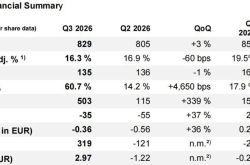
Business Focus: Optical Giant ams OSRAM Posts €829 Million in Q3 2026 Revenue
-
Jet Fuel Price Surge Inflates Costs, Net Profit Falls Over 20%; Spring Airlines Issues 10 Billion Yuan in Bonds to Fund 27.6 Billion Yuan Aircraft Purchase
-
![]()
A $5 Trillion Foreign Trade Hub Hosts a Landmark Gathering of Chinese and Global Titans
-
Baidu's AI Revenue Tops 50% for the First Time, Yet Shares Hit Record Low—Baidu Is Still Essentially Selling Computing Power
-
![]()
China's 6G Communications Breakthrough: Q/V-Band Experiment Hits 27Gbps, Setting New Domestic Record