Will Hunyuan Be Tencent AI's Big Bet? | Juchao
 11/24 2026
 512
Editor | Yang Xuran
The wave has already crashed down upon us. AI is advancing at breakneck speed, and the distant tide is already swallowing hill after hill.
We cannot afford to sit back and admire the view; we must rise quickly and meet the challenge. Half the team holds the fort while the other half boards the ship to fight new battles.
At Tencent's LinkTime livestream for the general office on November 11, AI was emphasized to an unprecedented degree.
Ma Huateng also delivered a line even more alarming to Tencent employees than the two above: he and Martin (Liu Chiping) were dressed in black and white that day, and he would be the one to deliver the bad news: "We are now in a life-or-death moment."
While the outside world was still digesting the meeting minutes, a disquieting Q3 report and a sustained stock price decline pushed Tencent Holdings down to a "traditional industry valuation" of 11 times price-to-earnings.
Tencent is an internet giant built on social networking, and almost all of its business models rest on connections between people. In the AI era, connections between people and AI are surging, and connections between AI and AI are surging just as fast. The foundation on which Tencent's previous business model was rooted is facing unprecedented erosion and challenge.
Now Yuanbao has "fallen short of initial expectations" and will see its investment substantially reduced. Although WorkBuddy is already "China's most-used AI product," as an office AI tool its moat is not deep enough; product homogenization and a future subsidy war are highly likely.
Facing mainstream institutions of the AI era such as ByteDance, DeepSeek, and even Alibaba and Kimi, Tencent ultimately needs to rely on sufficiently strong foundation model capabilities to break through. Therefore, bringing Hunyuan to the world's top level in the large model field has been set as an indisputable major internal goal.
A smarter Hunyuan will be Tencent's strong core and strategic foundation for meeting the AI era.
This article is an in-depth value piece from the "Juchao WAVE" content team. You are welcome to follow us on multiple platforms.

Profit in Reverse
Give up short-term windfall profits, bet on a model moat, and pursue long-term value.
Understand this sentence and you understand Tencent's performance and stock price over the past year or two.
To fill the computing power shortfall, Tencent has undertaken epic-scale capital expenditure. In Q3 alone it reached 81.433 billion yuan, a year-on-year surge of 527%, exceeding the full-year 2024 level in a single quarter, with cumulative spending in the first three quarters reaching 166.2 billion yuan.
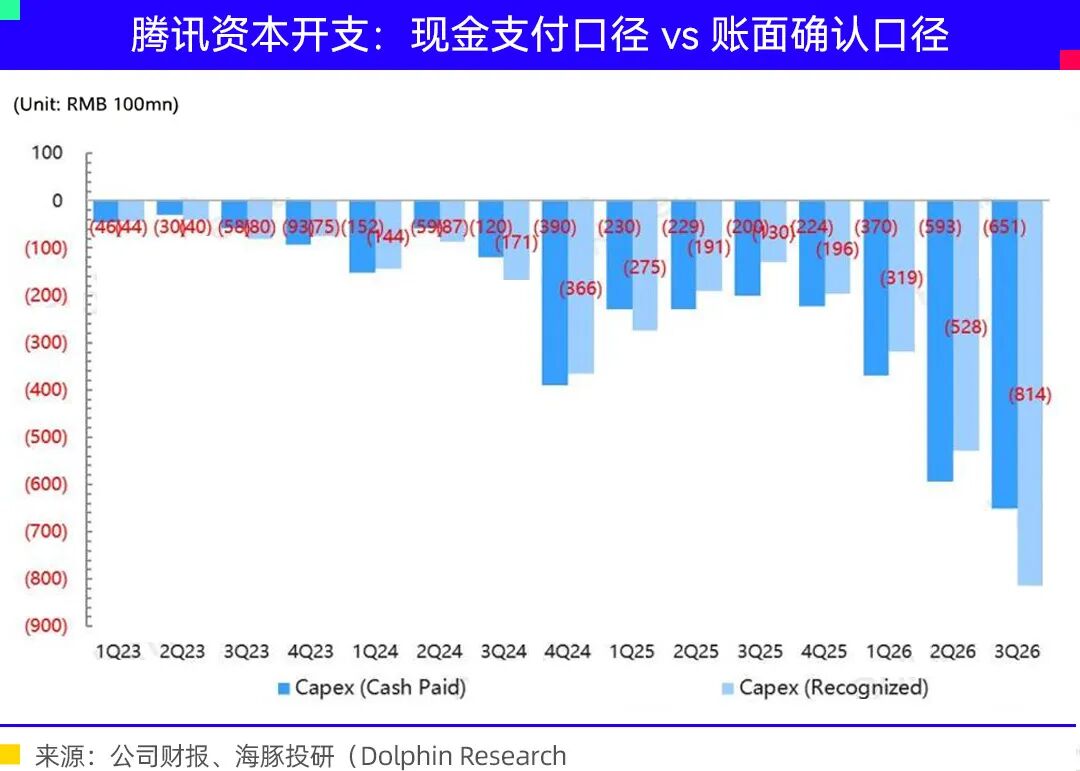
Measured on a cash basis, 65.1 billion yuan was paid and delivered in the quarter, plus about 86 billion yuan in prepayments for computing power procurement, bringing total cash expenditure to 151.1 billion yuan.
Massive capital expenditure is already eating into cash flow. Free cash flow in the first three quarters was negative 69.1 billion yuan, while this figure was positive 56.7 billion yuan in Q1.
The sheer scale of the investment lays bare Tencent's anxiety about the future. In January this year, Ma Huateng said in an internal communication: "Tencent's judgment on AI was 9 months to 1 year slower than peers."
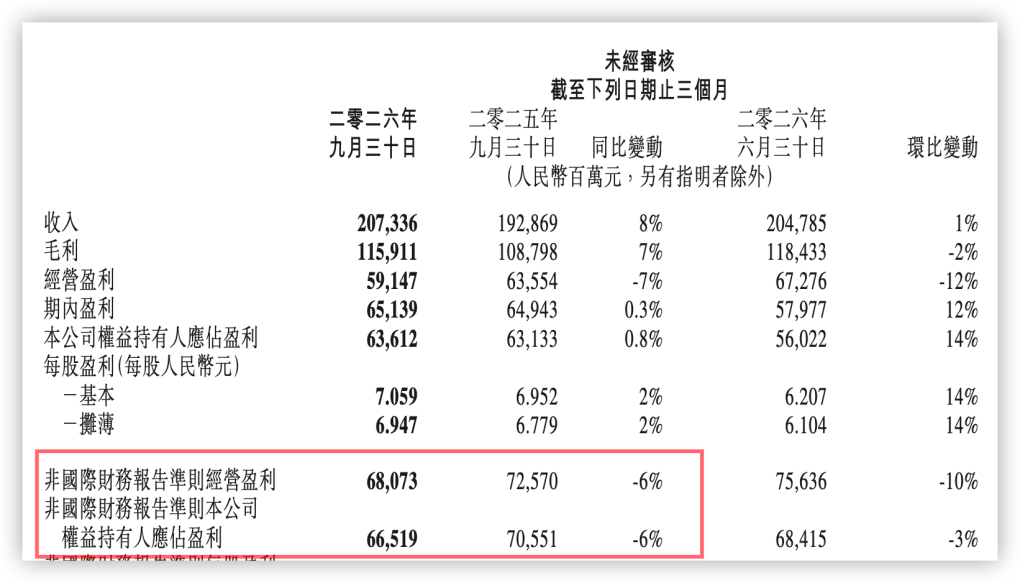
Now its large model development has clearly accelerated, and early investment in a large number of AI products is also eroding profits. Under Non-IFRS in Q3, net profit attributable to shareholders was 66.5 billion yuan, down 6% year on year. The last time this happened was the special situation in 2022.
The stock price reaction was more direct. After the earnings report was released, Tencent's stock price fell 6% in response, extending its year-to-date decline to more than 41%, with a market value of about HK$3.4 trillion, corresponding to only about 11 times this year's Non-IFRS net profit of about 260 billion yuan.
In the early stage of Tencent AI, the group's approach followed its existing successful path, leaning toward being "pragmatic," that is, using its strong existing ecosystems in social, gaming, and office to improve AI output efficiency. Compared with the aggressive bets of Alibaba and ByteDance, Tencent's approach was understood as "using the fewest cards to make the most money."
However, the Scaling Law of the large model track did not give Tencent as much catch-up time as before. "One day in AI is like a year in the human world." Competitors used their positional advantages to build product and traffic barriers far more solid than imagined.
A Nomura research report pointed out that the average daily usage time per user of Hongguo short dramas has reached 125 minutes, exceeding the daily usage level of WeChat users. If Douyin and others are included, ByteDance's mobile time share climbed to 41.8%, while Tencent's fell back to 28.6% (QuestMobile).
Traditional internet application businesses are under enormous pressure from attention competition, but the development of Tencent's AI products is still not fast enough.
Alibaba's investment is quite aggressive, forming a layout of self-developed chips (Pingtouge) + cloud services (Alibaba Cloud) + models (Qwen) and applications. In the first half of 2026, Alibaba Cloud alone accounted for 42% of China's full-stack AI cloud service market.
ByteDance's AI ecosystem is even more imposing. With Doubao as the foundation, it has built the video model Seedance, the cloud and AI service platform Volcano Engine, and connected a complete commercial loop including the runaway leading C-end Doubao, Hongguo short dramas, and B-end Doubao Work.
Before Tencent's Q3 earnings call had even ended, Doubao Work loudly announced that its DAU had exceeded 8 million and enterprise customer ARR (annualized revenue) had exceeded 2 billion yuan. The exact basis may be debatable, but the competitive intent is already quite clear.
Facing the surging tide of the AI era, the largest and most important transformation in Tencent's 28-year history is underway.

Resource Rearrangement
Tencent has long had a mature horse-racing mechanism internally, allowing multiple teams to develop similar products in parallel and ultimately letting data decide the winner. WeChat, Honor of Kings, and many other business lines were actually born under this mechanism.
But in the AI era, with huge investment and urgent catch-up tasks, resource waste is not allowed.
Tencent needs to adjust quickly amid the rapidly changing AI megatrend. During the earnings call, Liu Chiping explained the businesses of the Hunyuan model, Yuanbao, and WorkBuddy, which can be seen as Tencent's "resource rearrangement" of its AI system.
"With the launch of Hy4 and Hy4 flash, users showed strong recognition of the model through heavy Token usage, and model training investment has already created valuable products."
The fact that Yuanbao's performance did not meet initial expectations has been acknowledged. At present, Yuanbao's focus has shifted from expanding user scale to improving capabilities, which means the entire business line will undergo a technical upgrade and product adjustment.
During the 2026 Spring Festival, Tencent splashed out 1 billion yuan in cash red envelopes. The campaign topped the Apple free app chart on the day it launched, but its momentum faded afterward.
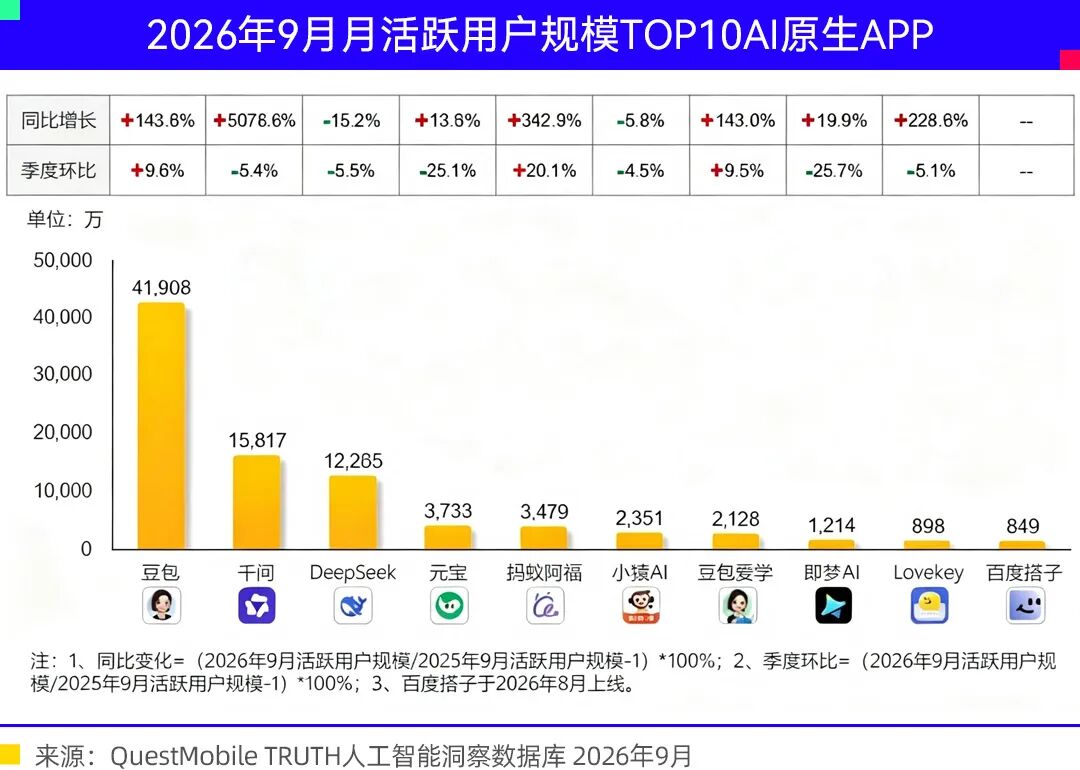
Now in the AI-native app camp, Doubao leads with monthly active users exceeding 400 million, Qwen and DeepSeek rank second and third, and Yuanbao stands at 37.33 million in fourth place.
The ranking in the C-end AI app arena is basically stable, and Tencent has rarely fallen behind in the C-end field it once excelled in.
The desktop office agent WorkBuddy has delivered impressive performance and is Tencent's biggest bright spot in AI. Tencent said that by token consumption, WorkBuddy is already "China's most-used AI product." Liu Chiping revealed that WorkBuddy's ARR over the most recent seven days exceeded US$500 million, more than twice that of Tencent Meeting.
Earlier Analysys data showed that Tencent WorkBuddy led the track with 85.34 million monthly visits, more than the combined total of second-place Qwen Office and third-place Doubao Work.
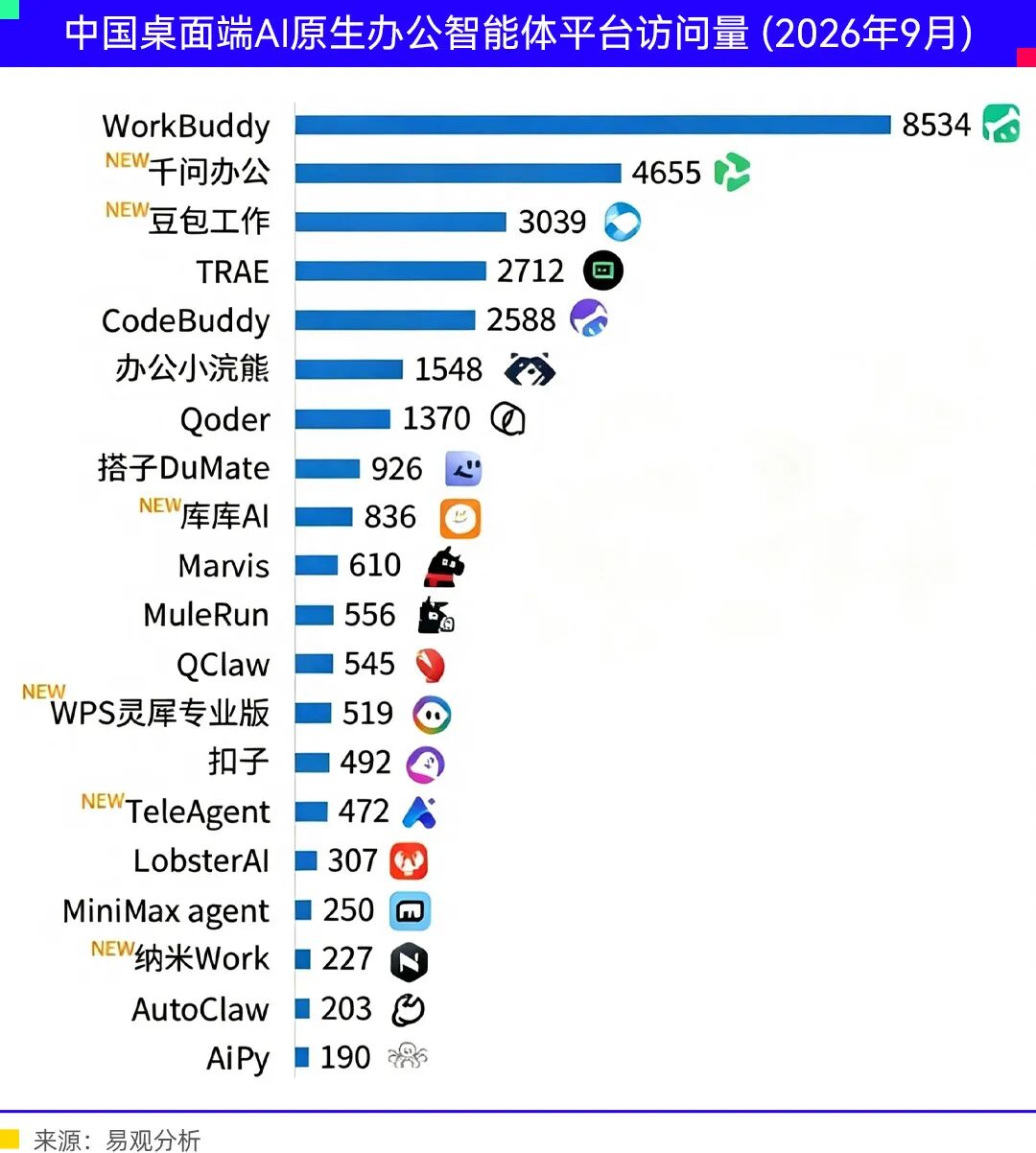
The product is certainly successful, but if there were only WorkBuddy, it clearly could not constitute a sufficiently solid foundation for a company of Tencent's scale in the AI era.
In the vast C-end AI scenarios, Tencent cannot tolerate a situation where it has no presentable product of its own. Leveraging WeChat's scale, the AI assistant "Xiaowei" will become the AI entry point for WeChat's service ecosystem, and its daily active users have already exceeded 30 million.
Liu Chiping admitted that Xiaowei's current capabilities are not yet as strong as Muse (under Meta), but after iteration it will be comparable to Muse in the future. By then users will be able to complete transactions, discover content, and manage schedules through Xiaowei alone.
In October, Tencent also quietly launched "Green Bubble Short Dramas," following the path of "free content, advertising monetization." This business has made a significant contribution to advertising revenue. However, it is still in an early stage, and attracting a group of independent short drama studios also requires investment.
It can be seen that Tencent's strategic adjustments in the AI era are advancing almost on a monthly basis. It took only nine months from Tencent Yuanbao launching its cash red envelope campaign to deciding to "reduce investment," and future restoration of investment to some extent cannot be ruled out. After seeing WorkBuddy explode, it quickly "reallocated" resources from lower-priority projects such as Yuanbao.
This high-frequency self-denial, business experimentation, and organizational iteration are inevitable on the AGI battlefield and must be faced.

Core Weapon
Tencent is not the only one facing strategic difficulties. The same hard problem is on the desks of previous-generation internet giants such as Meta (Facebook) and Google, and even Alibaba and Baidu, which invested aggressively earlier, are also facing enormous pressure.
Controlling vast entry traffic and user assets does not directly equal competitive advantage in the AI era. Today's powerful model companies, such as OpenAI, Anthropic, or DeepSeek and Zhipu, were not incubated inside large companies.
Tencent therefore requires all core businesses to "start anew for the AI era." Ma Huateng also emphasized internally the need to create AI-Native products and gave WorkBuddy quite high praise.
But after a year of exploration, he reflected: "A year ago we thought we had boarded the ship, then found that the ship was leaking. Now it feels like we have stood up, but still cannot sit down. We still hope the ship can go faster."
This leaking ship may be a metaphor for foundation models that are not strong enough.
Whether Yuanbao or WorkBuddy, Xiaowei or any AI application, all must be built on strong model capabilities. Otherwise, no matter how grand the commercial vision, it will be water without a source and a tree without roots, especially for a trillion-level enterprise like Tencent.
After ChatGPT set off a global explosion in early 2023, Baidu was the first to release ERNIE Bot, Alibaba's Qwen followed closely, and ByteDance's Doubao rose rapidly through aggressive promotion. Tencent released the Hunyuan large model slightly later, and the Yuanbao App launched in May 2024. By then other leading players had already accumulated more than a year of user and scenario refinement, and Hunyuan failed to arrive later but surpass earlier.
There were previous reports that Tencent employees would rather use Claude and GLM, saying that "a large model developed by a big company cannot even get a seat at the main table in its own home." After painful reflection, Liu Chiping pointed out that Hunyuan 4 and Hunyuan 5 would gradually approach and ultimately reach the industry's best level.
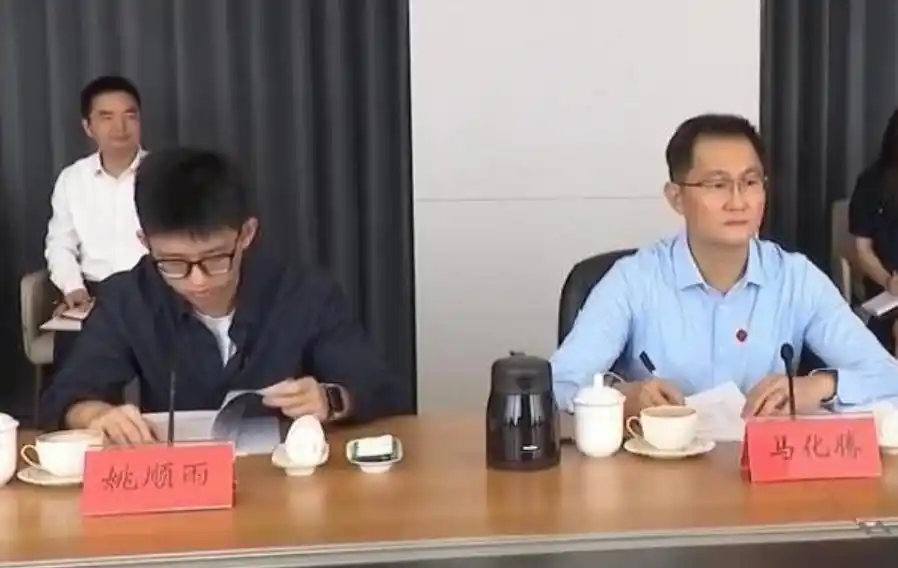
Tencent is replicating Meta's approach of betting on young genius Alexandr Wang to turn things around. In December 2025, 28-year-old Yao Shunyu parachuted into Tencent as chief AI scientist and immediately began a rare major reshuffle.
The turning point soon arrived. Hy3 began to gain momentum, and then Artificial Analysis ranked Hy4 second in China among more than 700 models, behind only Kimi K3.1 Pro. Hy4 formally entered the core table of China's large models.
Management's greater expectation is that "Hunyuan 5 becomes the true industry SOTA," a goal of great significance to Tencent.
Liu Chiping explained that SOTA status would allow Tencent to build a massive Token business, and a stronger model would also empower WorkBuddy to complete more difficult tasks. Outstanding intelligence capabilities can leverage Tencent's vast accumulated assets, including users' potential attention and a large number of products, ultimately translating into long-term rich economic returns.
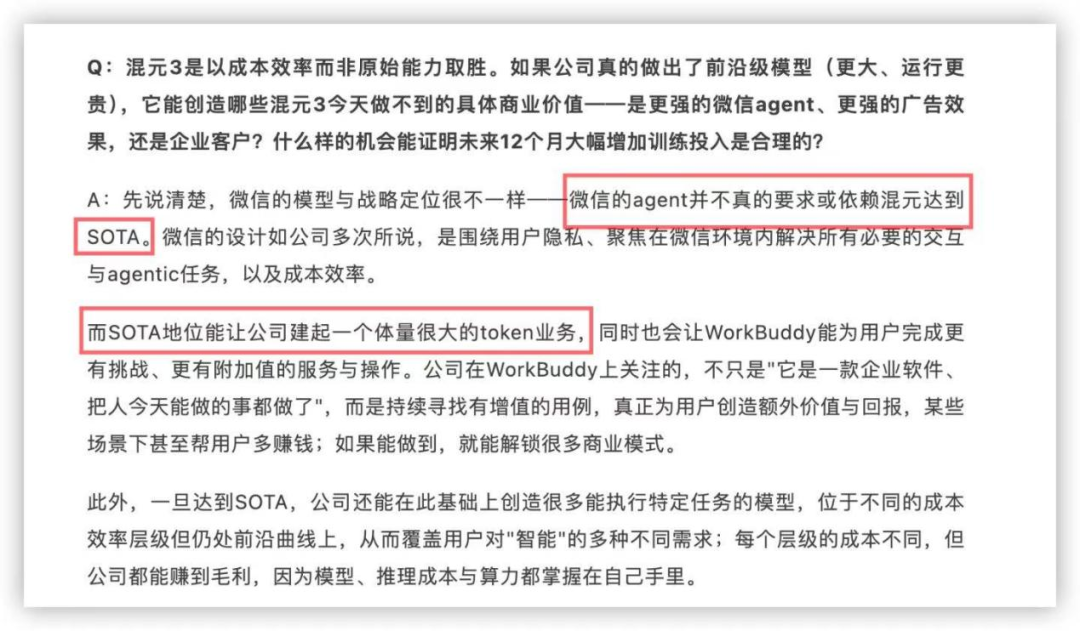
The sprint toward SOTA is essentially using today's massive capital expenditure to buy a long-term ticket to the AGI era.
Regarding WorkBuddy, Zhu Xiaohu once expressed his views in an interview. He believes that WorkBuddy is indeed very easy to use, but just like paying phone bills, he would be willing to pay at most 50-100 yuan per month for it. The user base is large, but the upper limit of revenue scale may not be that high.
However, he also stressed that office agents will undoubtedly belong to the big tech giants in the future — and WorkBuddy is already clearly ahead of the pack.
During Tencent's earnings conference call, it was even revealed that one heavy user's monthly spending reached as high as 40,000 yuan — far beyond Zhu Xiaohu's imagination, which speaks volumes about WorkBuddy's appeal.
Building a useful agent tool that can actually "get work done" may not have a very high barrier to entry, but "being able to scale paid usage" sharply raises that bar. Tencent's anxiety here stems from the fact that the application layer will sooner or later become commoditized and will sooner or later descend into subsidy wars. The only thing that can truly anchor a trillion-yuan commercial empire is a powerful large model.
That is why, whether judged by economic value or technical value, Tencent's most core weapon for meeting the AI era will still be Hunyuan.

Final Thoughts
Of course, Tencent has also built a risk-hedging mechanism into this "strategic priority." During periods when computing power prices are soaring, Tencent can at any time choose to "lease out computing power externally and pocket considerable immediate profits."
But this is only a short-term buffer — not a proactive long-term tactical move.
Tencent's AI business cannot be written off as a failure, and the capabilities of a company this massive should not be underestimated. Throughout its history, Tencent has repeatedly turned the tide by leveraging its "latecomer advantage." It is accustomed to letting pioneers validate the market and make all the mistakes first; once the direction is clear, it quickly catches up by leaning on its enormous user base and ecosystem resources, ultimately achieving runaway success. This is an ability etched into Tencent's DNA.
In the AI era, the rules of the game have completely changed — but the ambitions of the company and its founders have not. We can see this in the internal and external remarks of Pony Ma and Liu Chiping.
After a period in the trough, Tencent has begun to rapidly repair its hull. Hunyuan is no longer just one piece of the puzzle in Tencent's AI landscape; it has become the foundation of the entire edifice — the thing that determines how much every other piece is worth.
-
![]()
Doubao Tests Shopping as a Primary Entry Point: Is AI Conversation Becoming the New Shelf?
-
![]()
Insta360 Q3 Financial Report: Revenue Surges to 3.9 Billion Yuan, Net Profit Plummets 93% to Just 17.43 Million Yuan
-
Global Investors Are Converging on AI Hardware
-
Is Charging Now Faster Than Refueling?
-
![]()
$10 Billion Entry: Who Is Pricing AI4S
-
![]()
Why Is ChatGPT Still Running Ads? | iAnalysys Insights
-
![]()
Anthropic's Trillion-Dollar Valuation
-
Optical Communications' "Fire and Ice": Amid NVIDIA Personnel Turmoil, Should We Panic or See the Big Picture Clearly?