Why Is ChatGPT Still Running Ads? | iAnalysys Insights
 11/24 2026
 541
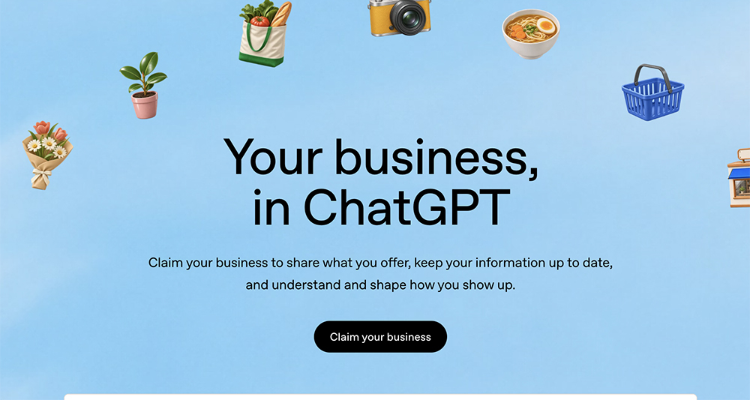
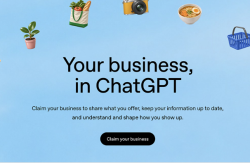
Last week, OpenAI launched Businesses in ChatGPT, a product aimed at merchants. Once registered, merchants can update product information, access consumer data insights, and build agents that interact directly with customers through a management dashboard.
The product functions much like Google Business Profile, and can be seen as a major step by OpenAI to push deeper into advertising monetization.
In conversations with industry insiders, the common reaction was, "Why is ChatGPT still doing ads?" So how is ChatGPT's commercialization actually going?
01 User Data Comparable to WeChat, Yet Revenue Contribution Remains Negligible
Judged purely as a consumer product, ChatGPT has a solid foundation, and its commercialization potential is appealing.
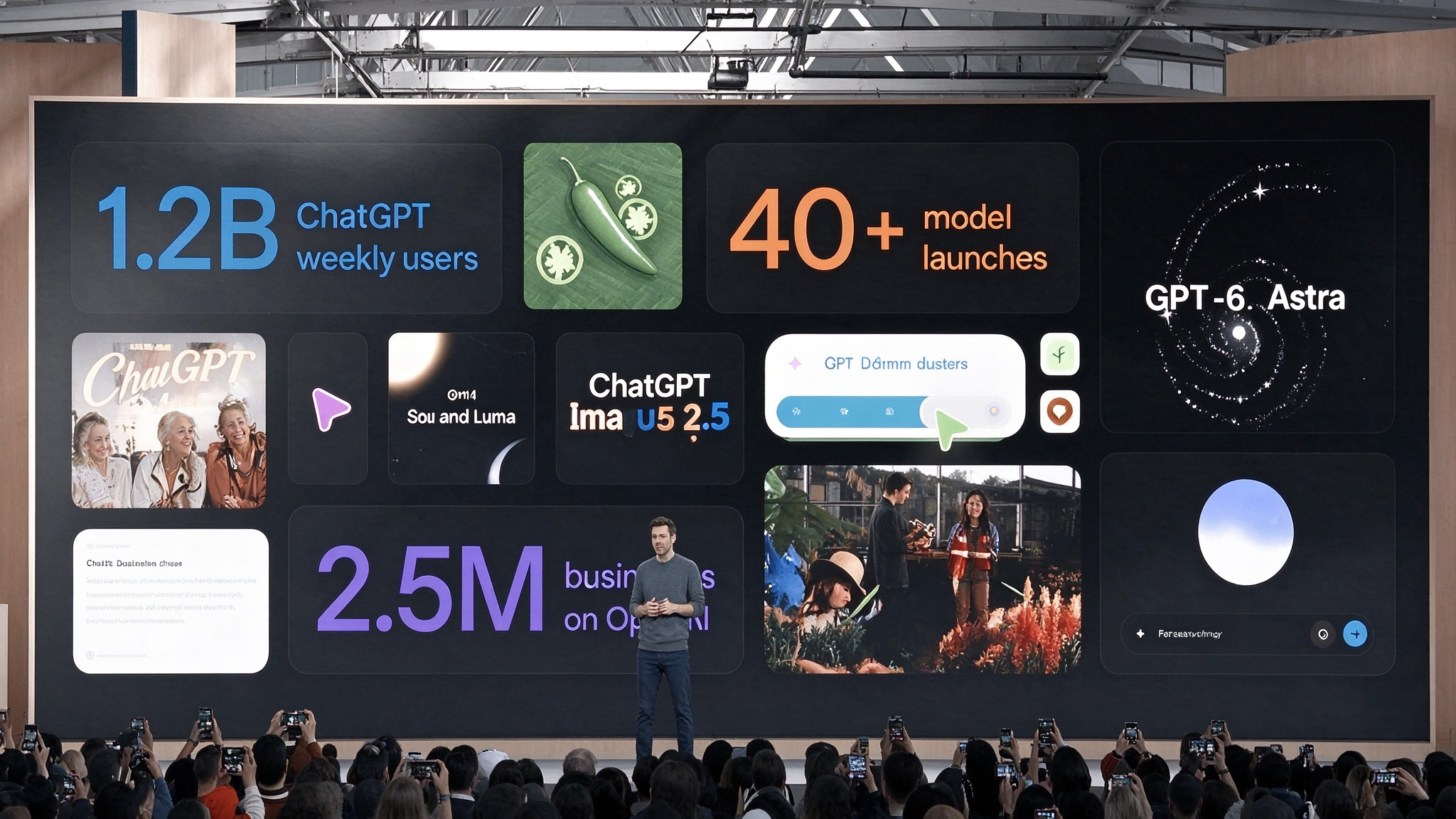
As of the end of September, ChatGPT's weekly active users exceeded 1.2 billion, putting it on the same scale as WeChat. While WeChat's active user growth has fallen below 5%, ChatGPT is still growing at 50%. In terms of search volume, ChatGPT's head said November data was already approaching 20% of Google's search query volume.
Such outstanding product metrics have also led OpenAI to set high hopes on ChatGPT's commercialization. In earlier communications with investors, ChatGPT advertising was positioned as an important lever for OpenAI's commercialization, with projected revenue of $2.5 billion in 2026 and $100 billion in 2030.
But in reality, ChatGPT's commercialization progress is far below expectations.
As of the end of August, annualized advertising revenue stood at only $1 billion, and to date it has not surpassed $2 billion, making the 2026 revenue target unattainable. The cumulative number of advertisers exceeded 100,000 by the end of October, with a monthly increase of 40,000, but both retention rate and average monthly spending performed poorly. The retention rate is estimated at only around 50%, and more than one-third of trial advertisers have stopped advertising.
02 Altman's Stance Wavers, Alternating Between Disdain and Strong Support
The core reason advertising has performed poorly is Altman's attitude—he has never thought clearly about whether he actually wants to do this.
In May 2024, Altman was at a peak of ambition. He hated advertising, believed that adding ads to AI applications was unsettling, and considered advertising the last choice for OpenAI's business model. At that time, ChatGPT's weekly active users were approaching 200 million, making it the fastest-growing product in user history, bar none.
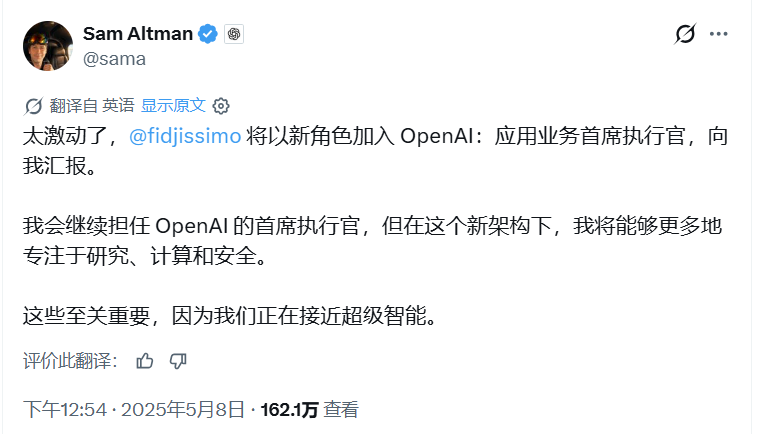
But in just one year, Altman bowed to the business model, and his attitude toward advertising began to soften. In May 2025, Altman appointed Fidji Simo as CEO of the applications business, reporting directly to him. Simo had previously managed Facebook advertising at Meta.
After that, Altman began to warm up the advertising business. First, in an interview, Altman shifted his tune on advertising: "The fact that ChatGPT has no ads today doesn't mean it won't in the future. I admire Instagram's ads, but putting them into ChatGPT requires caution." Not long after, advertising code was discovered in the Android beta.
In early 2026, ChatGPT officially announced ad testing.
At the same time, Altman and Dario began trading barbs. Dario ran an ad during the Super Bowl: "Ads are coming to AI. But not to Claude." A direct jab at Altman. On X, Altman fired back, "More Texans use ChatGPT than all Americans use Claude."
This was also the moment when Altman most strongly backed the advertising business. After that, OpenAI's competitive environment began to deteriorate, and Altman began to have no time to attend to advertising. First Gemini caught up and seemed poised to overtake. Facing a direct competitor in AI search, Altman worried about being surpassed, and the pace of advertising advancement dropped sharply.
After that, OpenAI was not overtaken by Gemini, but was overtaken by Anthropic, and completely lost its leading position in the enterprise market. What dealt an even harder blow to Altman was that one of Anthropic's core values is never to do advertising.
In June, OpenAI was overtaken by Anthropic, and in July, Simo, who was in charge of advertising, stepped down. From then on, Altman completely lost interest in the advertising business. The new head of the advertising line is Dave Dugan, also from a Meta advertising background, but his reporting line no longer goes to Altman, but to the COO.
From initially looking down on advertising, to strongly championing it, to losing interest, Altman's dramatic swings spanned just two years. Although OpenAI still says externally, "We are an advertising company" and "We are building the world's fastest-growing advertising business," in fact, the advertising business has been marginalized, and the entire organization is in continuous turmoil.
03 A Turbulent Organization, Restructured 7 Times in Less Than a Year
Changes in Altman's attitude have caused the strategic value of the advertising business to fluctuate. At the same time, OpenAI also failed to figure out how to build the advertising team. In less than a year, this team was restructured 7 times.
As of October, the ChatGPT advertising team had about 140 people, nearly half of whom joined after the last organizational adjustment from July to September. This adjustment was also an action that began after the former applications CEO stepped down. Such large-scale personnel changes directly caused advertising ARR to remain stuck after surpassing $1 billion.
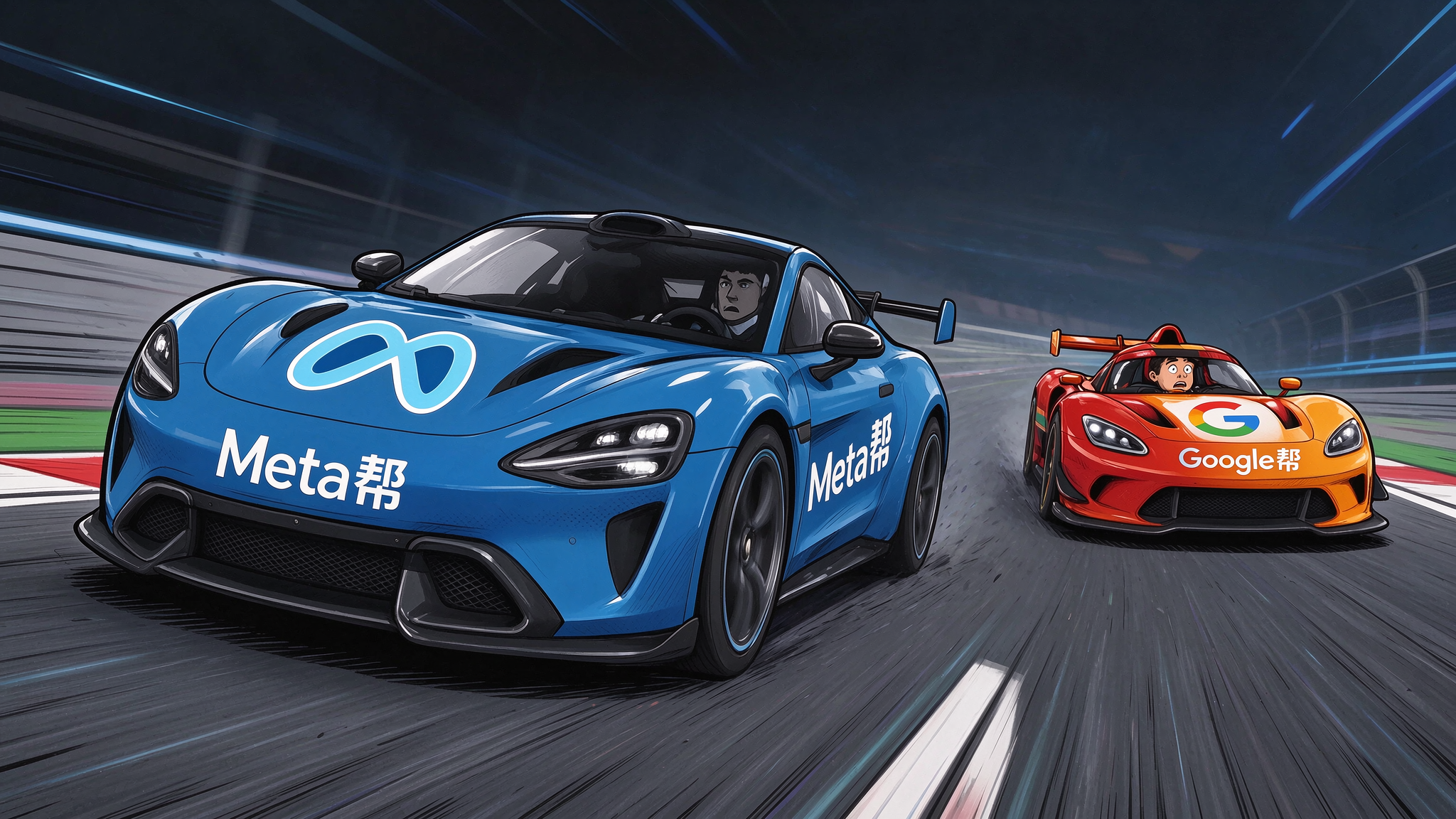
What is even more puzzling is that ChatGPT's direct competitor is Google Search, and the advertising commercialization models and paths of the two are basically the same. By convention, ChatGPT's advertising team should be a "Google faction," but in fact, they are a "Meta faction." According to public reports, more than one-third of the current advertising team members have Meta backgrounds.
Although Google and Meta are the two advertising giants, their advertising logic differs greatly. Google search ads recommend ads based on the keywords in user queries, while Meta feed ads recommend ads based on user interest tags. Yet ChatGPT's advertising team rarely includes members with Google backgrounds and has a distinctly Meta flavor.
The current head of advertising, Dave Dugan, is a 13-year Meta advertising veteran, and he is driving the comprehensive Meta-ification of OpenAI's advertising business. Under the new structure, the advertising team has been reorganized into specialized departments divided by vertical industry, as well as specialized departments serving agencies.
04 Is AI Advertising a Dead End?
In addition to CEO attention and organizational stability, the more severe problem ChatGPT faces is whether AI advertising is a dead end.
First, AI advertising inventory is extremely limited, with few placements and opportunities. Traditional search can display hundreds or thousands of search results, with many ad slots, but ChatGPT's ad slot sits at the end of the answer, and only 1-2 ads can be recommended per session. According to statistics from ad monitoring agency AdClarity, since May this year, ChatGPT's ad impressions have stabilized at 390 million per week, with almost no growth.
Second, AI's advertising monetization capability is poor. Google recently acknowledged publicly for the first time that AI search query volume looks good, but monetization capability is weaker than traditional search. On the one hand, the core of paid advertising is click-through redirection, but the complete answers in AI responses significantly reduce the number of user click-throughs. On the other hand, user query intent leans toward exploration rather than purchase, resulting in a low price per click. The questions users ask AI are mostly general and vague questions that traditional search could not solve before. These questions belong to the stage of user purchase intent and are still far from the actual purchase journey.
Third, Agent search usage is growing, and advertising is losing value. New consumer-grade applications such as Personal Agent are gradually rising, shifting search functions from human use to Agent use, and Agents do not click on ads, so the value of search advertising is collapsing.
05 Domestic Doubao Is Also Anxious
Domestic ChatGPT-like applications face a similar situation: impressive user data and dim commercialization. Doubao's monthly active users have exceeded 400 million, and it has already begun trying commercialization through transaction commissions.
It can be seen that Doubao has learned from ChatGPT's lessons and temporarily refrains from touching paid recommendations. But the prospects for transaction commissions are also unclear, with mixed feelings.
The good news is that the redirect effect of free recommendations is better than paid ones. According to data analysis of ChatGPT, the effect of free organic recommendation traffic is significantly better than paid advertising. The organic recommendation redirect rate is 2.21%, while paid advertising is only 0.37%.
The worrying news is that the effect from redirect to closed deal is not significant. Many transaction tracking studies through AI applications have already been done abroad.
For example, the Frankfurt School of Finance and Management in Germany conducted a tracking study with a sample of 1,898 online stores, 60 weeks, and nearly 10 billion AI redirect visits. Among 102 advertisers, 82% did not close a single deal.
ChatGPT and Doubao remain the traffic leaders among AI applications, but the value leaders have long been surpassed by applications such as Codex and WorkBuddy. For a product category that is beginning to decline, no matter how commercialization is done, it will probably only delay the time until it is eliminated.
-
![]()
Doubao Tests Shopping as a Primary Entry Point: Is AI Conversation Becoming the New Shelf?
-
![]()
Insta360 Q3 Financial Report: Revenue Surges to 3.9 Billion Yuan, Net Profit Plummets 93% to Just 17.43 Million Yuan
-
Global Investors Are Converging on AI Hardware
-
Is Charging Now Faster Than Refueling?
-
![]()
$10 Billion Entry: Who Is Pricing AI4S
-
![]()
Why Is ChatGPT Still Running Ads? | iAnalysys Insights
-
![]()
Anthropic's Trillion-Dollar Valuation
-
Optical Communications' "Fire and Ice": Amid NVIDIA Personnel Turmoil, Should We Panic or See the Big Picture Clearly?