Apple Imposes Mandatory Adaptation Directive for iPhone Duo, Marking Unprecedented Assertiveness
 10/08 2026
 419
419
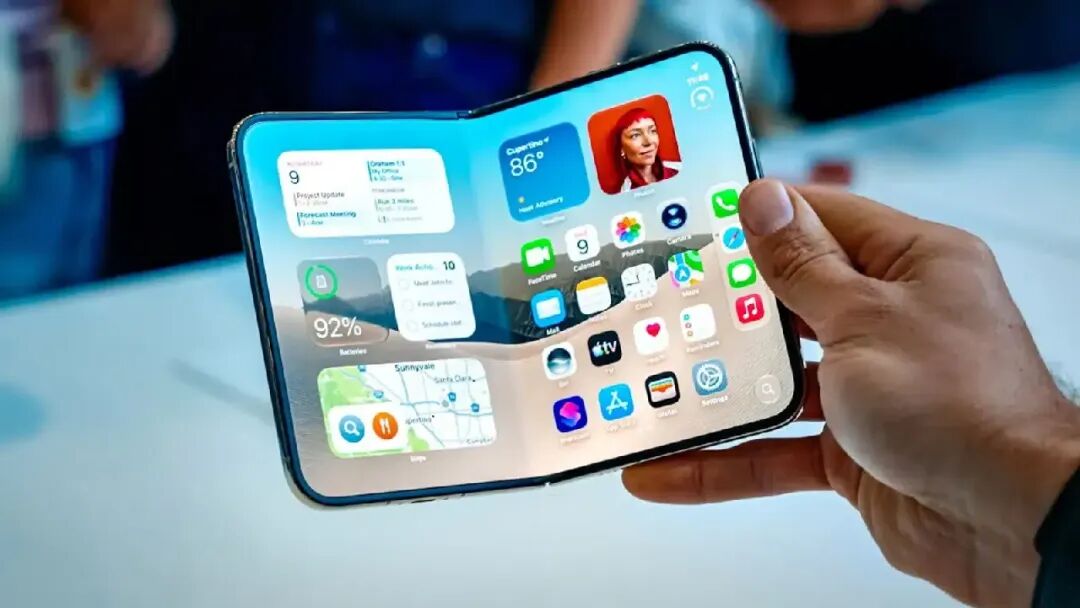
Original content sourced from the editorial team of Caigou Business Review
Author | Xuan Niao
Apple has once again made a bold move, this time displaying an unprecedented level of assertiveness.
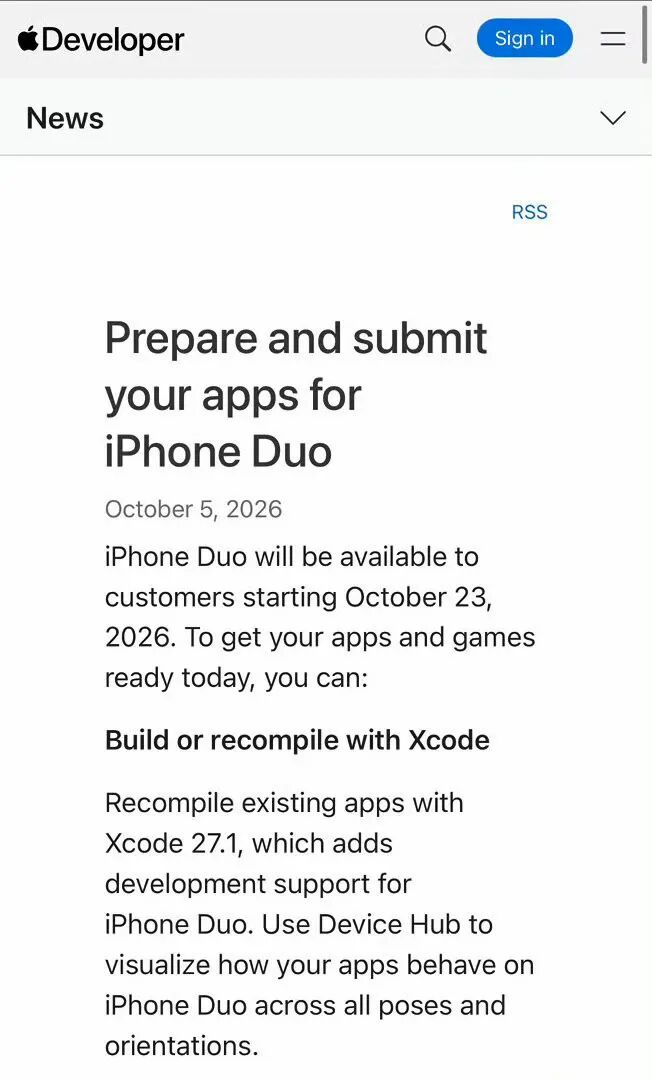
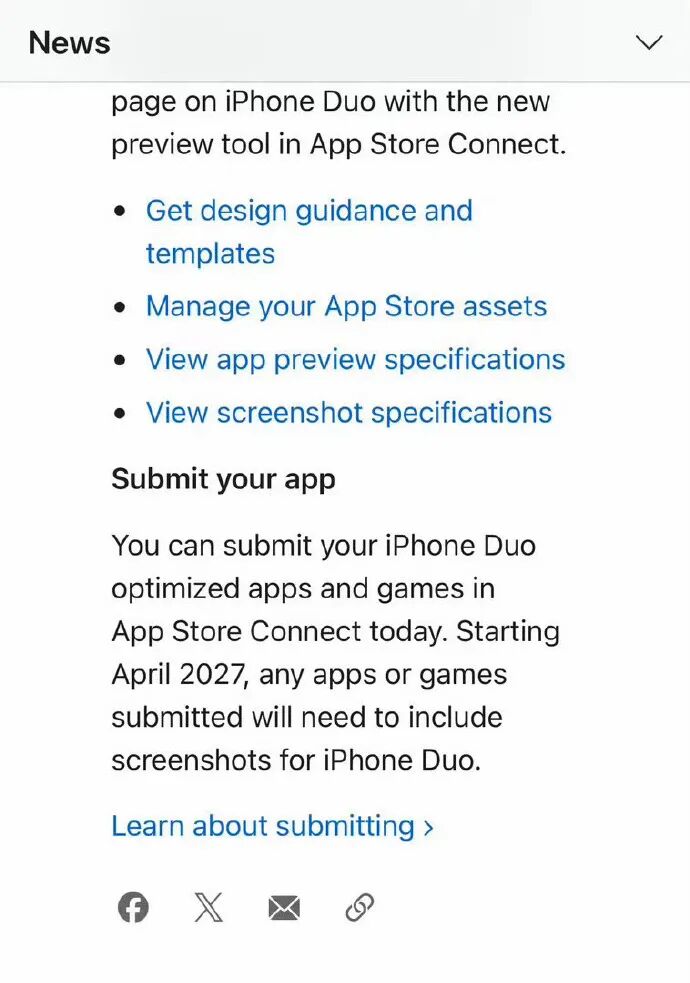
Apple's Developer Information Center has announced the official launch of the submission portal for apps tailored for the iPhone Duo on October 6.
On the same day, Apple unveiled a new mandate: Beginning in April 2027, all apps and games featured on the App Store must include screenshots showcasing the iPhone Duo model; failure to comply will result in review rejection. Developers are required to recompile their existing projects using Xcode 27.1 and utilize the Device Hub simulator to preview their app's performance across various foldable screen configurations.
Screenshots shared by netizens vividly illustrate the three-stage adaptation process: apps appearing squeezed in the middle with surrounding empty spaces under iOS 26 SDK; barely filling most of the screen under iOS 27 SDK; and only by upgrading to iOS 27.1 SDK can true full-screen display and vertical bar optimization be achieved. Apple employs a comparison chart to convey a clear message to developers: no upgrade, no approval.
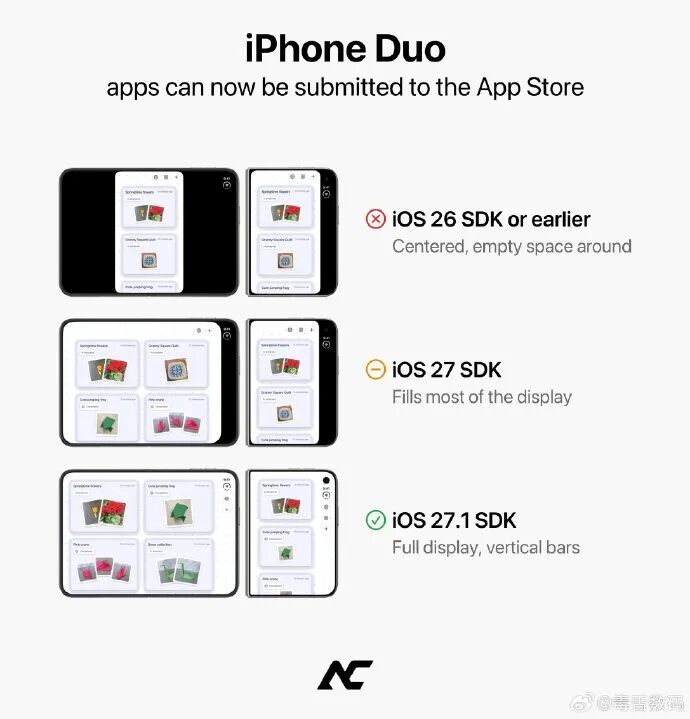
Apple's three-tiered adaptation strategy clearly delineates the rendering disparities among iOS 26/27/27.1 SDKs.
In essence, this is not a mere suggestion or encouragement but a directive. Post-April 2027, failure to adapt to the iPhone Duo will result in your app being barred from updates within the Apple ecosystem, let alone new listings.
Netizens Display Double Standards with Finesse
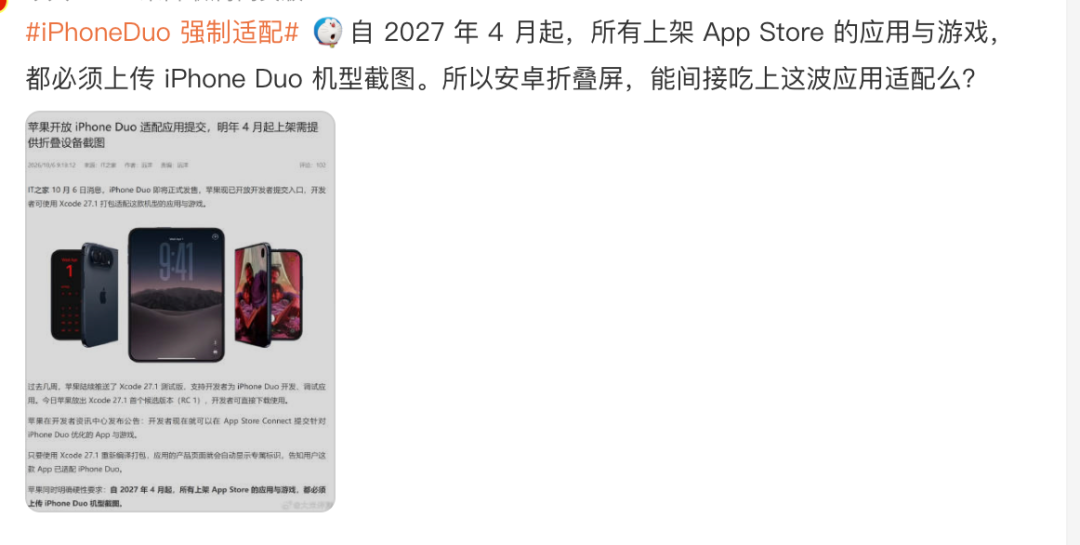
The topic gains traction, and the comment section quickly polarizes into two factions within a day.
As soon as this new regulation was announced, the comment section instantly divided into two camps: one lamenting the formidable nature of Apple's ecosystem control, the other directly highlighting the elephant in the room—double standards.
One netizen bluntly stated, "I dare not imagine the uproar if Huawei proposed this." Another highly-liked comment hit the nail on the head: "If Huawei did this, it would be criticized for overbearing contract terms, but Apple fans' inclusivity and adaptive ability are truly remarkable."


The same requirement would spark a public relations disaster if proposed by domestic manufacturers.
This sentiment is not without merit. Recalling the early days of HarmonyOS promotion, when Huawei mandated developers to adapt to native HarmonyOS apps, the internet was rife with accusations of "developer kidnapping" and "morally blackmailing patriotism tax." Some users even complained about the incomplete functions of HarmonyOS apps and the annoyance of forced installation. Yet, when Apple demands all developers adapt to foldable screens in an even more forceful manner, the same group of people laud "ecosystem chain advantages" and "Apple's profound skills."
One netizen succinctly summarized it: "A half-baked product can still turn a profit, and the followers are all cheering." Another put it more bluntly: "Coercion is dressed up so nicely. If Huawei made programs adapt to HarmonyOS like this, it would face criticism until next year."


One faction cheers for Apple, while the other anticipates a looming verbal battle for domestic manufacturers.
Overcoming Hardware Shortcomings with a Software Ecosystem

A blogger bluntly states: Apple's true strength has never lied in hardware design.
Setting emotions aside, the business rationale behind Apple's move is quite clear.
Foldable screens have been evolving for seven or eight years, with Samsung, Huawei, Xiaomi, and other manufacturers continuously refining their hardware—hinges becoming more precise, screens thinner, and creases shallower. However, one persistent issue remains: the inconsistent quality of third-party app adaptation.
Most Android foldable phones, upon launch, often leave users grappling with stretched and distorted interfaces, misaligned function buttons, and chaotic multi-window adaptations in commonly used apps. Reports from PhoneArena also highlight that poor app compatibility has consistently been the biggest complaint for Android foldable screens at launch, and Apple is precisely the player most adept at software optimization.


After seven or eight years of foldable screen development, hardware has advanced, but software adaptation remains a formidable challenge.
Apple clearly aims to avoid past mistakes. The iPhone Duo starts at 15,999 yuan for the domestic version, with pre-orders commencing on October 16 and official sales on October 23. With such a hefty price tag, user expectations are naturally sky-high. If users spend 16,000 yuan on a foldable screen only to find WeChat still in a zoomed-in interface and Taobao with white space on the sides, Apple's reputation would undoubtedly suffer.

With a 16,000 yuan price tag, user expectations for the first-generation foldable screen are also sky-high.
Thus, Apple has opted for the most "Apple" approach: leveraging ecosystem control to compel developers to get it right from the outset. From recompiling with Xcode 27.1 to multi-posture previews with Device Hub, to the stringent requirement for screenshot reviews, every step conveys a clear message to developers—cooperation is non-negotiable for survival in this ecosystem. And developers? Faced with over a billion active iOS devices worldwide, who dares to refuse?
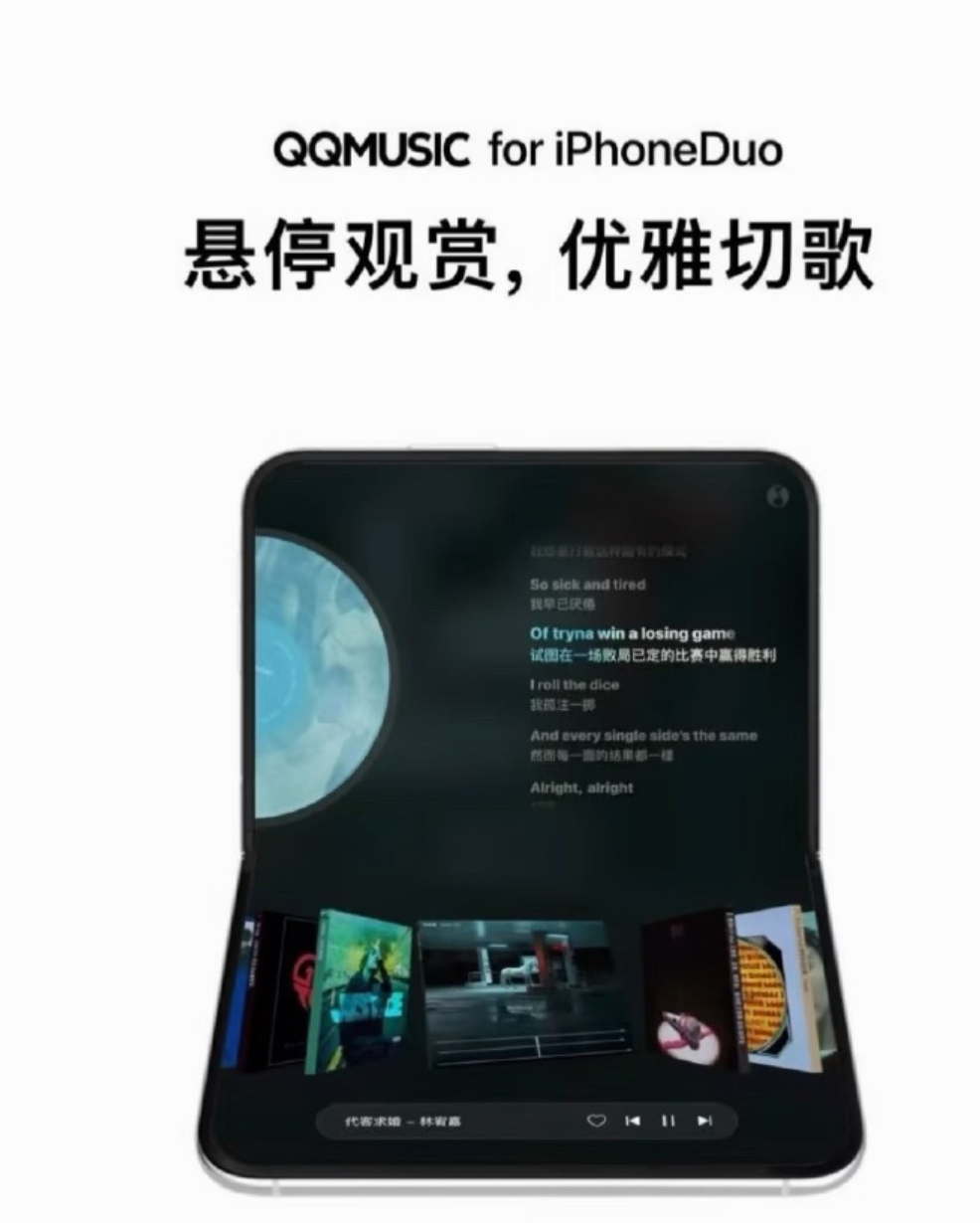
Once adaptation is executed properly, foldable screens can indeed deliver experiences that hardware alone cannot.

In the comment section, Apple's confidence has been succinctly summarized by netizens in one sentence.
Can Android Reap the Benefits?

An interesting derived topic is: Can Android foldable screens "hitch a ride" with Apple's forced iPhone Duo adaptation?
Theoretically, if developers optimize the UI layout and multi-window logic for foldable screens to adapt to the iPhone Duo, the same code logic could potentially be repurposed for Android foldable screens, indirectly enhancing the app experience there.
However, reality is far less optimistic—Android manufacturers have varying foldable screen ratios, hinge designs, and system APIs. Apple's adaptation targets a 7.6-inch inner screen and specific fold angles, which may not directly apply to the Samsung Galaxy Z Fold or Huawei Mate X series.
More importantly, the confidence underpinning Apple's move is precisely what the Android camp lacks most: an absolutely unified software distribution channel and an unquestionable rule-making authority.
Google Play cannot enforce this due to the fragmented Android ecosystem; Huawei cannot either because HarmonyOS's user base is still growing, and developers do not feel the urgency to comply.
Apple can do it because it's Apple.
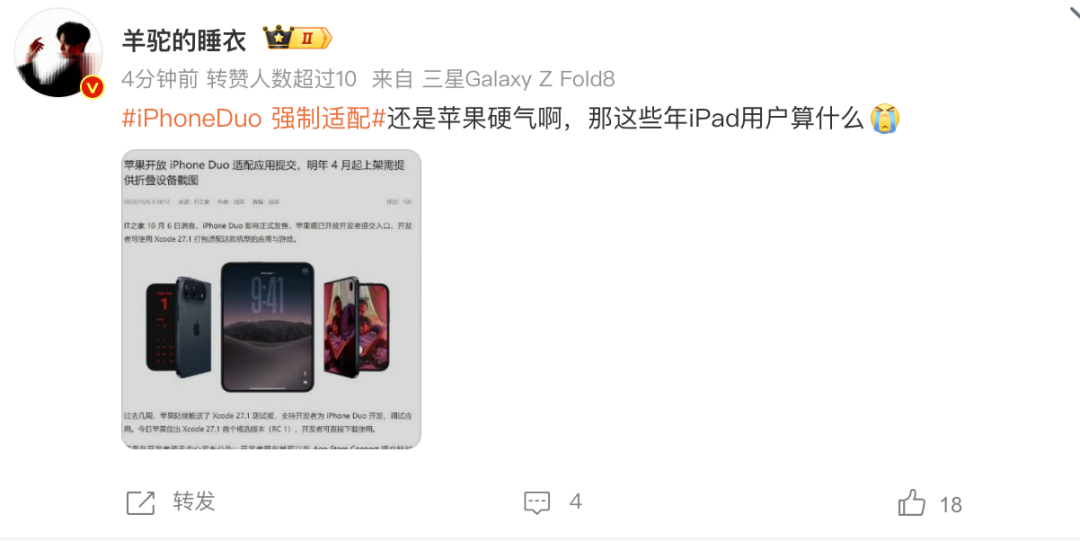
Whether praised or criticized, it all boils down to the old adage—whoever controls the distribution channel sets the rules.
The iPhone Duo pre-sale commences this Friday, and this forced adaptation movement for the foldable screen ecosystem, led by Apple, has just begun.
And that old saying is once again validated: In Apple's ecosystem empire, Apple dictates the rules, and everyone else is merely a pawn.
Disclaimer: This article is crafted based on publicly available information or insights provided by interviewees. However, Caigou Business Review and the article author do not vouch for the completeness or accuracy of the information or associated materials mentioned or displayed in the article, nor do they represent the stance of any institution. In case of infringement, please contact for deletion. Under no circumstances shall the information or opinions expressed in this article constitute investment advice to any individual.
▼
-END-
-
![]()
Feng Assist Shows Remarkable Boldness
-
![]()
The Price of a Single Smartphone Could Outfit Your Home with Appliances: Navigating the Rising Costs of Smartphones
-
![]()
AI Movies Turn Profitable: Recouping Costs in a Week with 8 Million Yuan in Revenue
-
![]()
Thirst for Computing Might! Tencent Secures $7 Billion Worth of Computing Resources from Oracle
-
![]()
After a model evaluation, I began to re-understand WorkBuddy
-
[Shanhu Talks] The Diverse Lives Unfolding in the AI Era: A Ten-Month Journey
-
【Tibetan Fox Talks】These Ten Months in 2026: People and Me Amidst AI Anxiety
-
Second-Gen Doubao Phone Falls Short in Resolving Previous Flaws