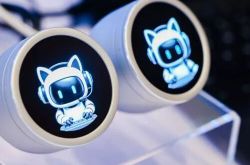
Second-Generation Doubao Phone Falls Short in Resolving Previous Limitations
 10/08 2026
 457
457
Source | Bohu Finance (bohuFN)
The Nubia NaviX Ultra has recently hit the market, marking the debut of the consumer version of ByteDance's Doubao mobile AI assistant. Dubbed the "second-generation Doubao phone," it is priced at RMB 5,999, with a reduced price of RMB 5,499 after national subsidies.
Less than a year after the first-generation Doubao phone made its debut, ByteDance and Nubia have swiftly launched the second-generation model, indicating a sense of urgency. This move is understandable given the current fierce competition in the AI phone market.
Over the past year, smartphones have emerged as a vital platform for on-device AI. Brands such as Honor, Vivo, and OPPO have integrated AI assistants as a core selling point for their new devices, while large model companies like JieYue XingChen are eager to enter the fray. Across the globe, OpenAI is also venturing into mobile hardware development.
Everyone is vying for an early foothold in this round of the AI revolution. However, the key question remains: how will the second-generation Doubao phone overcome the issues faced by its predecessor, which aimed to "handle tasks on behalf of users" but was hindered by several mainstream apps?
ByteDance has yet to provide a flawless solution. Many bloggers have reported that the second-generation Doubao phone still faces restrictions in several commonly used apps. Recently, some users experienced forced logouts from Honor of Kings while using the new phone, sparking widespread discussion.
Despite introducing new rules, only a select few apps are willing to open their ecosystems to the Doubao phone. As long as ecosystem providers retain veto power, outsiders will struggle to gain true access.
01 Still Facing Ecosystem Barriers
Of course, the second-generation Doubao phone has also made notable strides.
So far, the second-generation Doubao phone has demonstrated a strong initial performance. Officials revealed that its first-day sales exceeded RMB 100 million within just one second.
Reviews from major media outlets and bloggers highlight several significant improvements.
In terms of design, the phone is lighter and more portable. An AI button on the side allows users to activate different AI functions with single or double clicks. The operation is smoother, and security and privacy are enhanced through fingerprint unlocking.
Regarding AI functionality—the aspect users care about most—the second-generation Doubao phone offers both surprises and disappointments.
On the positive side, the first-generation Doubao phone's standout feature was allowing users to invoke the AI assistant with a single sentence. The second-generation model not only maintains this capability but does so more "intelligently."
In a video by Bilibili blogger "Xiaobai Testing," when a user says, "Help me book a ride to XX," the Doubao phone automatically executes the task, confirming the address and placing the order.
It can also assist users in booking flights and hotels across different apps, searching for music and books based on user instructions, and integrating more deeply with Feishu to summarize meeting recordings, generate PPTs, and create documents—essentially handling office tasks directly from the phone.
Moreover, the second-generation Doubao phone is smarter and more proactive than its predecessor when performing routine tasks.
For example, after receiving a user's instruction, Doubao can decide whether to activate deep-thinking mode. Its memory has also improved, allowing it to retrieve data from the user's phone and provide more personalized services.
Unfortunately, the second-generation Doubao phone still cannot operate freely across all apps.
In demonstrations of the first-generation Doubao phone, users could issue a command, and the phone would automatically compare prices in shopping apps and add items to the cart, with the user only needing to complete the final payment.
However, the second-generation Doubao phone can currently only perform these actions on designated shopping platforms. For food delivery, platforms like Taobao Snap Up, Meituan, and JD do not support ordering. Liking posts on Xiaohongshu or WeChat Moments also fails.
In simple terms, many mainstream apps still impose restrictions on the Doubao phone. Netizens joke that it is essentially a ByteDance-exclusive device, as tasks like ordering food, watching videos, or listening to music must be done through ByteDance's ecosystem apps.
The persistent "barrier" preventing the Doubao phone from breaking through is the ecosystem walls between different apps.
The Doubao phone aims to become the sole entry point for users' tasks, but every app wants to keep users within its own ecosystem. This is not just a battle for entry points but also for profits.
The Doubao phone's approach has shifted from "forcing its way in" to "knocking on the door."
Just two days before the launch event, the Doubao phone assistant officially released the "Screen Automation Operation Statement Protocol (SAEP)," giving third-party apps the choice of whether to allow access.
Simply put, whether the Doubao phone can invoke an app depends on three steps:
Step 1: Check if the app has adopted the MCP (Model Context Protocol) or A2A (Agent-to-Agent) protocol. If an agreement is in place, Doubao will send the request directly to the app without opening its interface, only providing feedback on the results.
Step 2: If no agreement exists, the Doubao phone will follow SAEP rules. The app can declare boundaries at three levels—page, business intent, and operation type—and the Doubao phone will execute tasks within the allowed scope.
Step 3: If the app explicitly rejects access from the Doubao phone, the Doubao phone will only help the user open the app, requiring manual task execution.
This time, the Doubao phone has adopted a more humble stance. Within a stricter compliance framework, third-party apps with ecosystem capabilities will decide how much and how deeply the Doubao phone can operate.
02 Every Player Has Its Own Calculations
However, by relinquishing control, the second-generation Doubao phone can accomplish fewer tasks. Its most attractive selling point has become a promise that cannot be fully fulfilled.
For the Doubao phone, this was a necessary choice.
From the first to the second generation, the Doubao phone's goal remains unchanged: to become the user's AI assistant, operating the entire phone on behalf of the user and transforming it from a manually operated tool into a super butler that understands and accomplishes tasks.
This vision is appealing, but too many agents, platforms, and smart hardware devices are vying for this position. Each player has its own business model, and none will fully open its ecosystem to competitors without carefully weighing the costs.
Nevertheless, deals can still be struck.
Apps want to protect their entry points, but they also covet ByteDance's massive traffic. Therefore, while they may block the first-generation Doubao phone, which barges in without permission, they are willing to negotiate with the second generation.
In current tests, the Doubao phone still cannot operate directly on mainstream apps like Taobao, Alipay, Meituan, WeChat, or Xiaohongshu. However, SAEP leaves room for future integration with these apps.
Whether the Doubao phone can ultimately join these ecosystems and access their functions depends on the level of cooperation and sincerity each side is willing to offer.
QuestMobile data shows that by June 2026, Doubao had 382 million monthly active users. ByteDance's traffic could bring new growth opportunities for transaction-based apps.
However, ByteDance also possesses more user profiles and shopping preferences, giving it increasing influence over user transaction flows. For ByteDance's direct competitors, the calculations may not be so straightforward.
Interestingly, WeChat has already opened A2A capabilities to Huawei, Honor, Xiaomi, OPPO, and Vivo this year but has excluded Nubia and Doubao from its cooperation list.
Clearly, the Doubao phone is not giving up on the AI phone narrative.
In fact, the Doubao phone does not necessarily need a dedicated device to "handle tasks for users." Currently, Doubao's transaction module has integrated into e-commerce, local services, and travel sectors. Users can also "accomplish tasks with a single sentence" through the Doubao app.
However, this model has its limitations. No matter how capable Doubao is, it operates on others' hardware. How much data it can access or how deeply it can interact with system interfaces is not up to Doubao.
Thus, Doubao must create its own "body." With its own hardware, it can gain full administrative privileges, read user data comprehensively, understand context, and have the opportunity to define the next generation of smart interactions.
However, this position is contested not only by the Doubao phone but also by other smartphone manufacturers, smart hardware companies, and large model firms like Alibaba, which are partnering with hardware makers to compete for this "entry point."
Smartphone manufacturers guard the hardware entry point, while third-party apps protect the ecosystem entry point. AI phones and agents hoping to advance and handle "entry point selection" for users must confront these two barriers.
They can either build everything from scratch—systems, ecosystems, and AI intelligence—or negotiate cooperation, conceding some control in exchange for access.
03 Who Will Control the Phone?
Of course, this is not a problem unique to the Doubao phone. All agents seeking to control entry points face the same two barriers.
This is why cross-border collaborations between large model firms and smartphone manufacturers have intensified over the past six months. Alone, neither can overcome these challenges.
However, new issues arise. If agents cannot break through app ecosystem barriers, consumers will struggle to obtain an AI assistant that can "invoke everything with a single sentence."
Is the AI phone still the best form factor for agent deployment?
A reference point comes from overseas. In September, Meta released its personal AI assistant, Muse. Within a week, it topped the U.S. App Store's free chart.
Its popularity stemmed not from groundbreaking technology or experience but from addressing the shortcomings of previous cloud-based agents: the "lobster" that could do everything but nothing well.
Thus, Muse was designed as a standalone app, eliminating installation barriers. It used independent virtual machines to address security and memory issues, offered free tokens to users, and relied on transaction commissions for revenue.
Most importantly, Muse identified scenarios that truly retained users, such as handling emails, filling out forms, and booking travel—tasks for the general public. Its success proved the enormous potential demand for consumer-grade agents.
However, domestic agents cannot simply replicate Muse's path. Not because they are less intelligent, but because control does not lie with the agents.
Overseas, email and credit card payments are infrastructure, with few conflicts of interest between web pages, allowing Muse to complete tasks with minimal friction.
In China, mobile internet services are consolidated within a few super apps. When agents try to help users, they first encounter "ecosystem walls," making task completion more convoluted.
Optimistically, while the current fragmented app landscape in China is chaotic, it also means each ecosystem can independently complete a closed loop of "social + content + functionality + payment." Once ecosystem interfaces are opened, "phones handling tasks for users" could become more than just a vision.
However, taking this first step will not be easy.
The Doubao phone is well aware of this. According to media reports, the second-generation Doubao phone has an initial stockpile of about 200,000 units, with less than 100,000 in the first batch. From an expected shipment perspective, the Doubao phone remains a "test field."
Even so, other smartphone and large model manufacturers should not underestimate it. The Doubao phone enters with questions and aims to resolve them through iterative updates.
Ultimately, the biggest challenge for AI phones is not technical but ecological.
How many ecosystems the Doubao phone can integrate depends on ByteDance's leverage. With sufficient patience and sincerity, the current interest landscape could be reshaped.
Entry points are the facade; rooting is the foundation. Only by truly infiltrating users' daily lives and work can agents gain firmer control than mere entry points.
Thus, by entering the market ahead of other smartphone manufacturers' busy product launches, the Doubao phone at least offers consumers another choice and reference. Regarding which AI is better, the Doubao phone is a worthy candidate for evaluation.
The copyright of the article's cover image and illustrations belongs to their respective owners. If the copyright holders believe their works are unsuitable for public browsing or should not be used free of charge, please contact us promptly, and our platform will make immediate corrections.
-
![]()
Feng Assist Shows Remarkable Boldness
-
![]()
The Price of a Single Smartphone Could Outfit Your Home with Appliances: Navigating the Rising Costs of Smartphones
-
![]()
AI Movies Turn Profitable: Recouping Costs in a Week with 8 Million Yuan in Revenue
-
![]()
Thirst for Computing Might! Tencent Secures $7 Billion Worth of Computing Resources from Oracle
-
![]()
After a model evaluation, I began to re-understand WorkBuddy
-
[Shanhu Talks] The Diverse Lives Unfolding in the AI Era: A Ten-Month Journey
-
【Tibetan Fox Talks】These Ten Months in 2026: People and Me Amidst AI Anxiety
-
Second-Gen Doubao Phone Falls Short in Resolving Previous Flaws