China Successfully Orbits 27 Satellites for Its Internet Constellation: Long March 12’s 671st Mission
 10/10 2026
 509
509
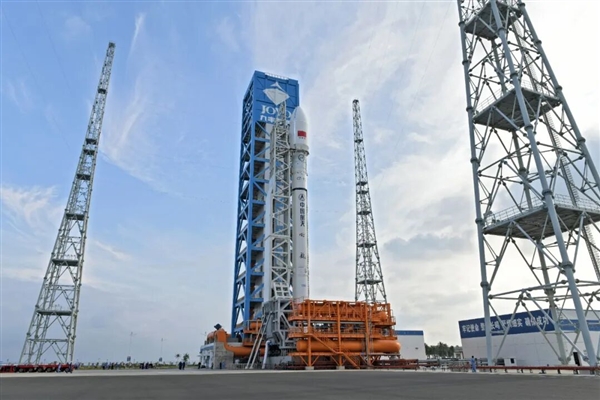
Kuaikeji, October 10th – At 3:27 AM today, China successfully deployed 27 low-Earth orbit satellites for its burgeoning satellite internet constellation. The launch, carried out by the Long March 12 carrier rocket from the Hainan Commercial Space Launch Site, was executed flawlessly, with all satellites reaching their designated orbits, marking a resounding success for the mission.
This mission signifies the 671st launch within the Long March series of carrier rockets. The launch services were expertly handled by China Commercial Rocket Company, a subsidiary of the China Aerospace Science and Technology Corporation, serving as the primary contractor.
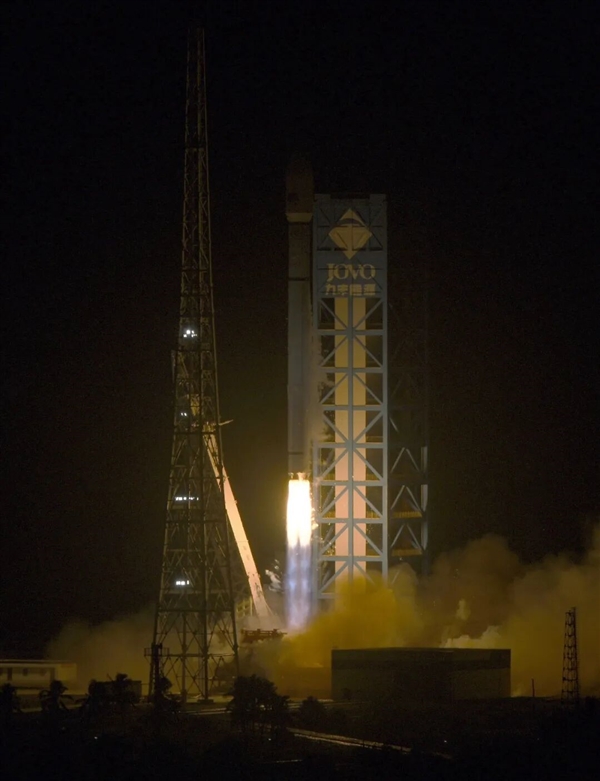
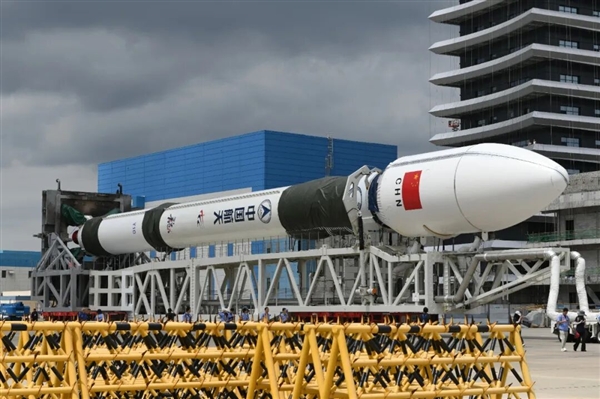
The Long March 12 carrier rocket, developed by the Eighth Academy of the China Aerospace Science and Technology Corporation, represents a new generation of low-temperature liquid propellant rockets. It stands as China's inaugural 4-meter diameter, single-core carrier rocket. With an approximate total length of 62 meters, it boasts a payload capacity of no less than 6 tons for a 700-kilometer sun-synchronous orbit. Depending on the mission requirements, it can be fitted with fairings of either 4.2-meter or 5.2-meter diameters, accommodating a wide range of orbital launch tasks for single or multiple satellites.
Previously, on September 17th, the Long March 12 carrier rocket had already demonstrated its prowess by successfully launching 25 low-Earth orbit satellites for the satellite internet constellation at the same launch site, marking its second low-Earth orbit satellite networking launch within a span of less than a month.
The 26th group of low-Earth orbit satellites, developed by the Fifth Academy of the China Aerospace Science and Technology Corporation, forms part of the China Starnet GW Constellation. As China's pioneering mega low-Earth orbit satellite internet project, it envisions launching a total of 12,992 satellites to construct a global high-speed communication network.
During China's 16th Arctic expedition, the China Starnet "GW Constellation" achieved a significant milestone by successfully conducting its inaugural test. This test enabled real-time video calls across the North and South Poles, connecting the "Xuelong" (Snow Dragon), "Jidi" (Polar), "Tansuo 3" (Exploration 3), and China's Antarctic Qinling Station. The measured video transmission latency was less than 1 second, with peak uplink and downlink rates each reaching approximately 30 Mbps.
This accomplishment signifies China's official attainment of full end-to-end autonomous control in polar communication, eliminating the need for communication data to transit through overseas nodes.
According to the outlined plan, the GW Constellation is poised to commercialize direct-to-phone satellite functionality by 2026. This advancement will empower users to make satellite calls and send text messages using ordinary mobile phones in areas devoid of signal coverage.
-
![]()
Manus Caught Between Tech Giants
-
![]()
Starting at 329,800 Yuan! BAIC Unveils New Car: Official Launch on September 28 with an Impressive 1,456 km Range!
-
![]()
Starting at 80,800 Yuan! Volkswagen Unveils New Car Model: Official Release in October, with Top Variant Priced at Only 99,800 Yuan
-
![]()
Design Verification of Auto Parts Using Traditional Methods: How Traditional Automakers Develop, Verify, and Release a 'Brake Pedal'
-
![]()
Defying Expectations! Xiaomi Pengcheng's Locked-In Orders Soar During National Day, Alongside HiCar Smart Travel's Order Surge Over the Holiday
-
![]()
Capital Sets Sights on New Model Pathway: Matrix Partners, Shunwei, and Legend Capital Jointly Invest in DiffuSpace
-
AI: Pioneering New Horizons for Smartphones
-
![]()
China Successfully Orbits 27 Satellites for Its Internet Constellation: Long March 12’s 671st Mission