Selling One Car Means a 40 Million Yuan Loss! Porsche Divests from the 'World’s Priciest Supercar Maker'
 09/14 2026
 406
406
Porsche has offloaded two supercar brands at a price tag nearing 7.8 billion yuan. On September 10, Porsche announced the completion of the sale of its entire equity stakes in Bugatti Rimac and Rimac Group, with an expected influx of approximately 1 billion euros in funds. To the uninitiated, Bugatti, with starting prices for its models soaring to 25 million yuan, is recognized as the world’s most expensive car manufacturer—a definitive brand enhancer.

Furthermore, this 7.8 billion yuan price represents a ‘package deal,’ as Porsche is not just selling Bugatti but also all its equity stakes in Rimac Group, another esteemed Croatian electric supercar giant. This move might seem somewhat regrettable. Some may assume that Porsche is in dire financial straits, resorting to asset liquidation to stay afloat. However, in reality, while Porsche didn’t secure an exceptionally high price, it is secretly relieved:
After all, it has finally managed to offload this money-losing burden smoothly.
Some media outlets have previously criticized Bugatti as a financial black hole. Bugatti has always been a prestigious brand that yields no financial returns, focusing primarily on limited-edition custom and collectible models with extremely limited annual production—just 70-80 units. Yet, the research and development costs for each model soar into the hundreds of millions of euros.
Take, for instance, the Veyron (more commonly known as ‘Weilong’ among car enthusiasts and media). Officially released in 2005, it had a global limited production of 450 units, including 300 hardtop and 150 convertible versions. Volkswagen invested over 500 million euros and seven years in its development. Among these costs, the research and development expenses for Michelin's custom tires alone, designed to accommodate extreme speeds, reached tens of millions of dollars.
This ‘high-investment, low-output’ business model, while feasible as a reputable project to enhance brand image during times of ample financial resources for Porsche and the Volkswagen Group, becomes a heavy financial burden when the overall profit margins of the enterprises are significantly compressed.

So, just how much money does Bugatti burn? Media reports reveal that according to Volkswagen's own data, from 1998 to 2013, Bugatti accumulated losses of approximately 2 billion US dollars, with annual sales of less than 100 units and a loss of 40 million US dollars per car sold. This brand resembles a bottomless pit in any corporate portfolio—a business that, while perhaps a mere trifle for Porsche when it was flush with cash, could be used to spin some tales. But now, what Porsche lacks most is not brand stories but profits and cash flow.
Porsche's fiscal year 2025 report, released in March, showed that the company's operating revenue decreased from 40.08 billion euros in 2024 to 36.27 billion euros, a year-on-year decline of 9.5%. Operating profit plummeted from 5.64 billion euros in 2024 to 413 million euros, a staggering drop of 92.7%.
Immediately following the announcement of this deal, Porsche promptly raised its future performance expectations. The company stated that after accounting for the transaction's cash flow and pension expenses within a week, it would raise its forecast for the net cash flow margin of its automotive business in 2026 from 3%-5% to 5.5%-7.5%. From this outcome, it is evident that Bugatti directly dragged down Porsche's profit margins by around 2 percentage points—a truly significant figure. After all, many automakers achieve annual profit margins of only around 5%. A 1% profit margin could translate to hundreds of millions in real cash.
This marks the third time in Bugatti's history that it has been sold. Founded in 1909 in Molsheim, France, by Italian-born engineer Ettore Bugatti, Bugatti is renowned for its artistic design and ultimate performance. Its iconic horseshoe-shaped front grille, featuring a red background and white brand logo, is highly recognizable. As one of the world’s most renowned luxury cars, Bugatti's products are rare and exorbitantly priced, with even its most ‘affordable’ models priced above 20 million yuan.
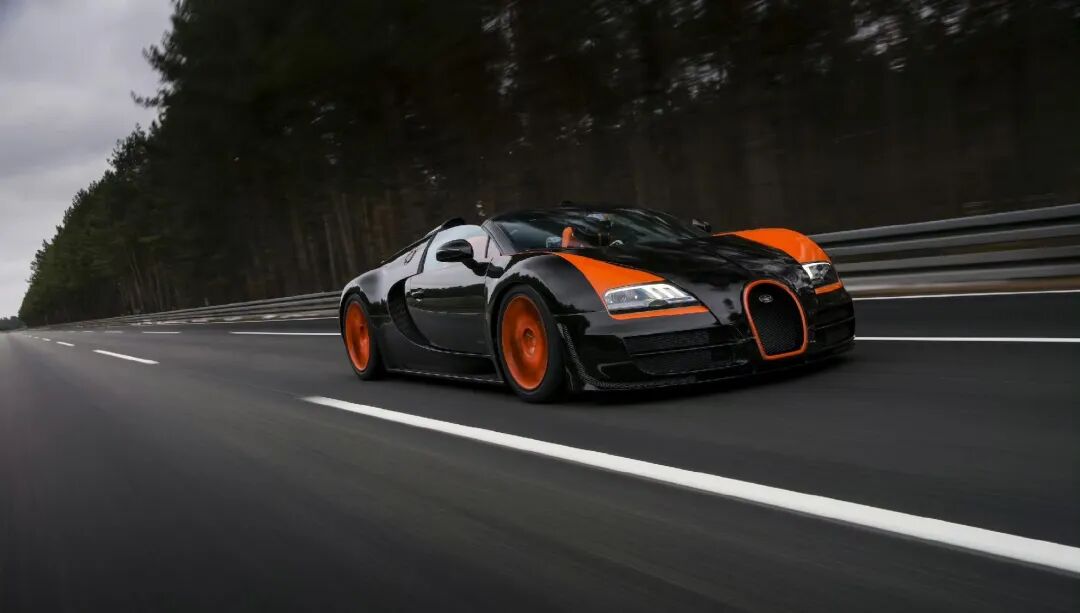
However, due to its limited product quantity, Bugatti has faced repeated bankruptcies and transactions. Historically, Bugatti went bankrupt once in 1956, was acquired by Italian entrepreneur Romano Artioli in 1987, and went bankrupt again in 1995. In 1998, the Volkswagen Group purchased Bugatti's trademark and remaining assets for approximately 50 million US dollars, rebuilding ‘Bugatti Automobiles S.A.S.’ in its birthplace and successfully continuing this top-tier supercar brand.
In reality, Volkswagen also found this money-burning asset troublesome. As early as 2021, the Volkswagen Group, led by Porsche, incorporated Bugatti into a joint venture established with Rimac to alleviate financial pressure. Since Porsche only held a 45% stake in the joint venture, while Rimac held 55%, Bugatti had effectively one foot out the door of the Volkswagen Group at that point. Of course, another objective of this asset reshuffle was to transform Bugatti's successor to the Chiron into a pure electric supercar, continuing to set records in the era of electrification.
Of course, this plan did not succeed. Nevertheless, the acquirer is also a wealthy entity. According to foreign media reports, HOF Capital, the investor taking over Bugatti, is a New York-based venture capital firm that has invested in a batch of global top-tier tech companies, including OpenAI, Anthropic, SpaceX, and Neuralink. Foreign media analysts suggest that Bugatti's future value proposition may no longer be limited to traditional supercars but rather a reintegration of technology, capital, and symbols of ultra-luxury consumption. The largest contributor among the international consortium comes from BlueFive Capital in Abu Dhabi, UAE.
In other words, we can still expect to see stunning new Bugatti models in the future, although we might only get to admire them briefly.
-
Ternus's First Move: The Most Expensive Foldable iPhone in History
-
![]()
Selling One Car Means a 40 Million Yuan Loss! Porsche Divests from the 'World’s Priciest Supercar Maker'
-
![]()
One Number, Dual SIM Support! Apple Highlights New iPhone 18 Feature—Is It a Push for eSIM?
-
![]()
Mother and Son with a 7-Year Age Gap, Labor Remuneration Soars Over 2 Trillion: Xingyu Shares Faces Information Disclosure 'Mishaps' Amid Layoff Controversy
-
If You're a Disruptor, Let's Ride the Wave of CALB's Business Success Together
-
![]()
Foldable Smartphone Showdown: A Prelude to the 'Tech Spring Festival Gala'
-
![]()
China’s Wealthiest Individual Could Change! DeepSeek Aims for STAR Market IPO—Could Liang Wenfeng’s Net Worth Hit Trillions?
-
![]()
Porsche Sells Bugatti for €7.8 Billion to Cover Pension Obligations