Trading Halted! GAC Group’s Blockbuster Announcement Sparks a Seismic Shift in the Automotive Industry
 09/15 2026
 563
563
By | Guanchejun
FAW’s ‘Southern Campaign’—This Time, It’s No Mere Whisper.
On the morning of September 14, trading in GAC Group’s A+H shares was abruptly suspended in a rare synchronized move.
The A-shares were halted for the entire day pending “material announcements,” while the H-shares were suspended mid-session after surging 8.64% during the morning auction. A GAC Group spokesperson confirmed, “The trading halt was urgent this morning due to a major announcement scheduled after market close today.”
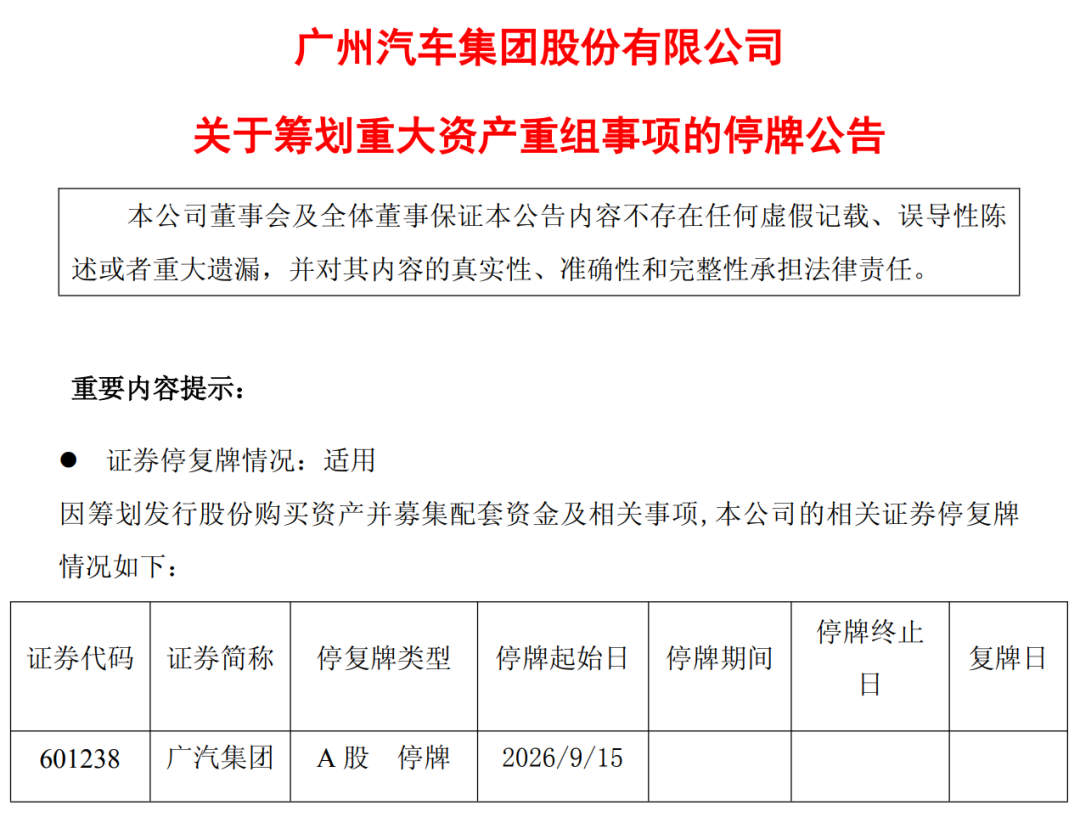
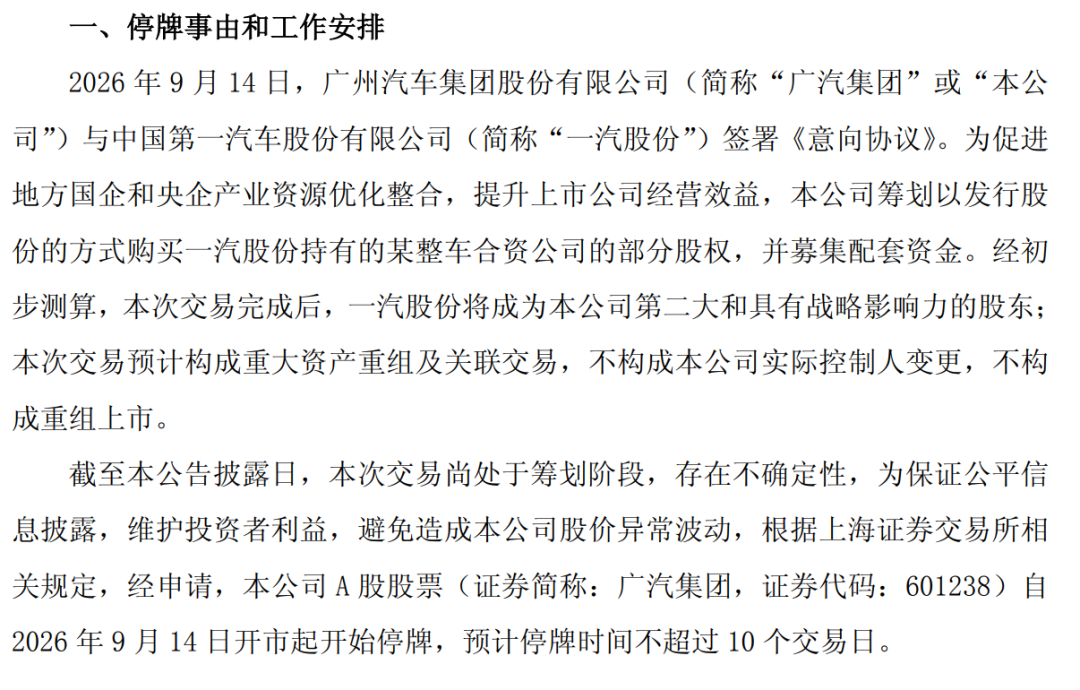
True to form, around 9 PM that evening, GAC Group dropped a bombshell: The company had signed an “Intent Agreement” with China FAW Group Co., Ltd., outlining plans to acquire a stake in a FAW-held vehicle joint venture via share issuance and raise complementary funds.
Post-transaction, FAW Group is poised to become GAC’s second-largest shareholder with strategic influence.
A critical detail emerged: The target company involves an overseas-listed entity, with the asset’s name withheld pending further disclosure in the restructuring proposal.
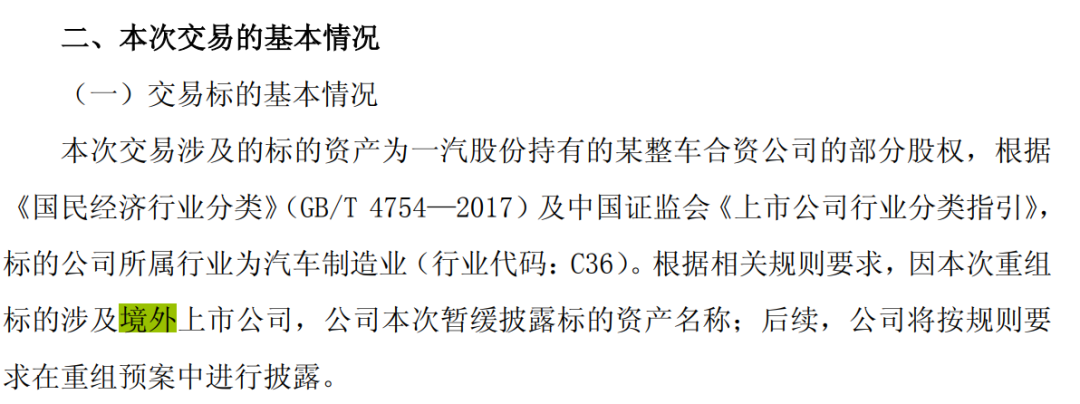
In Guanchejun’s analysis, among FAW’s vehicle joint ventures with overseas listings, only one entity fits the bill in China’s automotive landscape.
This is no ordinary financial play—it’s a strategic asset swap at the highest level.
01
Unlike GAC’s dual A+H listing, FAW’s capital market maneuverability is constrained, with its overall listing process stalled for years and core passenger vehicle assets still unsecuritized.
FAW-Volkswagen, a crown jewel among FAW’s unlisted assets, has long been barred from IPO access.
From Guanchejun’s perspective, the share exchange with GAC offers FAW a backdoor route to securitize FAW-Volkswagen’s equity. By acquiring GAC stakes, FAW indirectly achieves asset monetization, while GAC gains incremental joint venture assets.
This is a two-way strategic realignment.
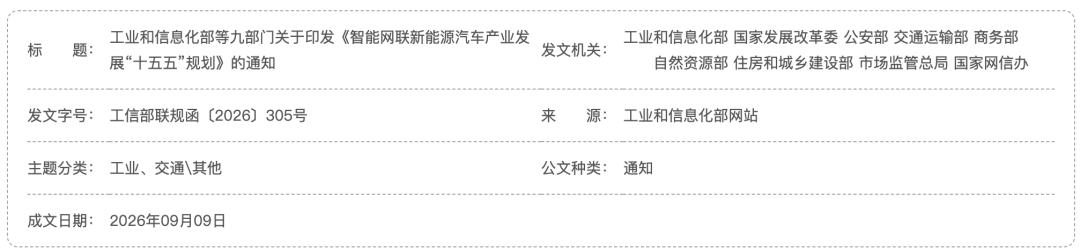
Policy tailwinds are blowing: On September 11, nine ministries, including the Ministry of Industry and Information Technology, unveiled the “15th Five-Year Plan for Intelligent Connected New Energy Vehicle Development,” explicitly urging “lawful M&A and cross-regional consolidation” in the auto sector. That same day, NDRC official Shao Ji vowed support for large enterprises to integrate R&D and production resources to curb redundant competition.
The message is unmistakable. After years of rhetoric, China’s auto industry consolidation has transitioned from policy documents to corporate announcements.
02
FAW and GAC are Toyota’s dual ‘in-laws’ in China, operating a ‘North-South’ structure for over two decades. This arrangement yielded immense profits but also bred internal cannibalization, channel redundancies, and sluggish electrification. In FY2026’s first three quarters, Toyota’s net profit plunged 26%, with a 43% Q3 collapse. Toyota knows better than anyone that China’s market rules have evolved.
Guanchejun notes Toyota’s recent consolidation of three R&D hubs—FAW Toyota, GAC Toyota, and BYD Toyota—into ‘ONE R&D.’ For the first time, Chinese teams now control styling, configuration, and pricing decisions, with streamlined development cycles. Meanwhile, GAC Toyota reportedly plans to ax two flagship fuel models in 2026, phasing out the decades-old ‘sibling model’ strategy.
R&D is unified, product lines are streamlined. What’s next? Channels? Joint venture entities?
03
Details remain under wraps, but the real drama will unfold post-trading resumption.
The first hurdle: Integration. Mega joint ventures boast independent brands, supply chains, and dealer networks. How will GAC manage this asset? Will it opt for financial consolidation or deep operational control? Board seat allocations and FAW’s governance role as GAC’s second-largest shareholder loom large.
The second challenge: Joint venture brands. If realized, China’s JV landscape could be rewritten. But channel mergers, personnel placements, and dealer interests pose daunting obstacles.
The third frontier: Capital markets. A+H dual-listing rules, state asset valuations, and antitrust reviews complicate compliance far beyond typical restructurings.
The announcement cautions: The deal is still in planning, with no formal pact signed. Implementation remains uncertain.
Regardless, this North-South titan has waded into integration’s deep end. The show has just begun.
*All charts sourced from public disclosures. Views expressed are for reference only and do not constitute investment advice.
-
![]()
Trading Suspended! GAC Group Launches Significant Restructuring
-
Cloud Computing in the Sky: Satellites Evolve from Eyes to Brains
-
Cloud Computing in the Sky: When Satellites Evolve from Observers to Processors
-
![]()
Is There a Future for Fuel Vehicles?
-
![]()
What is Insta360 Betting on with One-Fifth of Revenue Invested in R&D?
-
![]()
Find Ways to Make Agents Spend Money
-
![]()
Explosion in AI Inference: Can 'Unfortunate' SanDisk Achieve a Phoenix-like Rebirth?
-
![]()
Over 30 Car Brands Cut Prices in September, Yet Consumers Remain Unconvinced