Annual Sales of 1.7 Million Vehicles! GAC Group Welcomes Top Joint Venture Automaker as Shareholder: Stock Price Soars by 15% at Its Peak
 09/16 2026
 378
378
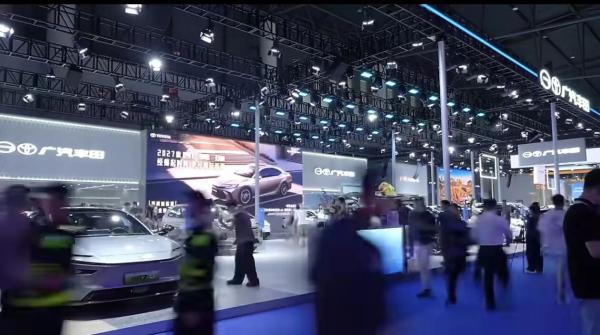
On September 14th, GAC Group unveiled a major announcement regarding FAW Group's equity participation, setting off a wave of industry-wide excitement. According to the announcement, Guangzhou Automobile Group Co., Ltd. (hereinafter referred to as "GAC Group") inked a Letter of Intent Agreement with China FAW Group Co., Ltd. (hereinafter referred to as "FAW Group"), the core operational platform of China FAW Group. GAC Group intends to acquire a portion of FAW Group's equity in a certain automotive joint venture by issuing shares and raising matching funds. Preliminary calculations indicate that upon completion of this transaction, FAW Group will emerge as the second-largest shareholder with strategic influence in GAC Group.
This announcement has sparked two main discussions: firstly, the potential merger of FAW Group and GAC Group; secondly, the integration of North and South Toyota. However, after a day of speculation, the situation has gradually become clearer, revealing that both predictions are inaccurate. Firstly, FAW Group has only acquired a partial stake in GAC Group, with the actual controlling shareholder remaining the Guangzhou Municipal State-owned Assets Supervision and Administration Commission. GAC Group will maintain its independent status, distinguishing it from the asset restructuring previously planned by Dongfeng Motor and Changan Automobile.
It is noteworthy that rumors about a merger between GAC Group and FAW Group have surfaced twice in recent years. The first instance occurred when senior executives from FAW Group were transferred to Guangzhou, seen as laying the groundwork for a potential merger. The second instance arose during management adjustments at GAC Group, with rumors suggesting that senior executives from FAW Group would be transferred to GAC Group, although this did not materialize. According to media reports, in the current plan, FAW Group may initially acquire approximately 30% of GAC Group's equity and appoint a general manager to GAC Group. Another insider at GAC Group mentioned that the two parties had discussed a plan for FAW Group to acquire a 15% stake in GAC Group, but this has not been finalized.
Secondly, the announcement stated that GAC Group will make a capital contribution to acquire a portion of the shares held by FAW Group in a certain joint venture company, believed to be FAW Toyota. In 2025, rumors circulated that senior executives from FAW Group would move south to join GAC Group, widely seen as preparation for the integration of FAW Toyota and GAC Toyota. According to a source close to GAC Group, FAW Group and Toyota have been enthusiastic about the integration, while GAC Group has shown less enthusiasm. Subsequently, in 2025, Toyota began promoting the integration. Around July 2025, Toyota China initiated a pilot program in certain "single-city, single-store" regions (i.e., regions where only one Toyota joint venture brand 4S dealership remains in a city), authorizing dealerships to sell the full range of models from both GAC Toyota and FAW Toyota simultaneously.
Currently, FAW Group holds a 50% stake in FAW Toyota, Toyota Motor Corporation holds 45.7706%, and Toyota China holds 4.2294%. If the transaction is realized, FAW Toyota will become a joint venture held by FAW Group, GAC Group, and Toyota. Furthermore, from the announcement, it appears that GAC Group is acquiring a "partial" stake, rather than the entire stake, meaning that GAC Group will not fully acquire the FAW Toyota shares held by FAW Group. Some media outlets have further clarified that FAW Toyota and GAC Toyota will not merge in this transaction. Additionally, FAW Toyota Motor Sales Co., Ltd., responsible for FAW Toyota's sales operations, is not involved in this transaction.
From this perspective, the integrated sectors may include manufacturing, procurement, R&D, and other areas with potential for synergy, while sales will remain independent. This compromise solution facilitates integration and avoids conflicts of interest, making it a well-balanced approach. Currently, there are also speculations about a merger between North and South Toyota, followed by questions about whether Lexus will be simultaneously incorporated into the joint venture system, which seems unrealistic in the short term. However, even from a manufacturing standpoint, the combined annual sales of North and South Toyota exceeding 1.7 million vehicles would make them the undisputed top joint venture automaker. Furthermore, after integrating R&D and other areas, it will be more conducive to their market breakthroughs—with expanded scale, they will have stronger supply chain bargaining power and economies of scale, leading to improved cost capabilities.
This arrangement is considered a highly advantageous model for automaker integration. Firstly, by acquiring stakes in FAW Group and GAC Group, it lays the groundwork for further actions. Secondly, it avoids the negative effects of forceful integration. Thirdly, by establishing a connection through equity and forming an automaker alliance, it is entirely possible to achieve higher efficiency through joint backend sharing, as evidenced by successful cases in overseas automaker mergers.
For instance, GAC Group and FAW Group can pool high-quality resources to quickly achieve scalable cost control through technology sharing, supply chain integration, channel and logistics sharing, and complementary market strengths, significantly enhancing their market risk resistance and core competitiveness. This creates broad space for synergistic efforts and accelerated breakthroughs of independent brands, continuously improving industrial concentration and overall comprehensive competitiveness, and jointly building a globally influential matrix of Chinese independent automotive brands. Finally, through such collaboration, they can optimize their layout and avoid homogeneous competition.
On September 11th, nine departments, including the Ministry of Industry and Information Technology, issued the "15th Five-Year Plan for the Development of the Intelligent Connected New Energy Vehicle Industry," explicitly proposing to increase the intensity of mergers, reorganizations, and cross-regional integrations of automotive enterprises in accordance with the law, and to deeply promote the reform of group management for automotive production enterprises. On the same day, at a press conference held by the Ministry of Industry and Information Technology, Shao Ji, Deputy Director of the Industrial Development Department of the National Development and Reform Commission, stated that they would actively support large enterprise groups in carrying out reforms, promote mergers and reorganizations among industrial enterprises in a market-oriented and legalized manner, support key enterprises in effectively integrating R&D, production, and other resources, and avoid homogeneous competition in product design, technology R&D, and other areas.
The integration between GAC Group and FAW Group is clearly the first case of policy implementation. In fact, this integration has also received a positive response in the capital market: after GAC Group's Hong Kong stocks resumed trading on September 15th, the stock price surged by over 15% at one point, marking the highest increase in recent years.
-
Mega-Funding of 33 Billion RMB! Zhipu AI's Monumental Financing Round: Zhang Peng Ascends as the Unrivaled AI Titan!
-
WorkBuddy, Qianwen Office, TRAE Work, Baidu Dazi: A Head-to-Head Comparison of Four Major AI Office Platforms
-
![]()
The AI Industry is Experiencing a Complete Overhaul! Leading Figures Issue Joint Warnings – What’s Amiss with AI?
-
![]()
One Rocket Launches 10 Satellites! Private Rocket Makes Its Grand Entrance into the Satellite Internet "Delivery Fleet"
-
In the Ternus Era, Apple Won't Be So 'Fiery'
-
![]()
Annual Sales of 1.7 Million Vehicles! GAC Group Welcomes Top Joint Venture Automaker as Shareholder: Stock Price Soars by 15% at Its Peak
-
Li Dongsheng’s Time Magic Meets AI’s New Challenge
-
![]()
Hillhouse’s Post-90s Partner Yan Wentao: Potential CFO for DeepSeek? His Investment Portfolio Includes MiniMax and Zhipu