Why FAW Can Successfully Integrate with GAC While Dongfeng and Changan Fail
 09/20 2026
 492
492
Introduction
A New Model
As the topic suggests, we must first grasp a key premise from a temporal perspective: the success of FAW's integration with GAC lies in its ability to learn from the integration experiences of central and state-owned enterprises in other industries over the past few years, as well as from the failed integration attempt between Dongfeng and Changan.
There have been numerous successful integration cases in the past, such as the integration of Sinopec and China Aviation Oil, the deepened integration within China State Shipbuilding Corporation, the merger of ChemChina and Sinochem, the integration of Sinosteel and China Baowu Steel Group, the combination of China Hualu Group and China Electronics Technology Group, and the integration of Ansteel Group and Benxi Steel Group, among others.
The main pattern is clear: in these integrations, the leading party is typically a central enterprise or an industry leader, and the integration direction is either stronger enterprises absorbing weaker ones or mergers of equals.
The ultimate outcome is that, during the industry's transition from incremental expansion to competition over existing resources, equity restructuring led by state assets addresses issues of homogeneous competition and redundant investment, revitalizes existing assets, and simultaneously meets the needs for distress relief and securitization of specific enterprises or assets.
However, at the policy level, the "15th Five-Year Plan for the Development of the Intelligent Connected New Energy Vehicle Industry," jointly issued by nine departments recently, proposed increasing the intensity of mergers, acquisitions, and cross-regional integrations of automobile enterprises in accordance with the law, and further promoting the reform of group management for automobile manufacturing enterprises.
Nevertheless, in recent years, the SASAC has also emphasized the importance of focusing on becoming stronger and more specialized, rather than blindly pursuing scale; de-emphasizing scale-based assessments and striving towards becoming stronger and better; not blindly pursuing scale and breaking away from the traditional political achievement view that one-sidedly pursues scale.
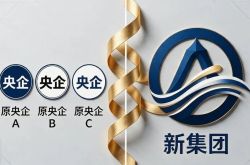
Therefore, for the highly market-oriented automotive industry, these models can only serve as references. Hence, the integration of FAW and GAC also has its uniqueness: it does not merge the groups, does not change control rights, does not make changes at the brand or headquarters level, but instead starts with joint venture asset swaps, which is acceptable to all parties.
In other words, from the outset, the integration of FAW and GAC did not alter the state asset affiliation of either party, thus avoiding disputes over dominance that could arise from equal administrative levels at the root. Moreover, FAW had something to offer, GAC wanted something, and both sides reached a consensus on the equal value of their assets.
If the above information is used as a reference, it serves as both the experience from the failed integration of Dongfeng and Changan and the key reason for their failure.
However, it should be noted that when news of the Dongfeng-Changan integration first emerged, theoretically, both sides had a foundation for integration, which is what we often refer to as complementary strengths.
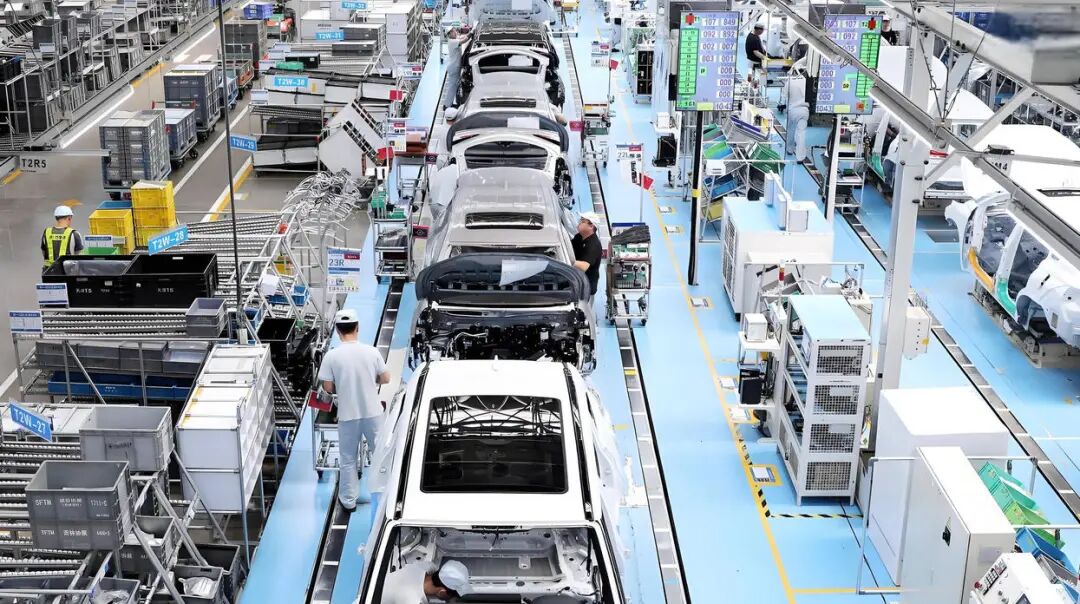
The most typical example is that Changan excels in passenger vehicles, while Dongfeng is strong in commercial vehicles. Additionally, Dongfeng leads in hardware technology R&D such as chips and solid-state batteries, while Changan is strong in intelligence aspects such as smart cockpits and intelligent driving. Dongfeng has a foothold in Europe through Stellantis, while Changan focuses on Southeast Asia, and there is overlap in battery and chip procurement between the two sides, among others.
This also includes the demands of the capital market. The overall listing process for Dongfeng has been stalled for a long time, and its new energy assets lack an independent listing platform. Later, VOYAH also listed on the Hong Kong Stock Exchange through a listing by introduction. If Dongfeng were to acquire shares in Changan, it would have a channel and platform for capital operations.
So why did the integration ultimately fail? In fact, the reason lies in economic considerations. After all, in the business world, interests determine all plans. Issues such as control rights, benefit distribution, and, as analyzed by outsiders, whether there would be internal friction after integration, all played a role.
Dongfeng's headquarters is in Wuhan, while Changan's is in Chongqing, and both cities view the automotive industry as an economic pillar. After news of the integration spread, discussions quickly heated up regarding where the new headquarters would be located.
The location of the headquarters implies issues such as tax revenue attribution, employment placement, and industrial chain layout, which would inevitably lead to one party gaining at the expense of the other. When the interest demands of local governments become a third force at the negotiating table, any plan involving which party would merge into the other would encounter tremendous resistance.
There is also a natural contradictory factor regarding the issue of control rights after the group merger. This should have also been the most fiercely debated issue internally and the most controversial point externally during the Dongfeng-Changan integration.
Dongfeng is a first-tier central enterprise at the vice-ministerial level, while Changan was then a second-tier central enterprise at the bureau level under China South Industries Group Corporation. If following traditional administrative logic, Dongfeng should have led the integration. However, the key point is that Changan had better performance at that time. In other words, Changan would not accept having its decision-making power taken away by Dongfeng, nor would Dongfeng accept being reduced to a vassal of Changan.
In contrast, the integration of FAW and GAC did not alter the state asset affiliation of either party from the very beginning. GAC has always been controlled by the Guangzhou Municipal SASAC, with FAW only participating as a strategic investor, thus avoiding disputes over dominance that could arise from equal administrative levels at the root and completely preventing the extreme situation of the negotiation foundation collapsing.
Then there is the issue of complementarity versus internal friction. In terms of brand layout in the passenger vehicle sector, Dongfeng has Mengshi, VOYAH, and Aeolus, while Changan has Avatr, Deepal, and Qiyuan. Although their positioning cannot be said to be directly opposed, there is a high degree of overlap. Coupled with the fact that both are collaborating with Huawei, their differentiation will increasingly diminish.
This means that the first step after integration would not be complementarity but rather resolving the issue of competing against oneself, such as deciding which brands to retain and which to eliminate, as well as how to place the teams and channels corresponding to the eliminated brands. Regardless of which side is eliminated, it would directly result in the employment placement of tens of thousands of people and the scrapping of research and development and channel assets worth tens of billions of yuan, costs that neither side is willing to bear.
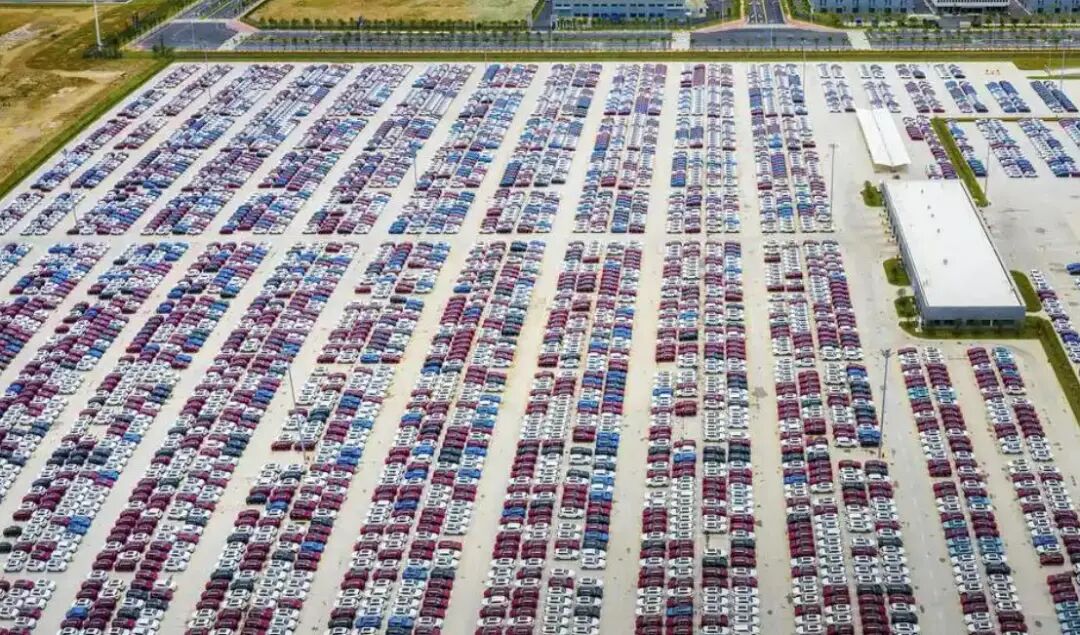
Ultimately, the cost-saving benefits brought by complementarity completely fail to cover the integration costs of overlapping businesses, rendering the so-called synergistic effect untenable. In other words, a forced merger would not achieve cost reduction and efficiency improvement but would instead likely result in an internal friction situation where "1+1<2."
Can the approach used by FAW and GAC, which uses equity in joint venture brands as bargaining chips, work? Actually, not really. The natural advantage of FAW and GAC is that they have both established joint ventures with Toyota, and the key is that Toyota agrees to this approach. For Toyota, there is no loss in equity returns, and there are even benefits, namely ending the internal friction between FAW Toyota and GAC Toyota and concentrating resources.
However, this operation cannot be replicated when it comes to Dongfeng and Changan. Changan's main joint venture brands are Ford and Mazda, while Dongfeng's are Honda and Nissan. It is difficult for these foreign brands to reach a consensus on integration, and the assets of these joint venture brands are either unequal in value or difficult to price due to unstable performance.
Ultimately, as everyone has seen, the integration of Dongfeng and Changan was downgraded. In June 2025, the State Council officially approved the separation of China South Industries Group Corporation, and in July, the new central enterprise China Changan Automobile Group was officially registered. As a result, China Changan was directly upgraded to an independently managed central enterprise, the administrative levels of both sides were completely leveled, and the merger plan was officially terminated.
Of course, the termination of the merger plan does not mean the termination of cooperation. For example, in June 2024, Changan Automobile and GAC Group signed a strategic cooperation framework agreement, planning to cooperate in areas such as shared platforms and technologies, industrial chain ecosystems, international business, and industrial funds, with the goal of leveraging complementary strengths, sharing resources, and jointly enhancing the competitiveness of the Chinese automotive industry.
In November 2024, GAC Components Co., Ltd., Chongqing Changan Automobile, China Changan Automobile Group, and Chenzhi Technology (a subsidiary of China Changan) signed a capital increase agreement. GAC invested no more than 550 million yuan to acquire a 30% stake in Chenzhi Technology, jointly laying out intelligent brake-by-wire chassis systems. Among them, Chenzhi Technology serves as the platform to supply both sides.
On June 13, 2026, China Changan Automobile Group and BAIC Group officially signed a strategic cooperation agreement in Beijing. Both sides announced that they would conduct in-depth collaboration in five key areas: cutting-edge technologies, green and low-carbon development, industrial chains, supply chains, and overseas markets, with the aim of achieving cost reduction, technological complementarity, and production capacity complementarity.
In fact, such strategic cooperation can be either large-scale or small-scale. On a grand scale, even without forms of integration, merger, reorganization, or shareholding as support, the width and breadth of cooperation still hold great imagination. Alternatively, with the model of FAW and GAC's integration as a reference, future automakers could also follow suit.
However, considering that after Changan and Dongfeng are on an equal footing, the original logic of restructuring or merging now has an administrative foundation, there may be operational space at the institutional level. The approach would be to learn from FAW and GAC, where both sides each contribute a new energy brand and then engage in some form of equity swap or cross-shareholding. This way, both sides become the second-largest shareholders of each other without changing the actual control rights of their respective groups.
Of course, relevant parties may also explore better approaches. Just as someone once said, "The two companies will not merge within two years, and the company that emerges victorious in market competition after two years will restart the merger as the dominant party." This statement also applies to all other automotive central and state-owned enterprises.
Editor-in-Chief: Li Sijia Editor: He Zengrong

THE END
-
![]()
Why FAW Can Successfully Integrate with GAC While Dongfeng and Changan Fail
-
![]()
Beauty Board Secretary ‘Dilraba’ Joins O-Film Tech, Capturing Renewed Attention
-
![]()
Huawei Steps Back, Seres Faces the Music
-
![]()
Large Models: Born from Industries, Destined to Revolutionize Them
-
![]()
Buick’s Big Reveal: New Car Model Launching on September 23rd!
-
![]()
319,000 Yuan! Lexus Unveils New Car: Official Release Set for September 18th
-
![]()
1,100km Pure Electric Range, World's First! BYD’s New Car 'Drops a Bomb'
-
![]()
Exclusive: Huawei Executive Reveals All About AITO's Future at Internal Meeting