Huawei Bids 'Farewell' to AITO
 09/20 2026
 444
444
What Lies Ahead After the 'Parting Ways'?
Image Source | Internet (Please contact for deletion if any infringement occurs. Partially generated by AI)
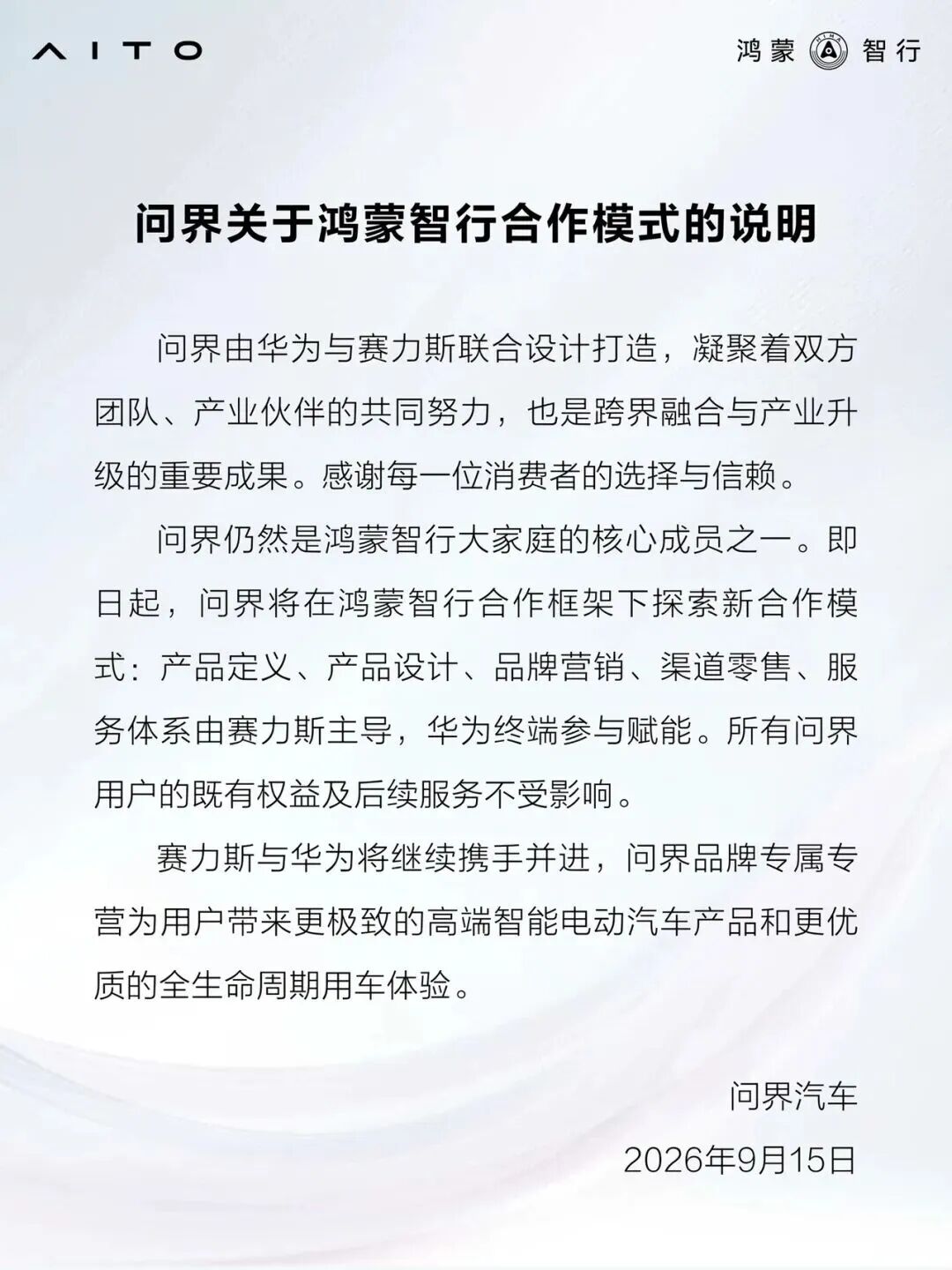
Recently, HiMos and Seres announced on the same day that, with immediate effect, Seres will take the lead in product definition, design, brand marketing, channel retail, and service systems for AITO, with support from Huawei Terminal.
Following this news, Seres' A-shares closed down over 5%, while its Hong Kong-listed shares dropped more than 6% during the session.
Many people's initial reaction was, 'Huawei and Seres have finally parted ways.'
However, interpreting this simply as a 'breakup' might cause you to overlook one of the most noteworthy business stories in China's smart car industry over the past seven years.
This is not a rupture but rather a carefully orchestrated 'rite of passage into adulthood'.

From 'On the Brink of Collapse' to 'Huawei Concept Stock'
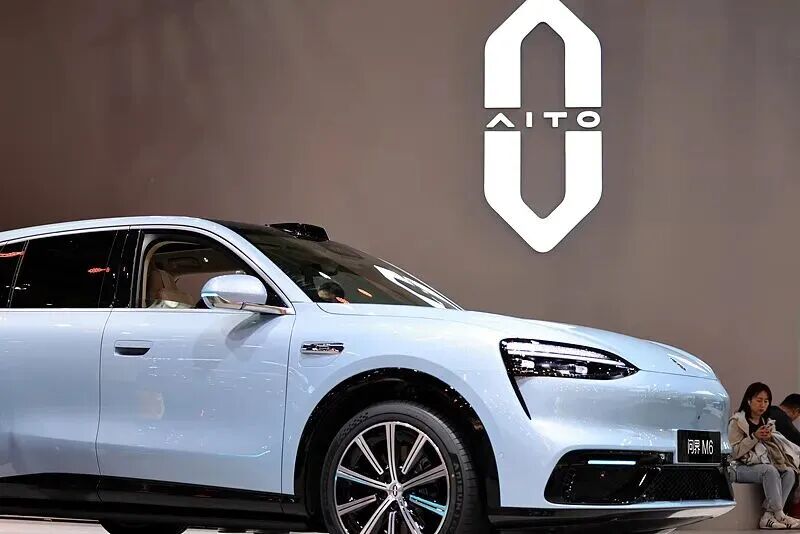
Seres, formerly known as Sokon, was a non-mainstream automaker producing microcars and low-end SUVs during the era of gasoline-powered vehicles.
Earlier, the company primarily manufactured seat springs and shock absorbers for microcars under the Chang'an brand until it formally entered the complete vehicle sector in 2003 through a partnership with Dongfeng Motor.
The company's management recognized the major trend toward new energy early on. In 2016, it invested to establish SF MOTORS in the United States, and in 2019, SERES made its debut at the Shanghai Auto Show, though it was virtually unknown in the industry.
In July 2020, Seres launched its first new energy vehicle, the SF5, but sold only 732 units for the entire year.
With declining gasoline vehicle sales and the costly shift to new energy, the company transitioned from profit to loss, once teetering on the brink of delisting. That's when Huawei stepped in.
Their cooperation dates back to 2018, with strategic planning in the smart electric vehicle sector, followed by a formal cooperation agreement in 2019. However, the real turning point came in April 2021.
At that time, the Seres Huawei Smart Selection SF5 was launched, marking the first time a complete vehicle product entered Huawei's sales channels. In December of the same year, the AITO brand was officially unveiled.
What happened next ranks as one of the fastest brand growth stories in China's automotive industry history. By January 2026, AITO had produced its one-millionth vehicle, taking approximately 46 months to go from zero to one million units.
Throughout 2025, AITO delivered over 420,000 vehicles, with an average price of nearly 400,000 yuan, setting a new benchmark in China's luxury car market.
Seres' revenue soared as well. In 2024, revenue increased by 305% year-on-year to 145.2 billion yuan, rising further to 165.1 billion yuan in 2025, with net profit attributable to the parent company reaching as high as 5.9 billion yuan for two consecutive years.
At its peak, Seres' total market value briefly surpassed 300 billion yuan, leaving many established automotive giants far behind.
However, behind these impressive figures lies a financial burden that increasingly keeps Seres awake at night.
The Heavy Burden of a Billion-Yuan Bill
Over the past four years, Seres has paid approximately 111.3 billion yuan to Huawei's ecosystem, accounting for 29.29% of its total revenue during the same period. In other words, for every 100 yuan received, nearly 30 yuan flowed to Huawei.
Breaking down this amount, it roughly consists of three layers.
The first layer is hardware procurement. Core components such as the HarmonyOS cockpit, Qiankun Intelligent Driving System, and three-electric systems totaled approximately 97.35 billion yuan over four years, representing the largest portion, essentially a straightforward transaction.
The second layer is the 'Huawei tax.' This includes a 2% technology licensing fee and an 8% channel marketing service fee based on the vehicle's selling price, totaling 10%. These are fixed expenses, as they must be paid once the vehicle is sold, regardless of whether Seres makes a profit or loss on that unit.
Seres specifically noted in its Hong Kong prospectus that the cooperation does not involve any profit-sharing arrangements. In other words, this is not about sharing your profits but purchasing my services—whether you make money is your concern.
The third layer consists of two one-time payments: 2.5 billion yuan in 2024 to acquire the AITO brand trademarks and related patents, and 11.5 billion yuan to purchase a 10% stake in Huawei's intelligent driving subsidiary, Yinqu.
Based on AITO's average transaction price of around 390,000 yuan, the 'Huawei tax' per vehicle amounts to 39,000 yuan. For the M9, with an average transaction price ranging from 500,000 to 560,000 yuan, the fee reaches 40,000 to 56,000 yuan per unit.
Some calculations based on first-half 2025 data show that, on average, approximately 136,000 yuan from each vehicle sold went to Huawei's ecosystem.
This accounting was not an issue when business was booming. However, in the first half of 2026, Seres' revenue was 57.493 billion yuan, a 7.87% year-on-year decline, with net profit attributable to the parent company turning from a 2.941 billion yuan profit in the same period last year to a 1.717 billion yuan loss.
The nearly 4.7 billion yuan difference between quarters made this accounting unsustainable.
It is important to note objectively that the 111.3 billion yuan was not 'pure profit' for Huawei, as it corresponds to the comprehensive consideration of Huawei's hardware costs, research and development amortization, and channel operations. From 2022 to 2025, Huawei's R&D investment in its automotive business exceeded 36 billion yuan.
However, an unavoidable fact remains: while Seres' gross profit margin rose from 8.01% to 29.14%, its net profit margin remained around only 3%. The difference of over 20 percentage points largely represents the cost of this cooperation model.

Huawei Also Needs to 'Move On'
If Seres is struggling under the cost pressure, Huawei, on its end, simply lacks the resources to continue.
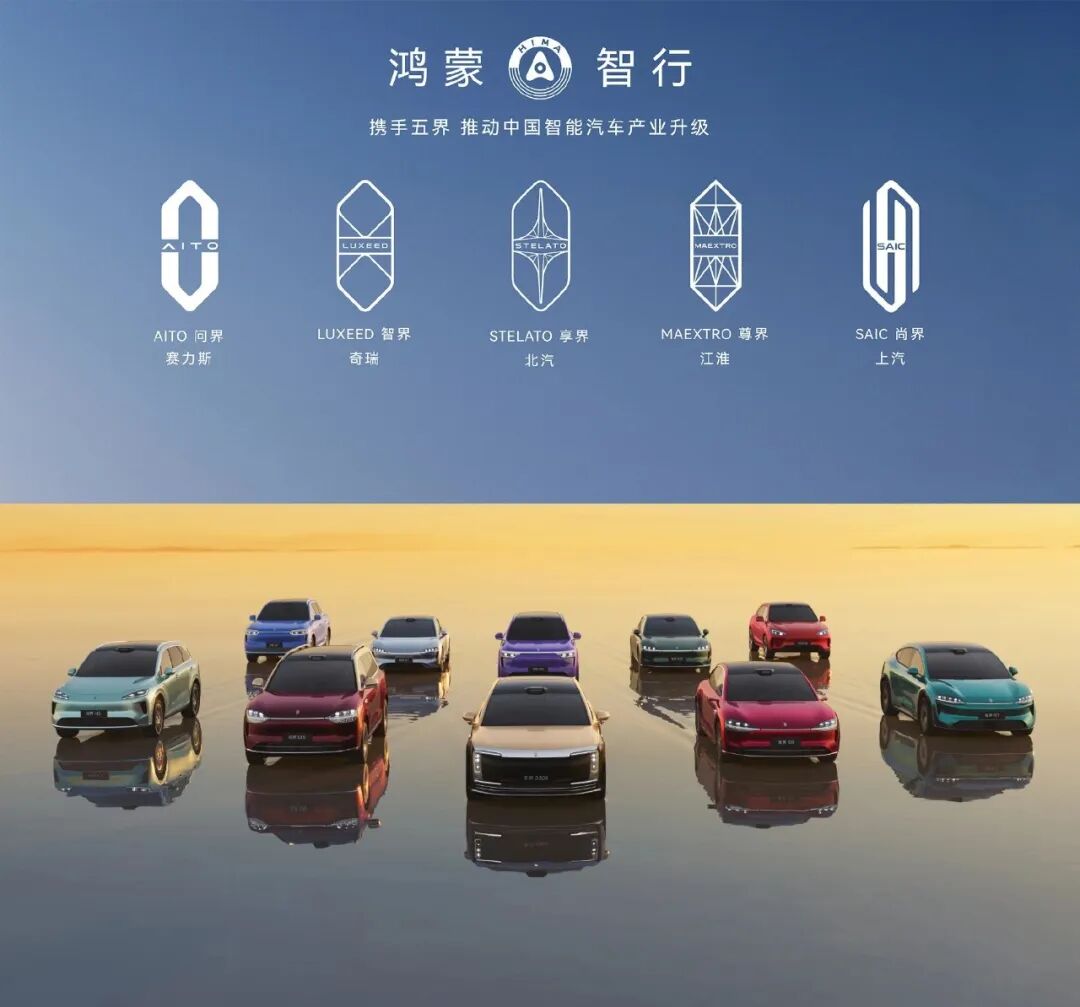
HiMos currently has five brands under its umbrella: AITO, Luxeed, STELATO, MAEXTRO, and Enjoyce, partnering with Seres, Chery, BAIC, JAC, and SAIC, respectively.
Throughout 2025, AITO contributed 420,000 units, accounting for over 70% of HiMos' total sales. However, by August 2026, both Enjoyce and Luxeed were at around 8,000 units, STELATO at just over 1,600 units, and MAEXTRO at 700-plus units.
AITO alone accounted for 70% of sales, which is both a source of pride and concern for Huawei. Huawei cannot allocate all its resources to a single brand; it needs to replicate more successful brands using AITO's success.
Huawei's Rotating Chairman has previously stated that HiMos' strategic goal is to 'help more automakers build better cars,' rather than bind itself to a single partner.
Relinquishing operational control of AITO represents a strategic reallocation of resources for Huawei, shifting from being a 'player' to a 'coach.'
The refreshed Luxeed R7 opened for reservations in September, while new models like the STELATO V9 and Luxeed RX are gradually entering the market. HiMos needs to focus its limited energy on brands still in their growth phase.
For Seres, regaining operational control means at least one thing: the 8% channel marketing service fee will no longer apply.
In 2025, Seres paid approximately 16.5 billion yuan in service fees, a figure that will significantly decrease in the future.
Previously, Huawei covered marketing expenses and store operations, costs that will now appear on Seres' own profit and loss statement. However, the saved service fees will likely cover these expenses.
According to multiple sources, AITO will adopt a 'dedicated and exclusive' sales model after the adjustment. Its sales channels will operate independently, with some existing HiMos stores transferring to Seres, displaying and selling only AITO series models while building a dedicated direct and franchise network.
What may seem like a simple adjustment implies a broader strategic direction. Previously, AITO owners might have found other models displayed alongside AITO in showrooms, with salespeople suggesting, 'The Luxeed is not bad either.'
That will no longer be the case, as AITO will have its own independent channels and dedicated service teams.
Seres is not unprepared. Over the past few years, it has established nearly 400 user centers, with the M9 achieving a 70% market share and 11 consecutive months as the sales champion in the 500,000-yuan-plus market.
However, the expansion costs and operational pressures of building its own channels are real. CLSA noted in a research report that Seres will face high channel expansion expenses while establishing its proprietary sales system, putting short-term pressure on its cost structure.
More critical is brand recognition. In the past, consumers bought AITO largely because of the 'Huawei' brand.
From 'Huawei AITO' to 'HUAWEI AITO,' and then to 'AITO' under the HiMos framework, ultimately becoming 'Seres AITO,' this gradual distancing of the brand prefix represents a tug-of-war for consumer mindshare.

How Long Can It Last?
Market reactions to Huawei and Seres' 'parting ways' generally fall into two camps.
Optimists believe that Seres, now operating independently, can reduce expenses on Huawei's services and channels, improving overall profitability.
CLSA also maintains an 'Outperform' rating for Seres, arguing that in the long run, this will help Seres build autonomous and controllable brand assets and channel systems.
Skeptics worry that without Huawei's comprehensive support, Seres lacks experience in independently operating a high-end brand and will struggle to lead AITO to breakthroughs in the fiercely competitive market.
Intelligent driving is shifting from 'far ahead' to an industry-wide standard. When everyone offers a similar driving experience, price ultimately determines purchasing decisions.
A more pragmatic middle view exists: the essence of this adjustment is a 'change in operational division of labor, with cooperation between the two sides continuing.'
AITO remains under the HiMos framework, with Huawei continuing to provide technologies like the HarmonyOS cockpit and Qiankun Intelligent Driving System, but shifting from 'full trusteeship' to 'asset-light empowerment.'
Officials emphasized that this adjustment does not affect other brands, with MAEXTRO, STELATO, Luxeed, and Enjoyce continuing under Huawei's full-process-led cooperation model.
Notably, the capital market's dramatic reaction on the day the news broke was more emotional. In the long run, this adjustment is reasonable for both sides, allowing Huawei to focus on platform-based empowerment while Seres needs to prove it is more than just a 'contract manufacturer.'
As one industry insider put it: After seven years of cooperation, Seres has reached its 'rite of passage into adulthood,' but this 'adult certificate' is also a bill it must carefully manage.
However, stepping back from this adjustment and looking at the bigger picture, the Huawei-Seres story reflects a core question in China's smart car industry: Where should the boundary lie in cooperation between automakers and tech companies?
Huawei's cooperation models with automakers have followed three paths: component supplier model, Huawei Inside model, and HiMos model.
AITO's adjustment essentially represents a 'stratification' within the HiMos model, evolving from full-chain deep involvement to an asset-light version of 'automaker-led operations + Huawei technology empowerment.' This provides a reference sample for future cooperation between more automakers and Huawei.
For Seres, the most critical question is not whether it can save money but whether it can spend those savings wisely.
In the first half of 2026, Seres' R&D investment reached 7.007 billion yuan, a 34.8% year-on-year increase, as it advances its self-developed systems like the Magic Cube Technology Platform 2.0.
However, the maturity of self-developed systems takes time, and in China's fiercely competitive new energy market, time is the scarcest resource.
For Huawei, relinquishing AITO's operational rights does not mean abandoning the automotive business. On the contrary, this may mark the true beginning of Huawei's 'broad-based, deep-empowerment' strategy in the automotive sector.
When 'Huawei Intelligent Driving' becomes as ubiquitous as utilities in the automotive industry, Huawei's imagination space only grows.
This 'separation' has no losers or winners—only two business partners redefining the boundaries of cooperation.
The real answer will come from AITO's sales curve over the next 12 months.
-
![]()
"Endured" for Six Years? Li Auto's Battery Self-Development Goes "Open"
-
Is Apple in Dire Straits Due to Supply Chain Woes? Baseband Chips, Flash Memory, and RAM in a Tangled Mix!
-
![]()
Auto Companies are Collectively Creating 'Humans', Next Stop: Car Factories
-
![]()
Zhu Huarong, 61, Embarks on the 'Final Battle' as Reappointed Chairman of Changan | MINGJINGpro
-
![]()
Are the Jobs of 16.74 Million Automotive Professionals Still Safe? Will They Remain So?
-
Zhipu Unveils Its Pioneering RSI Breakthrough, Constructing GLM with GLM Leveraging 100,000 Domestic Computing Cards
-
![]()
Huawei Bids 'Farewell' to AITO
-
![]()
Why are the satellites launched recently becoming increasingly 'smart'?