【Intelligentization】Li Auto to Supply Mach Chips, Silicon Carbide, and Range Extenders Externally
 09/22 2026
 564
564
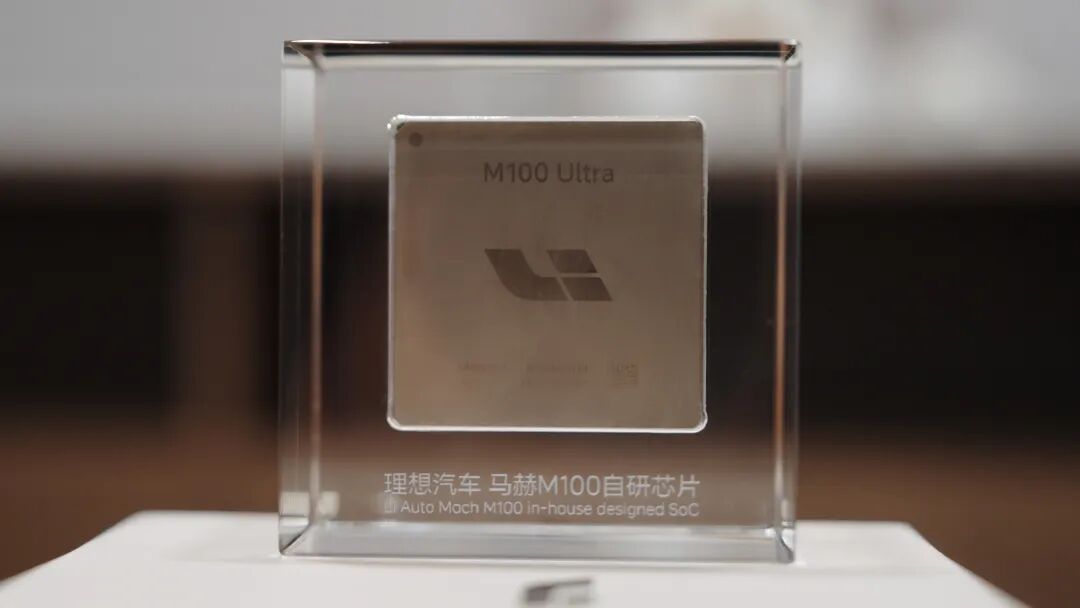
According to 36Kr, Li Auto has launched plans this year to externally supply its self-developed Mach intelligent driving chips, Scope Semiconductor's silicon carbide power modules, and complete range extender systems, with related businesses advancing the spin-off of independent entities and the introduction of external capital simultaneously. However, self-developed battery packs and cells will not be supplied externally for now. On September 21, Ma Donghui, President of Li Auto, further confirmed in an interview with Jiemian News that standardized components such as Mach chips and silicon carbide modules can be supplied externally to help amortize R&D costs, while battery packs are difficult to supply externally due to capacity and compatibility constraints.
This signifies that Li Auto is evolving from being a 'pure automaker' to adopting a dual identity as an 'automaker + core technology supplier.' It is not changing industries but is indeed adopting a different approach to cost-benefit analysis.
According to public information, Li Auto currently has three main categories of products available for sale:
Mach M100 intelligent driving chip. Launched in June this year, it utilizes a 5nm automotive-grade process, delivering 1280TOPS of single-chip computing power and 273GB/s of memory bandwidth, based on a dynamic dataflow architecture. Since the second quarter, it has been mass-produced in new models such as the L9, L8, L6, MEGA, and i9. Li Auto has publicly stated that its actual usable computing power is superior to NVIDIA's Thor-U.
Silicon carbide power modules. These belong to Suzhou Scope Semiconductor (a joint venture established by Li Auto and Hunan San'an Semiconductor in 2022, with Li Auto holding approximately 70% stake). Leveraging 8-inch SiC wafer capacity, the first production line, capable of producing 400,000 full-bridge modules annually, has commenced mass production. In addition to supporting Li Auto's 800V high-voltage platform, these modules are also supplied to other automakers for electric drive and thermal management systems.
Range extender systems. The third-generation self-developed range extender has achieved self-production, with a fuel consumption of 6.3 liters per 100 kilometers, a power generation efficiency of 94.8%, and an extended maintenance interval of 3 years. It incorporates patents such as low-pressure EGR. Li Auto has repeatedly signaled its welcome for peers to procure the complete range extender solution.
There is one category that will not be sold:
Self-developed battery packs and cells. The reasons are their high degree of customization, deep coupling with vehicle architectures, and the fact that Li Auto's self-developed 5C batteries are currently in the process of ramping up production (the first batch of i9 models still uses CATL's 5C ternary lithium batteries, with a full switch to self-developed batteries planned subsequently). Additionally, batteries represent a highly differentiated asset closely tied to the overall vehicle experience, and supplying them externally at this stage would essentially be handing over core capabilities to competitors.
The logic behind these choices is clear: technologies that are highly versatile, can be independently packaged, and do not undermine core competitiveness are prioritized for sale, while those strongly tied to the vehicle are temporarily not sold.
-
![]()
【Intelligentization】Li Auto to Supply Mach Chips, Silicon Carbide, and Range Extenders Externally
-
![]()
Announcement Related to AITO from Huawei's Yinwang
-
![]()
Selling Cars Proves Unprofitable: 'NIO, Xpeng, Li Auto, Leapmotor' Step into Supplier Role, Challenging Bosch and Huawei!
-
![]()
Chery’s Overseas Brands Set to Make a Comeback in the Domestic Market
-
AI Computing Power Surges, Colliding with the Most Vulnerable Metal Supply Chain
-
![]()
All Models to Feature Self-Developed Batteries: Will Others Follow Li Auto's Lead?
-
5G Private Networks and Physical AI: A Mutually Reinforcing Development Process
-
![]()
Why Do AI Glasses No Longer Need Cameras?