Li Jiaqi Moves 2 Trillion Tokens: AI Starts Landing in Shopping Carts
 11/06 2026
 507
Author | Zhang Qian
Editor | Hu Zhanjia
Operations | Chen Jiahui
Produced by | LingTai
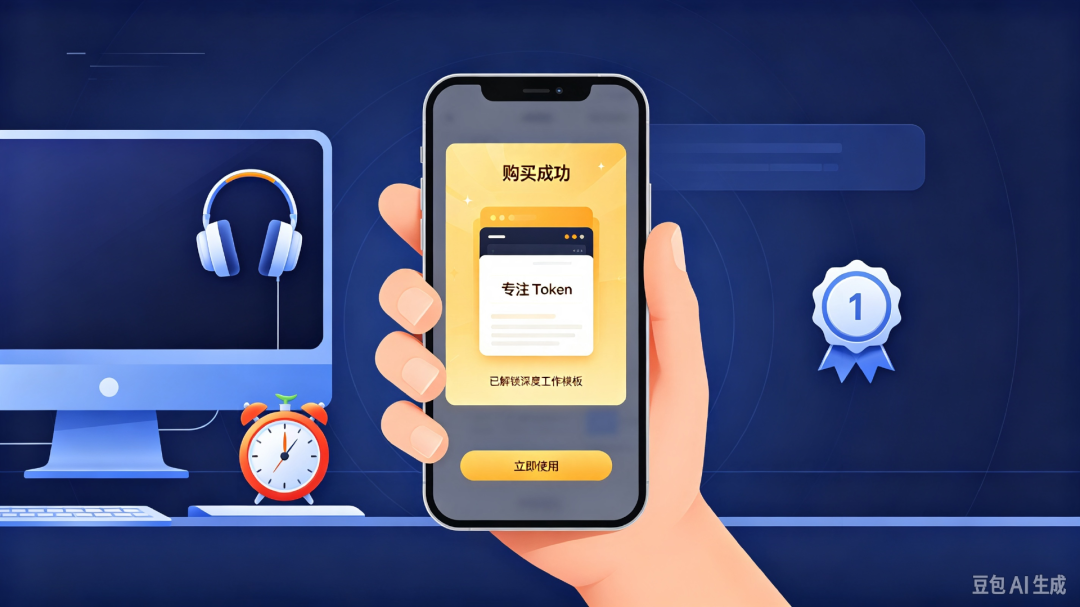
Header image | Generated by Doubao AI
In Li Jiaqi's livestream room, there is an invisible product.
On the evening of November 2, the Qwen Office personal membership monthly card went on sale in Li Jiaqi's livestream room. The Qwen Office team disclosed that within half an hour of launch, nearly 100,000 monthly cards were sold—corresponding to roughly 2 trillion tokens in cumulative quota. The basic monthly card, originally priced at 28 yuan, was offered at a livestream promotional price of just 1 cent.
Taken together, these three numbers read easily as yet another livestream commerce fairy tale. But unpacked, the 2 trillion tokens represent the aggregate quota attached to the packages sold—not computing power users have already consumed, and certainly not livestream sales revenue. What is truly noteworthy is that AI services have begun entering the mass consumer market through the very processes ordinary consumers already know well: explanation, price comparison, and ordering.
The significance of this livestream lies, above all, not in how much quota was sold, but in helping more people understand what AI can do for them.
 One Cent: Lowering the Threshold of Understanding First
The Chinese name for "token" is "ciyuan," a unit of measurement for how large models process and generate information. When a user inputs material, asks AI to write a report, or generate an image, corresponding token consumption occurs behind the scenes.
In the past, this term appeared mostly in developer documentation, model API price lists, and enterprise procurement plans. Even ordinary users who use AI every day may not know how many tokens they have consumed, let alone understand the differences between packages.
What Li Jiaqi's livestream room did was translate this technical language into consumer language.
The livestream did not stop at parameters and model capabilities; it demonstrated specific tasks on site: parents organizing their children's homework and test papers, livestream operations staff analyzing replays and bullet comments, and fishing enthusiasts generating a shareable map through conversation. Users first see "what it can help me do," and then come to understand membership, points, and tokens—so the order of cognition has been reversed.
The 1-cent price lowered the threshold for a first attempt to nearly zero. For an AI product that still needs market education, low-price trials are nothing new—but the large-scale reach brought by a top livestreamer means this experience is no longer limited to tech enthusiasts and existing users of office software.
This is also the most realistic value of this livestream: it may not immediately prove that consumers are willing to pay for AI over the long term, but it can enable more people to complete their first attempt at extremely low cost. For AI applications still in the popularization stage, the threshold of understanding is often harder to cross than the price threshold.
 Listed on E-Commerce: An Additional Consumer Entry Point
Tokens entering the livestream room is not an isolated event. This year's "Double 11" shopping festival has already seen AI services collectively placed on e-commerce shelves.
Tmall launched the "AI Space Station" token recharge center, with manufacturers such as Qwen, Zhipu, and MiniMax onboard; JD launched the "AI Software Recharge Hall," gathering models and agent services such as DeepSeek, Doubao, and Zhipu GLM. Consumers can browse packages and complete payments within the platform, just as they would buy video memberships or recharge phone credits.
For AI manufacturers, the value of e-commerce channels is not just adding another sales page.
On the one hand, the platform has a large-scale consumer base and mature payment, customer service, and after-sales systems, which can reduce friction in registration and purchase; on the other hand, memberships and packages from different manufacturers are placed at the same entry point, giving users the opportunity to browse and compare in a centralized way. Platform credit also provides additional trust endorsement for some unfamiliar brands.
According to comprehensive media information from Tianyancha and disclosures from Tmall, on October 20, the first day of "Double 11" sales, transaction volume in Taobao's token category increased by 450% month-on-month. This growth rate shows that attention to new categories is rising, but month-on-month growth is easily affected by a low base and cannot be directly equated with a mature market size. Media observations during the same period found that, apart from individual livestream promotional activities, many token products were priced close to their official websites, with sales still around a hundred units.
Therefore, the current e-commerce layout is more like channel positioning and market testing. It allows AI manufacturers to reach a broader audience and allows platforms to begin accumulating operational experience in new categories. Short-term transaction volume is not the only answer; whether users thereby develop the habit of searching for, comparing, and purchasing AI services is more worth observing.
 Users Ultimately Pay for Results
Mass AI consumption is not without a foundation.
The "Generative Artificial Intelligence Application Development Report (2026)" released by the China Internet Network Information Center shows that as of the first half of 2026, the number of generative artificial intelligence users in China had exceeded 700 million, with a penetration rate of over 50%. Among them, 32.5% of users use generative AI to handle work summaries, meeting minutes, and PPTs, and usage of AI efficiency office applications increased by more than 100% year-on-year.
This set of data shows that AI already has a broad user base, and office work is no longer just a concept demonstration. The next question is how to convert free use into services with sustained value.
The answer still has to return to specific results. The Qwen Office official website positions the product as a natural-language-driven AI Agent office product, covering tasks such as documents, data analysis, PPTs, and web pages. Its basic membership includes both points and daily office services in standard mode; for image, audio, and video tasks involving large computing power, points are settled according to actual usage.
The significance of this type of product design is that ordinary users do not need to understand model calls item by item; they only need to judge whether the delivered result is worth paying for. A PPT that can still be modified, a report that has been organized, or a web page that can be accessed—these are closer to real needs than an abstract number of tokens.
As Agents move from answering questions to executing tasks, the pricing logic of AI memberships also has the opportunity to shift from "how much quota you buy" to "how much work is completed." This does not mean tokens will lose their role; they remain an important basis for cost accounting and service measurement. But on the consumer side, task results and delivery experience should become more intuitive measures of value.
The demonstration in the livestream room completed exactly this step: turning invisible technical capabilities into perceptible work and life scenarios. For AI commercialization, this is more sustainable than simply creating a stunning sales number.
 Conclusion
Of course, a low-price livestream cannot answer all questions.
Nearly 100,000 1-cent monthly cards sold first reflects promotional appeal and the streamer's traffic, and cannot be directly extrapolated as willingness to pay at normal prices. The 2 trillion tokens corresponding to the packages does not mean these quotas will all be activated and consumed. What truly determines whether this business can succeed is the activation rate after the first order, sustained usage rate, task completion results, and renewal rate.
Pricing methods also need to be further clarified. Token divisions, point exchanges, free quotas, and usage restrictions differ among models, making it difficult for consumers to judge cost-effectiveness based on a single total number alone. After e-commerce platforms display products in a centralized way, they also need to push merchants to more clearly label applicable models, quota validity periods, queuing rules, excess fees, and refund conditions, reducing the information gap of "buying a lot but not knowing what it can do."
AI Agents can process files, data, and personal life information, so data security and privacy protection should also keep pace. Livestream rooms are responsible for sales, platforms provide transaction entry points, and manufacturers undertake model and service fulfillment. All parties need to clearly divide responsibilities for account redemption, exception handling, and content review. Only when transactional convenience and service reliability are both established can AI consumption move from a one-time trial to a long-term habit.
From this perspective, Li Jiaqi selling tokens is not the endpoint of a mature AI consumer market, but a valuable public test. It tests public interest in AI services, and also tests product demonstration, platform support, and manufacturer fulfillment capabilities.
In the future, judging whether AI has truly entered daily consumption cannot rely only on how many tokens appear in shopping carts, but also on how many users are still willing to use it a month later and continue to renew when there is no 1-cent promotion. That is the real question this livestream leaves behind.
(Sources: Qwen Office team and official website, China Internet Network Information Center's "Generative Artificial Intelligence Application Development Report (2026)," Jiemian News, Beijing Business Today, Nanfang+, Shanghai Securities News, China Youth Daily and related public reports.)
-
Volkswagen Recalls 610,000 Vehicles as Profits Plunge 98.7%—Is There Still Hope?
-
![]()
Li Jiaqi Moves 2 Trillion Tokens: AI Starts Landing in Shopping Carts
-
![]()
Apple Bows Its Head, Alibaba Bottom-Fishes: The AI Ticket for China-Market iPhone
-
![]()
Why Is Embodied AI Heading to Henan?
-
![]()
Full WiFi Bars but Videos Won't Load? Here's What's Really Going On
-
![]()
Yang Yuanqing's Bold 30% PC Market Share Pledge: Ambitious but Far from Easy
-
![]()
U.S. Moves to "Permanently Ban" Chinese Cars — and It Reeks of Fear
-
![]()
When MONA Accounts for Half of XPeng's Sales, Is It Trying to Break Away and Go It Alone?