Toyota China Faces Its Most Challenging Transformation and Strategic Shift
 09/22 2026
 564
564
Introduction
Organizational Restructuring: The Pivotal Element in Transformation
Recently, a trading halt announcement from GAC Group has lent credence to the rumors of a 'FAW-GAC integration'.
GAC Group has revealed plans to issue A-shares to acquire a portion of the equity in a vehicle joint venture held by FAW Co., Ltd. Given that the target company is listed overseas, its name remains undisclosed. However, the market consensus points towards FAW Toyota.
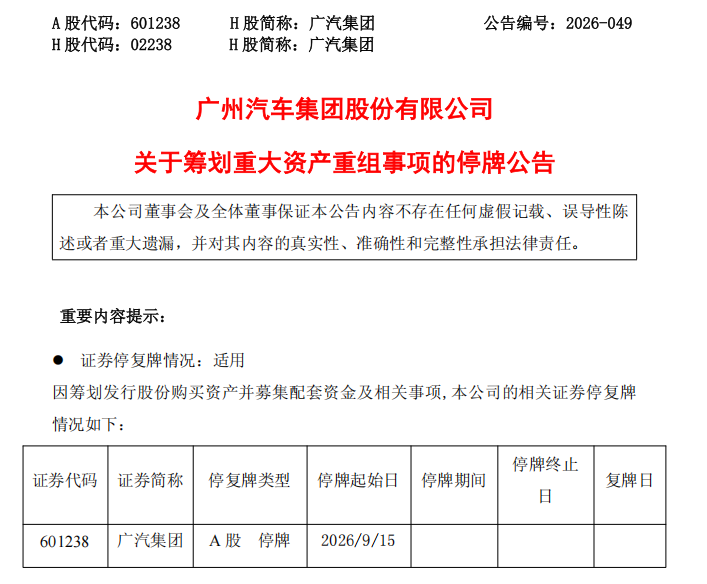
Within FAW Co., Ltd.'s framework, the only combinations that fulfill the criteria of being a 'vehicle joint venture' with a 'foreign partner listed overseas' are FAW-Volkswagen and FAW Toyota. Considering that GAC already has a joint venture with Toyota (GAC Toyota) but lacks one with Volkswagen, a senior industry insider quoted by China Securities Network stated, "It's likely FAW Toyota." Post-transaction, FAW Co., Ltd. is poised to become GAC's second-largest shareholder, wielding strategic influence.
The market swiftly interpreted this move as a signal from Toyota China: the two-decade-long strategy of separate operations in the north and south has reached a turning point, necessitating change in the dynamic Chinese auto market of 2026.
The Foundation Endures, but the Old Model is No Longer Viable
Reflecting on the era of fuel vehicle expansion, the dual joint ventures in the north and south represented the optimal strategy for Toyota.
FAW Toyota produced models such as the Corolla, RAV4, Avalon, and Granvia, while GAC Toyota manufactured the Levin, Wildlander, Camry, and Sienna. Leveraging the same TNGA platform, they adopted two distinct designs, distribution channels, and sets of KPIs to cater to a broader audience with minimal R&D marginal costs.
The two Chinese shareholders independently invested in and constructed factories, enabling Toyota to capitalize on two nationwide networks with minimal capital outlay—a classic example of the joint venture era where 'the foreign partner provides technology, and the Chinese partner provides qualifications and channels'.
However, challenges arose once growth stagnated. By 2026, the landscape had shifted: the Levin and Corolla vied for the same 100,000–150,000 RMB consumer segment, the RAV4 and Wildlander competed on discounts across the street, and the Sienna and Granvia jostled for space in the MPV market. Consumers were indifferent to whether the vehicle was produced by FAW or GAC; their focus was on the 'Toyota badge, intelligent driving features, and price'.
Yet, the two sales entities offered differing rebates, spare parts policies, and financing options, leading to internal competition at the dealership level. The 'twin models,' initially designed to target distinct demographics, now found themselves in direct competition.
Sales figures unequivocally highlighted the cracks. In 2025, Toyota China achieved over 1.78 million vehicle sales, the only positive growth among Japanese brands. FAW Toyota sold 805,500 units, GAC Toyota sold 772,000 units, and Lexus sold 182,000 units, with FAW slightly leading.
The scenario completely reversed in the first half of 2026. FAW Toyota's retail sales plummeted to approximately 273,700 units, a 27.4% year-on-year decline; GAC Toyota's sales dropped to about 341,100 units, a 6.3% year-on-year decrease. The leadership position FAW enjoyed a year prior was reversed within six months.
A closer look at the numbers reveals that FAW Toyota's bZ series sold approximately 11,500 units in the first half of 2026, while GAC Toyota's bZ4X series sold about 51,900 units—a staggering difference of around 40,000 units. The EV gap precisely offset FAW's previous advantage in fuel vehicles. The root cause lies not in poor vehicle quality but in Toyota operating two redundant operational units in China, both targeting the same consumer base.
Even more concerning than internal competition is the misalignment of R&D authority.
Under the previous model, vehicle definition rights rested with Japan headquarters: the chief engineer (Shusa) determined the platform, powertrain, and electronic architecture, while Chinese R&D was limited to localization. This approach sufficed during the fuel vehicle era but proved inadequate post-2025—with urban NOA, HarmonyOS cockpits, end-to-end intelligent driving, and even 100,000 RMB sedans equipped with LiDAR, Chinese brands were iterating three times a year. Global models' localization efforts struggled to keep pace. Regardless of how independently the north and south operated, they could not resolve the fundamental issue of 'vehicles being defined in Nagoya'.
Toyota is acutely aware of this. Its recent actions in China consistently point towards one direction—transferring definition rights to Chinese teams.
At the 2026 Beijing Auto Show, seven Regional Chief Engineers (RCEs) from China were elevated to lead projects such as the Platinum Wisdom 3X, Platinum Wisdom 7, bZ5, next-gen Corolla, all-new RAV4 and Wildlander, Sienna and Granvia, and Highlander and Crown Kluger. IEM by TOYOTA was integrated with the R&D centers of FAW Toyota, GAC Toyota, and BYD-Toyota into a unified R&D entity.
Notably, a single RCE now oversees both the RAV4 and Wildlander. Previously, engineers from the north and south independently modified global models; now, a single Chinese engineer is responsible for both sister SUVs' local adaptations. Product definition rights are being centralized first, with legal entity consolidation becoming a secondary consideration.
However, progress at the dealership level has been tentative. Toyota China may aspire to a 'One Toyota Experience,' but the two sales companies operate as independent profit centers. Currently, they are only piloting single-city, single-store co-sales in lower-tier cities, hesitant to connect to the entire grid (afraid to merge networks nationwide)—due to concerns about impacting joint venture personnel, executive KPIs, and shareholder interests.
Now, GAC's announcement makes a merger of FAW and GAC Toyota a plausible scenario.
Toyota is Also Dismantling Its Old Framework
Toyota recognizes the shortcomings of the old model better than anyone and has been actively exploring new approaches. Interestingly, most of these initiatives are taking place outside the joint venture system.
The most significant step is in Jinshan, Shanghai.
Toyota has announced plans to establish a research, development, and production company for Lexus pure electric vehicles and batteries, wholly owned by Toyota, with production slated to commence in 2027. Media reports indicate an investment of approximately 14.6 billion RMB, with an initial annual capacity of 100,000 units and a local component sourcing rate exceeding 90%.
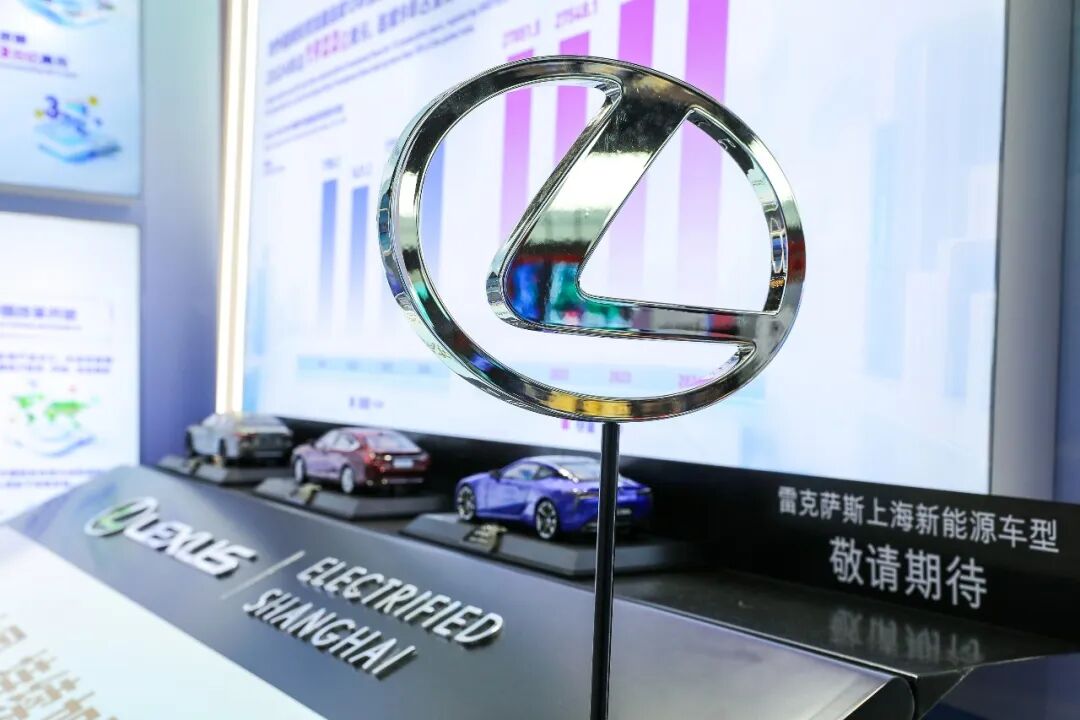
This sends a resounding market signal: if the north-south joint ventures were still suitable for building future vehicles, Lexus EVs should logically be produced by FAW Toyota or GAC Toyota. Toyota chose a different path. Next-gen luxury EVs, batteries, R&D, and export rights are all being kept in-house. The official rationale is 'meeting Chinese and overseas market demand,' but the action is clear: joint ventures will continue selling Camry, RAV4, and hybrid models; the future of pure EVs and brand leadership will no longer adhere to the old 'foreign technology, Chinese qualifications' model.
Localized R&D is also accelerating.
Beyond expanding RCE teams and having products defined by China, Toyota China is promoting pure electric models led by Chinese teams, such as the bZ4X. The bZ4X, developed by Chinese engineers within GAC Toyota, delivered approximately 70,000 units in 2025, ranking first among joint venture EVs for multiple consecutive months. The bZ5 features a HarmonyOS cockpit, Momenta intelligent driving, and Huawei electric drivetrains, with local suppliers and intelligent driving partners directly integrated into the product. Additionally, Toyota is advancing collaborations with Chinese partners in intelligent driving and mobility, adhering to the principle of 'rebuilding Toyota in China, the Chinese way'.
Connecting these dots, Toyota's future direction is unmistakable.
The joint venture system will defend today's fuel and hybrid markets; the wholly-owned platform will bet on tomorrow's EVs and luxury segment; local teams will define next-gen intelligent driving and products. Toyota is effectively splitting its inventory (existing business) and increment (growth business) into two distinct paths—existing business relies on north-south hybrids and twin models to sustain, while growth bypasses the joint venture framework and flourishes in the Jinshan factory.
If GAC truly acquires part of FAW Toyota's equity, the interests of the Chinese partners in the north and south will be consolidated under one shareholder. Joint venture personnel arrangements, dividend ratios, and technology transfers could then be negotiated by the Chinese side as a unified entity—while Toyota avoids internal friction but also relinquishes the leverage of 'playing one side against the other.' This represents the most delicate balancing act in the transformation.
What GAC and FAW have addressed is the equity structure. What truly reshapes Toyota's China model is the RCE system transferring definition rights to Chinese engineers, the bZ series proving that joint venture EVs can achieve success, and the Jinshan factory enabling Toyota to control next-gen EVs and future batteries in-house.
Whether the legal entities of FAW and GAC Toyota merge has become the least critical question in this round of changes—because Toyota has already provided the answer through its actions: it has not staked everything on the north-south joint ventures but has reserved a more autonomous path outside the joint venture framework.
-
Is MiniMax on the Verge of Crafting a New Narrative?
-
Self-Driving Buses Enter a 'Golden Era'
-
Can’t Compete? 25 Automakers Unite to Lobby for a U.S. Ban on Chinese Car Imports
-
![]()
One Step a Day: OPPO and vivo Emerge as Two Leading Players in China's Tech Narrative
-
Taking Small Steps, OPPO and vivo Become Two Protagonists in China's Tech Narrative
-
![]()
Four Leading Brands Dominate the 2026 Automotive NPS Rankings
-
Selling an iPhone Duo Results in a 1,847 Yuan Tax in China, Whereas an iPhone 18 Pro Incurrs 1,157 Yuan in Tax
-
![]()
Toyota China Faces Its Most Challenging Transformation and Strategic Shift