"Xiaomi in the Auto Circle" Declares War on Xiaomi Auto: Are Double-Decker Vehicles the Next Battleground?
 09/23 2026
 326
326

Lead
Introduction
Another new automaker joins the "double-decker vehicle" trend!
Speculation about Leapmotor's second brand suggested it would either target the "higher-end" segment or lean toward "greater personalization." However, few anticipated that Leapmotor's second brand would take aim at Xiaomi Pengcheng, aiming to create a new category—double-decker vehicles!
On September 16, during Leapmotor's Technology Launch Day, the company revealed more details about its second brand:
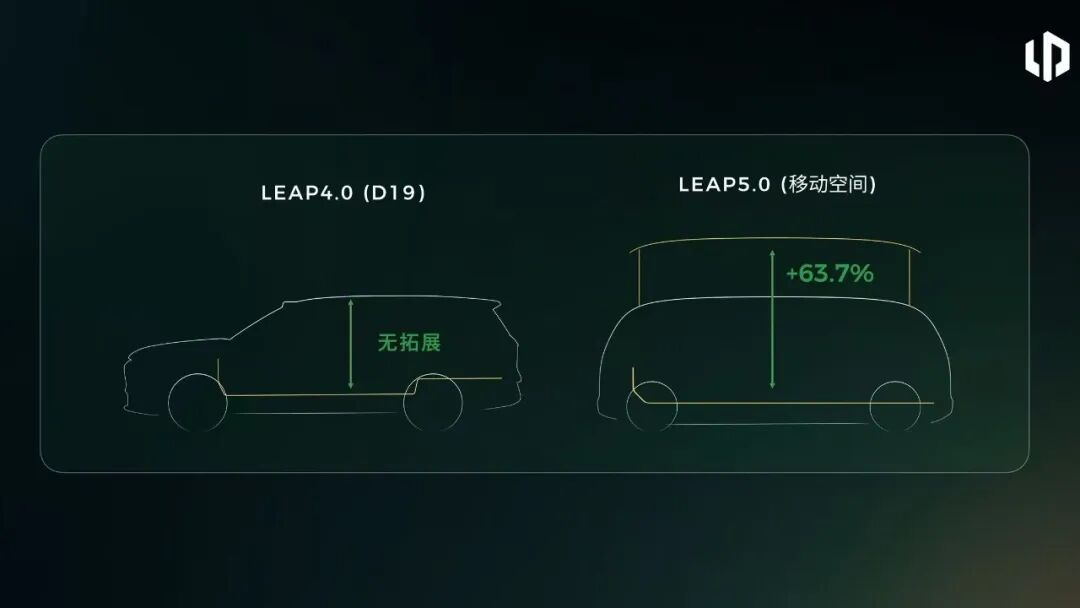
The new brand will officially debut in the fourth quarter of 2027 and deliver its first model, built on the latest LEAP5.0 vehicle architecture. The inaugural model will emphasize the "third mobile space," featuring over 100% usable space ratio. Through designs like a rear-mounted powertrain, a native elevating cabin, and a flat low floor, it enables seamless transitions between scenarios such as bedrooms, cinemas, and dining areas within the vehicle.
Setting aside the technological sophistication of the LEAP5.0 architecture, the product definition and functional design of Leapmotor's second brand—particularly the iconic native elevating cabin of the "double-decker vehicle"—inevitably draw comparisons to Xiaomi Pengcheng.
Previously, the Xiaomi Pengcheng N90 Max Explorer Edition generated significant buzz even before its official launch, especially discussions surrounding its elevating roof tent.
What truly propelled "double-decker vehicles" into the spotlight, however, was pricing. The Xiaomi Pengcheng N90 Explorer Edition set a precise benchmark at the "300,000-yuan" mark, offering exceptional cost-effectiveness compared to competing products.
This price point has now become the baseline for Leapmotor's second brand in its "double-decker vehicle" endeavor.
01 Not Half-Price Xiaomi, but the "Apple of the Auto Circle"
After achieving monthly sales exceeding 100,000 units, is Leapmotor abandoning its strategy of being "half-price Li Auto" to become "half-price Xiaomi" instead?
In fact, similarities between Leapmotor and Xiaomi have long existed. Both companies excel at capturing market share through high cost-performance ratios. Even before Xiaomi entered the automotive industry, Leapmotor was dubbed the "Xiaomi of the auto circle."
This led to natural associations when Xiaomi Pengcheng began exploring "double-decker vehicles," and Leapmotor's second brand chose a similar direction.
However, if you view Leapmotor's second brand as merely a "budget version of Pengcheng," you underestimate Zhu Jiangming's true ambitions.
During Leapmotor's Technology Day on September 16, Zhu repeatedly emphasized a goal: to become the "Apple of the auto circle." This refers not only to Apple's supply chain control but also to its revolutionary approach to defining product functionalities.

Zhu argues that while new energy vehicles have transformed powertrains, they have not fundamentally redefined the vehicles themselves. The cabin structures, seating layouts, and spatial logic from the fuel-powered vehicle (internal combustion engine vehicle) era persist in new energy vehicles.
Much like feature phones, which added more functions over time without fundamentally changing their form, the iPhone redefined mobile phones by reorganizing functionalities like cameras, music, and internet access, ultimately altering how people use them.
In Zhu's view, new energy vehicles should undergo a similar revolution to break free from the constraints of the traditional internal combustion engine era. Hence, Leapmotor's second brand focuses on the "third mobile space."
However, the concept of a third mobile space is not new. To stand out, Leapmotor adopted a "ground-up" approach.
For instance, to accommodate this space, Leapmotor even redesigned its thermal management system. Traditional new energy vehicles rely on complex air conditioning and thermal management systems involving 60–70 components. Leapmotor highly integrated these systems, reducing the number of related parts to 21 while freeing up more interior space.
Combined with a rear-mounted powertrain, flat floor, and advanced intelligent driving capabilities that free up in-car time, the prototype of Leapmotor's second brand began to take shape.
Of course, it remains to be seen what label the market will ultimately assign to Leapmotor's second brand. Whether it becomes "Uniqlo," "half-price Xiaomi," or the "Apple of the auto circle," Leapmotor must still prove whether it can forge a distinct product logic along the "double-decker vehicle" path.
02 Targeting "Double-Decker Vehicles": Hold the Celebration
Looking back at automotive history, "double-decker vehicles" are not new. Models like the Mazda Bongo Friendee, Toyota HiAce, Volkswagen California, Mercedes-Benz Marco Polo, and Honda Odyssey Field Deck have all featured similar designs.
However, the crux of the issue lies in the fact that despite existing for years, this functionality has never truly penetrated the mainstream market.
The reasons are pragmatic. For an average passenger vehicle, elevating roof vehicles are too expensive, and their complex structures introduce new challenges in sealing, waterproofing, sound insulation, thermal insulation, and reliability.
While users gain more space when the roof is elevated, if the process is cumbersome or if issues like strange noises, leaks, or mechanical failures arise after a few years, it becomes a different, sorrowful story.
The good news is that the new energy vehicle trend has spurred a surge of new technologies, expanding the possibilities for product functionality. Riding this wave, Xiaomi Pengcheng revived the concept of "double-decker vehicles" in the public eye.
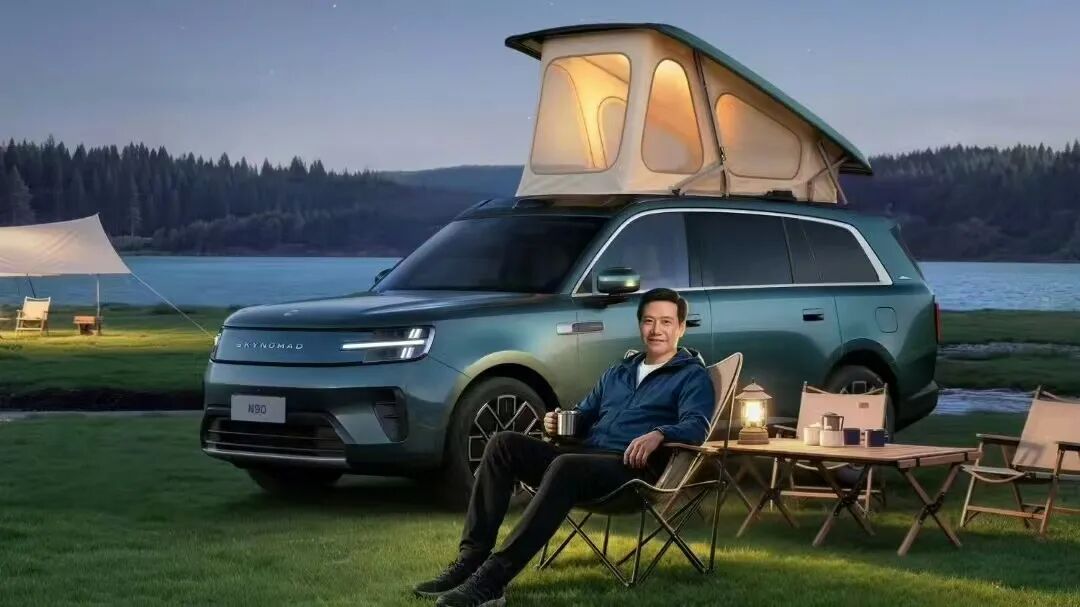
Undoubtedly, with modern technological advancements, the elevating roof functionality of "double-decker vehicles" will become more user-friendly. However, unresolved issues remain:
Can the elevating mechanism operate stably daily? Will it loosen over long-term use? Can the sealing withstand heavy rain and high temperatures? Does it provide adequate insulation in winter? Does it produce strange noises while driving? Is the structure safe after a collision?...
Simply incorporating an elevating roof structure into a passenger vehicle does not guarantee success. Moreover, to truly push "double-decker vehicles" into the mainstream market, the aforementioned reliability issues are merely the first hurdle.
Because, no matter how novel "double-decker vehicles" may appear, they remain niche products at their core. Most elevating roof structures serve low-frequency scenarios like camping and short trips but require users to continuously compromise on daily commuting, vehicle maintenance, and energy costs—a poor trade-off.
Thus, automakers must address three core pain points: reliability, practicality, and cost-effectiveness. They must transform the elevating roof structure from an optional premium feature into a practical function suited for daily use and mainstream demand. Only then can "double-decker vehicles" achieve mainstream adoption.
03 How to Transform a Niche Segment into a Mainstream Market?
RVs, travel, and outdoor consumption continue to gain traction. Three months ago, national-level policies promoting consumption also drove the development of scenarios like self-drive tours, camping, and RV travel.
For automakers, mobile spaces indeed present new product opportunities. However, it is important to note that while policies can expand consumption scenarios, they cannot directly guarantee the success of a specific vehicle type.
In other words, while "double-decker vehicles" currently enjoy some policy support, they have not yet become a trend. This situation resembles the early days of the off-road vehicle segment.
Over the past few years, off-road vehicles have transitioned from a niche market to a broader consumer base. Today, various new energy "boxy" models are active across price segments.
The market development of boxy products relates not only to design styles and outdoor culture but also to urban SUVs' ability to meet demands for space, versatility, and personalization.
The increasing number of automakers entering this field demonstrates that niche categories can indeed grow, but only if products find broader consumer appeal. "Double-decker vehicles" must undergo a similar transformation.
"Double-decker vehicles" must cater to more than just a few professional campers; they must also address the concerns of a wider user base:
Can it be used for daily commuting? Can it fit in underground parking garages? Is it still valuable if the household does not camp regularly? If it is only used a few times a year, why should consumers pay extra for the elevating roof structure?
If automakers can align in-car space with high-frequency needs like daily rest, family travel, and mobile offices, the product's utility will surpass the fleeting excitement of camping.
On this front, Xiaomi has marketed its product exceptionally well.
In summary, transforming a niche segment into a mainstream market requires three key steps:
First, the product must be "solid." This refers not only to chassis performance but also to comprehensive product strength, including structural reliability, spatial design, comfort, intelligence, after-sales service, and cost control. For elevating roof products, quality assurance is essential before expanding into additional scenarios.
Second, technology must be implementable. Unlike shallow elevating roof models retrofitted from traditional internal combustion engine vehicles, new-era "double-decker vehicles" require native architectures. They must undergo integrated R&D, from body structure and chassis layout to three-electric systems and thermal management system certification. Like Leapmotor's LEAP5.0 architecture, which reconstructs interior space and uses integrated technology to address spatial waste and structural redundancy, the stability, safety, and practicality of the elevating mechanism must be optimized at the source.
Finally, user perception must shift. Automakers must break free from the single-scenario limitation of elevating roofs for "camping." Through scenario popularization and authentic experience dissemination, they must reshape consumer mindsets, positioning the elevating cabin not just as a bonus for outdoor adventures but as an essential configuration for daily commuting, family travel, and mobile offices—and as a carrier (carrier) for a higher-quality, more diversified lifestyle.
It is foreseeable that with continued efforts from automakers like Leapmotor and Xiaomi, "double-decker vehicles" will emerge as a new growth opportunity. Whether the market for "double-decker vehicles" can achieve "breakout" growth like boxy models remains to be seen, and the answer will require more automakers to participate.
Editor-in-Chief: Cao Jiadong Editor: He Zengrong

THE END
-
![]()
JAC Motors Hits Price Ceiling, Leverages Huawei to Step into the 'Post-Seres' Era
-
AI Sparks a New Era of Efficiency Revolution
-
![]()
'Token Loans' See Intensive Rollout, Banks' Credit Anchors Quietly Shift
-
![]()
Is Seres Parting Ways with Huawei? Seres Chairman Rarely Responds! Yet, Other Sectors Are Also Forging Their Own Paths
-
![]()
Misconceptions and Misjudgments Surrounding Huawei
-
![]()
Zuckerberg of ALL IN AI Can Finally Breathe a Sigh of Relief
-
![]()
China’s Automotive Aftermarket Embraces New Policies to Unlock Growth Potential
-
![]()
"Xiaomi in the Auto Circle" Declares War on Xiaomi Auto: Are Double-Decker Vehicles the Next Battleground?