Behind 'Audi Sues Audi': Profiteers Flock to Germany, Rumors Stay in China
 09/23 2026
 474
474
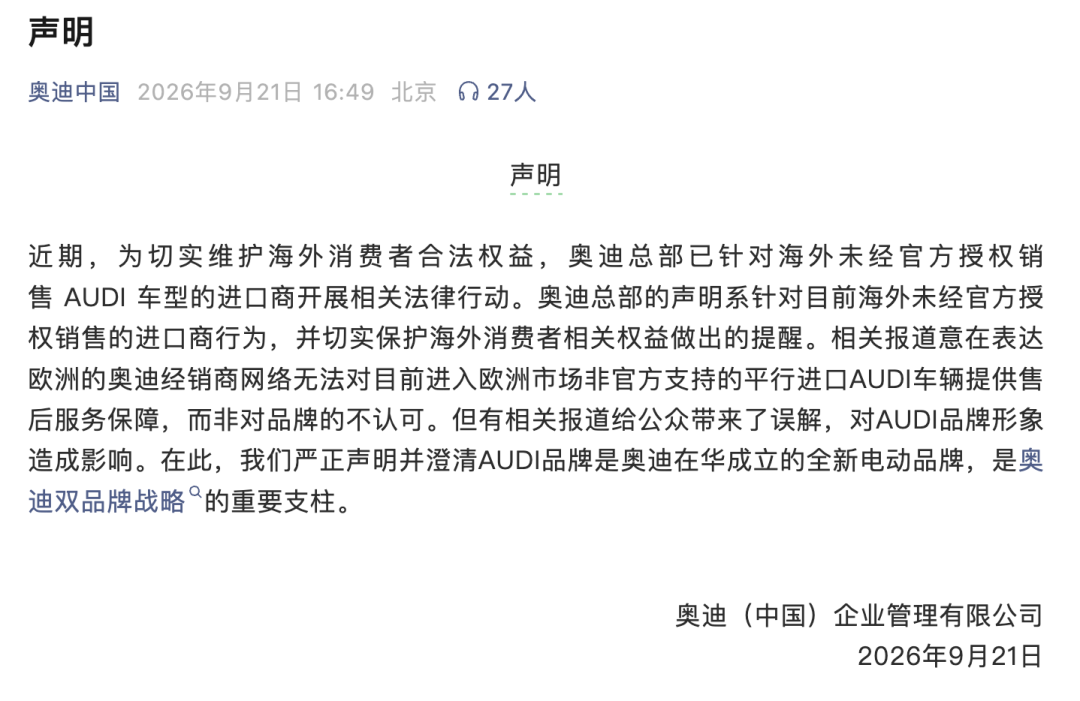
The most talked-about event in the automotive circle these past two days is none other than what some media outlets are calling 'Audi Sues Audi.'
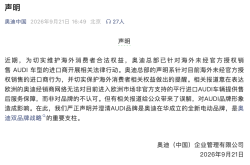
The cause is not complicated. Parallel importer Auto China brought SAIC Audi's E7X and E5 Sportback models into the German market. As Audi's global headquarters cannot provide after-sales support and warranty protection for vehicles sold through unofficial channels, they initiated legal proceedings against the parallel importer. However, in certain media accounts, the story has morphed into 'Audi disowns AUDI' and 'Audi suing its own family.'
A slight twist in translation completely changes the meaning. To put it bluntly, some people are deliberately manipulating the translation. The original intent of Audi's spokesperson was clearly just that 'parallel imported vehicles not officially supported cannot enjoy after-sales support.' How did this get transformed into 'disowning AUDI'? SAIC Audi can afford to ignore such noise. True strength doesn't require verbal disputes; the product has already spoken for itself.
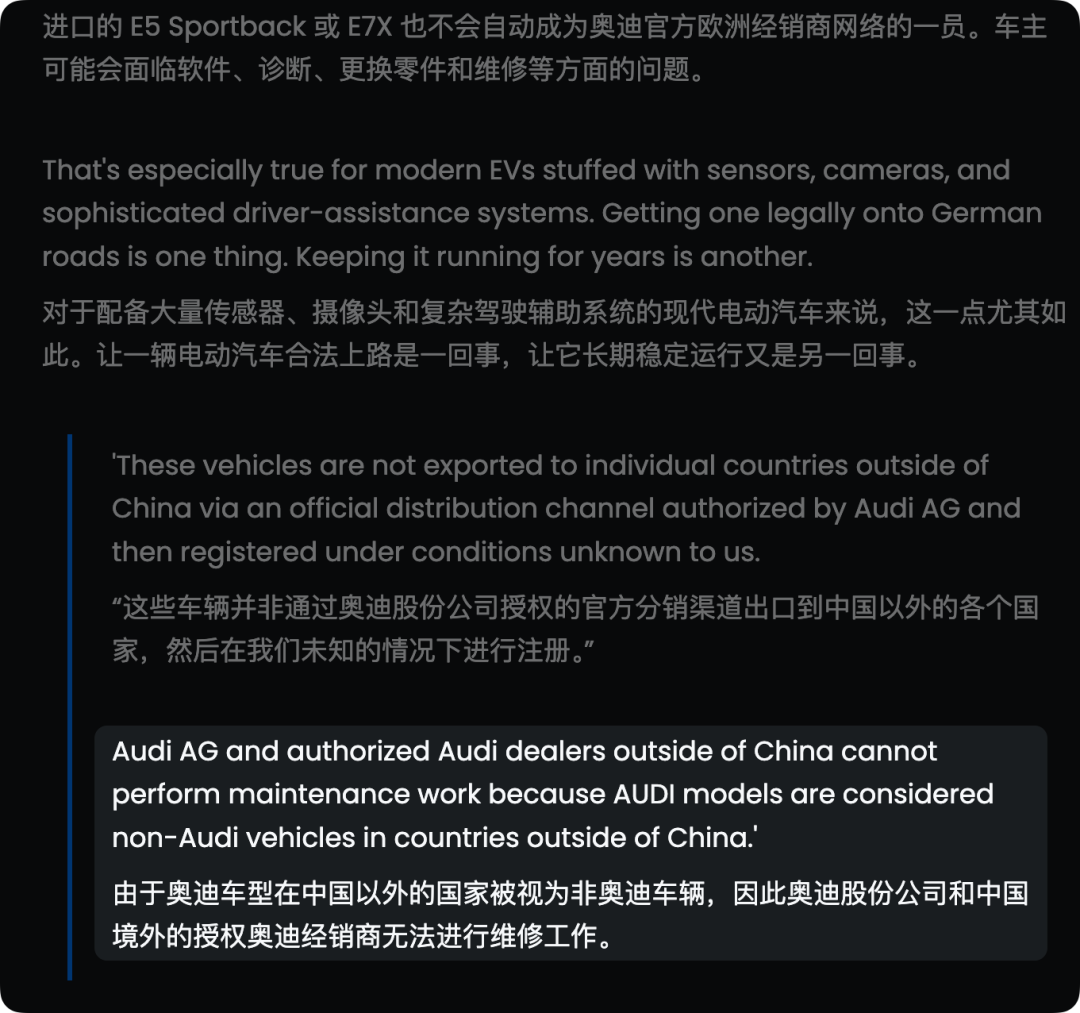
Figure 1: Audi AG's official statement on after-sales issues for parallel imported vehicles (screenshot of original foreign media report)
The Market Has Already Voted with Its Wallet on Product Strength
Let's look at the data. The Audi E7X sold over 4,000 units in its first month on the market and surpassed 10,000 units within 100 days, becoming the first luxury brand 'volume-selling' pure electric model. Its cumulative sales over three months exceeded the total annual sales of all Four Rings electric vehicles in 2026. In the Jeran Road New Energy Value-for-Money Index, the E7X consistently ranks among the top three 300,000-yuan-class SUVs, with nearly 60% of buyers coming from luxury brand trade-ins, and its Net Promoter Score ranks first among traditional luxury brands.
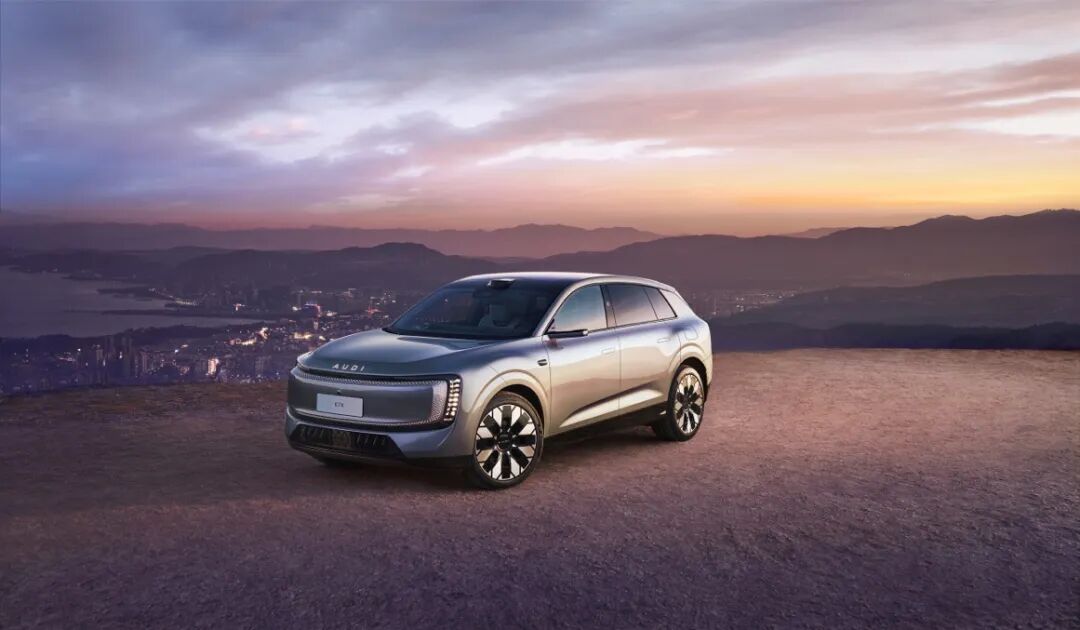
What do these numbers indicate? Consumers who are spending their money have already voted with their wallets. If a car were truly 'unrecognized' as rumors suggest, how could it sell like this?
Here's another point worth mentioning. There are always people online making bold claims, saying they won't buy an Audi without the four rings. But when you actually look at the sales of electric vehicles bearing the four rings, they're not doing so well.
After years of development, no Four Rings electric vehicle has managed to become a flagship product. Their total annual sales in 2026 combined are still less than the E7X's sales in just three months.
If the voices of 'keyboard warriors' truly represented the real market, then thousands of originally imported Type-Rs wouldn't still be gathering dust in Chinese warehouses after several years.
Often, there's a lot of noise but little substance. No matter how much outside ridicule there is, it can't diminish AUDI's ability to speak through its strength and product prowess. And behind those sales figures lies tangible product strength.
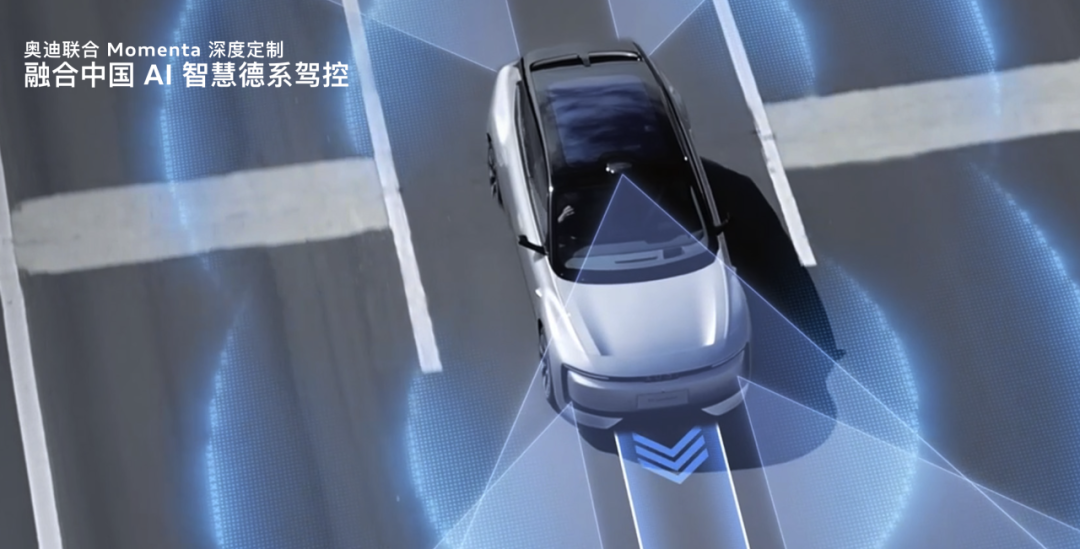
Figure 2: Audi's deep customization of intelligent driving in collaboration with Momenta
To be honest, comparing the AUDI brand in Germany is somewhat 'beneath it.'
Their true battleground is China's fiercely competitive new energy vehicle market. In this ultra-competitive arena, being able to create such a product and turn it into a bestseller speaks volumes.
When it comes to new energy vehicles, the focus should now be on China. A 'monster' forged in China's competitive environment, when placed in the German market, is almost a dimensional reduction strike—nearly unbeatable.
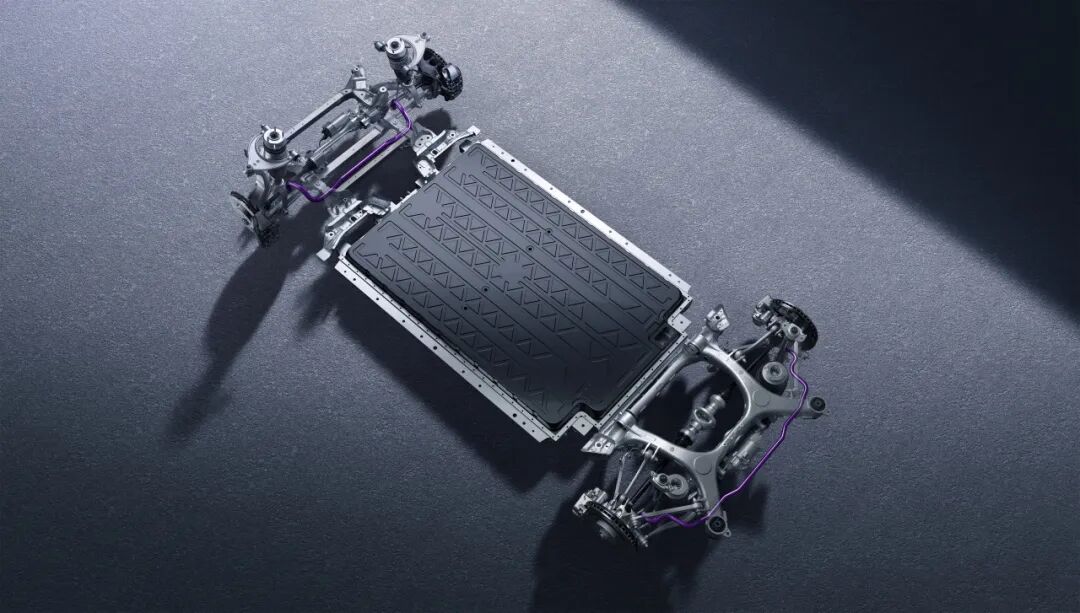
Figure 3: Audi E7X chassis
Unlike the traditional paths followed by Mercedes-Benz and BMW, AUDI is the first luxury brand to 'take the plunge' and the first to truly achieve scalable sales volume and stable market presence. With a price that offers sincere value, mechanical sophistication backed by Audi's century-long heritage, and China's strongest lineup for intelligence, it's no wonder this product sells so well. The market has already voted, and the data and sales figures are the loudest response.
Profit-Seeking Resellers and the Best Certification of Brand Strength
Now, let's talk about the AUDI letters themselves. They represent the original German Audi brand, not some 'unverified wild logo.'
From Horch founding Audi, to the four-ring emblem, and now to the new AUDI, Audi's brand history is one of continuous breakthroughs and fearless self-disruption.
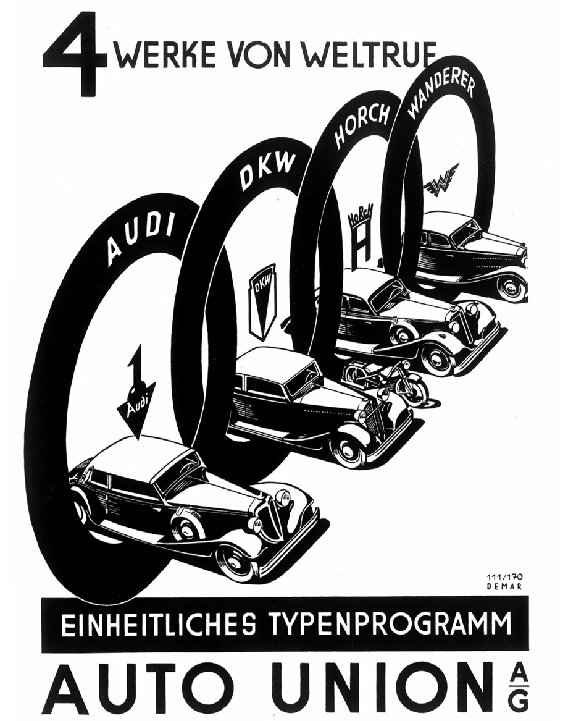
AUDI is viewed by Audi's global headquarters as the core of its electrification and intelligent transformation. Audi's global CEO, Gernot Döllner, has repeatedly attended AUDI brand events, personally endorsing it. The E5 Sportback is even displayed alongside Audi's F1 racing car in the showroom at Ingolstadt headquarters. If the global headquarters treats it like a precious gem, how can there be any talk of 'disowning' it?
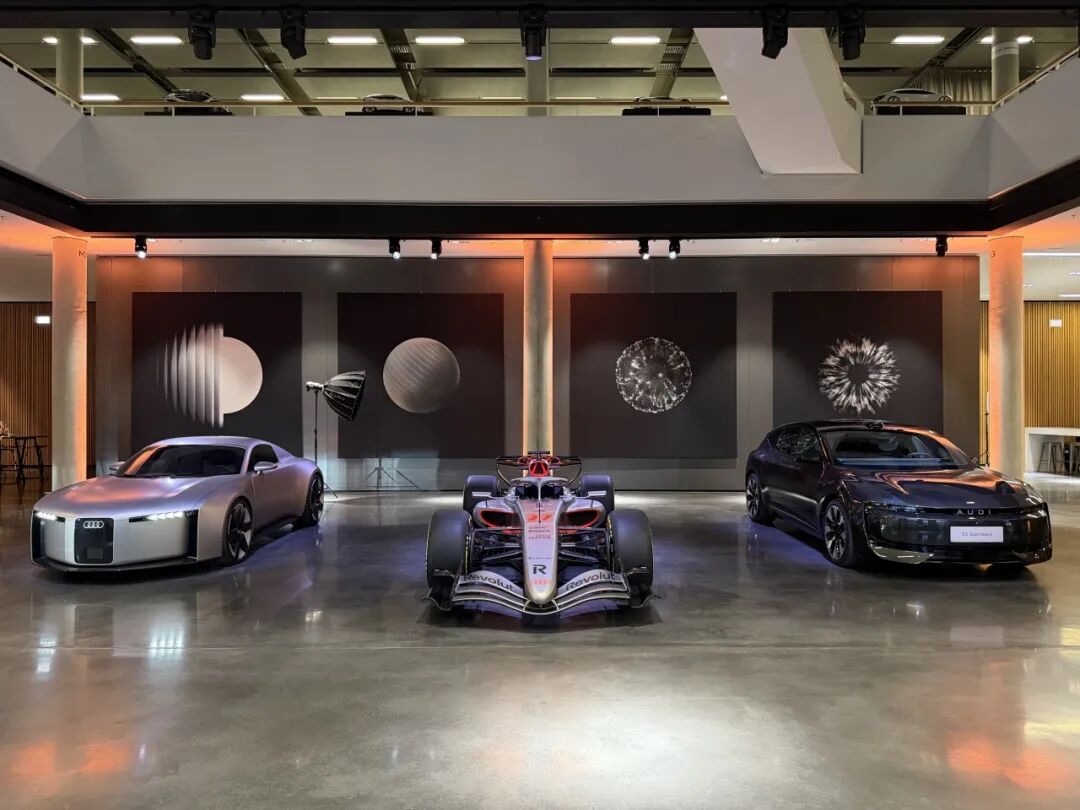
Figure 4: Audi's Ingolstadt headquarters showroom
What's even more interesting is the market's genuine reaction.
Why are these 'profit-seeking reseller' dealers willing to risk being sued by the parent company to bring vehicles like the E7X and E5 Sportback into Germany? Simply put, AUDI's product strength is so compelling that they're willing to take the gamble.
When parallel exported to Germany, the price nearly doubles compared to the domestic market, yet there are still buyers. A car that can motivate 'resellers' to transport it across oceans and sell it at a premium is itself the truest certification of brand strength.
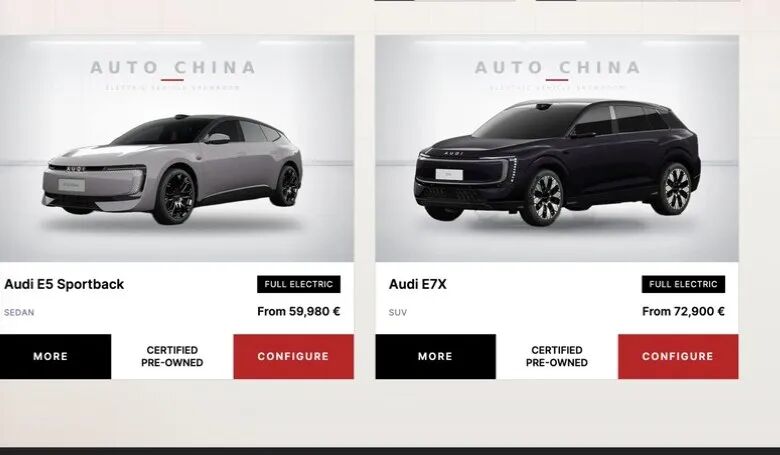
Figure 5: Prices displayed on Auto China's website: E5 Sportback starting at €59,980, E7X starting at €72,900
Ultimately, this is just a microcosm of China's new energy vehicle export boom in recent years. 'Profit-seeking resellers' are selling China's excellent electric vehicles overseas and reaping substantial profits. Foreigners are also eager to try these vehicles, even without official warranties and with many intelligent features unusable overseas—halving the experience—they still think Chinese cars are great. People in Germany who have test-driven these vehicles also speak highly of them. China's new energy vehicles have a truly solid foundation.
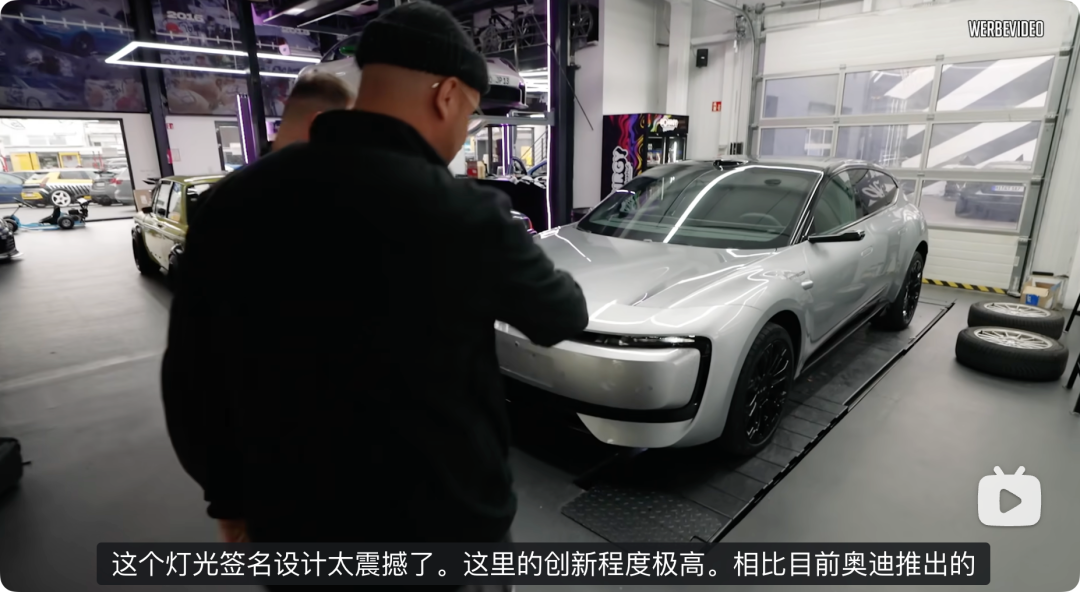
Figure 6: German tuning media JP Performance explores the Audi E5 Sportback locally, praising its light signature design
The Lawsuit Isn't About Disowning; It's About Taking Responsibility
Finally, let's discuss Audi's lawsuit.
Many people focus on the word 'sue' but don't consider why Audi is taking legal action. Parallel imported vehicles lack official after-sales support. Who takes responsibility if consumers buy these cars and encounter problems?
Audi's move is precisely to protect the rights of German consumers. This is what a responsible company should do—it's not about 'disowning AUDI.'
Audi takes consumer responsibility seriously. It has also made substantial investments in SAIC Audi.

Figure 7: Schematic diagram of Audi's Innovation Technology Center
Audi's Innovation Technology Center has been established in Shanghai, marking Audi's first overseas intelligent electric technology center. Already registered and set to open soon, it will launch multiple products based on the second-generation ADP platform, with L3 autonomous driving first appearing on AUDI models. The global headquarters is betting its core technologies and resources on China, which is the strongest endorsement for AUDI.
SAIC Audi, in turn, extends this responsibility to every vehicle owner. It provides full lifecycle exclusive technical and service support to Audi's global standards. This November, it will also hold the first AUDI Day with owners. From product to service, from technology to rights, SAIC Audi puts 'responsibility' into practice.
While short-lived rumors may influence public sentiment, the market and consumers voting with their wallets are perhaps what truly deserve attention. After all, battle reports can deceive, but battle lines don't lie.
Audi is taking responsibility for every consumer in its own way. What this controversy should ultimately leave behind is not a sensational headline but a responsible company and an excellent product that has proven itself through sales.
Produced by | Kanche China
-
![]()
Why Has CATL Reached This Point?
-
![]()
Tuopu Group Sees 10% Revenue Growth, But Profits Decline by 21%: Robot Business Contributes Just 14.0477 Million Yuan
-
![]()
Shenzhen Announces Procurement Results for 2,036 Buses: BYD, Nanjing Golden Dragon, and ZTE Secure Contracts
-
![]()
Behind 'Audi Sues Audi': Profiteers Flock to Germany, Rumors Stay in China
-
![]()
Seres' Stock Price Soars for Five Straight Days: Is Investor Confidence Rising Over AITO Brand Control?
-
![]()
Porsche’s Winter Deepens: Another 4,100 Jobs to Be Cut Amid Worsening Conditions
-
![]()
26 New Models Launch in 'Golden September', Automotive Market Hits Late-Month High
-
![]()
JAC Motors Hits Price Ceiling, Leverages Huawei to Step into the 'Post-Seres' Era