Audi Headquarters Restricts AUDI Models from Entering Germany? The Issue Stems from Parallel Imports, While the Global Rise of Chinese Tech Remains Unstoppable
 09/24 2026
 325
325
From Parallel Exports to Official Re-imports: A Shifting Landscape
Has Audi headquarters truly barred the sale of new energy vehicles bearing the SAIC Audi's AUDI brand in Germany?
According to foreign media reports, Auto China, a German parallel importer, sourced two all-electric models, the E5 Sportback and E7X, under the SAIC Audi's AUDI brand from China. After securing the necessary certifications in Germany, the company commenced sales on its official website.
Subsequently, Audi took legal action and issued a warning letter to the parallel importer, demanding that the shipment of models be halted from entering the German market via unofficial channels. Consequently, these two models were promptly removed from the parallel importer's official website.
However, this incident does not imply that Audi headquarters has banned the sale of AUDI brand new energy vehicles in the German domestic market.
The rationale behind Audi headquarters' move to prevent this batch of vehicles from entering the German market is that the parallel import dealers lack official authorization from the AUDI brand for import and sales. Moreover, Audi dealers in Germany lack the maintenance capabilities for AUDI models. Models entering the German market through unofficial channels cannot be integrated into the official after-sales system, ultimately compromising consumer rights.
This incident has recently continued to escalate in China's domestic online public opinion arena, eventually prompting denials from Xie Shiqi, the head of SAIC Audi, and Audi China.
So, why did this incident escalate? Why did a corporate action in distant Germany spark such significant discussion in China?
Audi vs. AUDI: A Major Misconception
Let's first delve into the responses from Audi China and Xie Shiqi, the head of SAIC Audi.
Audi China clarified in its response that the relevant foreign media reports were indicating that 'the Audi dealer network in Europe cannot provide after-sales service support for parallel-imported AUDI vehicles entering the European market without official backing, rather than a lack of recognition for the brand.' It also emphasized that 'the AUDI brand is a new all-electric brand established by Audi in China and is a crucial pillar of Audi's dual-brand strategy.'
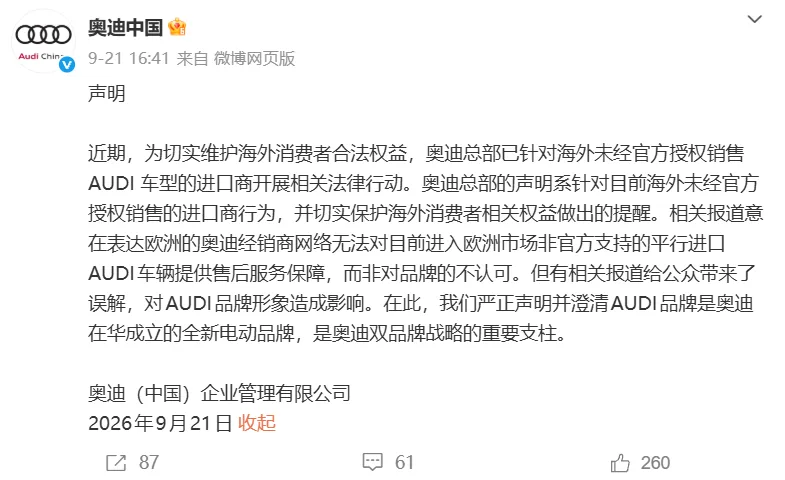
(Image Source: Audi China)
Xie Shiqi's response directly addressed the core of this public sentiment, which is the domestic lack of recognition and even opposition to the AUDI brand.
He stated, 'On the day of the pre-sale of the first model, the E5 Sportback, it became entangled in a series of interconnected public opinion discussions,' and bluntly remarked, 'True strength does not require verbal disputes; the strength of the product is the best response.'
From both Audi China's and Xie Shiqi's responses, it is clear that this wave of public opinion regarding Audi headquarters prohibiting parallel importers from selling AUDI models in Germany has transformed from a specific incident into a minor public frenzy, attempting to declare that Audi headquarters does not recognize the AUDI brand and that the AUDI brand is not a genuine Audi.
In fact, such public opinion has persisted since the official announcement of the AUDI brand. The reasons for this public opinion boil down to two points: one is that the AUDI brand does not use the four-ring logo, and the other is that AUDI employs SAIC's electronic and electrical architecture instead of Audi's own.
In the eyes of these individuals, an Audi that neither bears the four-ring logo nor utilizes its own technology cannot be considered a genuine Audi.
So, is a joint venture brand that leverages domestic three-electric technologies to establish a new brand truly inferior in the eyes of some people?
Who Claims Using Chinese Technology Makes You Inferior?
In reality, automakers utilizing non-self-developed platforms to produce vehicles or sourcing core components from other brands for their own models is not a phenomenon unique to the new energy era, nor is it exclusive to the Chinese market.
For instance, the first-generation Mercedes-Benz Vito V280, launched in 1997, utilized Volkswagen's VR6 engine. Starting in 2010, Mercedes-Benz also forged a comprehensive strategic cooperation with Renault-Nissan, with some of its A-Class and B-Class models equipped with engines jointly developed with Renault.
Even the fifth-generation GR Supra, highly regarded by many JDM enthusiasts, was developed on a rear-wheel-drive sports car platform jointly created by Toyota and BMW, sharing its architecture with the third-generation BMW Z4 and equipped with a BMW engine.
This demonstrates that cooperation between automakers, leveraging each other's technologies to produce core components or even entire vehicles, has a long-standing history. Why is it deemed unacceptable when it comes to Chinese technology?
In fact, these individuals' judgment of the AUDI brand essentially reflects a lack of recognition for China's new energy industry, believing that Chinese new energy vehicle technology is not up to par and cannot uphold the status of a luxury brand.
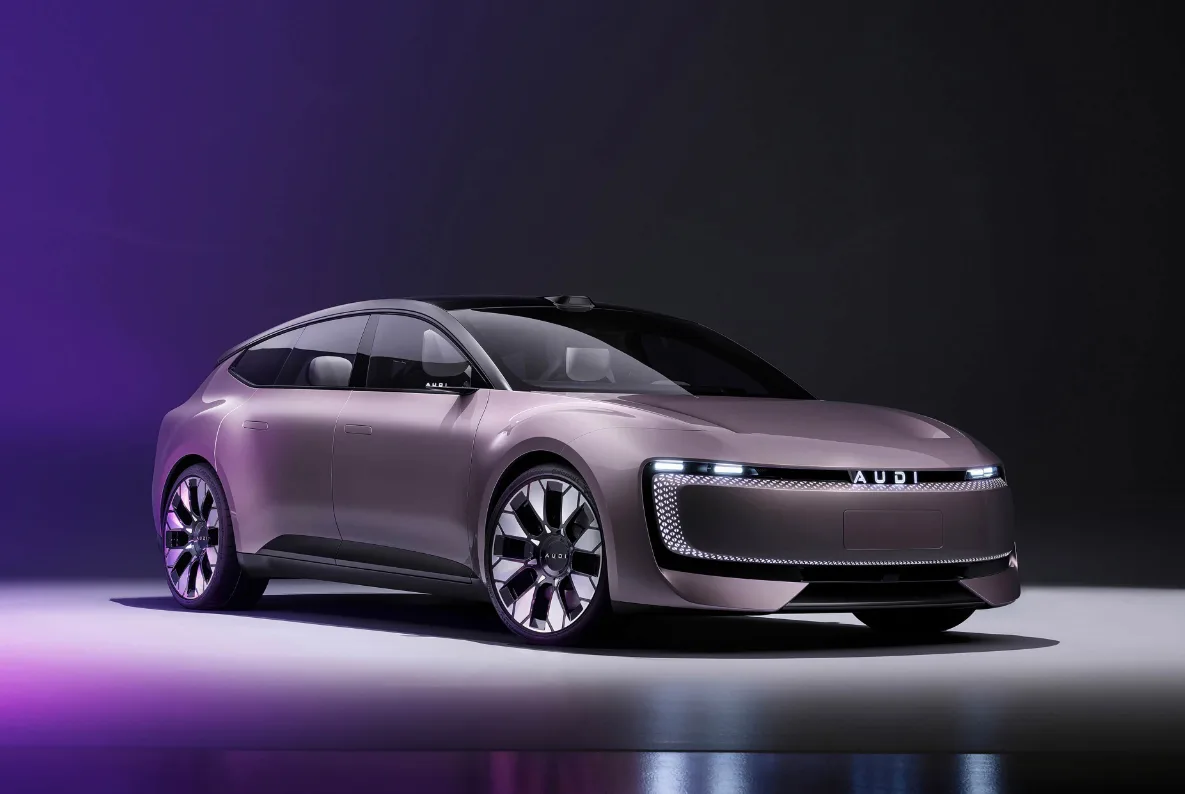
(Image Source: AUDI)
But is this truly the case?
We can examine luxury automakers that have recently embraced Chinese three-electric technologies, such as the smart brand resulting from the cooperation between Mercedes-Benz and Geely, and the Discovery Sport resulting from the cooperation between Chery and Jaguar Land Rover. In terms of intelligent assisted driving, FAW-Audi has also equipped several models with Huawei's assisted driving solution, while Mercedes-Benz and BMW have also incorporated Momenta's assisted driving technology in their new models.
Since luxury automakers are willing to actively embrace various new technologies from China, let alone mainstream brands like Toyota, Nissan, and Volkswagen.
Returning to the public opinion surrounding the AUDI brand this time, Xie Shiqi stated in his response, 'Audi's global headquarters not only fully embraces the AUDI brand but also regards it as the core of its electrification and intelligent transformation.'
In other words, the scenarios conjectured in this public opinion, such as Audi not recognizing the AUDI brand, are actually figments of some people's imagination due to their disdain for domestically produced three-electric technologies and their aversion to the new Audi brand without the four-ring logo. The actual situation is precisely the opposite of the online rumors.
However, this minor friction between Audi headquarters and parallel importers seems to have provided us with some insights: Why can't joint venture new energy vehicles produced in China be re-imported into the European market?
From Parallel Exports to Official Re-imports: A New Trend
In fact, Audi's prohibition of parallel imports of the AUDI brand into the European market is not the first instance of Volkswagen Group issuing a ban on parallel imports for models produced by the group in China.
As early as 2022, a German parallel importer procured 22 FAW-Volkswagen ID.6 CROZZ models and planned to sell them locally in Germany after completing relevant certifications.
Since the ID.6 series is a model exclusively supplied to the Chinese market and not sold in Europe, Volkswagen Group requested a ban on the sale and destruction of these models on the grounds of trademark infringement and design patent infringement. Ultimately, the court upheld this request.
From the ID.6 CROZZ to the entire AUDI brand, Volkswagen Group has actually been intervening in the parallel exports of Chinese-made vehicles to Germany in various ways.
As for why Volkswagen Group takes such actions, besides the apparent reasons of lacking corresponding authorization and being unable to enjoy warranty services, there is a more core factor: the price disparity between China and Europe.
Taking the ID.6 CROZZ, which was banned from sale in the European market that year, as an example, the price of the domestically produced ID.6 at that time was equivalent to approximately €25,000 to €30,000, while the price of a comparable all-electric Volkswagen model in Europe was close to €60,000. This means that even after adding various fees and sales profits during the parallel import process, these parallel-imported vehicles to Europe would still be highly competitive.
The same applies to the two AUDI models. The manufacturer's suggested retail price for the E5 Sportback starts at ¥235,900, while the E7X ranges from ¥269,800 to ¥359,800. At these prices, parallel exports to the European market would also be highly competitive.
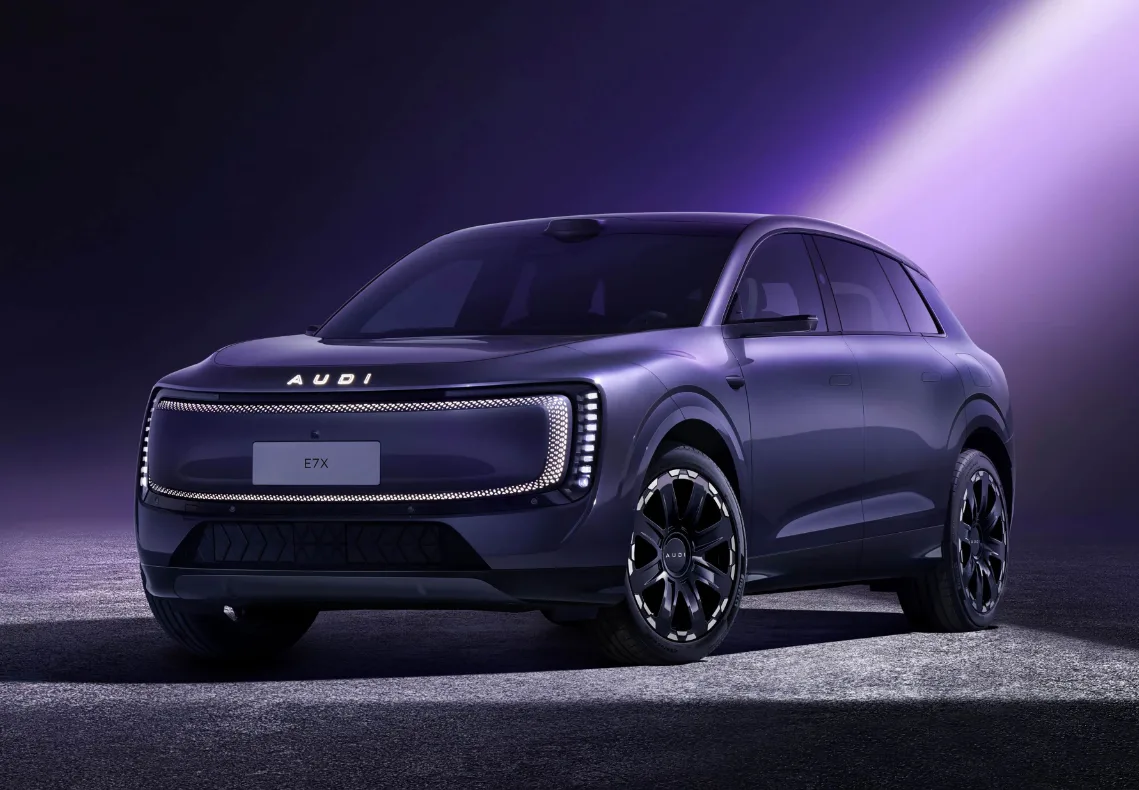
(Image Source: AUDI)
This reminds Dianchetong (ID: dianchetong233) of the era of fuel vehicles when various luxury models from foreign brands were sold in China through parallel imports.
Back then, a large number of high-end models were parallel-imported into China because domestic automakers could not produce high-end luxury models, and official imports faced issues of limited quantity and high prices, thus spawning a large parallel import business.
Now, a large number of new energy vehicles produced in China are being parallel-exported overseas because these regions cannot produce cost-effective new energy vehicles like China, thus also spawning a large parallel export business.
From a large number of parallel-imported luxury cars to a large number of parallel-exported new energy vehicles, this reflects China's leadership in new energy technology and experience.
However, at the same time, the compliance risks of parallel exports have not been eliminated. Situations similar to the ban on the ID.6 CROZZ and AUDI brand models may recur in the future.
Therefore, for these brands developing localized new energy product lines in China, instead of obstructing parallel exports, it would be wiser to attempt to re-import some of the new energy vehicles produced in the Chinese market back to their home markets through official channels. This would be advantageous for the brand itself, its joint ventures in China, and local consumers.
Perhaps in the future, European brands, Chinese R&D, and global sales will become one of the mainstream models in the new energy vehicle industry.
Source: Leikeji
Images in this article are from the 123RF royalty-free image library. Source: Leikeji
-
![]()
Why Must Autonomous Driving Testing Transition from Open-Loop to Closed-Loop?
-
![]()
Two Days, 15 Product Launches: What Is the Auto Industry Really Vying For?
-
![]()
From a $200,000 Premium to a $300,000 Discount: The Porsche Cayenne's Price Drop Signals More Than Just a Sale
-
![]()
Priced from 197,900 Yuan, the IM LS6 Makes Waves! 11,000 Orders in Just One Hour with Standard Wire-Controlled Steering
-
![]()
Leadership Reshuffle at Chery: Zhang Guibing Steps Up, Zhang Guozhong Shifts to Holding Group
-
![]()
Audi Headquarters Restricts AUDI Models from Entering Germany? The Issue Stems from Parallel Imports, While the Global Rise of Chinese Tech Remains Unstoppable
-
![]()
Xiaomi 18 Pro Max First Look Review: Standing Out with Unmatched Imaging Capabilities, Making the Leica Logo Almost Redundant
-
China’s Commercial Rockets: The Rise of a ‘Second-Tier Player’