Xiaomi 18 Pro Max First Look Review: Standing Out with Unmatched Imaging Capabilities, Making the Leica Logo Almost Redundant
 09/24 2026
 334
334
Xiaomi never follows the crowd.
Over the past few years, Xiaomi's flagship digital series has consistently taken a 'differentiated route.' While competitors were fully engaged in developing all-rounder devices, Xiaomi focused heavily on imaging; when everyone else was intensely competing in the imaging space, Xiaomi began exploring 'personalization,' introducing the 'Wonderful Rear Display' with the Xiaomi 17 Pro series.
Opinions on this rear display were quite polarized. Some found it interesting, using it for selfies, displaying favorite wallpapers, or generating various cute pets; however, others felt it was a waste of battery, an attempt to force differentiation for the sake of being different, with low practicality once the novelty wore off.
(Image source: Leitech)
As the second-generation phone featuring the 'Wonderful Rear Display,' what new tricks does the Xiaomi 18 Pro Max have up its sleeve? Has the practicality of this rear display truly improved? Here's Leitech's (ID: leitech) experience sharing.
The Rear Display is Now 'Flatter' and More User-Friendly
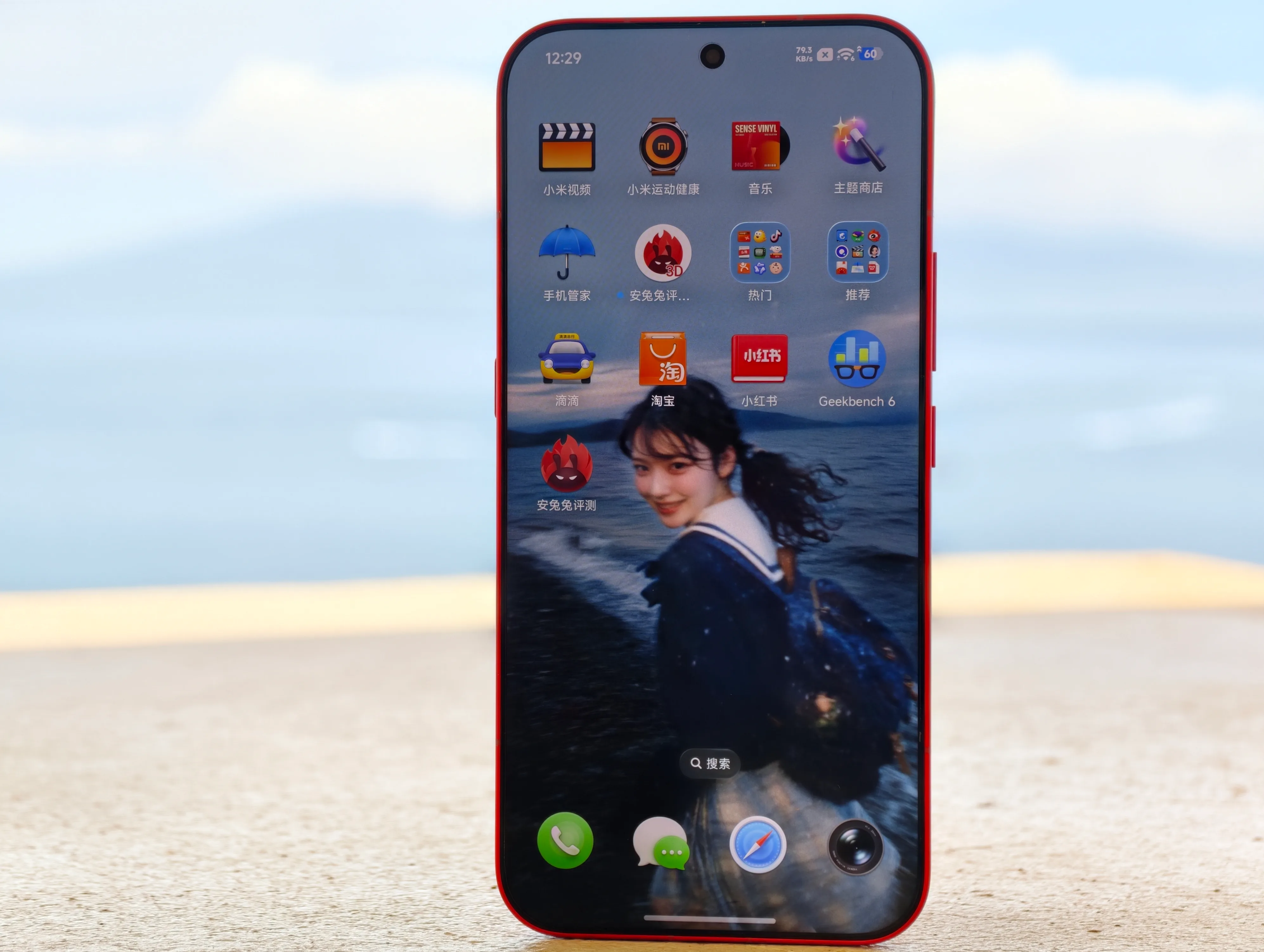
Looking only at the front, the Xiaomi 18 Pro Max is still a very standard 2026 Android flagship: flat screen, straight-edged mid-frame, extremely narrow bezels all around, with the border (Note: ' border ' means 'bezels' or 'frame edges'—context suggests retaining as 'frame' for clarity) further narrowed to 0.99mm this time. The 6.9-inch screen with a 19.6:9 aspect ratio appears almost entirely as a screen from the front.
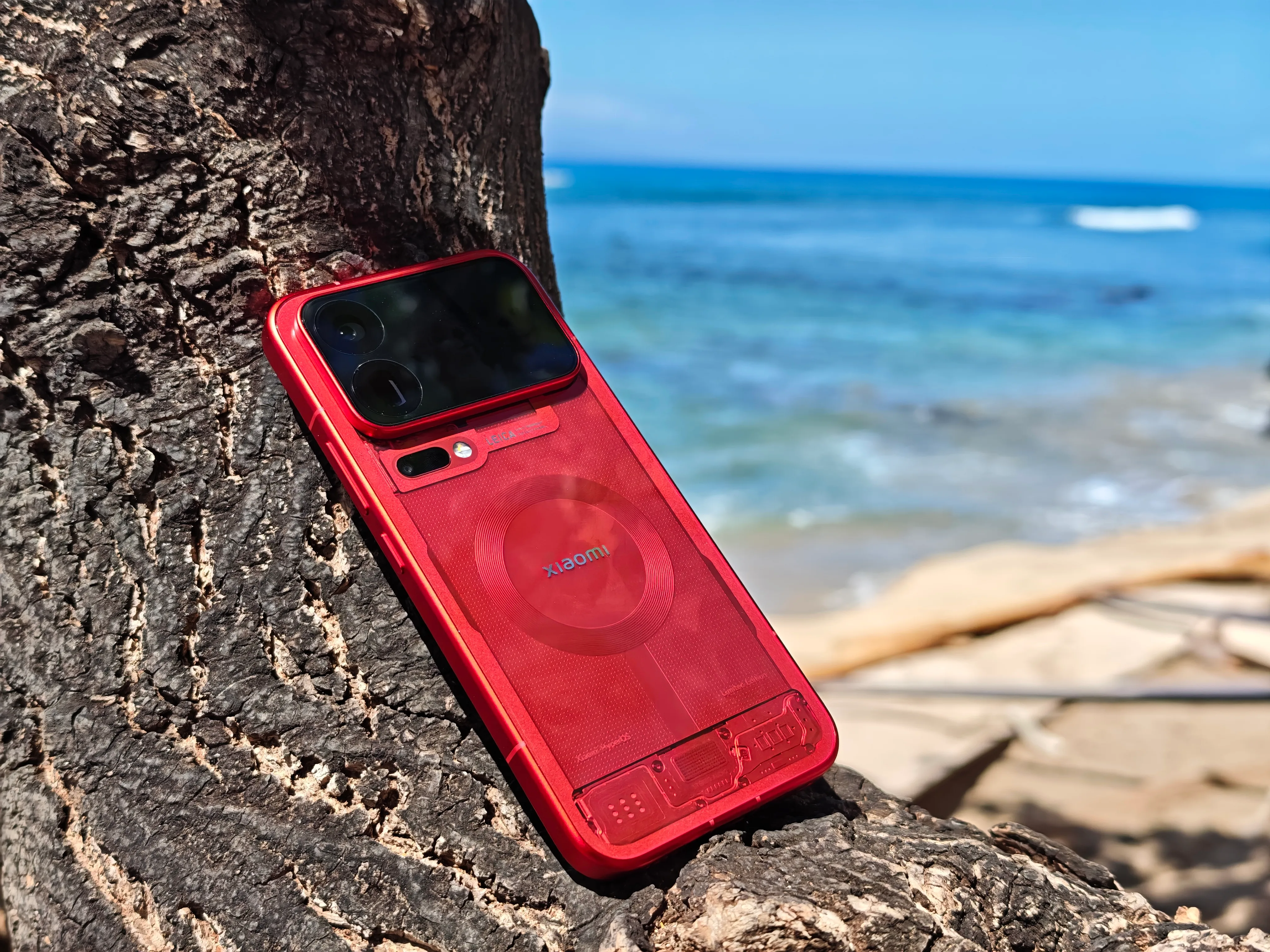
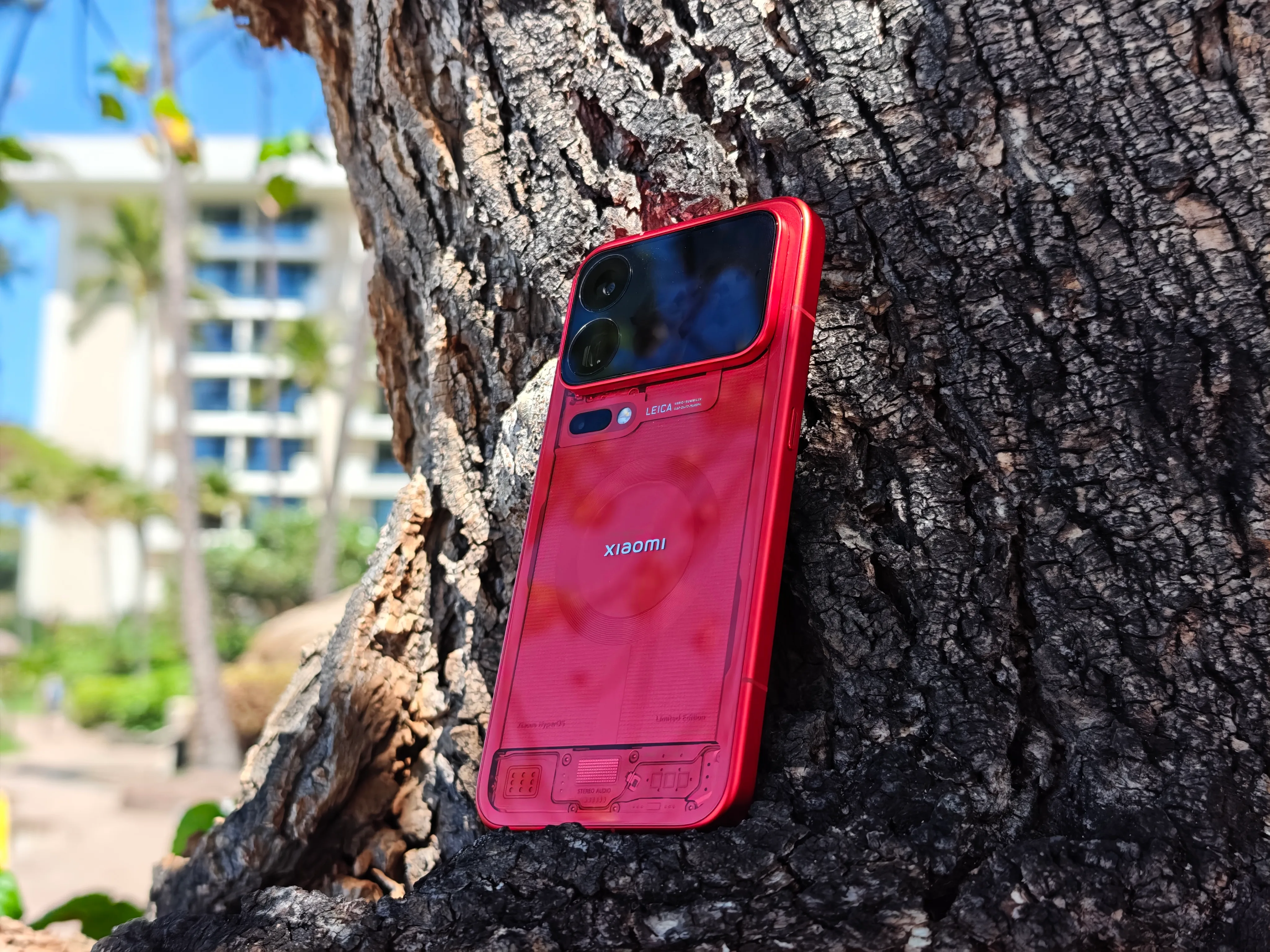
This time, I got the Transparent Explorer Edition. Xiaomi has been quite bold with its color choices this time around. The pure red body paired with a transparent glass design is quite eye-catching in hand, even reminding me of the high-saturation colors of Xiaomi's cars at first glance.
In terms of feel, the Explorer Edition in my hand weighs around 240g, not exactly lightweight, but fortunately, the body thickness is still controlled at around 8.39mm. It hasn't become a 'brick' due to the inclusion of an 8500mAh battery, feeling heavy but not unwieldy.
(Image source: Leitech)
However, its biggest change lies in the rear display. While the Xiaomi 17 Pro Max already combined the rear display with the camera module, the two cameras still had noticeable protrusions, visually emphasizing the 'lens + screen' combination. The Xiaomi 18 Pro Max, on the other hand, directly 'embeds' the two lenses into the glass. Although this makes the entire camera Deco look much thicker, the back does appear cleaner after integration.
On one hand, there are fewer height differences between the rear display and lenses, significantly improving the Deco's completeness. On the other hand, the issue of dust accumulation on the edges of the previous generation's lenses is also conveniently solved. The phone is also more stable when placed flat on a table, not turning into a 'seesaw' due to the large lens protrusion.
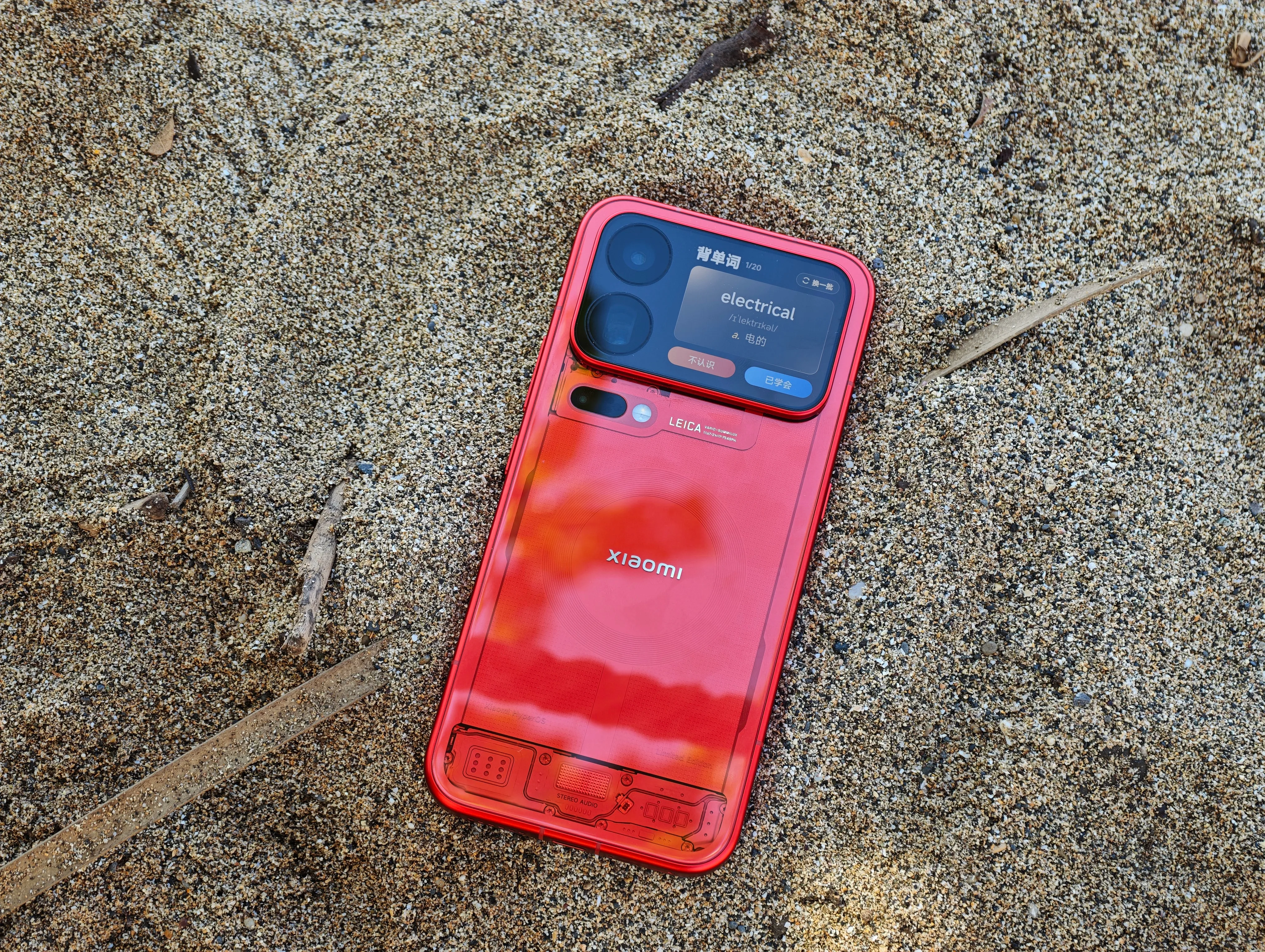
The quality of this rear display is quite impressive: 976×596 resolution, 400PPI, supporting 1-120Hz refresh rate and 4000nit peak brightness, far surpassing those small windows on the market that can only show time and notifications.
The Rear Display as a Second Desktop: Convenient for Notifications
But as a rear display, screen quality is secondary; the most important aspect is the unique experience it brings. Last year's Xiaomi 17 Pro Max already provided a satisfying answer, but Xiaomi believes these practical scenarios are far from enough.
The biggest change in this generation's Wonderful Rear Display is that Xiaomi has started transforming it from a 'display window' into a 'second desktop': when the phone is placed face down on a table, there's no need to flip it over to unlock the main screen; you can directly view information or complete simple operations. Compared to the previous generation's focus on wallpapers, cute pets, and selfie framing, this direction is clearly more practical.
After all, many times we pick up our phones not to 'play with them' but just to check messages, change songs, or see the progress of an app. If these trivial tasks can be completed directly on the back, the meaning of the rear display is no longer just to increase recognizability.
(Image source: Leitech)
Of course, this experience might initially seem a bit puzzling: the main screen is on the other side, so why not just flip the phone over? Personally, I habitually place my phone face down on the table while working to minimize distractions. However, when messages arrive, I have to flip the phone over one by one to check them. The existence of the rear display solves this problem, even more intuitively than a smartwatch worn on the wrist.
Therefore, compared to the previous generation, my evaluation of the Wonderful Rear Display is much higher this time. The previous generation felt more like Xiaomi proving that 'an extra screen on the back of a phone is indeed useful,' while this generation answers 'what else can this screen do besides differentiation.' Of course, I admit it's still not an indispensable feature, and its functions and ecosystem need further expansion, but at least it's not something forgotten once the novelty wears off.
The Front Screen Doesn't Focus on Specs, but the 'Privacy' Effect Exceeds Expectations
After looking at the back, let's examine the front.
The Xiaomi 18 Pro Max features a 6.9-inch, 2624×1208 resolution Super Pixel 2.0 screen, using M11 luminescent material, supporting 1-120Hz LTPO, 4000nit peak brightness, and full RGB arrangement. However, to be honest, screen parameters for flagship phones have generally reached this level in recent years, with similar display effects across the board. Therefore, Xiaomi has introduced the 'Intelligent Privacy Screen' for further differentiation in this generation.
(Image source: Leitech)
Preventing phone snooping has long been a challenge in the industry, but privacy films sold on the market not only reduce screen brightness and viewing angles but also make the screen look dull even when viewed head-on, effectively downgrading a 2K resolution screen to 1080P. Users are often forced to choose between display quality and privacy protection.
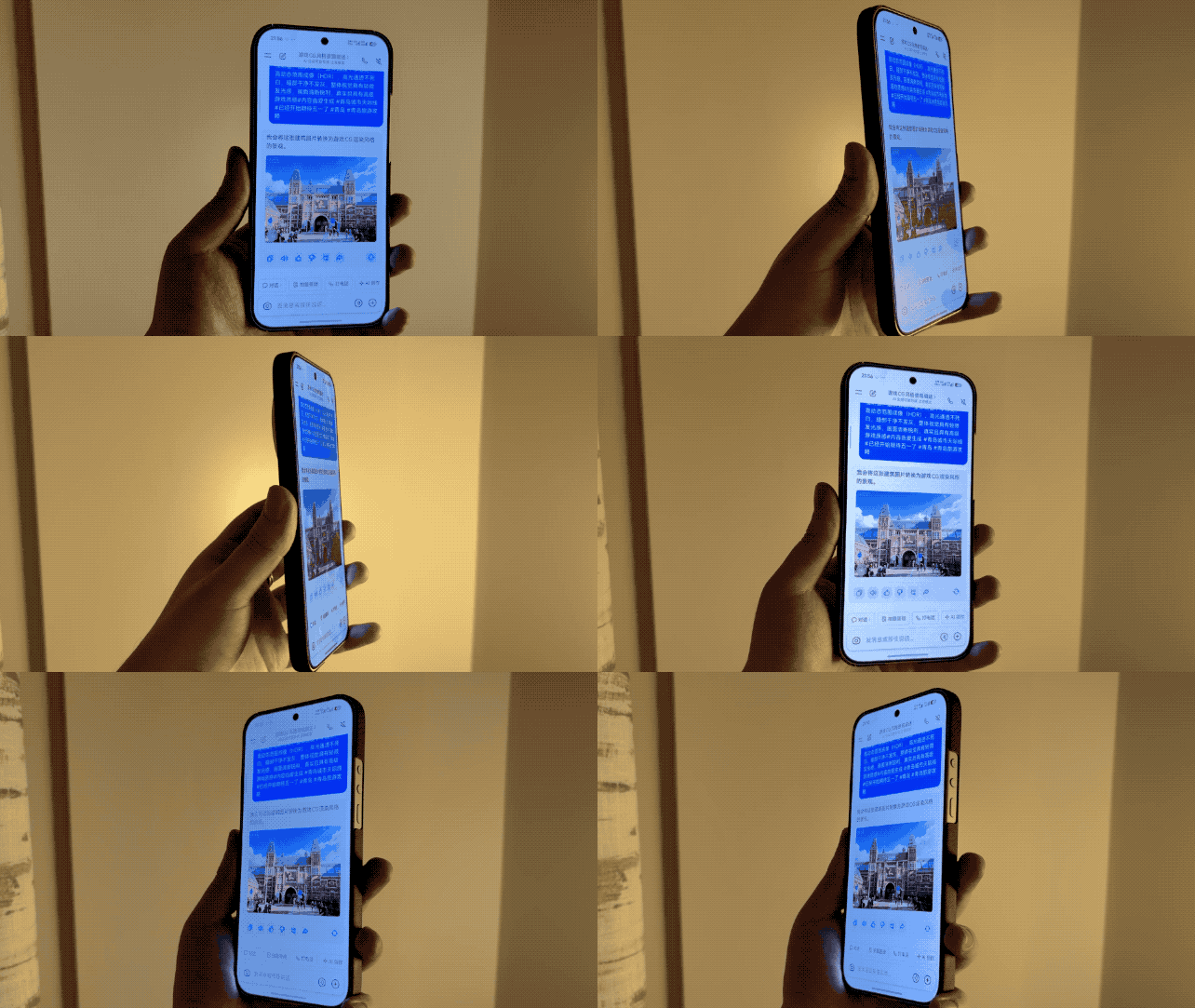
The Xiaomi 18 Pro Max, however, chooses to tackle the issue directly from the screen structure. It incorporates a light-limiting structure within some pixels, dividing them into regular pixels and privacy pixels. During normal use, all pixels light up together, so the front display is not much different from an ordinary screen. When privacy mode is activated, the system turns off the regular pixels, leaving only the privacy pixels with the light-limiting structure to work, significantly reducing side visibility angles. According to official data, when viewed from 45° on either side, the screen's lateral brightness can be reduced to below 3%.
This is also somewhat related to Xiaomi's Super Pixel 2.0, which uses a full RGB arrangement with complete red, green, and blue sub-pixels. Therefore, when privacy mode turns off some regular pixels, the remaining pixels can still independently complete RGB display, minimizing the impact.
I also conducted a real-world test. After activating the Intelligent Privacy feature, the brightness of the Xiaomi 18 Pro Max's gallery page when viewed from the sides drops sharply, allowing only a general outline to be seen without clarity on the actual content of the images. Of course, you can also add privacy-focused apps like WeChat, Alipay, and banking apps based on your needs.

(Image source: Leitech, Xiaomi 18 Pro Max)
(Image source: Leitech, Xiaomi 17 Ultra)
Interestingly, besides this straightforward 'privacy' mode, the Xiaomi 18 Pro Max can also automatically enable privacy for certain screen regions. For example, when a WeChat notification pops up, only the notification area enters privacy mode, while the rest of the content remains normally displayed. Moreover, in small window and split-screen modes, the privacy area can follow the window movement. Sensitive pages in some social and financial apps can also automatically trigger privacy mode, even allowing Super Xiaomi AI to automatically configure privacy strategies based on locations like companies and airports.
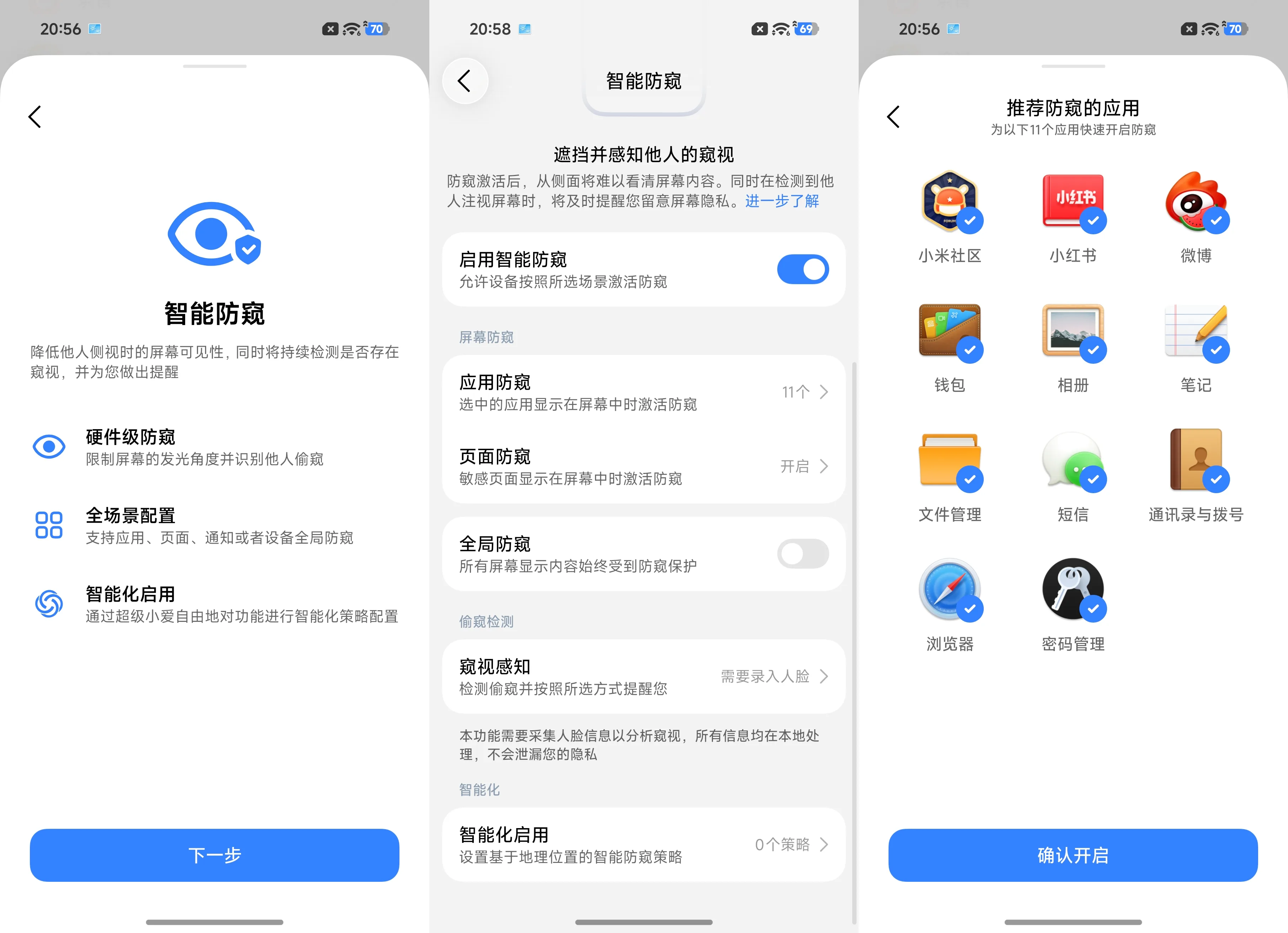
(Image source: Leitech)
However, I don't recommend enabling the global privacy option. While it keeps the phone in 'privacy' mode at all times, the display quality is somewhat affected, though not significantly, the difference is still perceptible.
Dual 200-Megapixel Imaging Combo: Pro Max Approaches Ultra's Level
For a long time, the Xiaomi 17 Ultra By Leica has been my primary device, simply because of its excellent photography: nearly flawless hardware configuration, highly recognizable Leica tones, and the famous Leica Moment. This generation's Xiaomi 18 Pro Max seems to want to compete with its older sibling.
The main camera of the Xiaomi 18 Pro Max is a 200-megapixel Light Hunter 960L sensor with a 1/1.28-inch photosensitive area, F1.67 aperture, and OIS support. The periscope telephoto lens is a 200-megapixel Samsung HP5 sensor with a 1/1.56-inch photosensitive area, 75mm equivalent focal length, and F2.4 aperture, also supporting OIS.
Another advantage of these two high-pixel sensors is the ample cropping space. This imaging system can cover several main focal lengths: 0.7x at 17mm, 1x at 23mm, 2x at 46mm, 3.2x at 75mm, 6.4x at 150mm, and 8.6x at 200mm. Moreover, multiple commonly used focal lengths support direct output of 25-megapixel photos.

(Image source: Leitech)
From a parameter perspective, Xiaomi's imaging combination aligns more with the current development direction of flagship phones than adding another independent medium telephoto lens: focusing on two large, high-pixel sensors for the main and telephoto lenses, with commonly used focal lengths in between achieved through cropping. This reduces the number of lenses and body weight while maintaining higher consistency in color and stability across the entire imaging system.
Let's start with daytime photography. The main camera of the Xiaomi 18 Pro Max performs excellently in terms of resolution and dynamic range in well-lit environments.
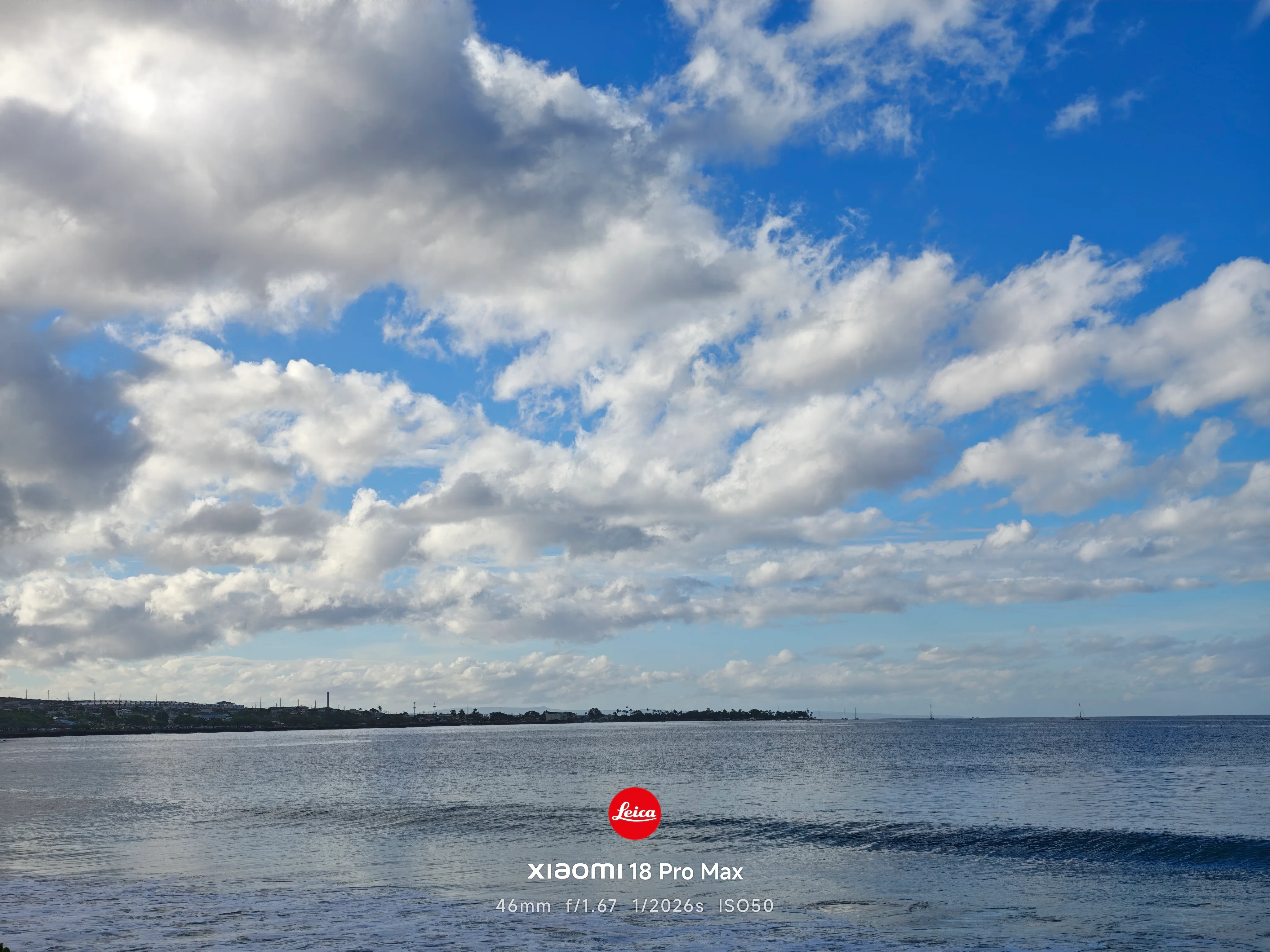

(Image source: Leitech)
For example, when shooting by the seaside, the sky and clouds are not overexposed, and the sea surface is not overly processed by the HDR algorithm to look unnatural, striking a balance between naturalness and aesthetics. However, I've always preferred not to use the default 23mm focal length and often switch directly to 35mm or 46mm to remove some cluttered edge information from the frame, making the subject more prominent.
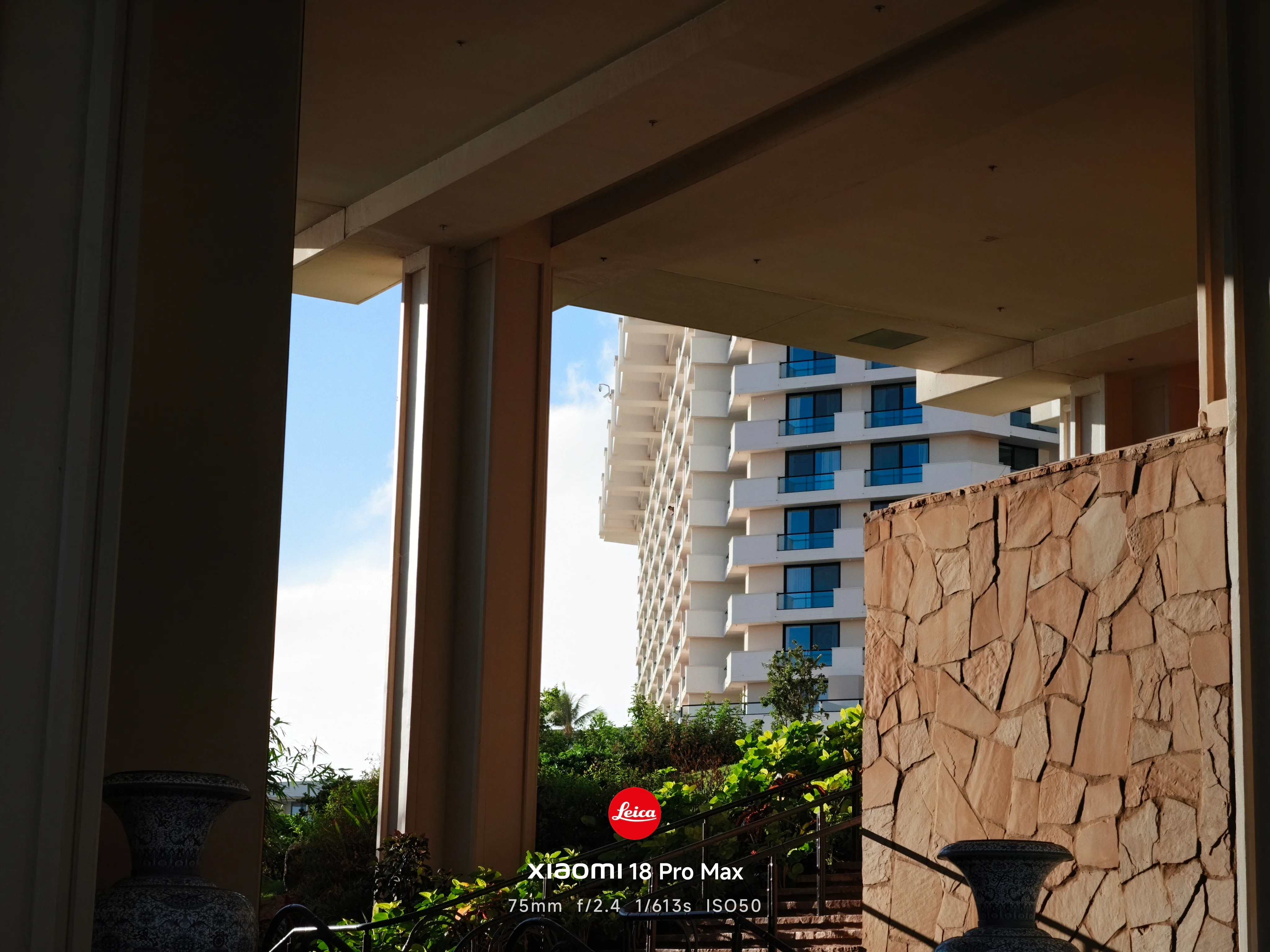
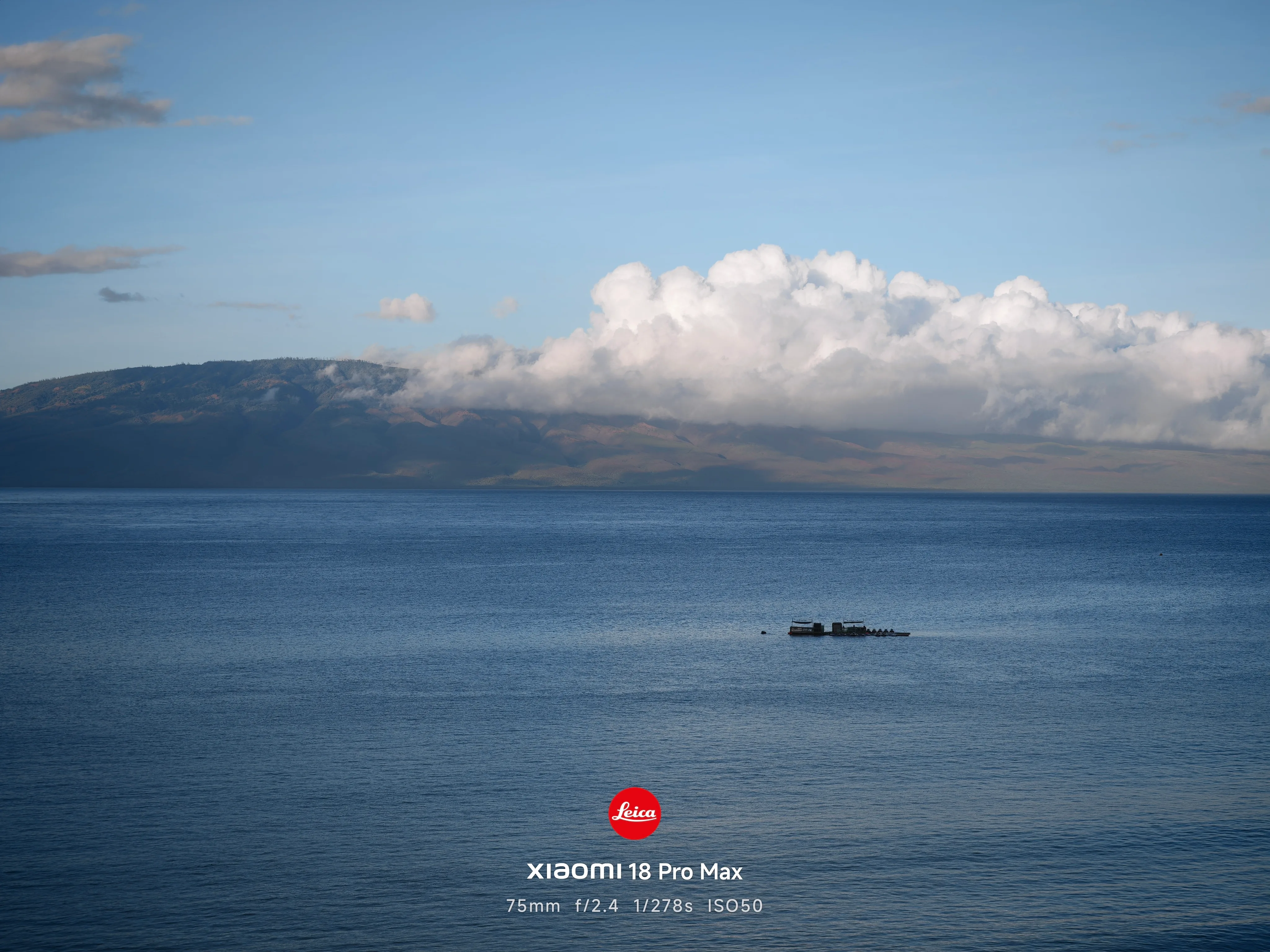
But my favorite is the 75mm lens, which is also the easiest focal length on the Xiaomi 18 Pro Max to capture great photos. It's not as scene-dependent as 120mm and can significantly compress space, making it great for shooting mountains, seascapes, buildings, and casual street photography.
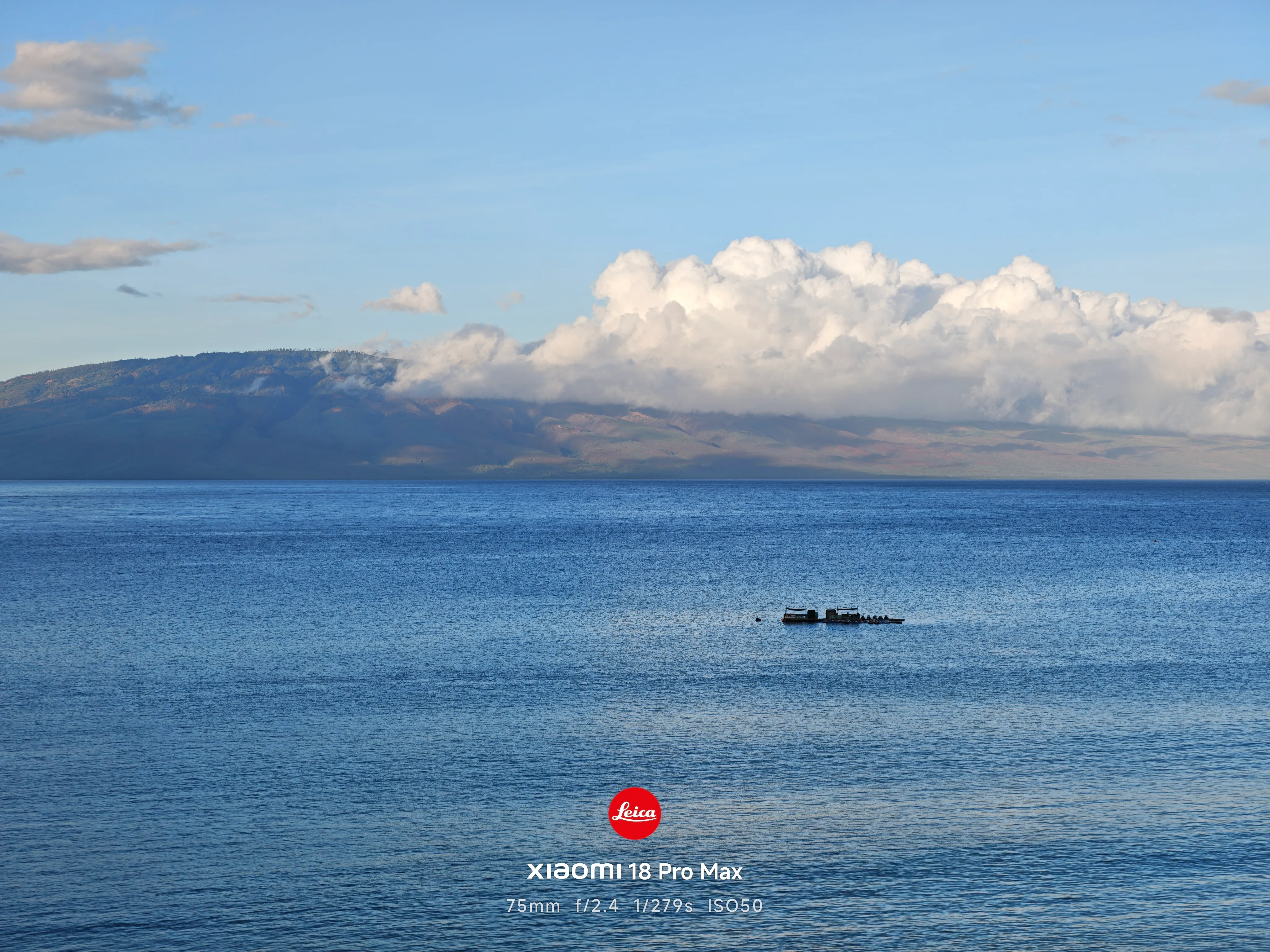
(Image source: Leitech)
For instance, in this sample photo, the texture of the distant mountains is still clear, the clouds have relatively complete shading, and the color of the sea surface does not affect the overall tone of the photo.
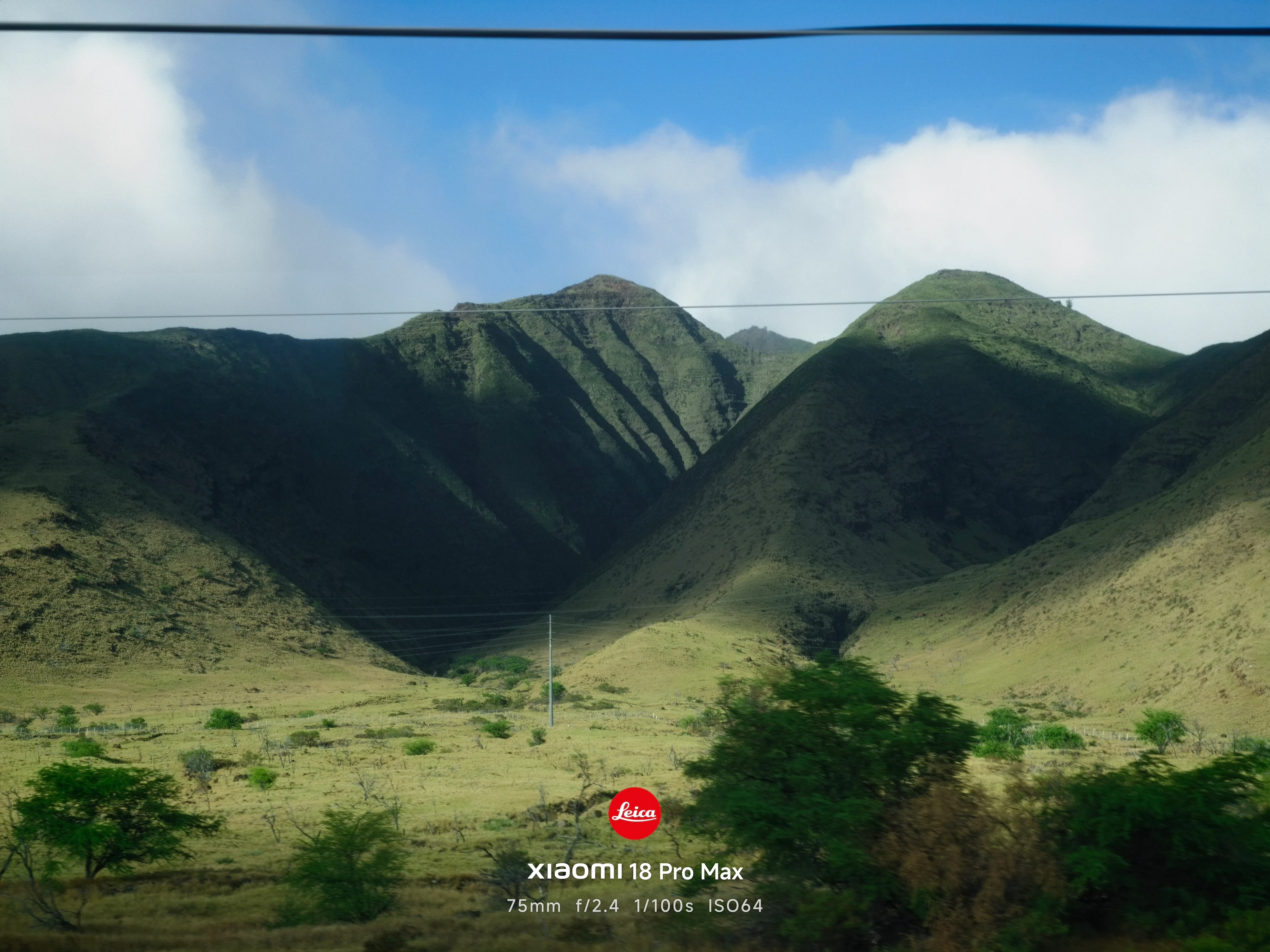
(Image source: Leitech)
In another photo, the sunlight only hits part of the mountainside, and the Xiaomi 18 Pro Max preserves the contrast between the illuminated and shaded areas of the valley very well, without excessive adjustments to the shadows, giving the mountains a more three-dimensional appearance.
(Image source: Leitech)
Of course, it doesn't completely forgo HDR; it just doesn't completely ignore the overall light-dark relationship of the photo just to make the 'dark areas' look more pleasing. This approach indeed makes it easier to capture great shots in naturally beautiful lighting scenarios.
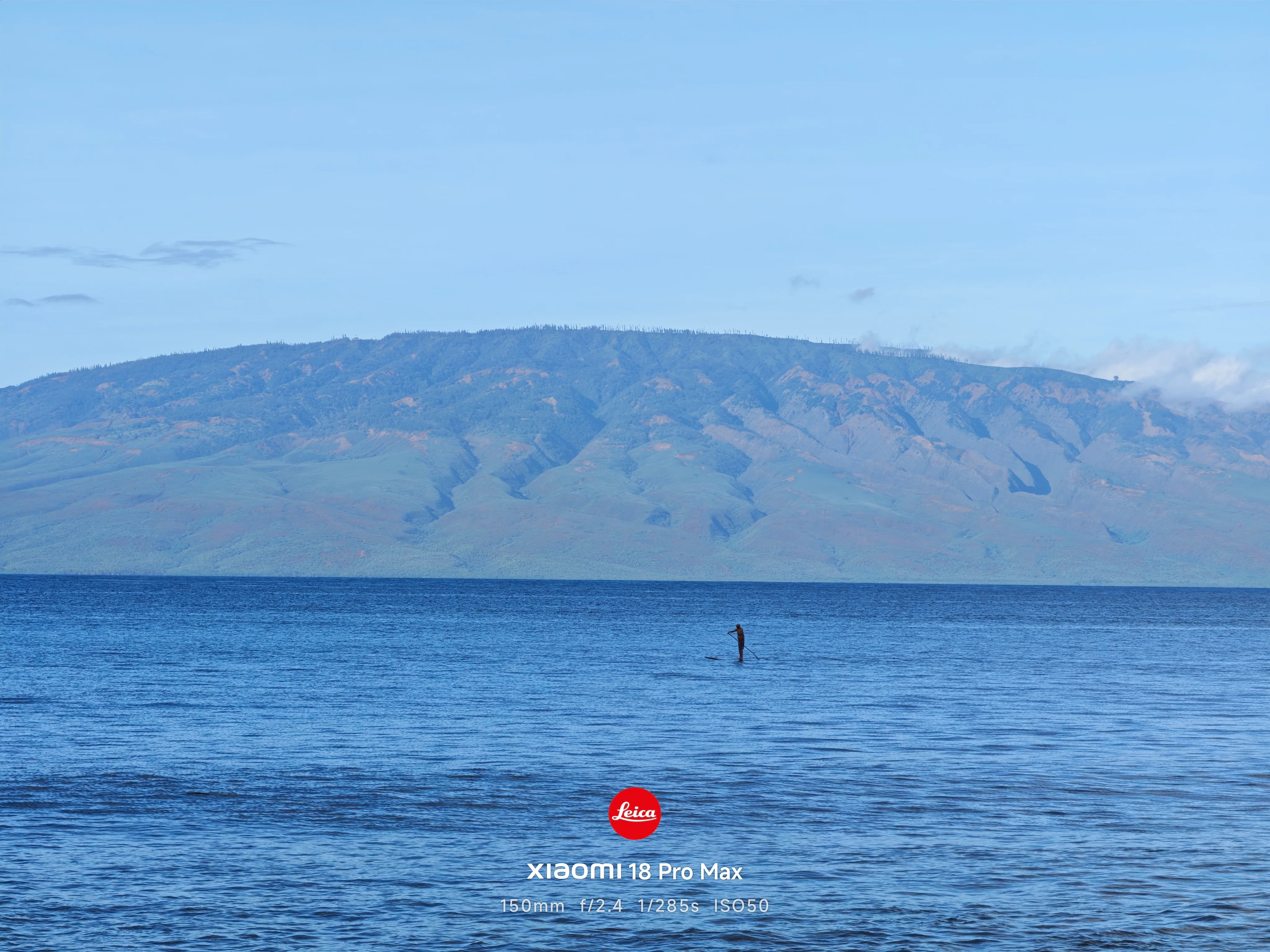
If the 75mm focal length is considered the most versatile, then the 150mm has been the biggest surprise for Xiao Lei in recent days. Some readers might wonder, isn't 150mm just a crop from 75mm? How can that be considered an upgrade? Indeed, it's not a standalone 150mm lens, but its actual performance exceeds Xiao Lei's expectations by a significant margin.

(Image source: Leitech)
Take this photo of someone paddling on the sea, for example. If shot at 75mm, the person might appear as just a tiny dot in the frame. Switching to 150mm instantly makes the person and the mountain in the background the focal points of the image. Combined with the distinct ridges and vegetation boundaries on the mountain, the photo gains a clear visual center.
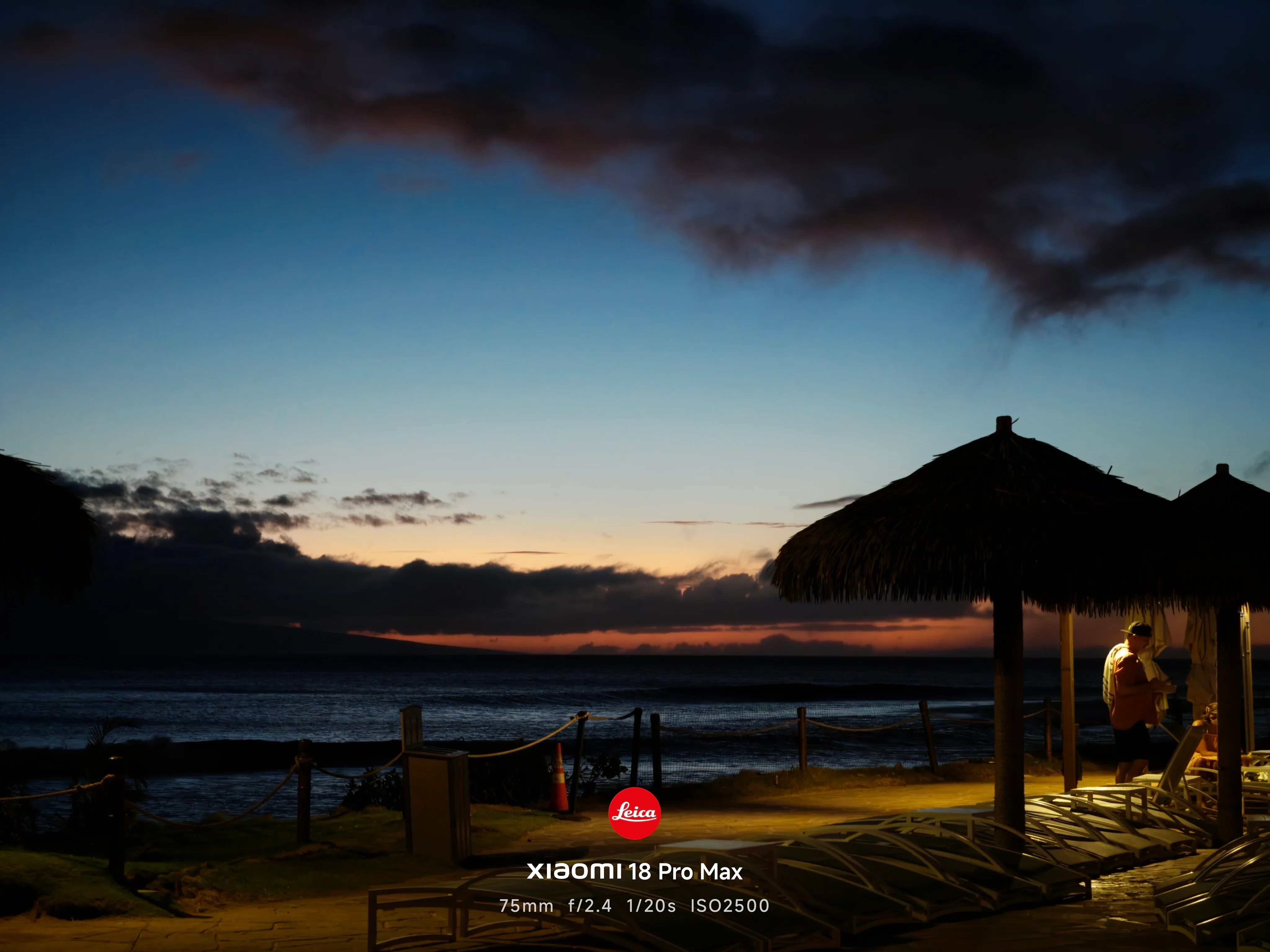
Hawaiian sunsets truly test a phone's dynamic range. Before the sun fully sets, the brightness difference between the sky, sun, sea reflections, and foreground is enormous. Poor handling can result in either the sun and sky being overexposed or the foreground becoming a black void.
(Image source: Leitech)
The Xiaomi 18 Pro Max doesn't artificially brighten the sea and buildings to showcase dynamic range. Areas meant to be bright remain bright, while dark areas stay dark, preserving the dusk atmosphere.
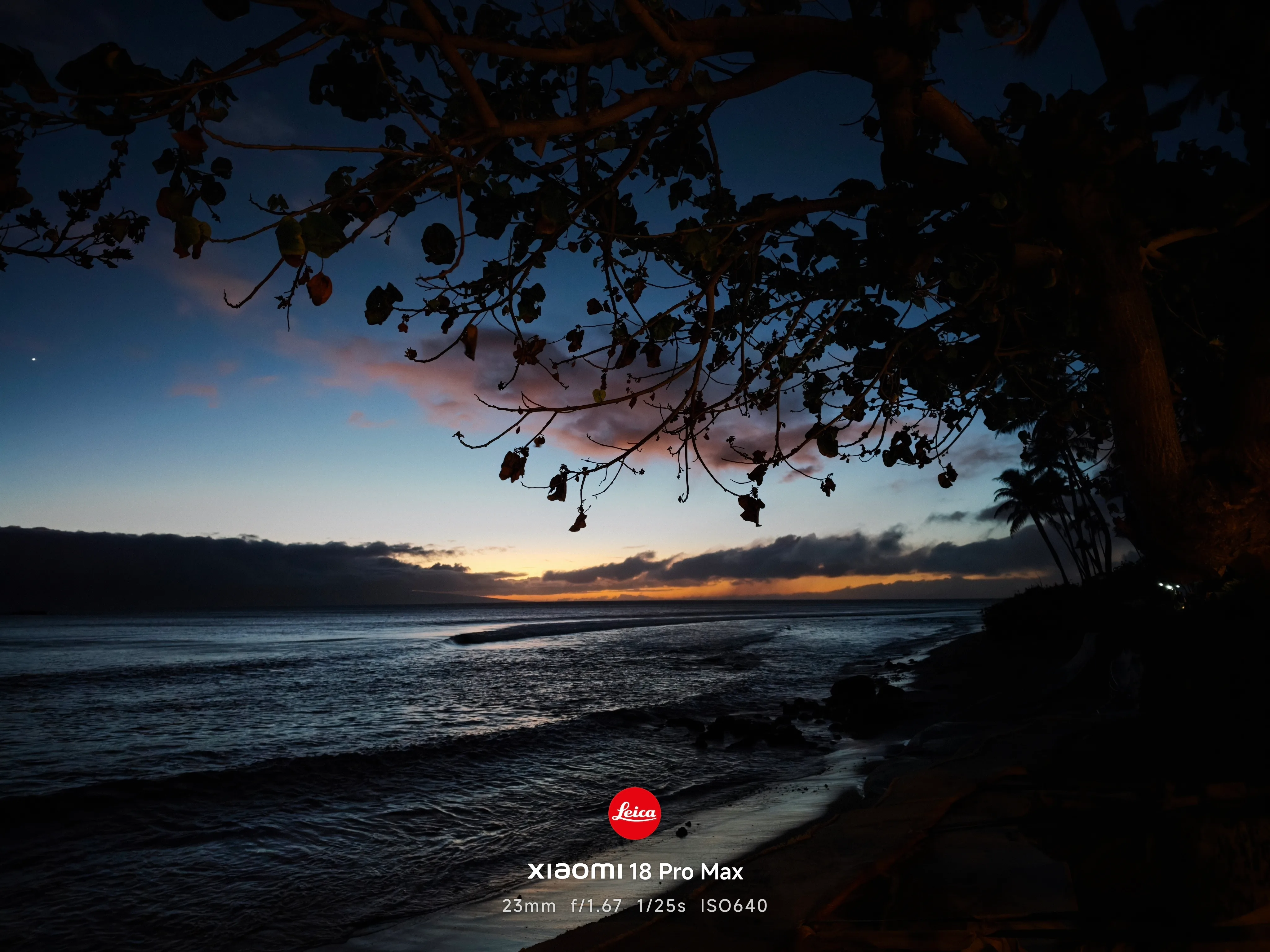
During the blue hour, the Xiaomi 18 Pro Max maintains the color gradient from deep blue to orange in the sky. While zooming in reveals noticeable loss of detail in shadows, it at least avoids turning night mode into a "night vision goggle" effect, achieving Xiao Lei's desired outcome.
(Image source: Leitech)
The Xiaomi 17 Pro Max once claimed to be the "King of Backlighting," and the 18 Pro Max continues this strength. Even when facing harsh artificial lighting that's almost blinding to the naked eye, Xiaomi perfectly controls highlights while preserving details in illuminated areas.

(Image source: Leitech)
Beyond hardware, Xiaomi continues refining its imaging style. The previous "Leica Classic" mode was designed around SDR displays, but with flagship phone screens getting brighter and HDR content more prevalent, unadjusted HDR highlights could eliminate tonal transitions in photos. Xiaomi's solution involves rebuilding a native HDR pipeline based on RGB Gainmap to preserve Leica Classic's emphasized tonal gradation and contrast on bright screens.
(Image source: Leitech, Leica Classic)

(Image source: Leitech, Leica Vivid)
(Image source: Leitech, Natural Color)
Oh, and the Xiaomi 18 Pro Max introduces a new "Natural Color" mode in its camera. This mode has little to do with the Leica aesthetic, instead aiming to minimize active processing of colors and contrast to produce photos closer to natural vision.
Xiao Lei appreciates this approach because, at this stage of smartphone imaging development, there's no consensus on what constitutes "accurate" colors. Some prefer Leica Classic's high contrast, others want more vibrant hues, and some simply want photos that match natural vision. Rather than forcing a manufacturer-defined "premium look," giving users choice makes more sense.
The Xiaomi 18 Pro Max also introduces an interesting new feature called "Legendary Moment." Essentially a cloud-collaborative imaging model, it uploads multi-frame RAW data to the cloud after shooting, allowing the model to reprocess tonality, color, depth of field, and details. It currently offers three styles (Black & White Film, Legendary CCD, Contemporary Classic) and two lens effects (35mm, 75mm).
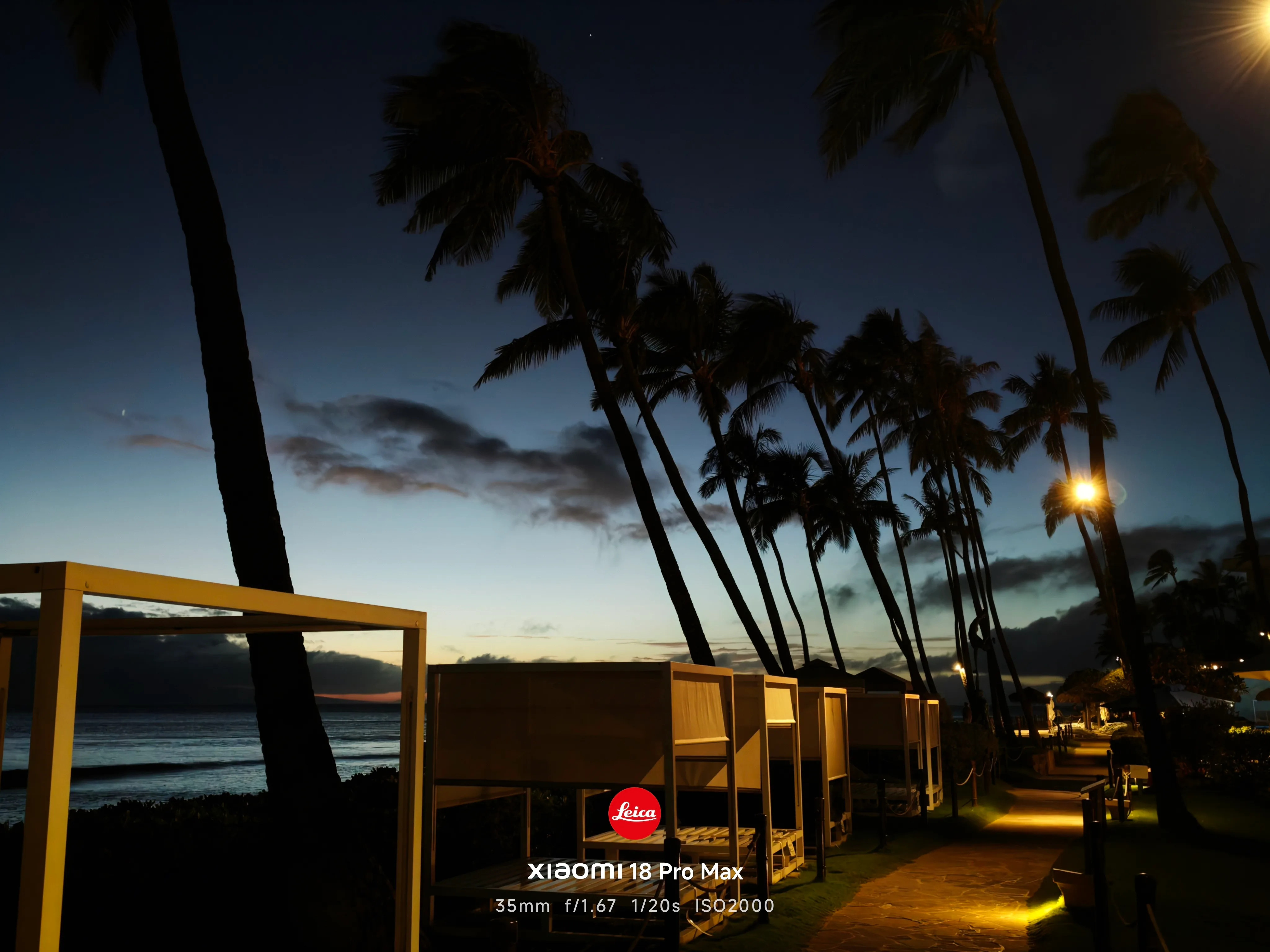
(Image source: Leitech, Legendary CCD)
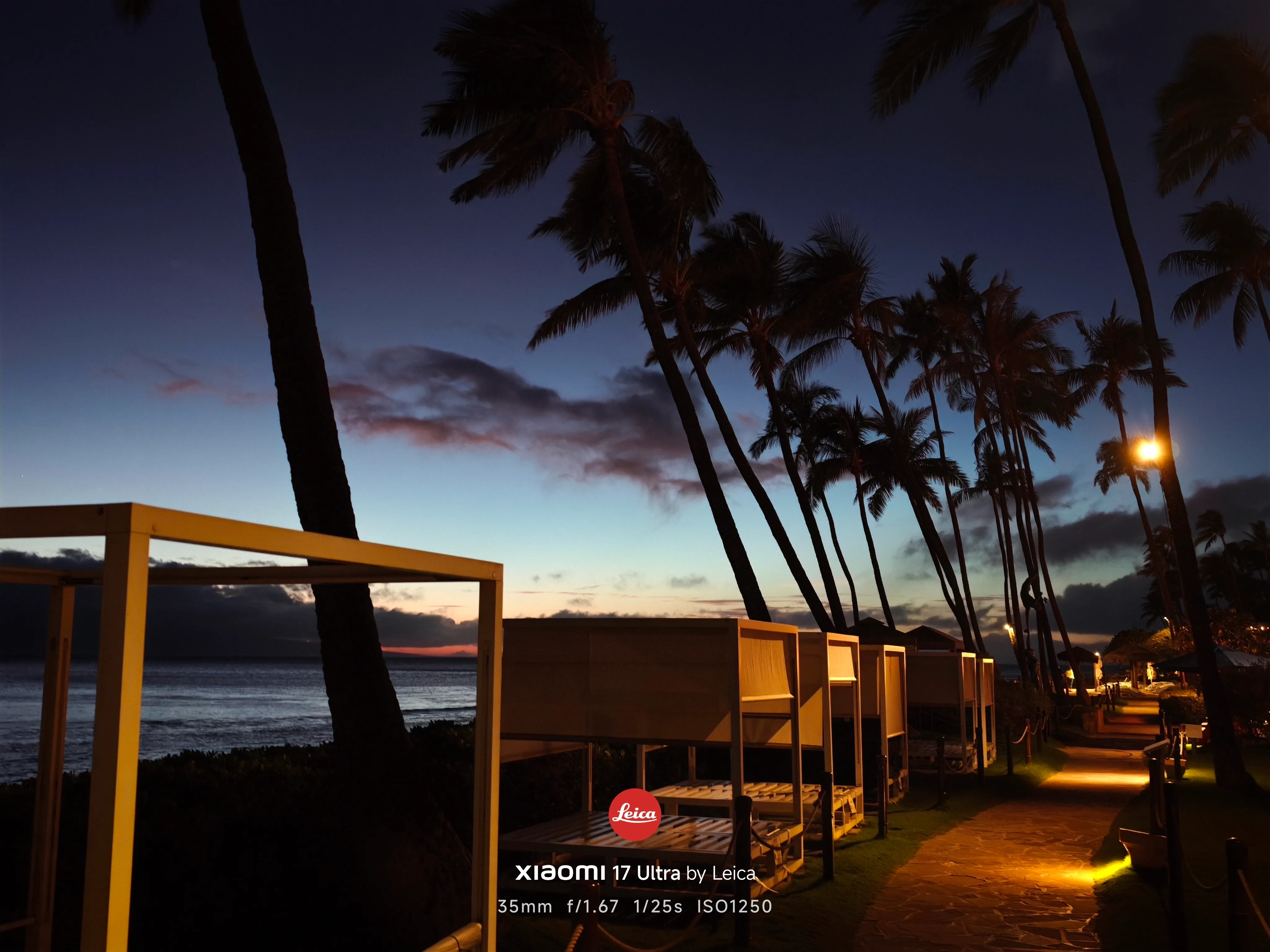
(Image source: Leitech, M9 Mode)
Xiao Lei initially thought this feature shared lineage with the "Leica Moment" on the Xiaomi 17 Ultra By Leica, but testing revealed completely different color tones. Xiao Lei even believes "Legendary Moment" offers superior first impressions with less serious coloration and tonality compared to "Leica Moment."
For video, the Xiaomi 18 Pro Max supports full-focal-length 4K 60fps Dolby Vision recording while adding OpenGate full-sensor recording. This allows complete sensor readout for later cropping to landscape, portrait, or other ratios. While casual users might not frequently use OpenGate, content creators posting to Bilibili, Douyin, and Xiaohongshu will find it extremely convenient.
Conclusion: A flagship that refuses to follow trends
In Xiao Lei's view, the Xiaomi 18 Pro Max isn't just another "all-rounder" flagship. These days, a top Android flagship with powerful performance, imaging, and battery no longer excites. What truly helps it stand out are its unconventional differentiators.
The most distinctive feature remains the rear screen. While the previous generation's "Magic Back Screen" primarily aimed for differentiation, this iteration shows Xiaomi considering how to make it genuinely useful. Though not yet a true "secondary screen," with room to grow in third-party ecosystem support and functionality, Xiaomi has found a promising direction.
The imaging system follows a similar philosophy. While nearly maxing out hardware specifications, Xiaomi empowers users through features like "Natural Color" mode and "Legendary Moment," complemented by hardware privacy screens. These innovations extend beyond mere specifications.
This generation of Xiaomi 18 Pro Max no longer needs the LEICA logo beside its cameras to prove its flagship status.
Source: Leitech
Images in this article come from: 123RF Licensed Image Library Source: Leitech
-
![]()
Why Must Autonomous Driving Testing Transition from Open-Loop to Closed-Loop?
-
![]()
Two Days, 15 Product Launches: What Is the Auto Industry Really Vying For?
-
![]()
From a $200,000 Premium to a $300,000 Discount: The Porsche Cayenne's Price Drop Signals More Than Just a Sale
-
![]()
Priced from 197,900 Yuan, the IM LS6 Makes Waves! 11,000 Orders in Just One Hour with Standard Wire-Controlled Steering
-
![]()
Leadership Reshuffle at Chery: Zhang Guibing Steps Up, Zhang Guozhong Shifts to Holding Group
-
![]()
Audi Headquarters Restricts AUDI Models from Entering Germany? The Issue Stems from Parallel Imports, While the Global Rise of Chinese Tech Remains Unstoppable
-
![]()
Xiaomi 18 Pro Max First Look Review: Standing Out with Unmatched Imaging Capabilities, Making the Leica Logo Almost Redundant
-
China’s Commercial Rockets: The Rise of a ‘Second-Tier Player’